
How Does the F1 FIA Stewards’ Panel Review Incidents and Announce Decisions?

Published: October 18, 2026 • Reading Time: 5 min • Last Updated: October 18, 2026
Learn how FIA Formula 1 stewards assess incidents, what evidence they may consider, and where to follow official decisions.
Contents
Understanding F1 stewards’ race decisions means knowing when an incident is being reviewed and what evidence can inform the outcome. This guide explains the FIA stewards’ role, the main steps in an incident review, the records they may assess, and how decisions are announced. It helps readers follow a penalty or investigation notice as a process, rather than treating an early update as the final outcome.

Who are the FIA stewards?
Several officials help apply sporting rules during a Formula 1 weekend, including the race director, race control personnel, observers, and the stewards. The stewards are appointed for the event and make rulings on incidents referred to them under the applicable regulations. Their role is to apply the rules to the available facts, not to represent a team or driver.
Race control and the stewards work in related but distinct ways. Race control monitors the live event, manages operational communications, and may refer an incident for review. The stewards assess the sporting question and determine whether a rule has been breached and whether a sanction is appropriate. A notice saying that an incident is “under investigation” therefore does not establish that a driver has committed an offence or will receive a penalty.
How an incident review begins
An incident may come to the stewards’ attention through trackside observations, race control, video, technical records, or information raised by a team. Depending on the circumstances, the stewards can begin reviewing it during a session or examine it after the session has ended. The subject may involve contact, gaining an advantage off track, driving conduct, or a procedural matter. Each case needs to be considered in its own context.
Initial notifications often state that an incident has been noted or referred to the stewards. These are status updates, not final findings. Officials identify the cars and drivers involved, establish the relevant time and session, and determine which sporting rule may apply. If the session is still live, safety measures and race management continue separately while the review proceeds.
What evidence can the stewards consider?
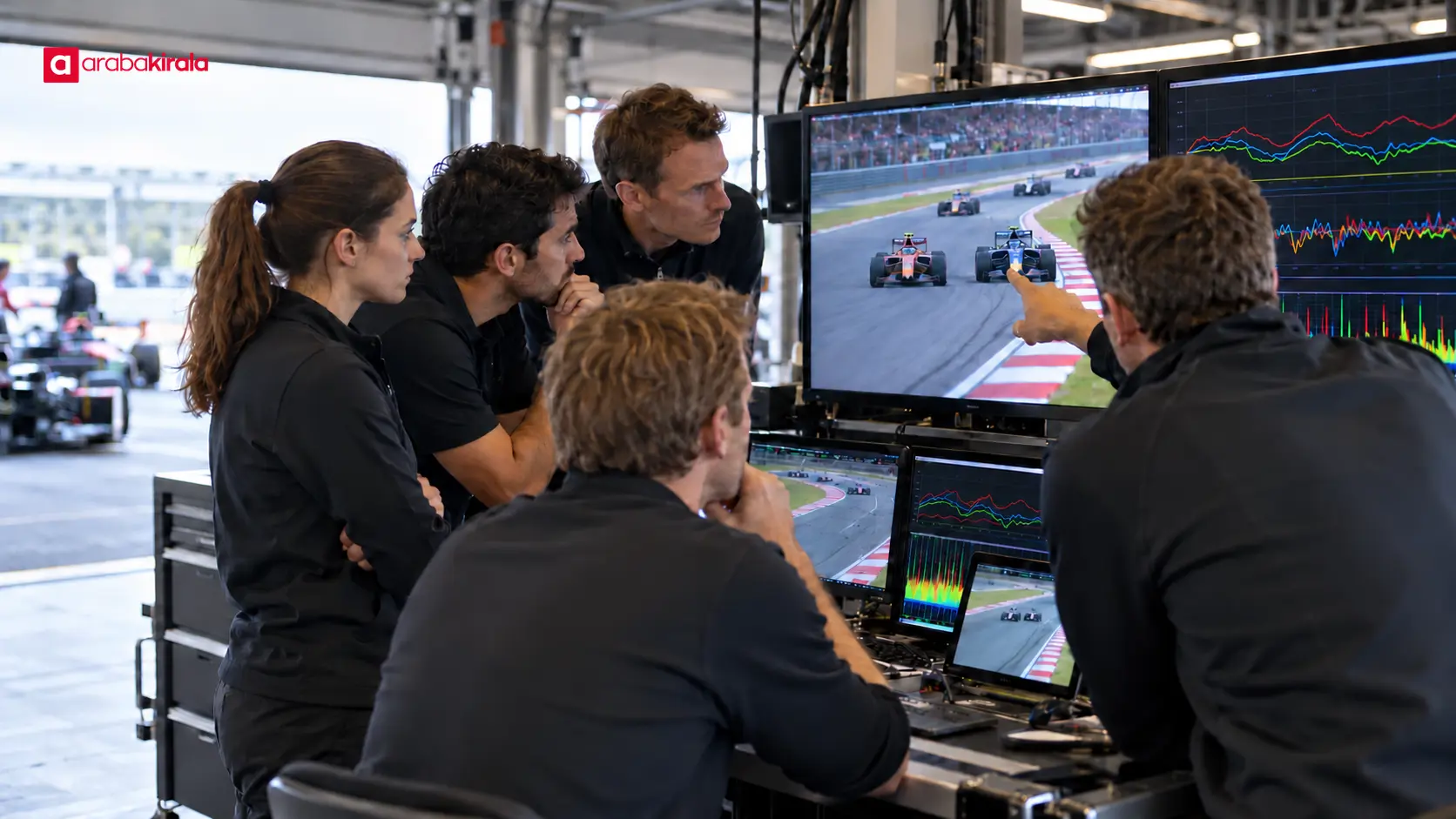
A single camera angle rarely shows every detail. Where available, the stewards may consider onboard footage, circuit cameras, broadcast video, timing records, team radio, and information from car systems. These sources can help answer different questions: where each car was positioned, how the drivers reacted, how contact or a track excursion unfolded, and what consequences followed.
Each record has limits. Video can show cars alongside one another, while speed, steering, and the sequence before and after the incident may require other angles or technical data. Radio messages can add context about what a team noticed, but they do not necessarily establish the full sequence on their own. The goal is to assess how the incident developed and how the relevant rule applies, not simply to look at the result.

Explanations from the parties and the reasoning
When an incident concerns particular drivers or teams, the stewards may ask the relevant parties to explain what happened. A driver or team representative can provide context, and any information offered becomes part of the review. Being asked to attend a hearing does not itself mean that fault has been established. The stewards consider the explanations alongside the other evidence and the applicable sporting regulations.
Context can include each driver’s control of the car, the other car’s position, track conditions, the outcome of the manoeuvre, and the wording of the relevant rule. Not every collision automatically leads to a penalty, and the absence of contact does not by itself prove that no rule was breached. Any sanction depends on the type of incident and the regulations in force. A viewer’s general impression cannot replace the official ruling.
How decisions are announced and read
Official decisions are generally published through FIA documents and notices for the relevant race weekend. A short on-screen message may appear during a session, while a fuller decision document can identify the parties, the matter considered, the regulation applied, and the outcome. Timing depends on when the incident occurs and how much evidence needs review.
When reading a notice, check that it relates to the correct session and incident. “Noted,” “under investigation,” and “decision” describe different stages. The reasoning section may say which records were considered and which rule was applied. To understand any effect on the result or standings, also check the official classification and any later notices.
A practical way to follow an incident
- Check whether the notice is an interim update or a final ruling.
- Identify the session and cars involved; different incidents can raise different rule questions.
- Read the official decision’s reasoning and the regulation it cites.
- Use more than one camera angle where available; a short social media clip may omit relevant context.
- If the classification changes, consult the latest official result document.
This approach helps separate confirmed information from rapid commentary during a race. When technical records or a decision document seem dense, start by identifying the stage of the process and the question the stewards were asked to resolve.
Summary and next step
The FIA stewards assess incidents using observations, available video and technical records, explanations from the parties, and the applicable rules. An investigation notice is not a final decision; the official ruling provides the outcome and may explain its reasoning. When an incident comes up in a future race, follow the notice through to the decision document and check the latest official classification.
Frequently Asked Questions
Does being referred to the stewards mean a driver will be penalised?
No. A referral or investigation notice means the incident will be assessed. The stewards decide whether the evidence establishes a breach and whether any action is needed.
Do stewards make decisions during the race?
Depending on the incident and available evidence, a decision may be announced during or after a session. Immediate race management and safety actions can proceed separately from the sporting review.
What footage is used to review an incident?
Depending on what is available, the review may use onboard cameras, circuit cameras, broadcast footage, timing, team radio, and technical records. The same evidence sources are not necessarily available in every case.
Where can I find the reasoning behind a ruling?
Look for the FIA’s official decision documents and notices for that race weekend. A detailed document may explain the matter considered and the outcome beyond what a short live update says.
Can a stewards’ decision change the race result?
Some decisions can affect sporting results or classification. Check the ruling and the latest official classification together to understand the current result.
Legal Disclaimer: All content, articles and information on the Araba Kirala website are provided solely to inform users. No information shared on this website constitutes definitive advice or guidance. Araba Kirala Teknoloji A.Ş. and its authors cannot be held responsible for any direct or indirect damages arising from the application of information on the website. For all questions and requests regarding car rental, please contact the office from which you will rent your vehicle.












