
How Does Fuel Work When Renting a Car?

Published: November 1, 2026 • Reading Time: 7 min • Last Updated: November 1, 2026 • Author: Merve B.
Learn how to record the fuel level at pickup, confirm the right fuel type, and check the return arrangement before handing back a rental car.
Contents
Fuel arrangements for a rental car cover the level recorded at pickup, the fuel type the vehicle requires, and the expected level at return. This guide explains how to check the dashboard reading, why the handover record matters, and what to clarify before bringing the car back. Arrangements can vary by reservation and rental office, so confirm the precise pickup and return expectations with the branch where you will collect the car.

What does a rental fuel arrangement mean?
A fuel arrangement describes how the amount of fuel in the car is documented when it is handed over and what is expected when it is returned. The dashboard gauge and the handover record are the practical references to check. A fuel gauge gives an approximate indication of what is in the tank at that moment. It does not record distance travelled, and it serves a different purpose from the odometer.
Rental terms may use different approaches. A reservation may ask you to return the vehicle at a level similar to the one recorded at pickup, while another may describe a different process. Do not assume one method applies to every rental or location. Read the wording in your reservation and handover documents. If it is unclear, ask the office that will provide the car how the fuel level should be recorded and what return level is expected.
Record the fuel level at pickup
Before driving away, look at the fuel gauge and compare it with the handover paperwork. The display may show a full, half or partial tank, or use bars rather than a needle. Some cars also display an estimated driving range. That estimate can change with driving style, traffic, load and road conditions, so it should not be treated as a substitute for the fuel gauge or the recorded level.
If the form includes a fuel field, check that it matches what you see on the dashboard. If the entry is missing or appears different, tell the staff member before leaving and ask how the record can be corrected. A clear handover record helps both sides refer to the same starting point when the car is returned.
You may take a photo of the gauge and the relevant paperwork for your own records, subject to any instructions from the rental office. A photo is not automatically a replacement for the official handover record, so ask which record is used if there is a question later. Make sure the display is visible before taking the picture, and avoid handling the phone while driving.
Check the odometer separately. The odometer records distance; the fuel gauge indicates the amount of fuel. Neither reading proves the other. It is useful to note both because they establish different facts about the vehicle at the start of the rental. Review any other vehicle condition notes on the handover form as well.
How to confirm the correct fuel type
Do not guess the fuel type from the model’s appearance or from assumptions about the vehicle. Check the marking near the fuel flap and the vehicle’s owner information or manual. If the fuel type was not explained at pickup, ask before driving away. If you are still unsure at a fuel station, pause and confirm before putting fuel into the car.
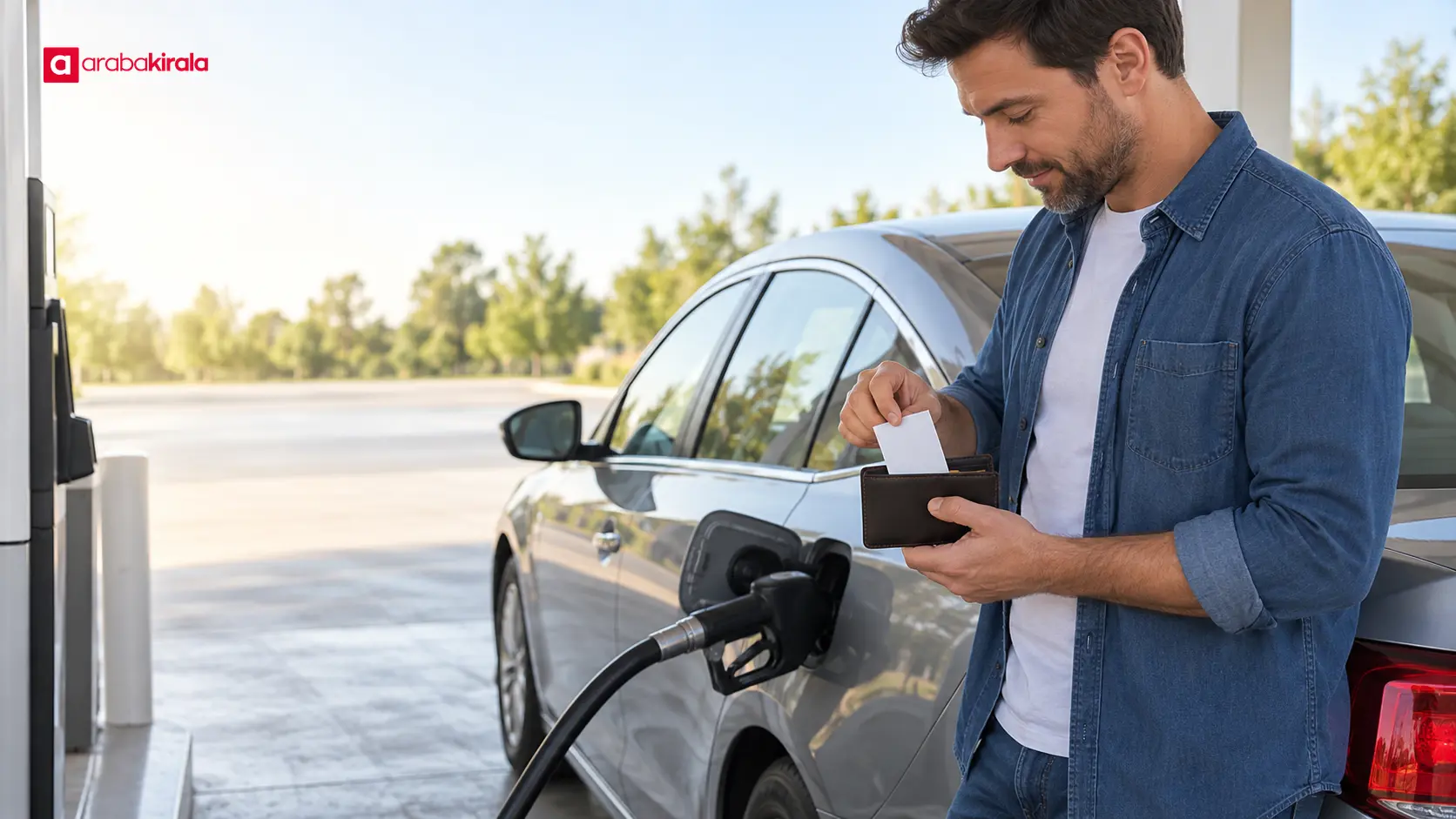
Using the wrong fuel can damage a vehicle. Match the label on the pump to the requirement shown on the car, and follow the station’s safety instructions. Do not force the fuel flap or cap. For an electric rental, the relevant questions concern charging rather than liquid fuel, including the return charge expectation and the charging equipment available to you. Confirm those details with the branch. A hybrid still has vehicle-specific operating information, which you can find in its manual.

Planning fuel during the trip
On a longer journey, plan a fuel stop before the tank is nearly empty. Traffic, weather, passenger and luggage load, terrain and driving habits can affect consumption. The distance estimate on the dashboard is only an estimate. When a low-fuel warning appears, choose a safe place to stop and refuel; do not try to manage the gauge while driving.
Keep any fuel receipt if it helps you track travel expenses and the timing of a fill-up. A receipt records a purchase, but it does not by itself establish the fuel level at pickup or determine how the rental’s return arrangement is applied. For that, check the handover and return documents and ask the rental office which records it uses.
Check the arrangement before returning the car
Before reaching the return location, compare the current gauge reading with the level recorded at pickup and the return wording in your reservation. If the arrangement calls for a similar level, allow time to refuel if necessary. The amount needed will depend on the vehicle and the current gauge, so avoid relying on a fixed litre estimate or cost. If you do not know the required return level, contact the office rather than guessing.
At handback, check the gauge with the staff member and make sure the return record reflects the observed level. Ask how the return is documented and whether you receive a completed record. Details such as the return time and the way to leave the vehicle can depend on the booking and branch. If you plan to return outside normal office hours, confirm the procedure in advance; do not assume every location offers the same method.
What to clarify before booking
Start by finding the fuel wording in the reservation information. Then clarify the practical points that affect your trip: the level at which the car will be handed over, the expected level on return, what process applies if the returned level is lower, and where both readings will appear in the records. These are questions to ask about your own booking, not a statement that a particular fee or procedure is universal.
If you are searching for Istanbul car rental or planning a rental around Beylikdüzü, use the same approach: do not infer the fuel terms from the destination or from a general industry assumption. Confirm them with the office where you will collect the car. For a longer route, learning the fuel type, gauge location and return expectation before leaving can make the trip easier to manage.
In brief: check the record and confirm the terms
Handle rental fuel carefully by comparing the dashboard reading with the pickup record, confirming the required fuel type from the vehicle’s own information, and checking the return expectation for your reservation. Treat the fuel gauge and odometer as separate readings, and keep receipts for your own expense records. Your next step is to review the fuel wording in your booking and ask the rental branch about any pickup or return detail that remains unclear.
Frequently Asked Questions
Do I need to return a rental car with the same fuel level?
That depends on the arrangement for your reservation and the instructions given by the pickup office. Compare the recorded pickup level with the return wording, and ask the branch if you are unsure.
Is the dashboard range estimate the same as the fuel gauge?
No. The gauge indicates the fuel level. The range estimate uses recent consumption to approximate how far the car may travel and can change with driving conditions.
How can I tell which fuel the rental car uses?
Check the marking by the fuel flap and the vehicle manual. If the information is not clear, ask the rental staff before refueling.
What should I do if I put in the wrong fuel?
Do not start or continue driving the car. Stay somewhere safe, contact the rental office, and follow its instructions rather than attempting repairs yourself.
Should I keep fuel receipts?
A receipt can help you organize your travel expenses and personal records. Keep the handover and return documents too, since a receipt alone may not establish the rental’s recorded fuel levels.
Legal Disclaimer: All content, articles and information on the Araba Kirala website are provided solely to inform users. No information shared on this website constitutes definitive advice or guidance. Araba Kirala Teknoloji A.Ş. and its authors cannot be held responsible for any direct or indirect damages arising from the application of information on the website. For all questions and requests regarding car rental, please contact the office from which you will rent your vehicle.












