
How Does a WRC Safety Cage Protect the Driver?
Published: October 15, 2026 • Reading Time: 7 min • Last Updated: October 15, 2026
Learn how the tubular cage in a WRC car supports the cabin, how it works alongside driver restraints, and what its protection can and cannot do.
Contents
- What is a safety cage?
- How does the cage help in an impact or rollover?
- It supports the shape of the cabin
- It transfers loads through its joints
- How is the driver protected inside the cage?
- What are the limits of a safety cage?
- Why do WRC cars need a purpose-designed cage?
- What to look for when viewing a rally car
- Summary and next step
- Frequently Asked Questions
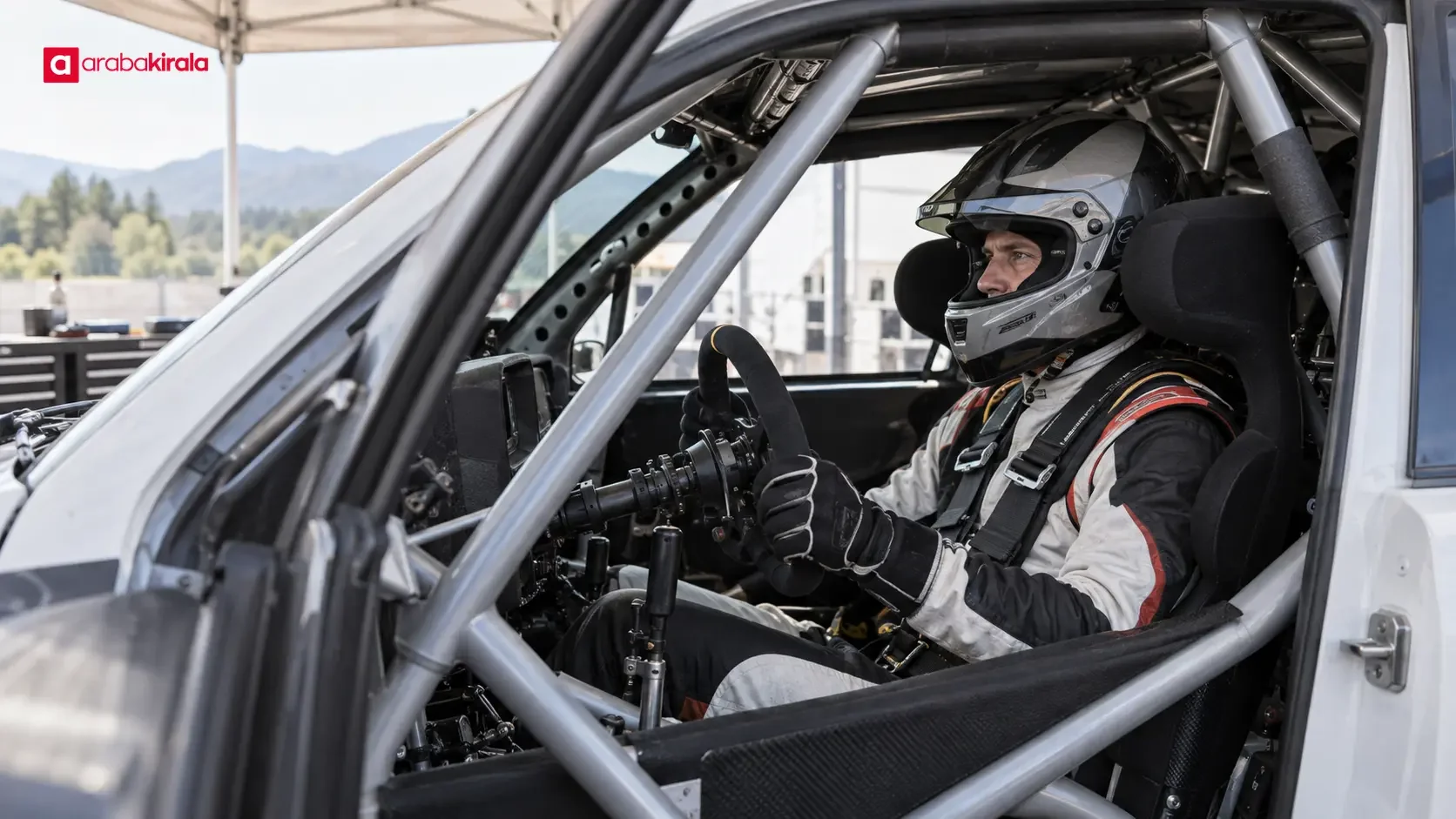
A WRC safety cage is a tubular structure fitted inside a rally car and attached to its body. It is not a standalone shield for the driver: its purpose is to support the passenger cell during impacts and rollovers, working alongside the seat, harness, helmet, and other safety equipment. This guide explains the cage’s main parts, how it helps carry loads, the limits of its protection, and why driver safety depends on the complete setup.
What is a safety cage?
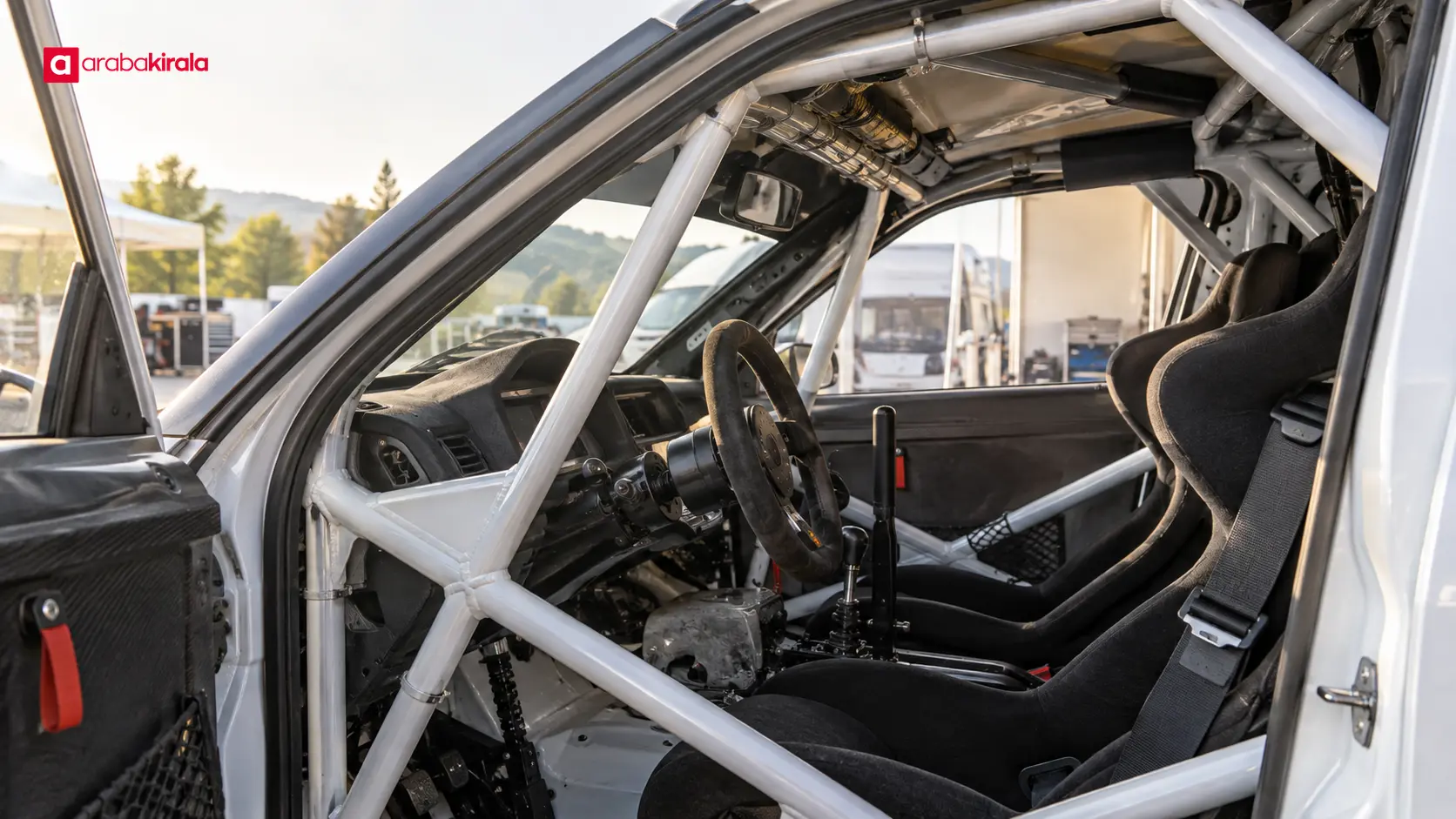
A safety cage consists of metal tubes arranged inside the passenger compartment and secured to points on the vehicle body. The tubes form a supporting framework around the front, sides, roof area, and rear of the cabin. The design is more than a frame that occupies space: tube placement, joints, mounting plates, and how the structure transfers loads into the body all matter.
Often called a roll cage, the structure is intended to create a protective space around the occupants in a competition car. Rally stages can include asphalt, gravel, and snow, with risks such as impacts, hard landings, and rollovers. The cage does not make driving risk-free. It is one safety feature intended to reduce the chance that the passenger compartment will deform or collapse into the occupants’ space.
How does the cage help in an impact or rollover?
It supports the shape of the cabin
In a collision, forces travel through the vehicle body from different directions. The cage’s network of tubes can help distribute some of those forces across multiple attachment points. During a rollover, it is intended to support the cabin’s resistance to the roof and side structures collapsing inward. Preserving the space around the occupants is a central aim.
The idea is not to eliminate impact forces but to manage how the structure responds to them. Other parts of a vehicle are designed to deform and absorb energy; the cage supports the integrity of the passenger cell. The outcome of an actual crash depends on many factors, including its direction and severity, the vehicle’s condition, and the cage’s design and installation. No cage can be said to produce the same result in every accident.
It transfers loads through its joints
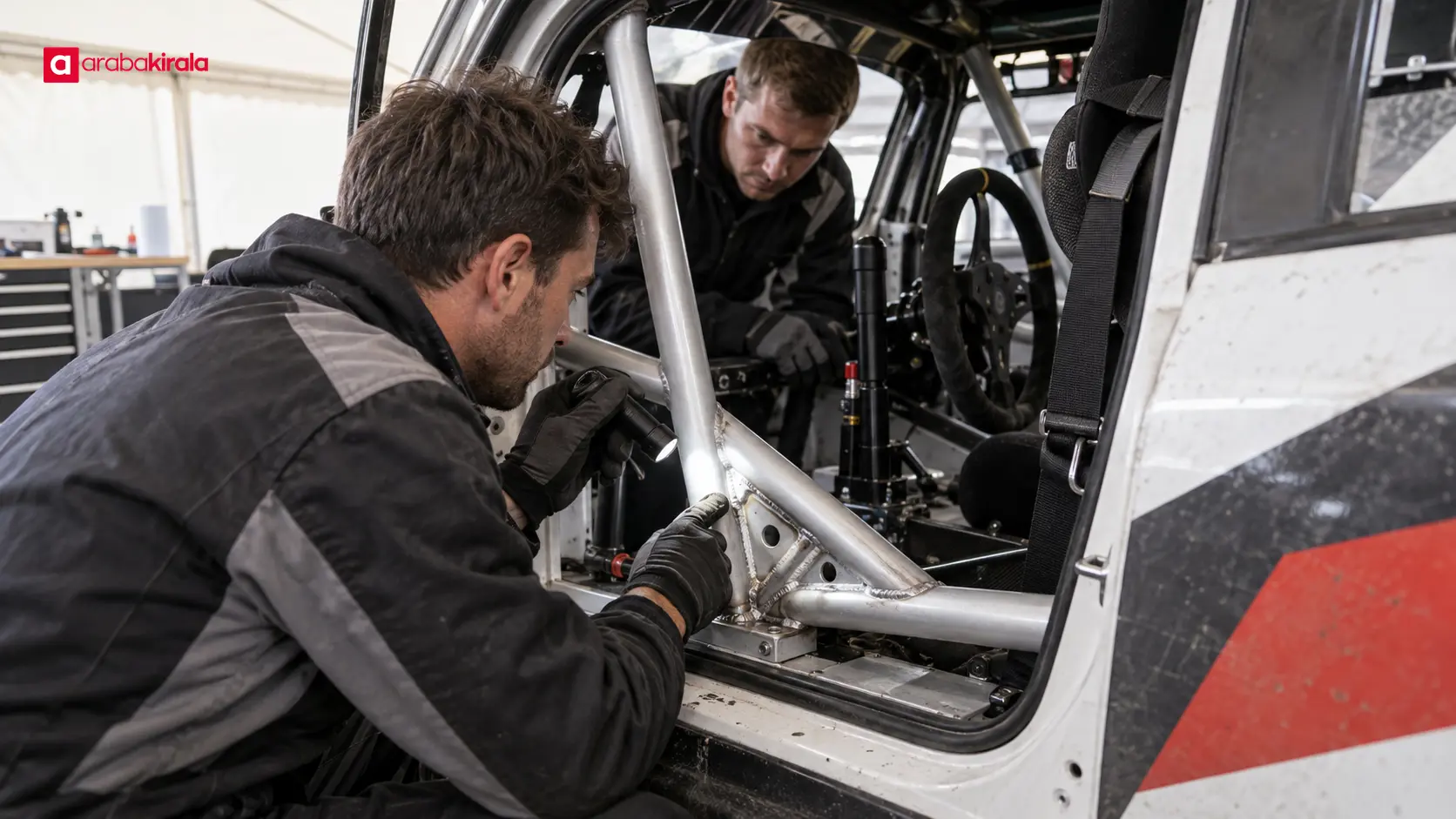
Where tubes meet each other and attach to the body affects how the structure works. The components are assembled so that loads can be shared across the framework rather than concentrated on one tube. Joint quality, weld condition, and body mounting are connected to the cage’s intended strength. Designing and installing a competition cage to meet applicable technical rules therefore requires specialist knowledge.
A cage that looks complex does not prove that it is safe. Tube placement, material and dimensions, joint quality, and compatibility with the vehicle must be considered together. A visual check cannot replace a qualified technical inspection.
How is the driver protected inside the cage?
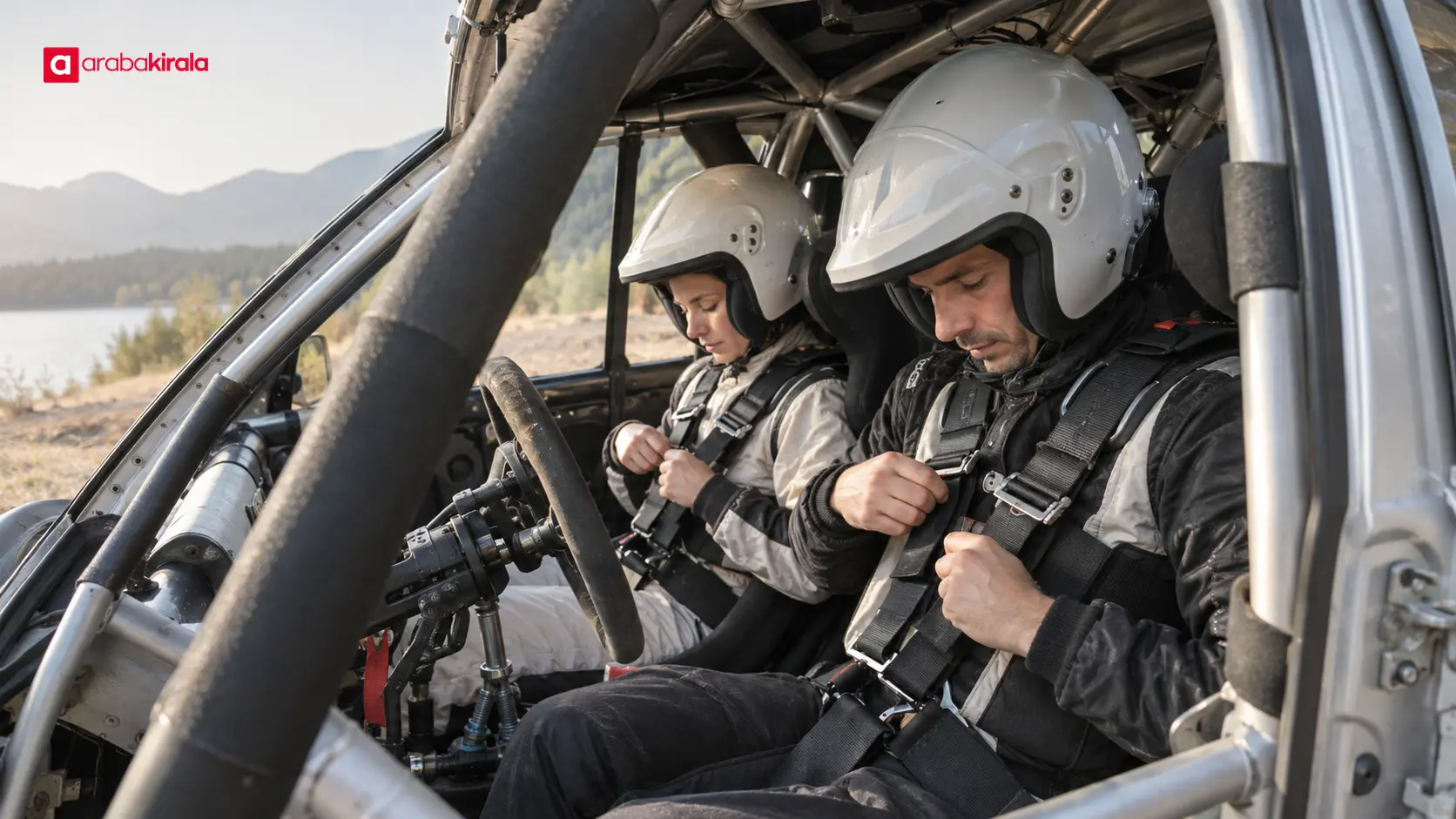
While the cage supports the structure around the cabin, keeping the driver correctly positioned in the seat also matters. A competition seat, multipoint harness, and helmet are designed to help limit movement and support the driver’s head, torso, and shoulders. They do not do the same job as the cage; each provides a different part of the safety system.
Correctly fitted seats and harnesses help reduce the chance of the driver striking the cage tubes. Systems used for head and neck protection are selected to work with a compatible helmet and restraint arrangement. Fit, compatibility, and correct use all matter. Having a cage does not remove the need to wear a harness or sit correctly in the seat.
What are the limits of a safety cage?
A safety cage does not prevent crashes, remove hazards outside the vehicle, or guarantee that occupants will avoid injury in every impact. Rally safety also depends on driving conditions, stage layout, speed, maintenance, equipment, and the nature of an incident. A design intended to help in a rollover does not mean the car is unaffected by impacts from every direction or at every severity.
The presence of a cage in the cabin is not enough by itself. Damage, corrosion, unsuitable repairs, or problems at attachment points can affect structural performance. Changes or repairs to a competition car should be assessed by specialists familiar with that vehicle and the applicable technical requirements. DIY instructions for cutting, welding, or modifying a cage would not be safe guidance.
Why do WRC cars need a purpose-designed cage?
Rally cars are prepared for conditions that differ from ordinary road use. The seating positions of the driver and co-driver, competition seats, and restraint equipment must be considered along with cage placement. The door openings, windscreen area, roof, and rear attachment points are all part of a design that has to accommodate both structural functions and the equipment inside the car.
There is no single cage layout that suits every vehicle and competition. The vehicle model, body structure, competition class, and applicable technical rules shape the design. Copying the appearance of a WRC cage onto another car does not mean it will provide the same result. Two cages that look alike may differ in design and execution.
What to look for when viewing a rally car
When looking closely at a rally car, consider the cage as part of the cabin’s complete arrangement rather than as a set of thick tubes. Following how the visible tubes continue around the roof and sides, how the joints are arranged, and how the cage relates to the seats and harnesses can help explain its purpose. Those visible details do not establish material certification, weld quality, or compliance with technical rules.
- Notice how the cage forms a supporting framework in more than one direction around the cabin.
- Observe how the seat and harness work with the cage to position the driver.
- Avoid judging structural safety from a photograph or brief video alone.
- Leave technical compliance and damage assessments to qualified competition-car specialists.
Summary and next step
A WRC safety cage is a body-mounted tubular structure intended to support the passenger cell. It helps the structure carry loads during impacts and rollovers, but it does not protect the driver on its own. It is one part of a properly designed and installed safety system that works with the seat, harness, helmet, and other equipment.
When watching a rally car, consider the cage alongside the other protective equipment and do not treat its visible appearance as proof of safety. If you need safety equipment or a technical inspection for a vehicle, plan the work with specialists who understand that vehicle and its competition requirements.
Frequently Asked Questions
What does a WRC safety cage do?
The tubular structure around the cabin supports the passenger cell’s ability to retain its shape in an impact or rollover. It does not protect the driver by itself; it works with the seat, harness, and other safety equipment.
Does a safety cage completely stop impact forces?
No. A cage does not eliminate impact forces or guarantee injury prevention. It is intended to support cabin strength, while the outcome depends on the conditions of the incident and the vehicle as a whole.
How is a cage different from a competition seat and harness?
The cage contributes to the vehicle’s cabin structure. The seat supports the driver’s position, and the harness helps hold the driver in the seat. They have different functions and need to be used together in a compatible setup.
Can you tell by looking whether a rally car’s cage is safe?
Appearance alone cannot establish that. Design, materials, attachment points, weld quality, and compliance with technical rules require a qualified inspection.
Can I install the same cage seen in a WRC car in a road car?
Copying the visible layout does not show that it will function the same way in another vehicle. The body structure, vehicle model, and applicable technical requirements need to be considered by specialists.
Legal Disclaimer: All content, articles and information on the Araba Kirala website are provided solely to inform users. No information shared on this website constitutes definitive advice or guidance. Araba Kirala Teknoloji A.Ş. and its authors cannot be held responsible for any direct or indirect damages arising from the application of information on the website. For all questions and requests regarding car rental, please contact the office from which you will rent your vehicle.












