
Watching for Cyclists and Pedestrians While Driving in Istanbul
Published: October 16, 2026 • Reading Time: 8 min • Last Updated: October 16, 2026
A practical guide to spotting cyclists and pedestrians, handling crossings and turns, and reducing dooring and parking risks after renting a car in Istanbul.
Contents
- Why city driving in Istanbul calls for extra attention
- Spotting cyclists and leaving room
- Speed and visibility around pedestrians
- A routine for junctions, lane changes and turns
- Parking and checking before opening a door
- Preparing the rental car and route
- A short checklist for driving in Istanbul
- Summary and next step
- Frequently Asked Questions
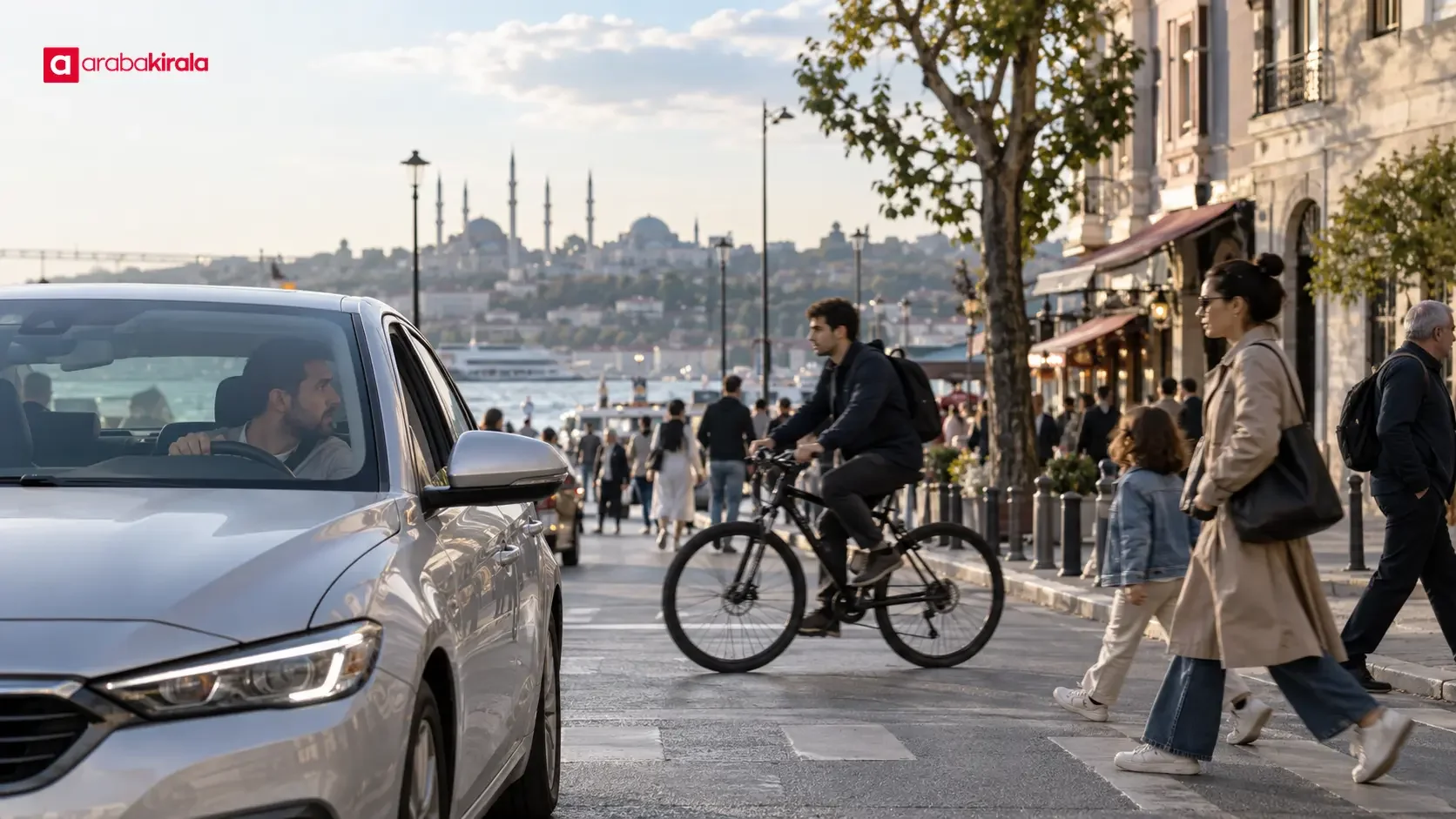
If your Istanbul car rental plans include city driving, this guide will help you anticipate busy pedestrian and bicycle movement, make safer choices at crossings and junctions, and reduce risks when parking or opening a door. You will learn where cyclists can be harder to see, how to adjust speed when visibility is limited, and what to check before setting off in an unfamiliar vehicle. These habits are useful on both busy avenues and narrower neighborhood streets.
Why city driving in Istanbul calls for extra attention
Istanbul streets are shared by cars, buses, motorcycles, cyclists and people on foot. Road width, construction, parked vehicles, transit stops and building corners can change what is visible within a short distance. A marked crossing or bicycle lane provides useful information, but signs and markings are only part of the picture. Keep scanning the edges of the road and choose a speed that lets you respond within the distance you can see.
When you are driving a rental car on an unfamiliar route, it may also take time to get used to the vehicle’s dimensions, mirror coverage and braking response. Set your route before moving. Trying to adjust navigation while driving or changing lanes at the last moment can take attention away from cyclists and pedestrians. If you miss a turn, continue to a safe place before changing the route.
Spotting cyclists and leaving room
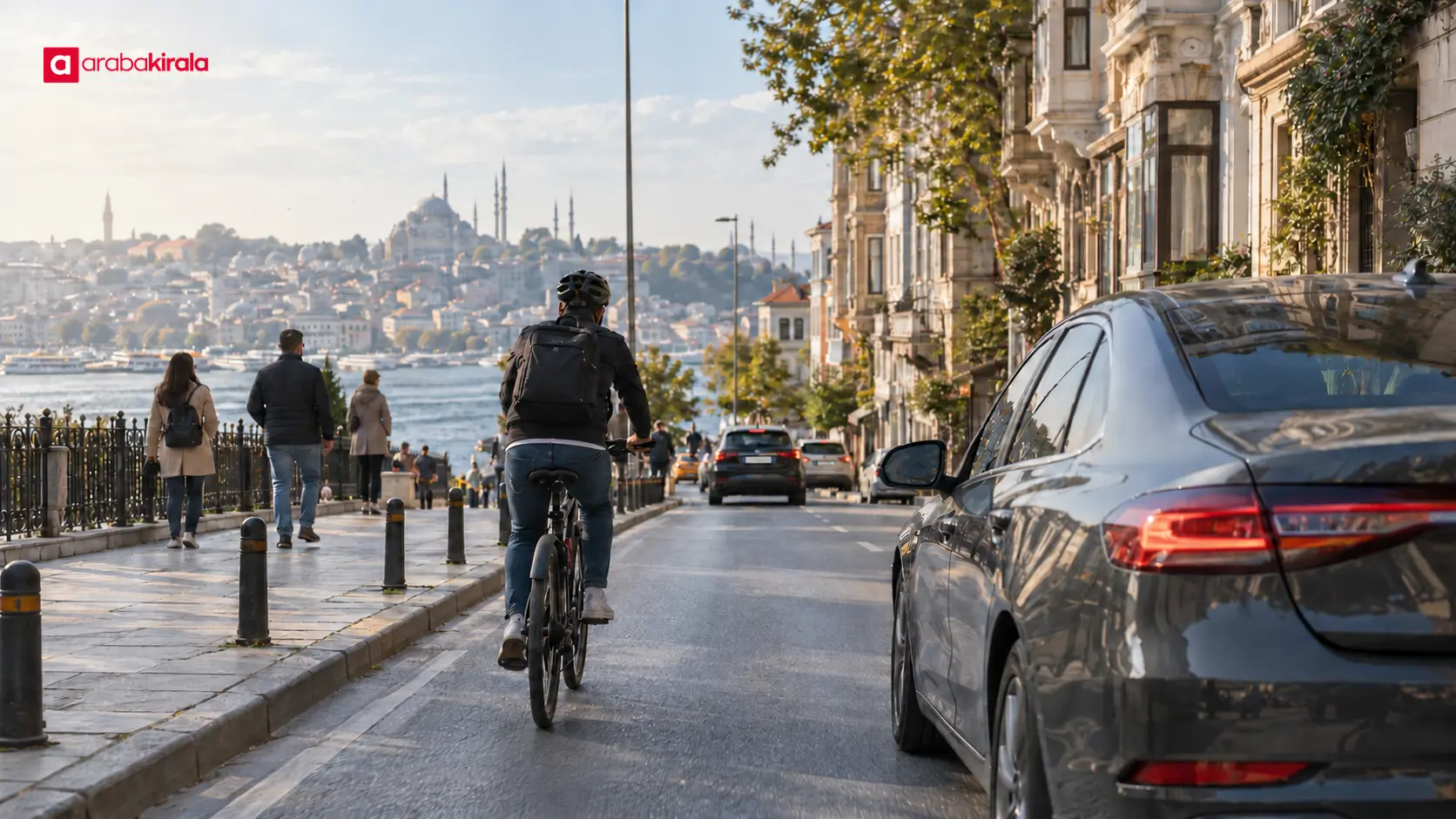
Cyclists have a narrower profile than cars and may be partly hidden by parked vehicles, buses or roadside objects. As you approach junctions, prepare to turn or consider changing lanes, check your mirrors and scan for other road users. Mirrors do not show every area beside the car, so add a brief direct check of the relevant blind spot before moving. Do not rely on a signal alone to tell you that the space is clear.
When passing a cyclist, slow down and leave safe lateral room for the conditions. If the street is narrow or your view is restricted, do not force the pass; wait until there is a suitable opportunity. A cyclist may move around a damaged road surface or adjust position to assess traffic. A sudden horn or a very close pass can startle them and make it harder for everyone to judge what is happening.
Before turning, check for cyclists traveling beside you, including in a bicycle lane or near the road edge. Signal before the maneuver, then wait if a cyclist would be cut off. A signal communicates your intention; it does not mean another road user has seen you. Remember that a cyclist passing parked cars may be close to the area where a vehicle door could open, so give both the cyclist and your own maneuver enough space.
Speed and visibility around pedestrians
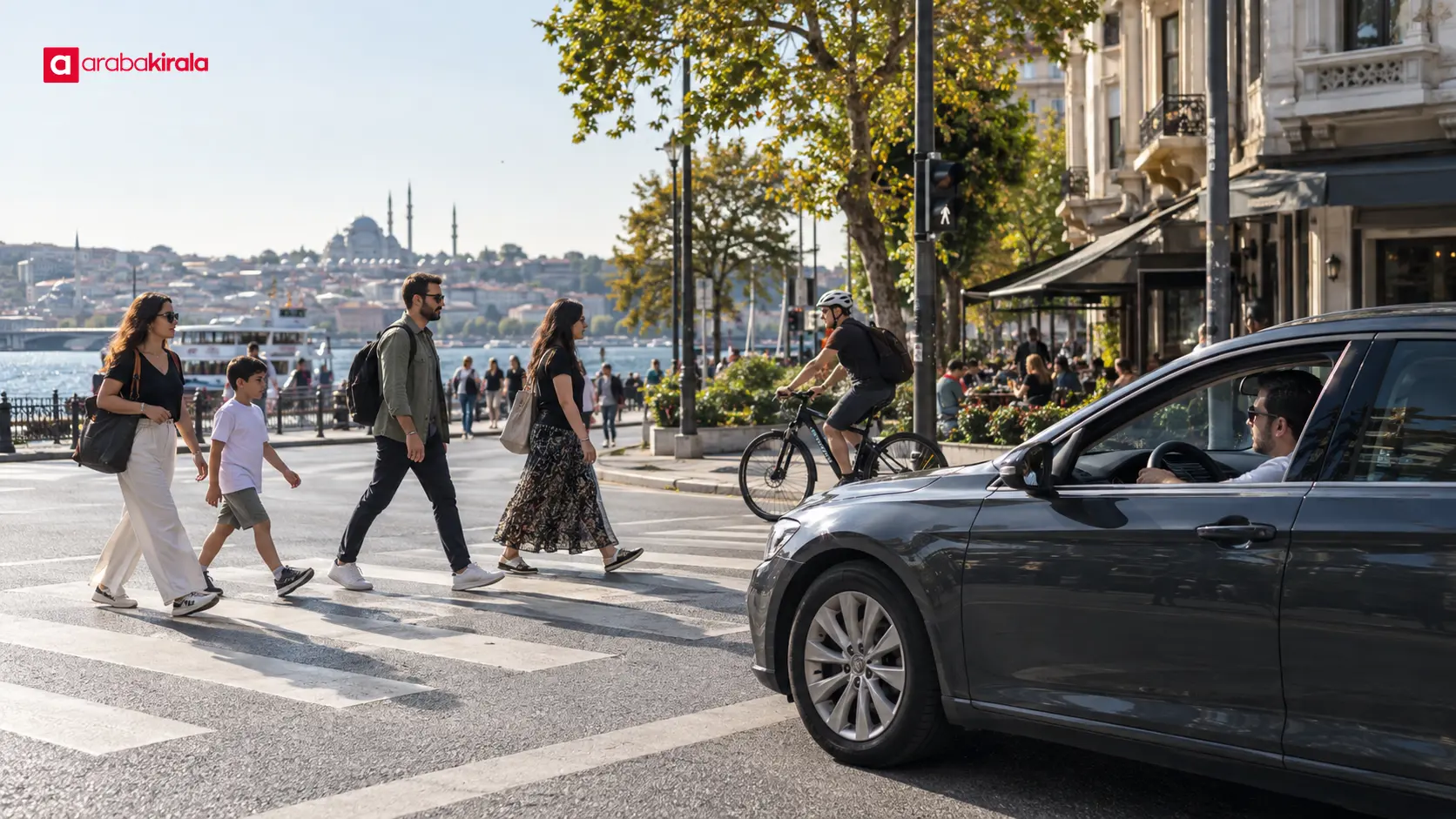
Pedestrian activity is not limited to marked crossings. Bus stops, school surroundings, markets, shopping streets and junction corners can all bring people close to traffic. Look for people who may emerge from behind a bus, walk between parked cars or be waiting to cross. If a vehicle or building blocks your view, account for movement beyond it rather than assuming the hidden area is empty.
Reduce speed as you approach a crossing and assess the people around it. When you need to yield, stop safely before the crossing so that it remains clear. If a vehicle in an adjacent lane has stopped, do not accelerate past it without understanding why; a pedestrian may be hidden from view. Drivers turning at a junction can overlook people crossing at the same time, so take the turn slowly and keep the crossing open.
In a crowded area, a speed suited to what you can see gives you more time to decide and brake if someone moves unexpectedly. Safe speed depends on visibility, road surface, traffic density and stopping distance, not just the number on the speedometer. Rain, darkness and glare can reduce visibility, so account for those conditions as well.
A routine for junctions, lane changes and turns
Maneuvers that change your direction or position deserve a deliberate check. Before changing lanes, decide whether the route truly requires it. Signal, check your mirrors, inspect the blind spot and account for cyclists and motorcycles nearby. If there is no safe gap, wait. Avoid last-second changes; if you enter the wrong street, find a safe place to reroute.
Slow down early before turning at a junction. Check oncoming traffic as well as the crossing on your turning path, the curb and the space where a cyclist may be traveling. Signaling in good time helps others understand your intention, but do not assume that a pedestrian or cyclist has noticed you. If a large vehicle blocks your view, wait until you can see the turning area before proceeding.
Following too closely in slow traffic can hide activity around a crossing or junction. Leave enough distance to see why the vehicle ahead slows down and to respond smoothly. Avoid entering a junction when congestion means you may have to stop in the middle of it. Keep crossings and junction exits clear, even when your signal is green and traffic ahead is moving slowly.
Parking and checking before opening a door
Keep watching for people on foot and on bicycles while looking for a place to park. Stopping in an unsuitable spot or blocking a crossing can force others into a risky maneuver. Check the signs, road markings and directions that apply to the parking area. Before moving the car again, confirm that the doors, mirrors and surrounding space are clear.
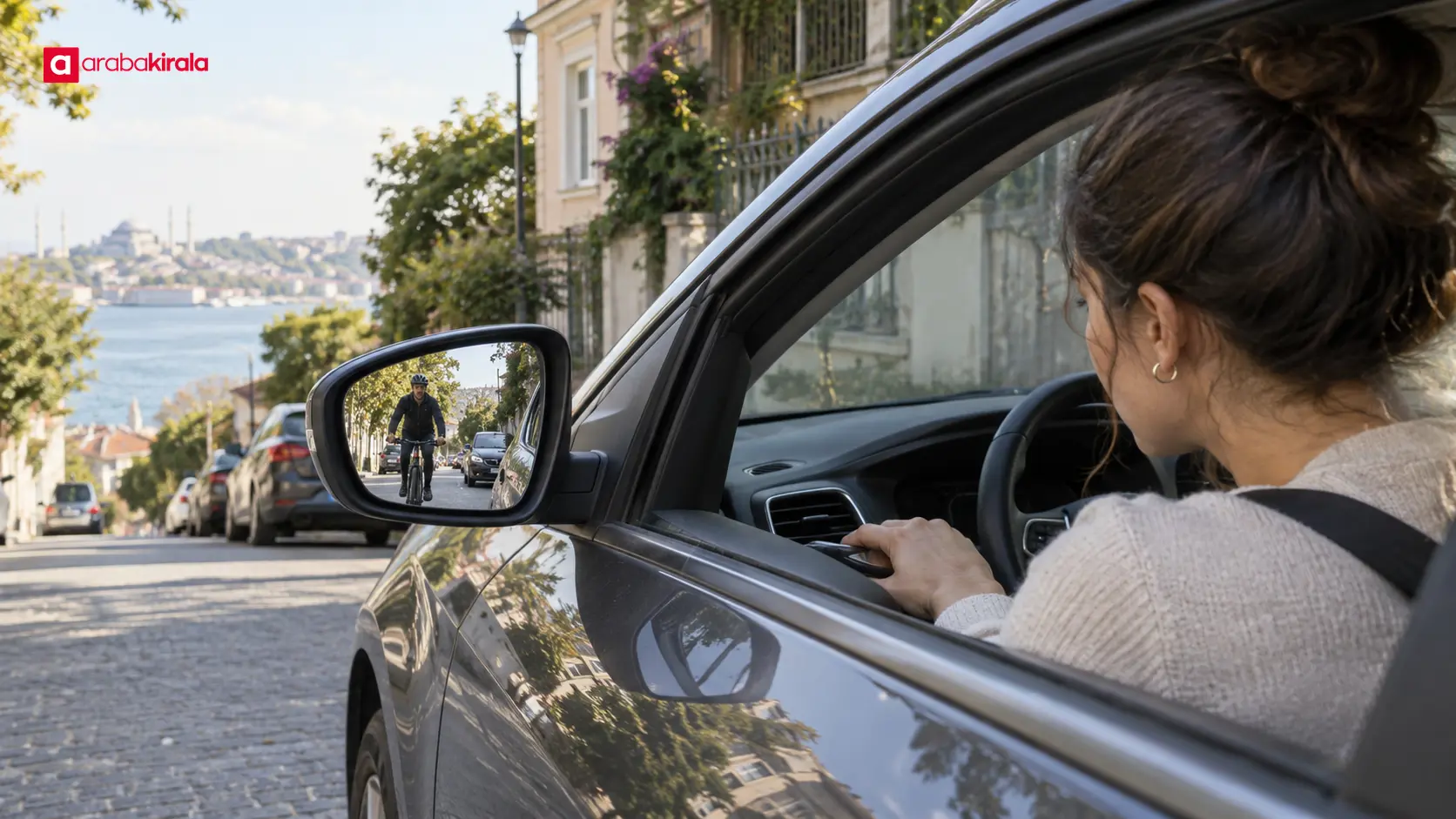
Before opening a driver or passenger door, check the mirror for a cyclist or motorcycle approaching from behind, then look directly at the door’s path. Opening the door slowly and taking care when getting in or out can help reduce collision risk. Remind passengers to check as well. This is particularly useful on narrow streets where cyclists may ride close to parked vehicles.
Preparing the rental car and route
Before moving, adjust the seat, mirrors and steering position. Make sure the mirrors give you a useful view to the rear and sides, and that luggage does not obstruct your view. Clean windows, working wipers and suitable lighting help you notice cyclists and pedestrians. The controls and sight lines may differ from the car you usually drive, so take a moment to become familiar with them while parked.
Review the route, planned stops and parking options before leaving to reduce last-minute decisions. If you use navigation, audio directions can help you keep your attention on the road. Pull over somewhere safe if you need to interact with the screen. Ask the rental branch about details specific to the vehicle or pickup. Check current road conditions separately, especially if your trip passes through busy pedestrian areas. If a warning light appears or you notice a problem that affects visibility, stop safely and bring it to the relevant staff member’s attention before continuing.
A short checklist for driving in Istanbul
- Choose your route and stops before setting off; do not handle your phone while moving.
- Adjust the seat and mirrors, and check that windows and mirrors are clean.
- Reassess speed and following distance near junctions, crossings, transit stops and parked vehicles.
- Signal before a turn or lane change, then check mirrors and the relevant blind spot.
- Do not force a pass beside a cyclist; wait when the space or view is inadequate.
- Keep crossings and pedestrian areas clear when parking, and check for approaching road users before opening a door.
Summary and next step
Safer city driving in a rental car in Istanbul relies on scanning early, choosing a speed that matches visibility and making maneuvers without rushing. Look for cyclists not only in marked lanes but also near junctions, turns and parked cars. Watch crossings and transit stops in pedestrian-heavy areas, and slow down when your view is blocked. Before setting off, adjust the vehicle, plan the route and ask the branch where you are renting about any pickup or vehicle details specific to your booking. These steps help you prepare a more informed plan for your route and the car you will drive.
Frequently Asked Questions
Where should I pay particular attention to cyclists in Istanbul?
Take extra care at junctions, before turning or changing lanes, and beside parked vehicles. A cyclist may be hidden by a larger vehicle or move to avoid a rough patch in the road. Check your mirrors and blind spot before a maneuver.
What should I do as I approach a pedestrian crossing?
Reduce speed and scan the crossing and its surroundings. When you need to yield to someone crossing or about to cross, stop safely without blocking the crossing. If a vehicle in the next lane is stopped, do not pass it quickly; a pedestrian may be hidden.
How much room should I leave when passing a cyclist?
The space needed depends on road width, speed, traffic and visibility. Leave safe lateral room for the conditions. If the road is narrow or your view is restricted, wait for a suitable opportunity and follow applicable traffic rules and road signs.
What should I check before opening a parked car door?
Check the side mirror for cyclists and motorcycles approaching from behind, then look directly along the door’s path. Open the door carefully and remind passengers to make the same checks.
What should I adjust before driving a rental car?
Set the seat, steering position and mirrors, check that the windows are clear and make sure luggage does not block your view. Familiarize yourself with the lights, wipers and basic controls while parked. Ask the branch where you are renting about questions specific to the vehicle or pickup.
Legal Disclaimer: All content, articles and information on the Araba Kirala website are provided solely to inform users. No information shared on this website constitutes definitive advice or guidance. Araba Kirala Teknoloji A.Ş. and its authors cannot be held responsible for any direct or indirect damages arising from the application of information on the website. For all questions and requests regarding car rental, please contact the office from which you will rent your vehicle.












