
One-Pedal Driving and Regenerative Braking in Electric Cars
Published: October 25, 2026 • Reading Time: 7 min • Last Updated: October 25, 2026
Learn how one-pedal driving relates to regenerative braking, how the two differ, and how to slow an electric car smoothly and safely.
Contents
In an electric car, one-pedal driving is closely connected to regenerative braking: lifting off the accelerator can slow the car, while some of its motion energy may be returned to the battery. Regenerative braking is the energy-conversion process; one-pedal driving is a way of controlling acceleration and much of the deceleration with the accelerator pedal. This guide explains the difference, when the regular brakes are still needed, and how to get used to the system safely.
What is regenerative braking?
An electric motor turns the wheels to move the car. When the driver reduces the request for acceleration, the motor may operate in reverse as a generator. It converts part of the vehicle’s motion into electrical energy that can be stored in the battery. This process is called regenerative braking. It can recover some energy during deceleration that would otherwise be lost mainly as heat through conventional braking.
Regeneration also creates a slowing force that the driver can feel. It should not be treated as a system that can stop the vehicle on its own in every situation or at every speed. The amount of energy that can be recovered depends on the vehicle’s design, battery condition, speed, road conditions, and selected settings.
What does one-pedal driving mean?
One-pedal driving is a driving setting that lets the driver use the accelerator’s range of movement to manage acceleration and much of the deceleration. Pressing the pedal requests more acceleration; easing off begins to slow the vehicle. In some cars, fully releasing the pedal can bring the vehicle close to a stop or to a stop at very low speed. The strength of this effect and whether the car comes to a complete halt vary by model and setting.
The phrase “one pedal” does not mean the brake pedal is no longer used. The driver must still use the brake pedal when a rapid stop, stronger braking, or more deceleration than the regenerative system provides is needed. The regular braking system remains essential for slowing and stopping the car. A driving mode name does not guarantee that the brake pedal will never be needed.
The key difference between the two
Regenerative braking describes a technical process that recovers energy. One-pedal driving describes how that slowing feels to the driver and how much of it can be controlled by easing off the accelerator. Regeneration can operate without a one-pedal setting; for example, a vehicle may recover energy through its motor when the driver applies the brake, to the extent its design allows. In one-pedal driving, the driver makes more direct use of the deceleration that starts when the accelerator is released.
The terms are therefore related but not interchangeable. Not every part of the slowing in a one-pedal mode necessarily comes from energy recovery; depending on the vehicle and braking demand, friction brakes may contribute too. Likewise, a car with regenerative braking may not offer a one-pedal mode or may not stop when the accelerator is released. The owner’s manual is the best source for the specific pedal response and operating limits of a particular model.
What happens as the car slows?
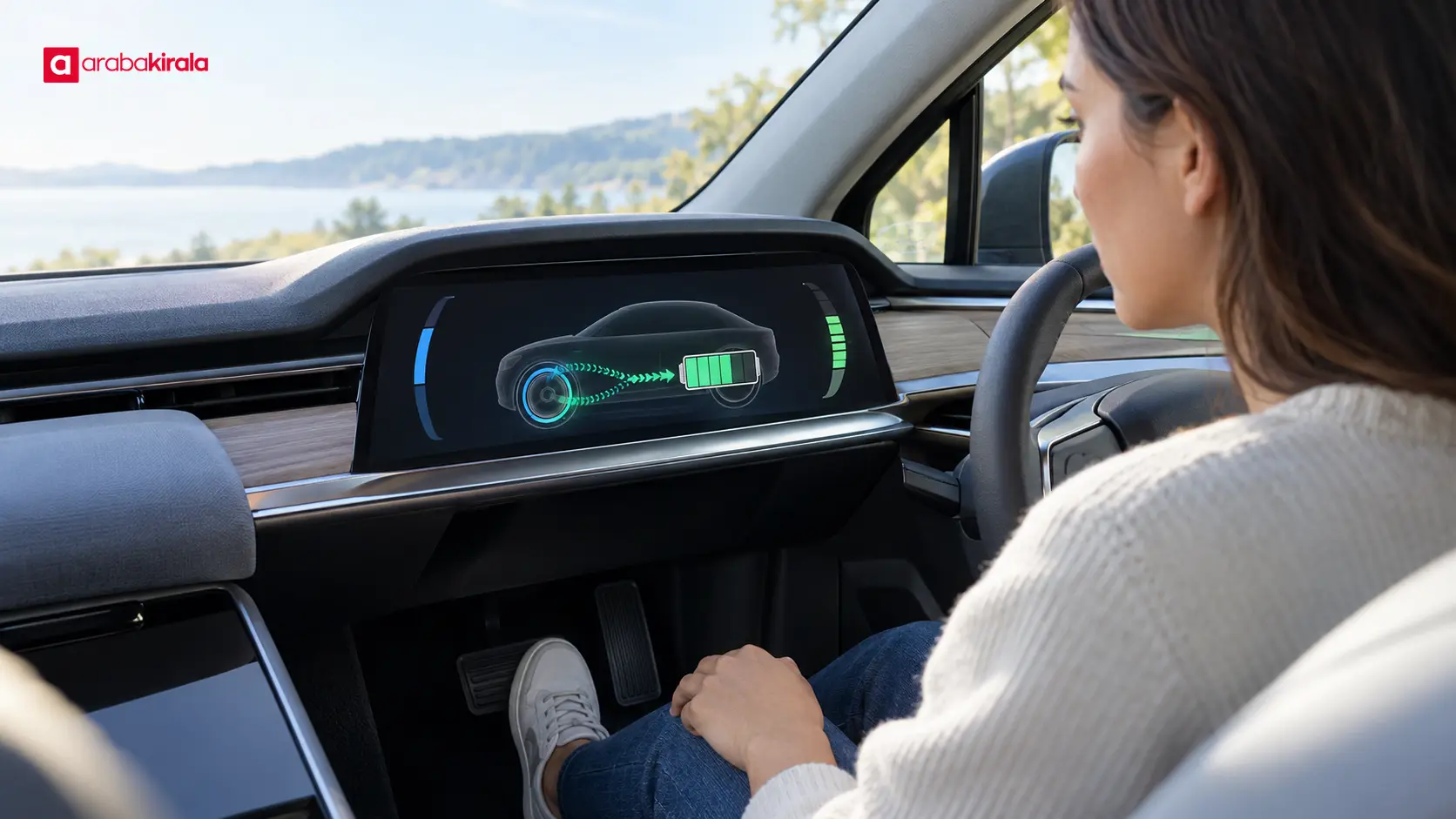
When the driver lifts off the accelerator, the car may coast or slow noticeably depending on the selected setting. If regeneration is active, the motor draws energy from the motion of the wheels and generates electricity. The vehicle’s control systems manage how that energy is directed to the battery and how deceleration is delivered. When the driver presses the brake pedal, the car may blend regenerative and mechanical braking in different proportions to achieve the requested slowing. The details depend on the model.
Drivers do not need to estimate the amount of energy recovered every time they brake. If the dashboard displays energy flow or regeneration, treat it as an indication from the vehicle. A display reading does not mean the safe stopping distance has become shorter. Traffic ahead, visibility, surface conditions, and a suitable following distance remain the priorities.
What affects energy recovery?
The battery’s ability to accept energy can limit regeneration. A high state of charge or temperatures outside the system’s operating range may cause the car to reduce energy recovery. Road gradient, speed, frequent short decelerations, and the selected drive mode can also change the slowing that the driver feels. The same car may therefore respond differently from one trip to another, and the energy recovered may vary.
Road grip and slope affect vehicle control as well. On slippery surfaces, sudden pedal movements or strong deceleration can unsettle the vehicle. Since regenerative response differs by model, follow the owner’s manual for guidance on wet, snowy, or icy roads and for the settings intended for those conditions. Do not experiment in a way that pushes the vehicle or its safety systems beyond their limits.
Getting used to one-pedal driving safely
To learn the pedal response, start in an area with little traffic, clear visibility, and suitable road conditions. Before moving, read the owner’s manual to learn how to select or disable the mode, how much the car slows when the accelerator is released, and how it behaves at low speed. Adjust the seat and mirrors and fasten your seat belt before setting off.
- At first, use small, smooth accelerator movements. Releasing the pedal abruptly can make the ride uncomfortable for passengers.
- Keep enough distance from the vehicle ahead and begin slowing early before intersections, pedestrian crossings, and turns.
- Use the brake pedal promptly when needed. Regenerative deceleration is not a substitute for emergency braking.
- Learn how the car behaves while parking, maneuvering at low speed, and coming to a stop. Do not assume every model stops when the accelerator is released.
- Smooth pedal use can make the ride more comfortable for passengers.
Do not change your driving just to increase an energy display reading. A safe following distance and steady control matter more than potential energy recovery. Smooth acceleration and deceleration also make the car easier to manage and reduce sudden movement for passengers.
Before collecting a rental electric car
If this is your first time driving an electric car, ask for a brief explanation of the drive mode, regeneration setting, and dashboard indicators when you collect it. Check how to tell which setting is active and how it behaves after the car is restarted, using the manual or guidance from the person handing over the vehicle. These details can vary by model and vehicle.
For route planning, consider the battery level, estimated range, and charging locations along the route. Range estimates can change with weather, speed, road profile, and climate control, so do not treat the displayed figure as a guaranteed arrival distance. Ask the branch from which you will rent for details about the vehicle’s controls and your collection arrangements. Confirm the return procedure with that branch as well.
Summary and next step
Regenerative braking converts some motion energy during deceleration into electricity that can be stored in the battery. One-pedal driving is a way of controlling that slowing by easing off the accelerator. They are closely linked, but they are not the same: the amount recovered and how far the car slows depend on the model, setting, and conditions. Read the manual, get used to the pedal response in a calm environment, and use the brake whenever needed. If you rent an electric car, ask for a short introduction to its settings and indicators at collection.

Frequently Asked Questions
Do I need to use the brake pedal in one-pedal driving?
Yes. One-pedal driving lets you control some deceleration with the accelerator, but it does not replace the brake pedal. Use the brake when stronger or urgent slowing is required.
Does regenerative braking always charge the battery?
Energy recovery may take place during deceleration, but its amount depends on conditions. Battery charge and temperature, speed, the road, and vehicle settings can all affect the system. The same amount of energy is not necessarily recovered each time.
Are regenerative braking and one-pedal mode the same thing?
No. Regenerative braking is the motor-based process of recovering energy. One-pedal driving is a way to manage acceleration and much of the deceleration with one pedal. A car can have regeneration without offering a one-pedal mode.
Will an electric car come to a complete stop when I lift off the accelerator?
That depends on the model and selected setting. Some cars slow to a very low speed or stop; others keep moving. Learn the behavior described in the vehicle’s manual and use the brake pedal when needed to stop.
Can I use one-pedal driving on a slippery road?
On a slippery surface, pedal response and deceleration can affect control. Avoid abrupt accelerator or brake inputs and follow the owner’s manual guidance for those road conditions. You can also ask the rental branch about the vehicle’s settings and safe-use guidance.
Legal Disclaimer: All content, articles and information on the Araba Kirala website are provided solely to inform users. No information shared on this website constitutes definitive advice or guidance. Araba Kirala Teknoloji A.Ş. and its authors cannot be held responsible for any direct or indirect damages arising from the application of information on the website. For all questions and requests regarding car rental, please contact the office from which you will rent your vehicle.












