
How Regenerative Braking Affects Energy Flow on an Electric Car Descent
Published: October 20, 2026 • Reading Time: 8 min • Last Updated: October 20, 2026
Learn how regenerative braking converts some motion into electricity on a descent, why battery conditions can limit recovery, and how to descend safely.
Contents
- What regenerative braking does
- Energy flow on a downhill road
- What limits energy recovery?
- Battery state of charge
- Battery temperature and system status
- Road grade, speed and driving settings
- Regeneration and friction brakes are different
- A practical routine for a descent
- Preparing a rental EV for a hilly route
- Reading the display after the descent
- Summary: understand the car before relying on recovery
- Frequently Asked Questions
This guide explains where energy flows when an electric vehicle descends a hill, why the amount recovered varies, and how to use the brakes safely. In brief, the electric motor can act as a generator while the vehicle slows, sending some energy from the moving wheels back to the battery. That process can help control speed, but it does not replace the driver’s responsibility to manage the descent or use the brake pedal when needed.

What regenerative braking does
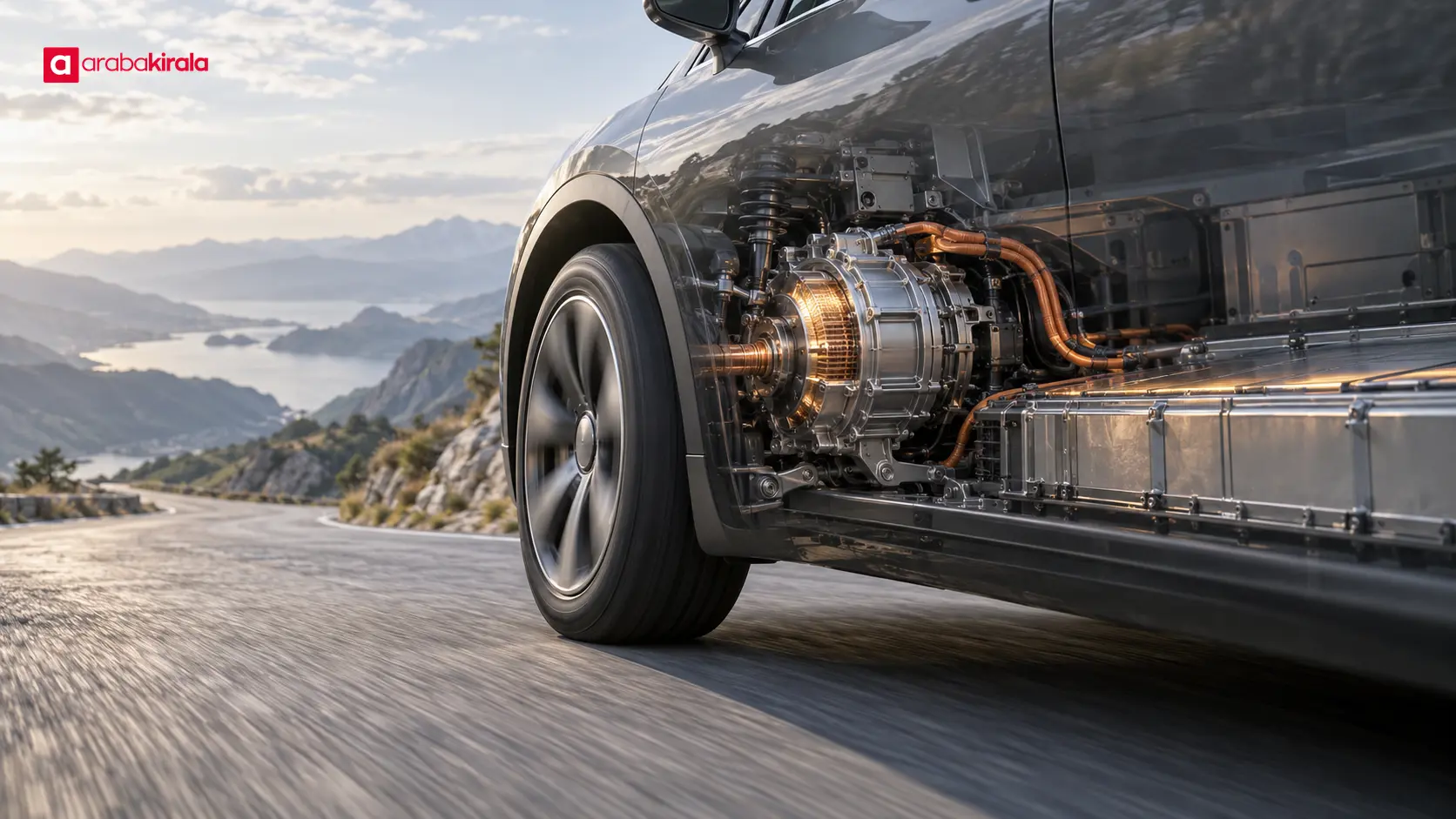
During ordinary driving, an electric motor draws electricity from the high-voltage battery and turns it into motion at the wheels. When the vehicle slows, the motor can work in the opposite direction: the moving wheels turn the motor, which produces electrical energy. Power electronics direct some of that energy toward the battery. This recovery process is called regenerative braking.
It has two linked effects: the vehicle decelerates, and the battery may store some of the energy that would otherwise be dissipated as heat by friction brakes. Recovery is never a perfect return of all the vehicle’s motion energy. Conversion losses, battery limits, air resistance, tyre and road interaction, and power used by vehicle systems all affect the result. Vehicle mass, speed, road grade, temperature and the selected driving mode also matter.
Energy flow on a downhill road
Gravity tends to increase a vehicle’s speed as it moves downhill. When the driver eases off the accelerator, or selects a suitable deceleration setting, the wheels may drive the electric motor. The energy path is broadly from the wheels to the motor, through the vehicle’s power electronics, and into the battery. Depending on the model, the driver may see a charge indicator, an energy-flow graphic or a changing power gauge.
Energy recovered during a descent can offset part of the energy used earlier, such as on an uphill section. It does not mean the vehicle will regain all the energy spent climbing. The motor and battery cannot convert or store every unit of energy, and the vehicle continues to lose energy to drag and other loads. A long descent may raise the battery’s state of charge, but the amount depends on conditions and should not be treated as a guaranteed reserve for the next part of a trip.
What limits energy recovery?
Battery state of charge
A battery with little spare capacity cannot accept unlimited incoming energy. When the battery is close to full, the vehicle may reduce regenerative power to protect the battery and keep the system within its operating limits. The driver may notice less deceleration after lifting off the accelerator, or see an indicator that recovery is restricted. Check the battery display and any warnings before a long or steep descent.
Battery temperature and system status
Very cold or hot battery conditions can affect how much power the battery can accept. Official vehicle manuals describe cases where regeneration is limited when a battery is cold or near full. The vehicle may show a message or indicator, and its behaviour can differ by model. Read the instructions for the specific vehicle rather than assuming that every EV uses the same display or response. Do not plan a descent based only on how strongly the car slows when you release the accelerator.
Road grade, speed and driving settings
A steep or extended descent may call for more speed control than the regenerative system can provide on its own. Some vehicles offer adjustable regeneration, one-pedal driving or a descent-related driving aid; others may use different controls or names. These settings influence how much the vehicle slows when the accelerator is released. Learn the response before entering a challenging route, using the owner’s manual and a safe place to become familiar with the car. Avoid experimenting with unfamiliar settings while negotiating a hill.
Regeneration and friction brakes are different
Regeneration converts part of the vehicle’s motion into electrical energy while slowing it. Friction brakes use contact between brake components to reduce wheel speed. Depending on the vehicle and driving conditions, the systems may work together. The amount of regeneration used when the brake pedal is pressed varies by vehicle and by the situation.
The brake pedal remains the control for reducing speed or stopping when required. Press it when regeneration is limited, when the car is not slowing as expected, or when traffic and road conditions call for more braking. Do not delay braking to increase energy recovery. On a long descent, avoid riding the brakes continuously; choose a safe speed and follow the vehicle manual’s guidance for descending and braking. If you notice an unusual pedal feel or warning, treat it as a vehicle safety issue rather than an energy-efficiency question.
A practical routine for a descent
- Check the vehicle first: Review the battery state of charge, regeneration display and warning indicators before setting off. In a rental, ask for a brief explanation of the energy display and available settings during handover.
- Set a safe speed before the slope: Approach at a speed appropriate to visibility, traffic and the road surface. Downhill speed can build quickly, so do not leave braking until a bend or junction is close.
- Leave space ahead: Keep a suitable following distance. Regenerative deceleration does not guarantee traction or provide extra stopping distance on your behalf.
- Use the pedals smoothly: Ease off the accelerator progressively if the vehicle is slowing as expected. Apply the brake pedal calmly and firmly whenever more deceleration is needed. Safety takes priority over energy recovery.
- Account for surface and weather: Rain, ice or loose material can reduce grip. If the vehicle’s deceleration feels variable, reduce speed, increase your space and follow any warning shown by the car.
- Ask about model-specific details: Before leaving, ask the rental branch where to find the owner’s manual, how the particular vehicle’s regeneration setting works and what its display warnings mean. Controls and features vary by model.
Preparing a rental EV for a hilly route
An electric rental car may have different pedal response, display graphics and settings from a vehicle you already know. At handover, review the battery level and your charging plan, then consider the route and suitable charging options along the way. Do not postpone charging on the assumption that a mountain descent will restore a predictable amount of energy. The recovered amount depends on the vehicle, battery condition, route and driving.
Before driving, locate the selector, parking brake and main controls. If regeneration can be adjusted, check the current setting while the vehicle is parked. Avoid looking through menus while moving; stop somewhere safe if you need to consult the manual. Ask the branch you are renting from about the car’s equipment, charging cable and vehicle-specific functions, since these details can vary. A clear handover explanation helps you interpret the display without treating an unfamiliar icon as a promise of a particular range.
Reading the display after the descent
A small increase in the battery indicator after a downhill section can reflect recovered energy. A stepped display or a changing estimated range does not, by itself, establish that anything is wrong. Range estimates can update with recent consumption, speed, climate control use, road profile and other vehicle settings. If the car provides an energy-flow screen, review it while safely parked rather than watching it continuously on the road.
If a warning appears, the vehicle slows less than expected, or the brake pedal feels unusual, adjust speed and following distance safely, use the brake pedal as needed and follow the manual’s instructions. If the issue continues, stop in a safe place and contact the rental branch or the vehicle’s roadside assistance channel for guidance.
Summary: understand the car before relying on recovery
On a descent, regenerative braking can send some of the wheels’ motion energy through the motor and back to the battery while helping the vehicle slow. Recovery depends on battery charge and temperature, speed, road grade and vehicle settings, so the same hill does not produce the same result every time. Check the indicators, learn the vehicle’s response, set your speed before the descent, leave room ahead and use the brake pedal whenever needed. For a rental, use the specific vehicle manual and the handover information from the branch as your guide.

Frequently Asked Questions
Can regenerative braking fully recharge an EV battery on a downhill road?
That depends on the length and grade of the descent, the battery’s starting charge, speed and how much power the battery can accept. Regeneration recovers only part of the energy, so a full recharge should not be expected. A battery close to full may also cause the system to limit recovery.
What should I do if the battery is nearly full before a descent?
Check the vehicle’s display and warnings, and be prepared for less regenerative deceleration. Choose a suitable speed before the slope, leave adequate space and use the brake pedal when needed. Follow the descent instructions in the specific vehicle’s manual.
Does regenerative braking replace the normal brakes?
No. Regeneration can contribute to slowing and return some energy to the battery, while friction brakes remain available to reduce speed or stop the car. Use the brake pedal when recovery is limited or greater braking is needed.
Why might an EV regenerate less in cold weather?
Battery temperature affects how readily the battery can accept energy. Some vehicles limit regeneration when the battery is cold and may show a related indicator or message. Check the manual for the meaning of the display in the vehicle you are driving.
How can I learn the regeneration settings in a rental EV?
Start with the vehicle’s owner’s manual and on-screen help; names and responses vary by model. During handover, ask the branch to explain the energy display, available settings and warning indicators for that specific car.
Legal Disclaimer: All content, articles and information on the Araba Kirala website are provided solely to inform users. No information shared on this website constitutes definitive advice or guidance. Araba Kirala Teknoloji A.Ş. and its authors cannot be held responsible for any direct or indirect damages arising from the application of information on the website. For all questions and requests regarding car rental, please contact the office from which you will rent your vehicle.












