
Planning an Additional Driver and Sharing the Wheel in a Rental Car

Published: October 28, 2026 • Reading Time: 8 min • Last Updated: October 28, 2026
Learn how to plan for an additional driver, check location-specific rental details, and share driving safely on a trip.
Contents
- Who is an additional driver, and why plan ahead?
- Match the driver plan to the journey
- A practical preparation checklist
- What to confirm with the rental location
- Check the driver record and vehicle at collection
- Share the wheel safely
- Keep the driver arrangement clear during the rental
- Before departure: a short checklist
- Frequently Asked Questions
- Summary and next step
Planning an additional driver before a trip helps organize both the rental handover and the time spent behind the wheel. This guide explains how to decide who may drive, what to confirm with the rental location, how to make a safe driver change, and what to check before setting off. Adding a driver is more than sharing a name: the reservation record, document checks, vehicle familiarization, and the pace of the journey all matter.

Who is an additional driver, and why plan ahead?
An additional driver is someone besides the renter who is declared as a person expected to drive the vehicle during the rental. Sharing driving can help travelers divide a long journey and give each driver time to rest. But being willing or able to drive does not automatically mean someone is listed in the rental record. Confirm the driver arrangements before anyone takes the wheel.
The steps, required documents, timing, and any fee can depend on the rental location and reservation. Ask the location where you will collect the car how an additional driver must be added, whether that person needs to attend the handover, and what documents to bring. Do not treat general guidance as a promise about a particular location’s process. If you are arranging a car through ArabaKirala, direct these location-specific questions to the branch handling your rental.
Match the driver plan to the journey
Do not base the decision only on the distance. Consider the mix of city streets and faster roads, departure time, expected traffic, visibility, weather, rest stops, passengers’ needs, and how each driver feels. A route with frequent turns, congestion, and parking maneuvers calls for different attention from a long stretch of open road. The plan should reflect the actual demands of the route.
Decide in advance who is expected to drive and how the group will handle navigation, breaks, and changes in conditions. A passenger can help with directions, but that does not replace the driver’s responsibility to watch the road. Choose safe, legal places to stop before changing drivers. A narrow shoulder or a roadside stop in moving traffic is not a safe handover location.
A practical preparation checklist
- Identify everyone who may actually drive, rather than assuming a passenger can take over whenever needed.
- Ask the rental location about registration, document checks, any charge, and when the additional driver must be added.
- Choose suitable rest stops and safe places for driver changes along the route.
- Allow each driver time to become familiar with the vehicle, its controls, and its seating adjustments.
- If a driver is tired, unwell, or distracted, change the plan; waiting for a turn to drive is not the same as resting.
What to confirm with the rental location
Additional-driver terms may vary by location, vehicle group, and reservation. Avoid assuming a particular age or licence threshold, fee, number of permitted drivers, or process. Ask the branch when the extra driver must be declared and whether all drivers need to be present at collection. Do not assume every branch handles the same request in the same way.
Get precise instructions about documents for the person who will drive: what identification and driving credentials to bring, whether originals are needed, and whether the person’s details should be entered before arrival. Check that the documents are current and readable. Do not rely on finding a last-minute workaround if something is missing.
If a fee or other condition is mentioned, ask what it applies to, what period it covers, and how it will appear in the reservation or handover record. Check the written record before leaving. This does not replace reviewing the full rental agreement; it helps verify that the agreed driver arrangement is recorded correctly. Also ask whether a driver can be added after collection and what steps would be required. Do not assume a change can be completed at any location or time.
Check the driver record and vehicle at collection
Before leaving, review the rental and handover records to confirm which people are listed as drivers. Check spelling, confirm that any required document review has taken place, and make sure any discussed condition is reflected in the record. If something is wrong, raise it with the staff member before driving and ask how the correction will be documented.
Inspect the vehicle regardless of whether you plan to share driving. Look at dashboard warnings, fuel or charge level, visible body damage, the apparent condition of the tires, lights, and any equipment supplied with the car. Have existing damage noted, and document anything that could be disputed before moving the vehicle. The odometer and fuel or charge readings help compare the collection and return records. They do not, by themselves, establish a mileage limit or a fee rule; ask the location about those details.
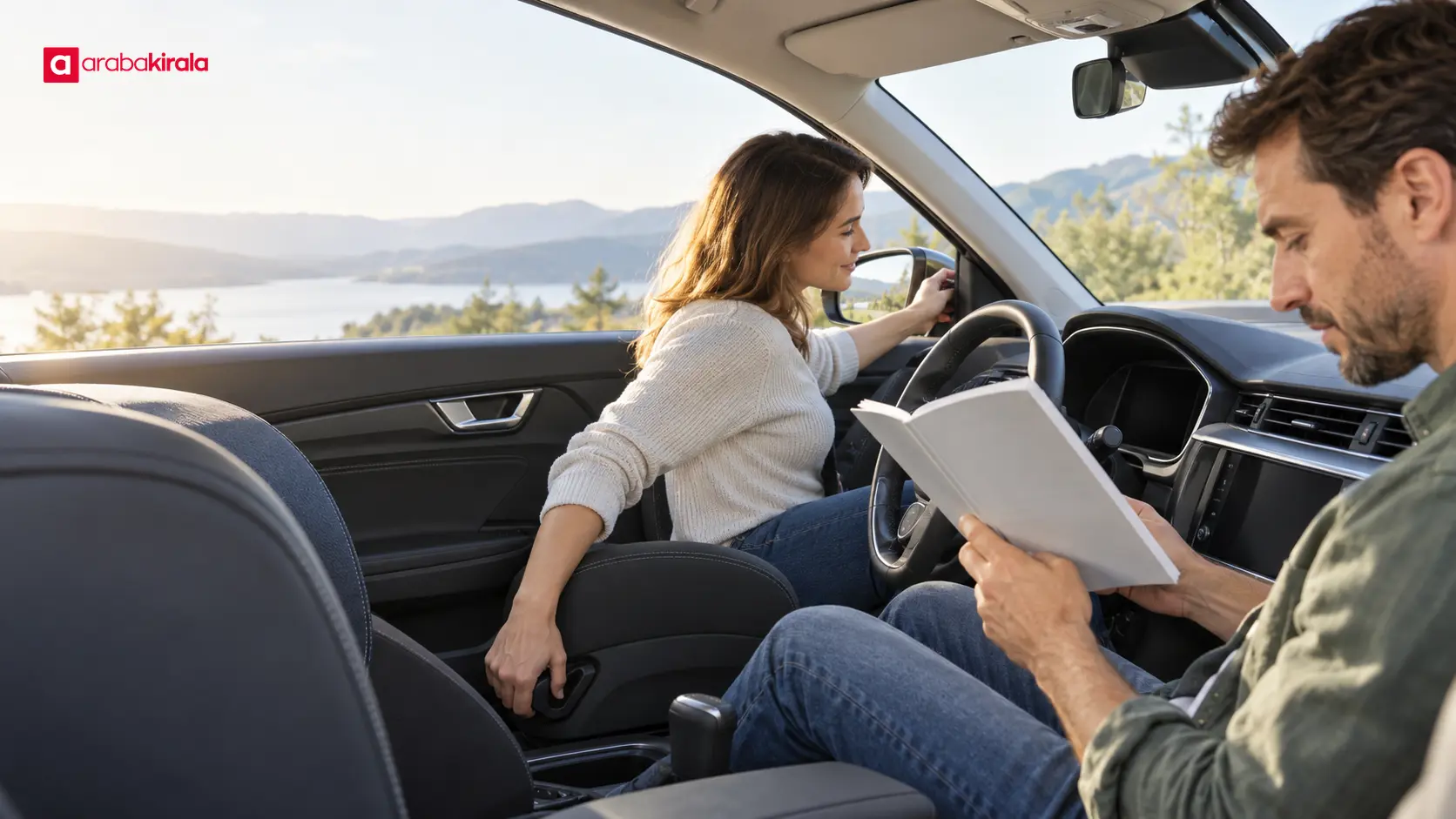
Each driver should adjust the seat, steering position, mirrors, and seat belt before driving. A vehicle may have a gear selector, electronic parking brake, or driver-assistance feature that one of the drivers has not used before. Read the basic instructions and identify the controls while the car is parked. Assistance features do not replace attention: the driver still needs to observe the road and remain in control.
Share the wheel safely
Change drivers only after the vehicle is fully stopped in a safe place. Secure the car, follow the appropriate parking steps, and give the next driver time to set the seat, mirrors, and belt. Leaving the previous driver’s settings in place can restrict the new driver’s view or comfort. Before moving, the new driver should know the locations of the gear control, lights, indicators, and parking brake.
Sharing the wheel does not automatically remove fatigue. Drivers differ in sleep, health, comfort, and response to road conditions. If someone is yawning repeatedly, struggling to keep position, finding it hard to focus, or reacting slowly, stop somewhere safe and take a proper break. Coffee or briefly getting fresh air cannot make serious sleepiness safe for driving. A driver who does not feel fit to drive should not take over.
A planned rotation can help, but conditions and people’s needs can change. Do not pressure another driver to continue or hide signs of fatigue to keep to a schedule. Night driving, rain, fog, and heavy traffic may call for longer or more frequent breaks, or for delaying the journey. Reassess speed and rest plans as conditions change, and avoid stopping in a place where the handover itself creates danger.
Keep the driver arrangement clear during the rental
Only people listed as drivers in the rental record should drive. Do not treat a short trip by an unlisted passenger as a harmless exception. If you need to add or replace a driver, contact the rental location and learn the process before that person uses the car. Keep any updated confirmation or record. Do not assume the change can be made instantly at every location.
If there is a collision, breakdown, dashboard warning, or newly noticed damage, stop in a safe place and follow the information supplied with the vehicle. Record the circumstances accurately, including who was driving. Do not assume a particular benefit, coverage, or reimbursement applies unless it is stated in the rental documents. Contact the rental location for the appropriate next steps when needed.
Before departure: a short checklist
- The names and driver details for everyone expected to drive are recorded correctly.
- The branch has explained the additional-driver document, fee, and process details relevant to this rental.
- I have checked the driver information in the reservation and handover records.
- The vehicle condition and fuel or charge reading have been recorded at collection.
- Each driver has adjusted the seat and mirrors and learned the basic controls.
- Rest stops are planned, and driver changes will happen in safe parking areas.
- If fatigue or road conditions change, we will stop and reassess the plan.
Frequently Asked Questions
Should I add an additional driver when booking or at collection?
The process depends on the reservation and rental location. Tell the location about the planned driver as early as possible and ask what information is needed. Do not assume the change can always be made at the counter or after the vehicle has been collected.
Does the additional driver need to be present at pickup?
That depends on the location’s identity and document-check process. Ask before collection whether the additional driver must attend in person and which documents they should bring.
Is there a charge for an additional driver?
A charge may or may not apply depending on the rental terms and location. Ask the branch handling your rental rather than relying on a general amount, and check how any quoted charge is shown in the reservation or handover record.
Can someone who is not listed drive for a short time?
Do not assume that a person absent from the rental driver record may use the vehicle. Contact the rental location and complete any required driver update before that person takes the wheel.
Where and when is it safest to change drivers?
Use a place where the vehicle can be fully stopped and parked safely. Avoid changing drivers in traffic or on a narrow shoulder. Before departure, the next driver should adjust the seat and mirrors, buckle up, and become familiar with the controls.
What should I do if I need to change the driver during the trip?
Contact the rental location before the new person drives and ask what steps are required. Complete the requested checks and keep any updated record. Do not assume every branch or time of day supports the same process.

Summary and next step
A sound additional-driver plan starts by identifying who may drive, confirming location-specific registration and document details, and choosing safe places for breaks. Check the driver record and vehicle at collection, then make sure only listed drivers use the car. Before booking, outline your route and driving needs, then ask the branch where you will collect the car how its additional-driver process works.
Legal Disclaimer: All content, articles and information on the Araba Kirala website are provided solely to inform users. No information shared on this website constitutes definitive advice or guidance. Araba Kirala Teknoloji A.Ş. and its authors cannot be held responsible for any direct or indirect damages arising from the application of information on the website. For all questions and requests regarding car rental, please contact the office from which you will rent your vehicle.












