
Rental Car Interior Check: Seats, Upholstery, and Equipment
Published: October 15, 2026 • Reading Time: 7 min • Last Updated: October 15, 2026
Use a simple pickup routine to inspect seat upholstery, belts, controls, and interior equipment. Learn how to describe existing marks, record them at handover, and respond to a safety concern.
Contents
- Why inspect the cabin at pickup?
- Before you begin
- Inspecting upholstery and cabin surfaces
- Check the front and rear seats separately
- Remember the doors, headliner, and floor
- Seat belts and safety-related parts
- Try interior equipment safely
- Controls, screens, and lighting
- Boot access and seat movement
- How to record a finding
- A short pickup sequence
- Summary and next step
- Frequently Asked Questions
A rental car interior check involves more than looking for stains on the seats. At pickup, take a few minutes to inspect the upholstery, seat belts, controls, and equipment shown to you, then match any findings with the handover record. This guide explains a practical order for checking the cabin, how to describe visible marks, and what to do when a feature does not work as expected.
Why inspect the cabin at pickup?
The cabin is where you spend much of your time using the vehicle. A tear in the seat fabric, a noticeable stain, loose trim, a missing head restraint, or a control that does not respond can affect comfort and the recorded condition of the car. An inspection before setting off helps distinguish a mark that was already present from a change noticed during the rental.
The goal is not to declare every surface perfect. It is to note what is visible, check features that you can safely try, and report a possible safety issue before driving. An interior check does not replace the exterior handover check; both deserve attention.
Before you begin
Inspect the vehicle in a well-lit place, with the doors open if practical. Looking through the cabin before loading your belongings makes seat surfaces and storage areas easier to see. Review the condition form or digital handover record provided to you. Whatever method the branch uses, show the staff member any finding and ask for the record to reflect it.
If you take photos or video, make the subject clear: first show where the part is in the cabin, then take a closer view of the mark. Capture the images at pickup and show them to the staff member. A photo may help document what you saw, but it may not replace adding the issue to the handover record. Avoid including personal documents, other people, or unnecessary private information.
Inspecting upholstery and cabin surfaces
Check the front and rear seats separately
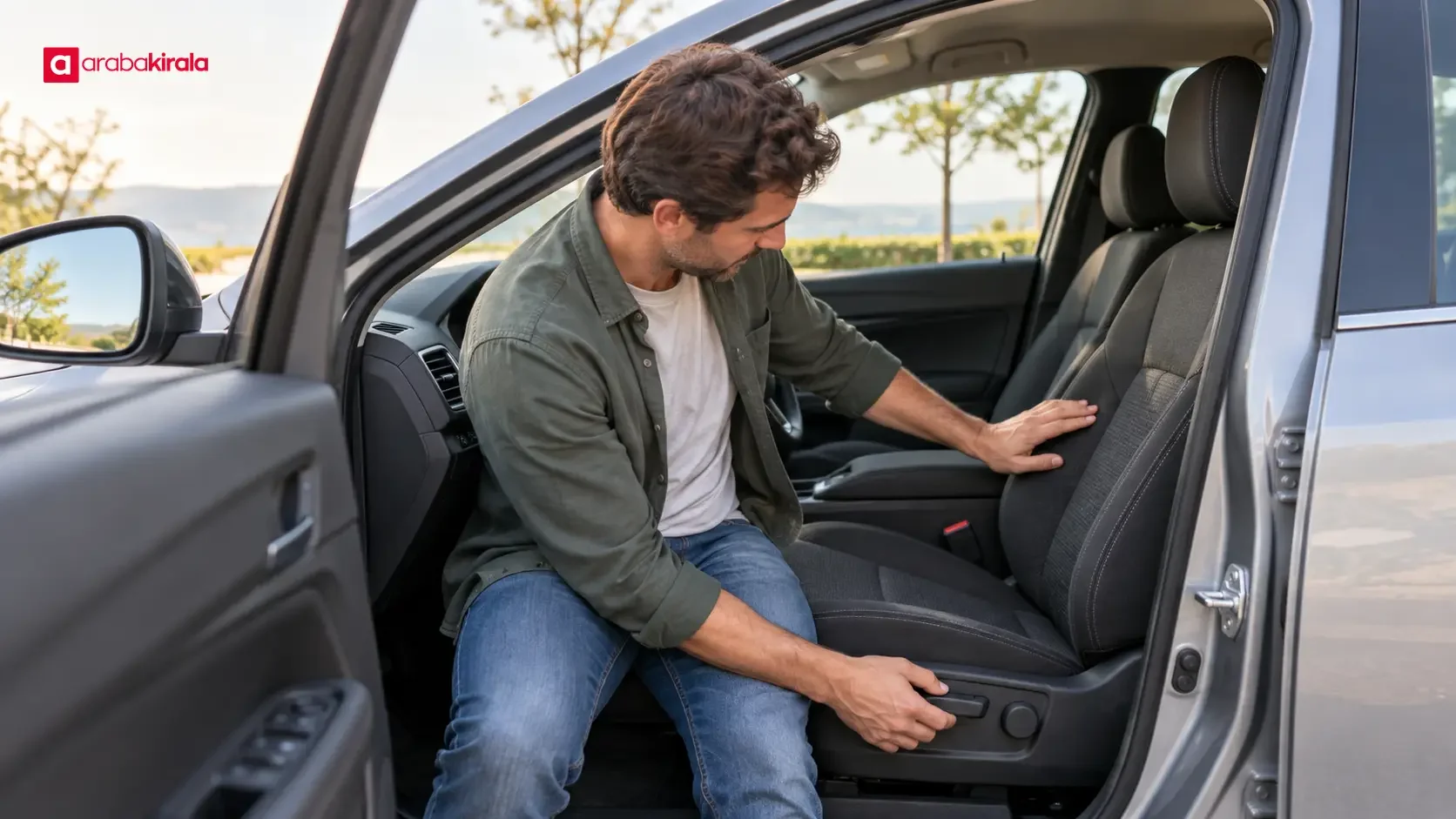
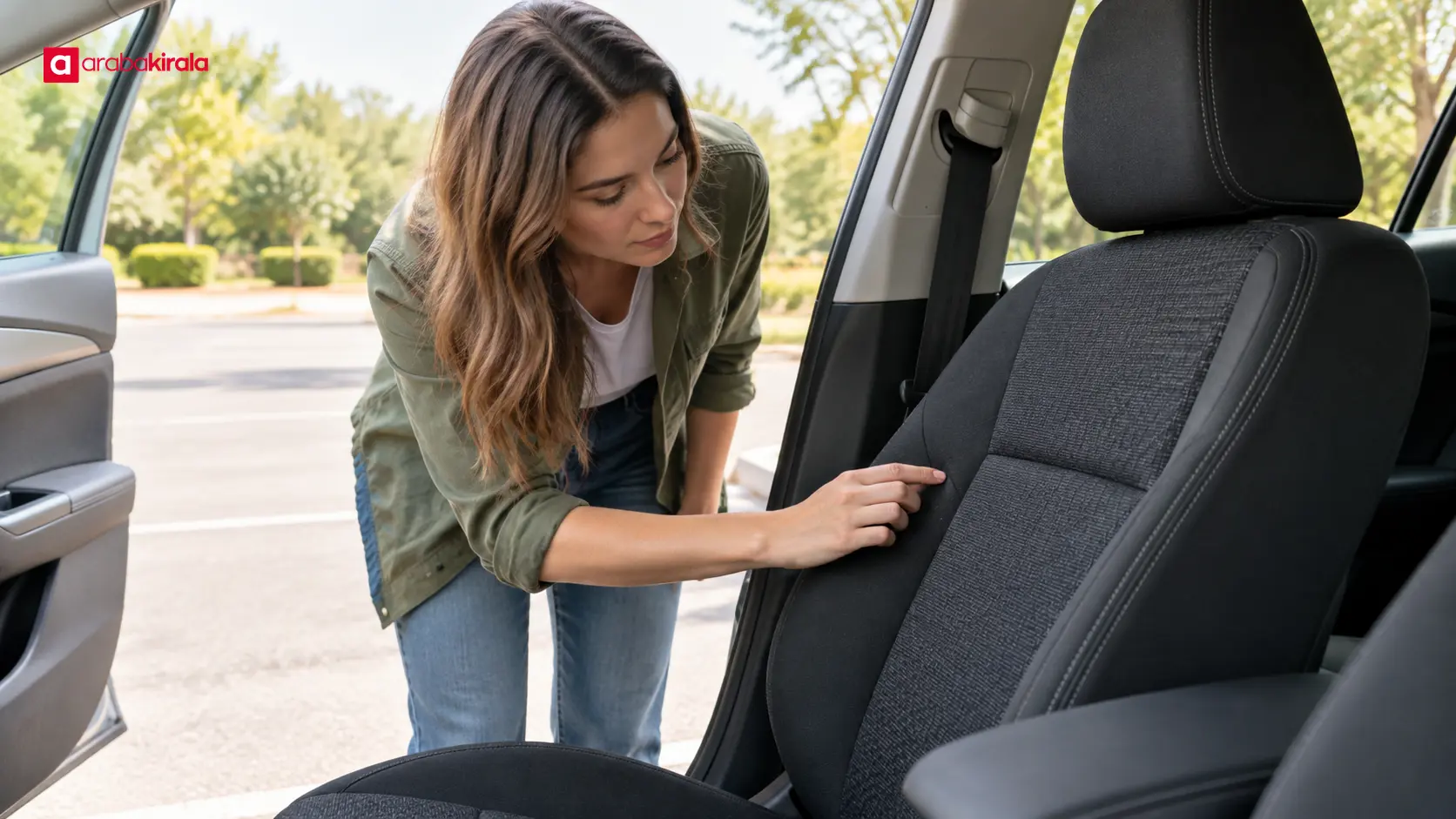
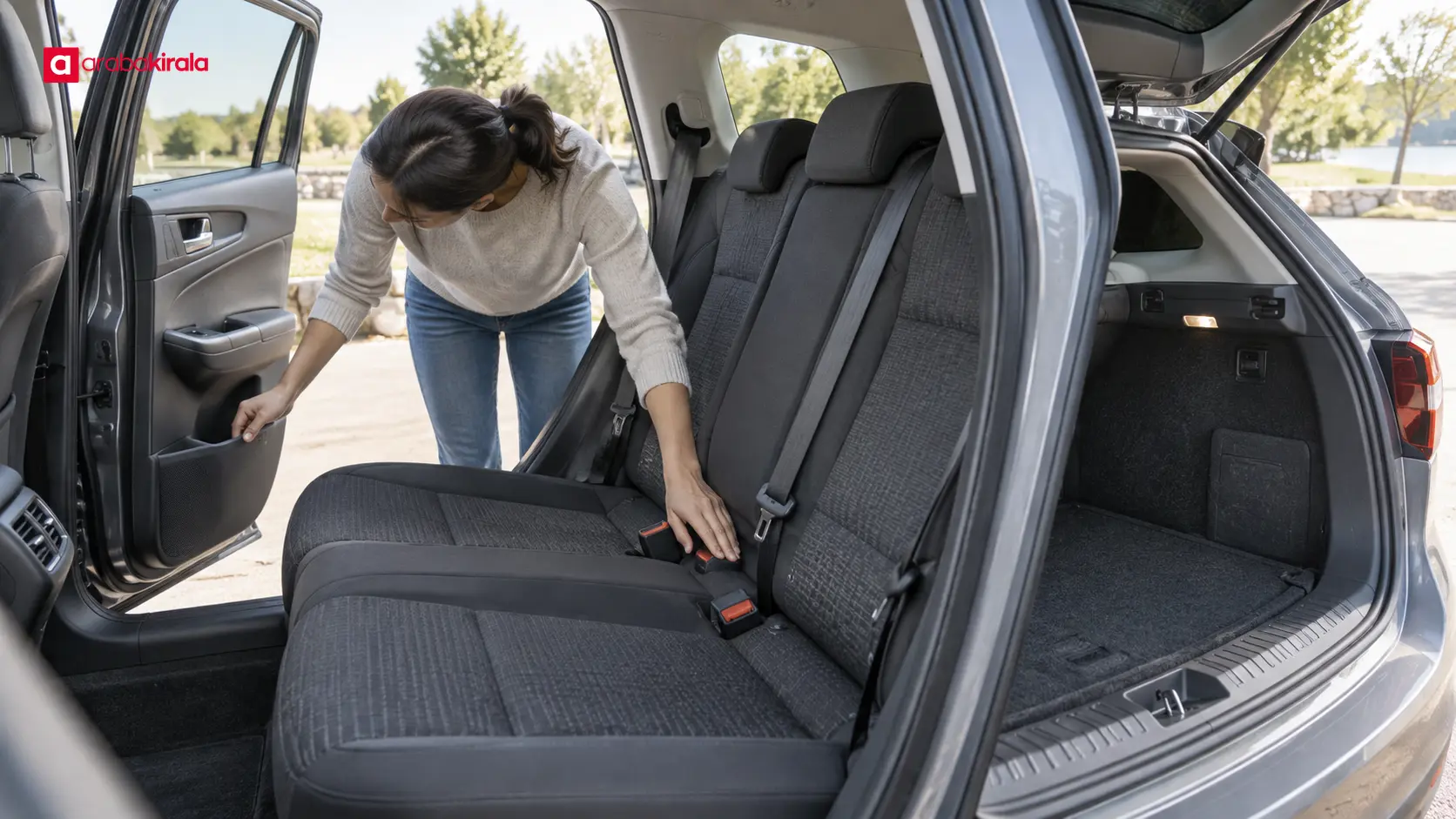
Start with the driver and front passenger seat cushions, backrests, side bolsters, and head restraints. Then inspect the rear seats and any movable parts, such as a folding section or armrest. Look for tears, burn marks, pronounced stains, open seams, cuts, or deformation. On leather or similar coverings, check for cracks, peeling, or separated stitching; on fabric, look for pulled threads and open seams.
Describe a mark by its location and appearance, for example, “a small stain on the right seating position in the rear row.” A broad phrase such as “seat damage” may not explain what you saw. There is no need to estimate a measurement, but for a clear mark, one close-up and one image showing the whole seat can make the record easier to understand.
Remember the doors, headliner, and floor
Look at the door trim for scratches, tears, or loose sections, and check the headliner for sagging or conspicuous dirt. See whether floor mats are present and properly positioned. Keep mats secured and away from the pedals. If the driver-side mat could move into the pedal area, do not drive until you have shown it to staff.
The boot floor and loading sill are also part of the interior. Point out visible tears, broken trim, a missing parcel shelf, or a part that was shown to you but is not present. Not every feature is fitted to every vehicle, so check the parts actually installed and included in the handover explanation.
Seat belts and safety-related parts
For each seating position, look at the buckle, belt webbing, and visible area around the fittings. If the belt is cut, badly worn, twisted, trapped, or the buckle appears broken or will not latch normally, show it to staff before moving the car. You may try extending and retracting a belt in the normal way; do not force it or attempt to remove parts.
If a warning light for a seat belt or airbag stays on, do not dismiss it without checking the vehicle’s guidance and asking staff. Inspecting the interior at handover is not a mechanical diagnosis. For visible damage or a warning related to safety equipment, ask the rental branch to assess it and explain the next step.
Try interior equipment safely
Controls, screens, and lighting
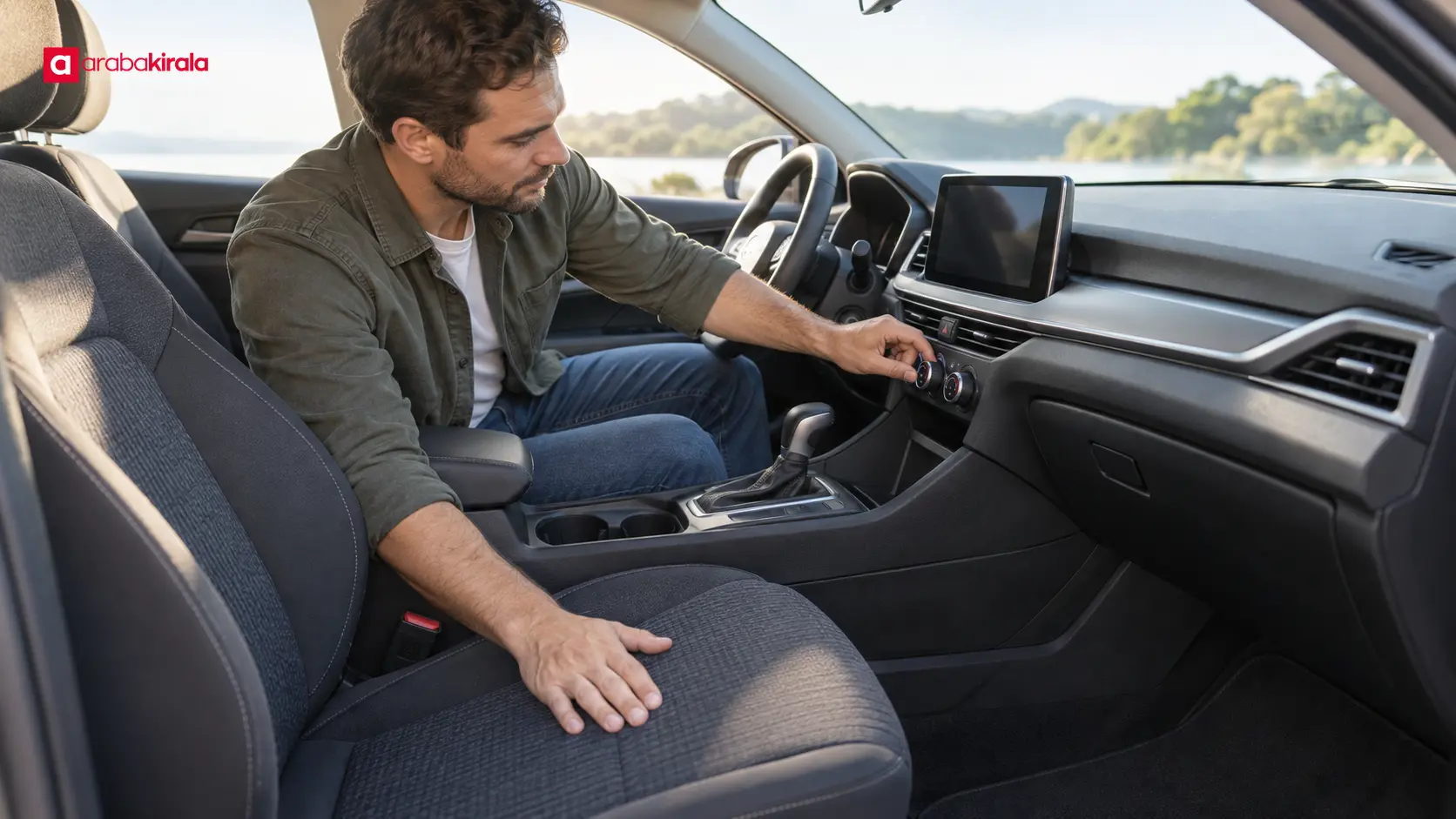
Check the basic controls and equipment the handover staff member shows you. Briefly try the climate or ventilation controls, window switches, central locking control, cabin lights, and screen if fitted. Focus on learning what each control does rather than pressing buttons at random. Note any error message, cracked surface, or touch area that does not respond, including where it appears.
Phone connectivity, navigation, USB ports, and audio systems vary by model and equipment level. Ask the staff member what is fitted and how it works. Before pairing a personal device, learn how to connect it and remove the connection from the vehicle later. If you do not want to add personal account or contact information, you can complete basic checks without pairing your phone.
Boot access and seat movement
Ask for a demonstration of the boot release and any button in the cabin. If you need to fold a rear seat or adjust a seat, follow the staff member’s instructions. Do not force a moving part; stop and report a jam, unusual noise, or latch that will not engage. A quick look at the boot can also help you understand how the space is arranged before setting off.
How to record a finding
- Show the mark or operational issue to staff at pickup, before driving.
- Describe its location clearly, including the row, side, and part.
- Ask for it to be added to the condition form or handover record, then check the updated entry.
- If taking photos, capture both the overall location and a close view, and show them to staff.
- If you have a safety concern, do not start the journey; ask the branch for an assessment and next steps.
The way a finding is classified or entered may depend on the branch’s process. Ask what the record covers and do not assume that a verbal report alone is enough. If an entry is unclear, request an explanation before completing pickup.
A short pickup sequence
- Inspect the cabin, seats, and head restraints in good light.
- Check visible marks on upholstery, door trim, headliner, floor, and boot.
- Look over seat belts and visible safety-related parts.
- Try the controls and equipment shown to you, using them safely.
- Have differences added to the handover record, review it, and then set off.
This sequence takes only a short time and helps keep the inspection focused. An issue noticed after personal belongings or passengers are in the cabin can be harder to locate and describe.
Summary and next step
A rental car interior check covers the seat upholstery, belts, door and headliner surfaces, boot area, and the vehicle’s installed controls. Describe what you can see, test only features that can be tried safely, and make sure differences are reflected in the handover record. The presence of a particular feature, how a control works, and how a finding is documented can vary by vehicle and branch, so clarify those details with the office where you collect the car. Start your journey after completing the inspection and confirming the record is accurate.
Frequently Asked Questions
Should a small stain on a seat be included in the handover record?
If you notice a visible stain that affects the vehicle’s recorded condition, show it at pickup and ask for it to be recorded. State which seat it is on and where the mark appears. Ask the branch how it will be noted.
Are photos enough to document existing damage?
A photo can support your description of a mark and its location, but it does not necessarily mean the branch has updated its handover record. Show the image to staff and confirm the finding appears in the record being used.
Do I need to test every button in the cabin?
Briefly check the basic controls you need to operate the car and the equipment shown to you. Do not force an unfamiliar control or try it while driving. Ask for a demonstration if you are unsure how a feature works.
What should I do if a seat belt buckle will not latch properly?
If the belt or buckle does not work normally, tell staff before driving. Do not try to force or repair it; ask the branch to check it and explain how to proceed.
What if equipment I expected is not in the car?
Equipment can vary between vehicles. Check the handover form and the explanation you received, then ask the rental branch whether the item is fitted to that vehicle.
Legal Disclaimer: All content, articles and information on the Araba Kirala website are provided solely to inform users. No information shared on this website constitutes definitive advice or guidance. Araba Kirala Teknoloji A.Ş. and its authors cannot be held responsible for any direct or indirect damages arising from the application of information on the website. For all questions and requests regarding car rental, please contact the office from which you will rent your vehicle.












