A Guide to the Trunk and Cargo Area in a Rental Car
Published: October 30, 2026 • Reading Time: 7 min • Last Updated: October 30, 2026
Learn how to assess a rental car’s trunk opening, cargo space, and seat layout so you can load belongings neatly and keep visibility clear.
Contents
- The trunk lid and cargo area are different things
- How body style affects access
- Sedan trunks
- Hatchbacks and liftbacks
- Wagons and SUVs
- Inspecting the hatch and cargo area at pickup
- Placing belongings with weight and visibility in mind
- Folding rear seats and carrying long items
- Loading ergonomically and using the space day to day
- Summary and next step
- Frequently Asked Questions
Getting familiar with a rental car’s trunk lid and cargo area before you set off helps you place belongings sensibly and preserve a clear view of the road. This guide explains how to assess the opening, how body styles affect access, what to check before folding seats, and how to arrange a load so it is less likely to shift. Cargo capacity is only one part of the decision: the shape and measurements of your items must also suit the actual opening and interior.
The trunk lid and cargo area are different things
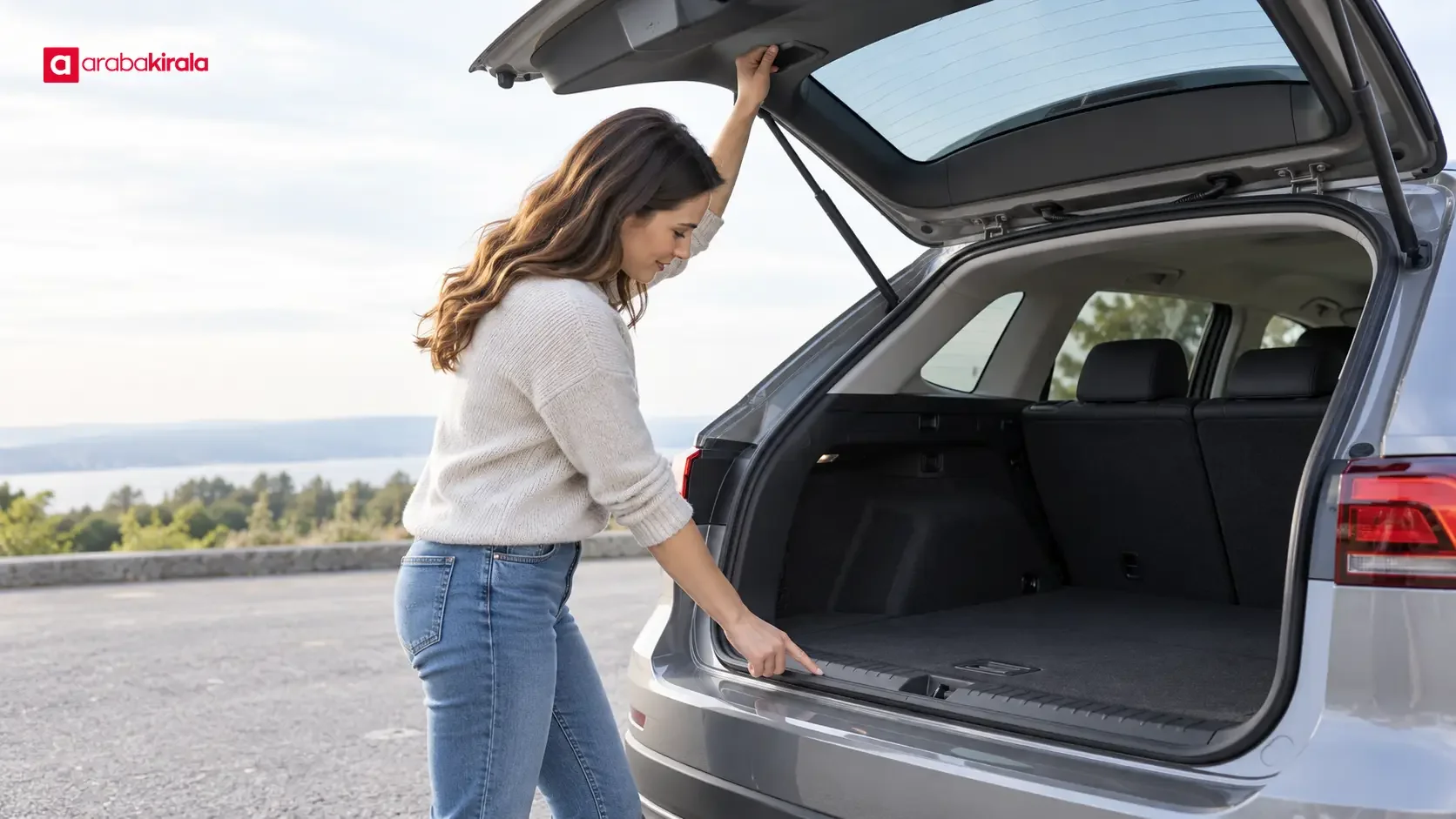
The trunk lid or rear hatch provides access to the rear loading space. The cargo area includes the floor, side walls, and the space behind the rear seats. A lid that opens widely does not guarantee that every item will fit. Opening height and width, the height of the loading sill, wheel arches, and the shape of the interior can all affect what can be carried.
Capacity is often expressed in litres, but that figure describes a volume under a measurement method; it does not tell you whether a long suitcase, stroller, or box will pass through the opening. Floor length, the narrowest width between wheel arches, and a sloping rear window can change the usable space. If you have an unusually large or shaped item, note its dimensions in advance and inspect the opening and cargo floor at pickup.
How body style affects access
Sedan trunks
A sedan usually has a separate luggage compartment. In many designs, the trunk lid opens without lifting the rear window, so the opening may be lower or narrower than the space inside. A deep compartment can still be difficult to use if a bulky item cannot pass through the opening. Consider the shape of what you need to carry, not just the apparent depth.
Hatchbacks and liftbacks
A hatchback’s rear door commonly lifts with the glass, creating a larger opening into the cargo space. Some liftback designs use a similar arrangement. This can make bulky luggage easier to load, but the open door needs headroom. In a low garage or covered parking space, the hatch may not be able to reach its full open position.
Wagons and SUVs
A wagon may offer a long cargo floor, while an SUV’s loading height and rear door design affect how easy it is to lift items in. A high sill can make heavy luggage harder to load; a lower one may be more convenient. Wheel arches, a sloping rear window, or a third row of seats can reduce usable room even when the vehicle looks large from the outside. Check the floor and opening as well as the vehicle’s exterior size.
Inspecting the hatch and cargo area at pickup
Before moving the car, find a safe, level place and try opening and closing the rear door. Learn how it releases, whether it opens from inside or outside, and where to hold it when closing. If the vehicle has a powered hatch or an unfamiliar latch, ask the pickup staff to show its operation. Do not force a door that meets unusual resistance, makes an unexpected sound, or displays a warning. Stop and contact the rental branch for guidance.
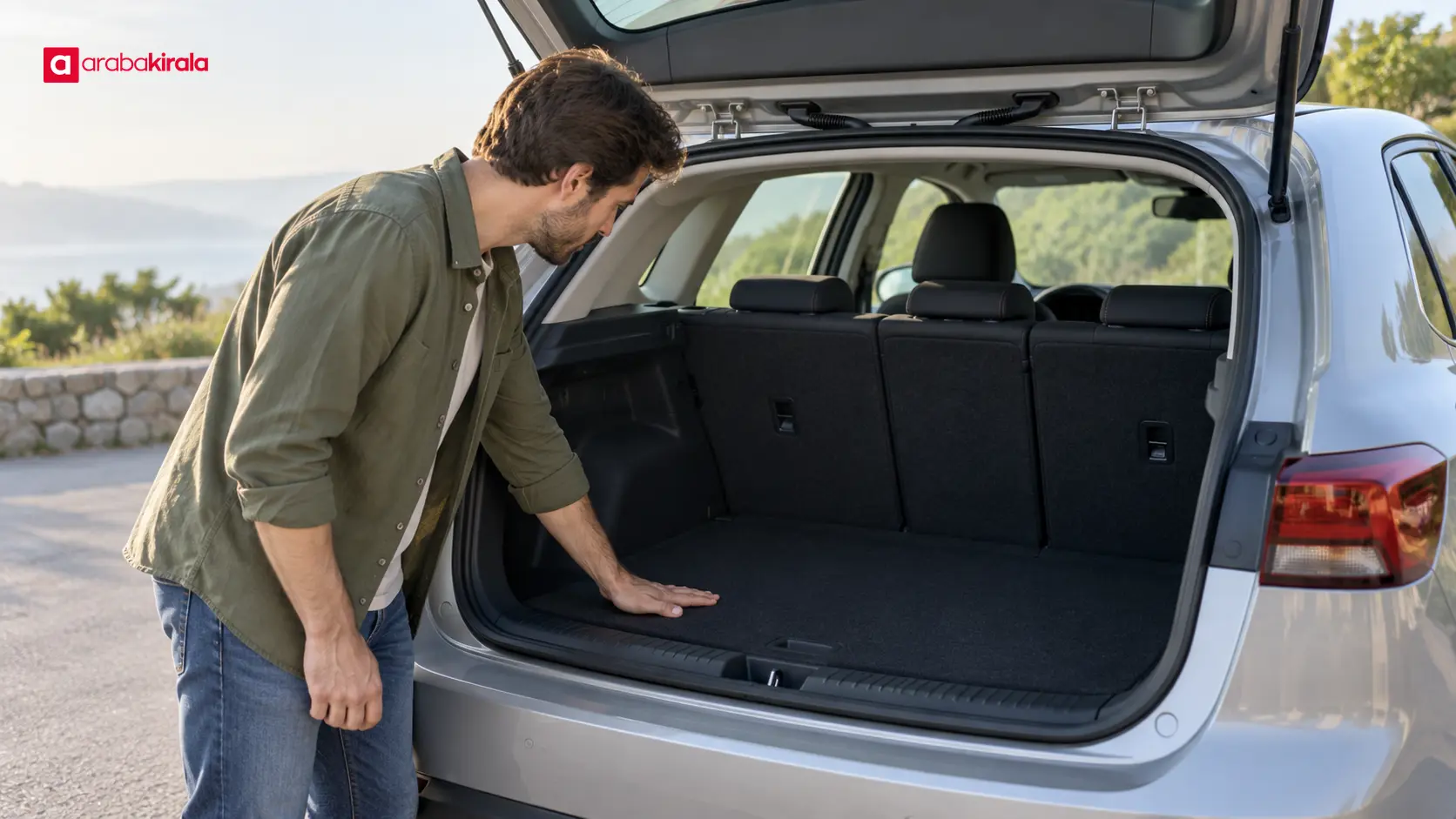
Look over the cargo floor and visible surfaces at handover. Point out any existing scratch, stain, tear, or damage and ask how it should be noted in the handover record. If there is a cargo cover or divider, learn how it is removed and where it should be kept. These parts can affect visibility and how you arrange luggage. Identify any equipment stored in the cargo area before placing bags over it.
- Check that the hatch has enough overhead clearance to open.
- Notice the height of the loading sill and whether the floor is level.
- Look at how the rear seats fold and how much space opens through to the cabin.
- Learn the purpose of any cargo cover, hooks, or tie-down points.
- Ask the branch about an unfamiliar hatch operation or a sign of damage.
Placing belongings with weight and visibility in mind
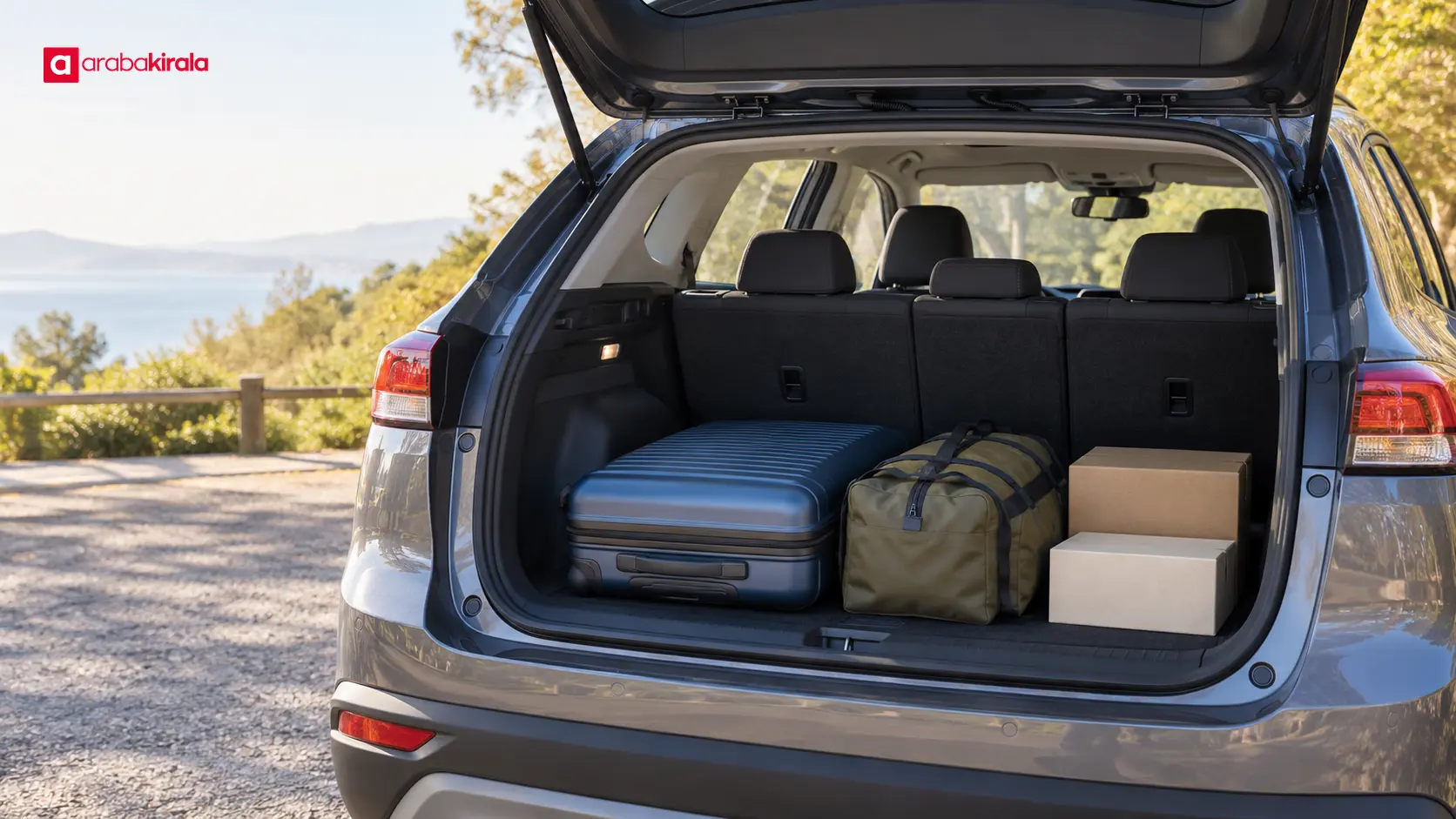
Put heavy items low on the cargo floor and as close to the rear seatbacks as practical. Keep lighter bags above them and arrange the load to reduce movement during braking or a turn. If the car has tie-down points, use suitable securing equipment. Make sure luggage does not press against the hatch, windows, or interior trim.
Avoid stacking loose items above the top of the rear seatbacks. They can block the driver’s rear view and may move forward if the car stops suddenly. If the load limits the view through the rear-view mirror, check the side mirrors and do not set off until you have adequate visibility. Before closing the hatch, confirm that no item is trapped between the door and body. If the hatch will not close fully, do not drive away with it partly open; rearrange the load or ask for assistance.
Folding rear seats and carrying long items
Folding seats can extend the cargo floor, but the mechanism varies by vehicle. Find the release and learn how it works, then check that the seatback locks when returned upright. Keep headrests, seat belts, and other components from being caught while folding. When seats are down, there is less room for passengers, so plan the passenger and luggage arrangement before setting out.
If a long item extends into the cabin, make sure it cannot reach the driver, pedals, controls, or field of view. Do not rest it against the front seats without securing it. The owner’s manual can explain model-specific seat and cargo features. If a manual is available with the vehicle, consult the relevant section; if the mechanism or equipment is unclear, ask the branch that hands over the car.
Loading ergonomically and using the space day to day
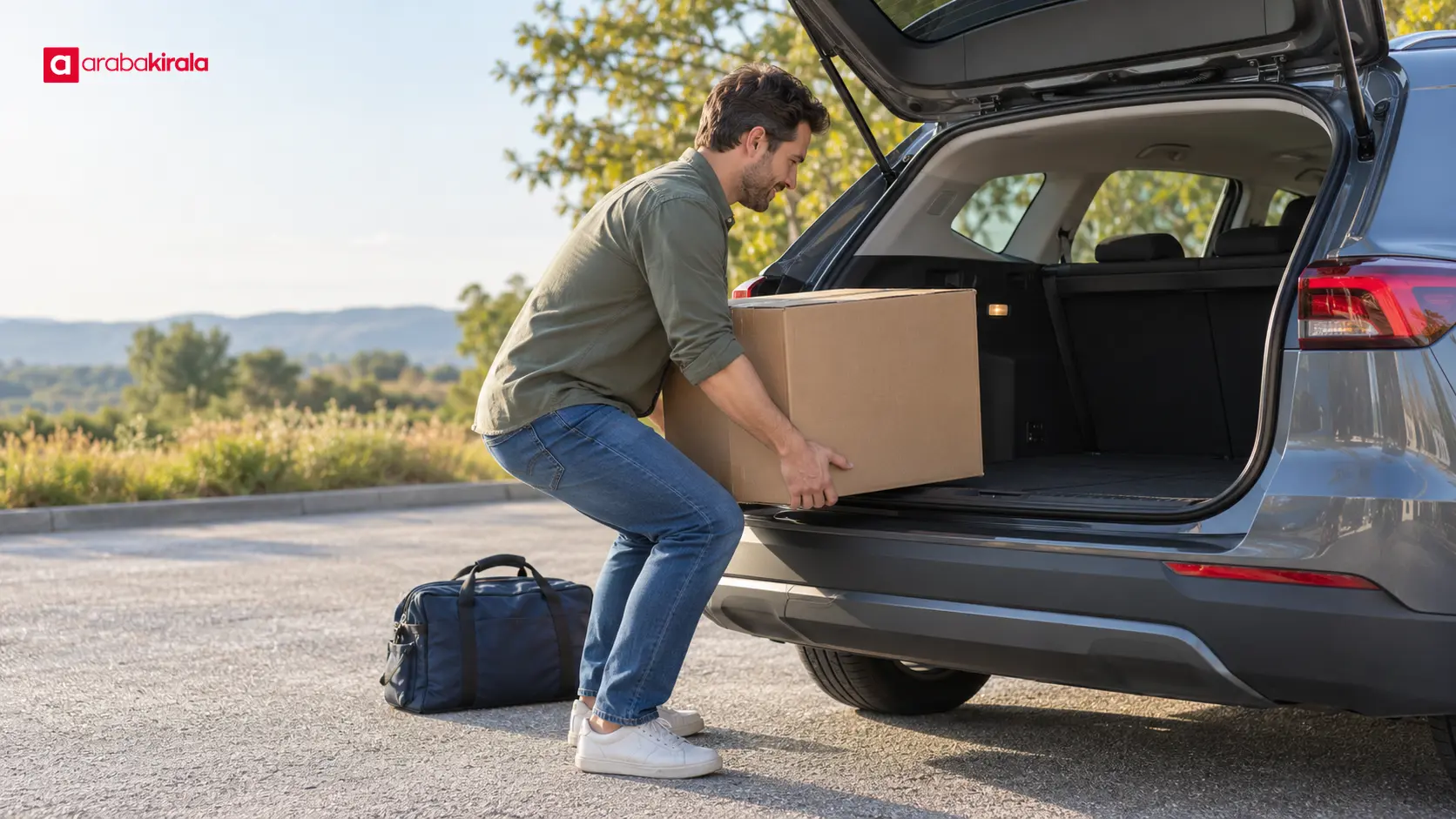
When lifting a heavy box, keep it close to your body, bend your knees, and avoid twisting while carrying it. Sliding an item across the sill may reduce strain on your back and shoulders, but take care not to scrape the vehicle’s surfaces. Place fragile or spillable items upright and stable. A suitable protective cover can help keep wet, dirty, or sharp-edged items from marking the trim.
Keep frequently used items, such as a stroller or sports gear, somewhere accessible. Packing an item you will need first at the bottom may mean unloading the rest of the trunk later. After loading, check that nothing is caught around the hatch, that the cargo cover does not obstruct your view, and that the door is latched. When unloading, leave enough room behind the vehicle to lift and remove belongings safely.
Summary and next step
Assess a rental car’s cargo space by considering the hatch design, opening dimensions, floor shape, sill height, and seat layout together. At pickup, learn the hatch operation, record any visible existing damage, and arrange belongings so they cannot move or block your view. For a definite answer about whether a particular item will fit, give its measurements to the branch handling your reservation or pickup and ask about the vehicle’s cargo opening.
Frequently Asked Questions
Can I tell whether my luggage will fit from the cargo capacity in litres?
The litre figure provides a sense of total volume, but it does not show whether an item will pass through the opening or fit its shape. Measure the item and consider the opening, floor, and narrowest points of the cargo area.
What should I do if the hatch would hit the ceiling when fully open?
Do not force it. Move to a safe spot with more clearance and learn the hatch’s range of motion at pickup. If the mechanism stops unexpectedly or feels resistant, contact the rental branch for help.
Is it okay to remove the cargo cover?
If the cover is removable, learn how to take it out and where it should be stored from the vehicle manual or pickup staff. Do not leave a removed part unsecured in the cabin, where it could affect visibility or passenger safety.
Can I carry more by folding the rear seats?
Folding seats can extend the loading space, but it reduces passenger seating and may allow cargo to extend into the cabin. Check that the seatbacks lock properly and secure items so they cannot move toward the driver.
How should I report existing damage in the cargo area?
Show it to the staff member at pickup and clarify how it will be included in the handover record. If you take your own photos, make sure they clearly show both the damage and its location.
Legal Disclaimer: All content, articles and information on the Araba Kirala website are provided solely to inform users. No information shared on this website constitutes definitive advice or guidance. Araba Kirala Teknoloji A.Ş. and its authors cannot be held responsible for any direct or indirect damages arising from the application of information on the website. For all questions and requests regarding car rental, please contact the office from which you will rent your vehicle.