
How to Assess Trunk Opening and Loading Height in a Rental Car
Published: November 1, 2026 • Reading Time: 7 min • Last Updated: November 1, 2026 • Author: Merve B.
A rental car’s luggage capacity is only one part of the fit. Check the trunk opening, loading sill, interior shape, and your items’ dimensions before planning a trip.
Contents
- Trunk capacity and the usable opening are different
- What the loading sill tells you
- Measure your belongings before booking
- A practical inspection at the car
- Plan for suitcases, strollers, and boxes
- Place the load securely
- A short checklist for planning
- Summary: check the route in, then the space inside
- Frequently Asked Questions
Rental car luggage space cannot be judged by a trunk’s stated volume alone. The height and width of the opening, how far the lid rises, the loading sill, and the shape of your luggage all affect whether items will fit and how easily they can be loaded. This guide explains how to measure your belongings, inspect the loading area, plan for common items, and keep the load secure without obstructing the driver’s view.
Trunk capacity and the usable opening are different
A luggage capacity figure describes the volume of a storage area. It does not guarantee that every item of that volume can pass through the opening. A long box may fit inside on paper but be too wide to pass between the sides of the trunk opening. A hard suitcase may catch at a corner, while a tall item may not fit beneath a sloping roofline. The route into the trunk matters as much as the space inside it.
The opening is the entry formed when the trunk lid is raised. Its narrowest width, usable height, and shape determine the angle at which an item can be inserted. The interior can also narrow around the wheel arches or seat backs. An item that passes through the opening may still be difficult to position where you need it. Treat capacity as a useful starting point, then consider the opening and the actual dimensions of each item.
What the loading sill tells you
The loading sill is the lower edge of the trunk entrance and the height difference between the outside and the trunk floor. When the floor is close to the sill, sliding a bulky item inward may require less lifting. A higher step can mean lifting a suitcase, stroller, or box over the edge. This matters most for heavy or awkward objects, where the distance and grip needed to load them affect comfort.
Consider the bumper’s position and the space available to hold an item while moving it into the car. A step, slope, or narrow ledge may make it harder to guide a wheeled or delicate object. Inspect the area with the vehicle parked on level ground. Keep clear of the lid’s path and do not try to hold it open by force. If you are checking a car at collection, take care not to scrape the paint, trim, or luggage.
Measure your belongings before booking
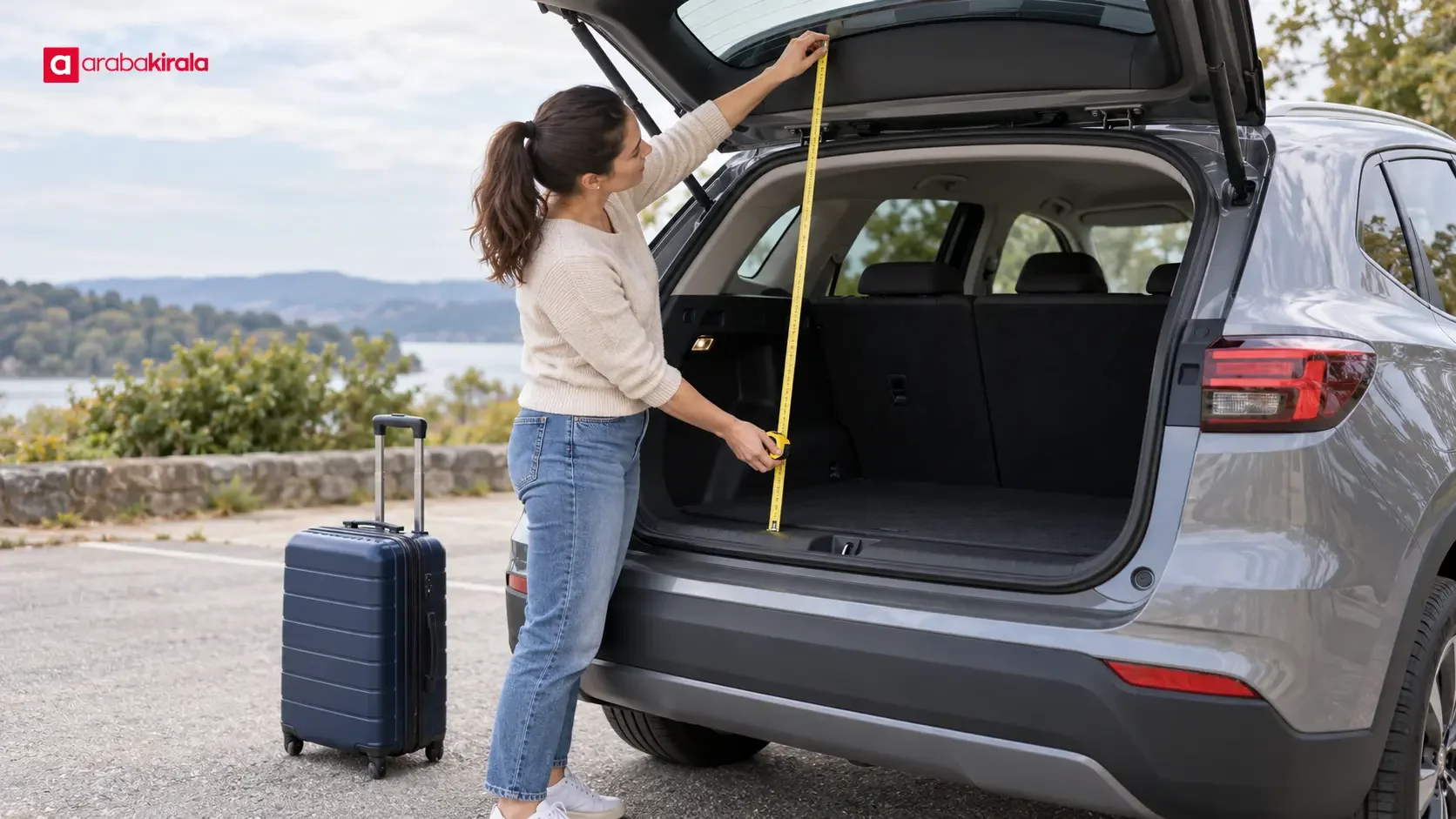
Write down the approximate width, length, and height of the largest items. Measure the parts that affect the outer dimensions: suitcase wheels and handles, stroller fittings, and a box’s packaging can add noticeable bulk. Also note the position in which an item must travel. If a box needs to remain upright, the opening height and interior roofline become especially relevant.
For several pieces, measure each one and sketch a simple loading order. Think about the floor area the largest item will occupy, the space left for other bags, and room for the lid to close without pressing on the load. Do not assume the rear seats can be folded or that doing so suits your passenger needs. Ask the rental branch whether that arrangement is available for the vehicle being offered. Keep passenger seating and any child restraint needs separate from the luggage calculation.
A practical inspection at the car
If you can inspect the vehicle, use this sequence:
- Park on a level surface and open the trunk normally. Check how high the lid rises and whether a ceiling, wall, or other obstacle limits it.
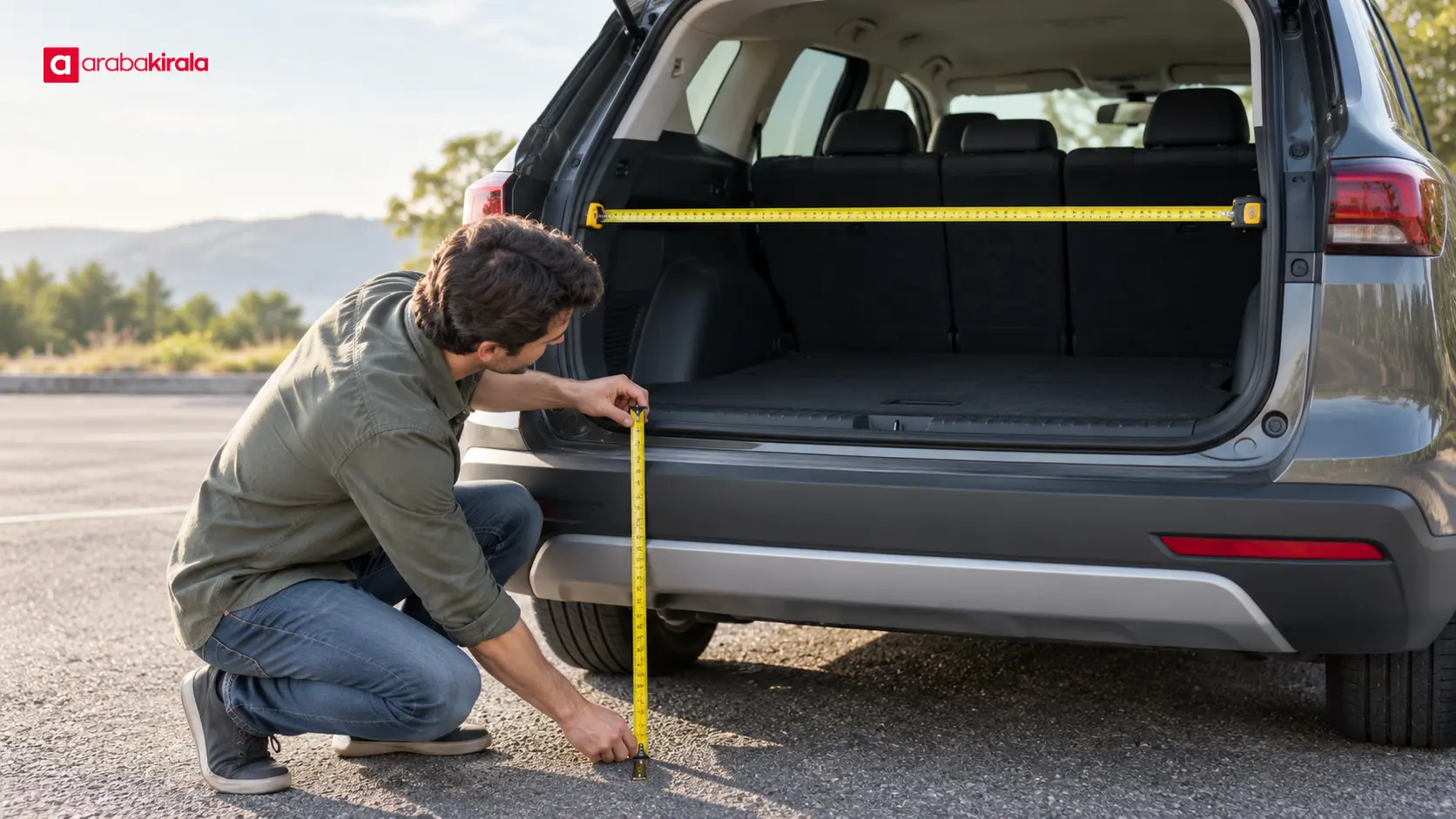
- Look at the narrowest width and usable height of the entrance, including any protruding parts of your item.
- Observe the sill height relative to the ground and trunk floor. Consider how far you would need to lift a heavy piece.
- Check the interior floor and side walls for wheel arch intrusions, tapering, or seat backs that affect placement.
- Keep the item’s dimensions at hand. If you test the fit, move it carefully without rubbing it against the car.
Do not assume every booking comes with the same body style or trunk layout. If a particular item’s fit is essential, contact the branch you will rent from before booking and describe the largest piece by its actual dimensions. Asking whether the trunk is “large” gives less useful information than explaining whether a long case needs to stand upright or a stroller must pass through a narrow opening. The branch can clarify details specific to the available vehicle.
Plan for suitcases, strollers, and boxes
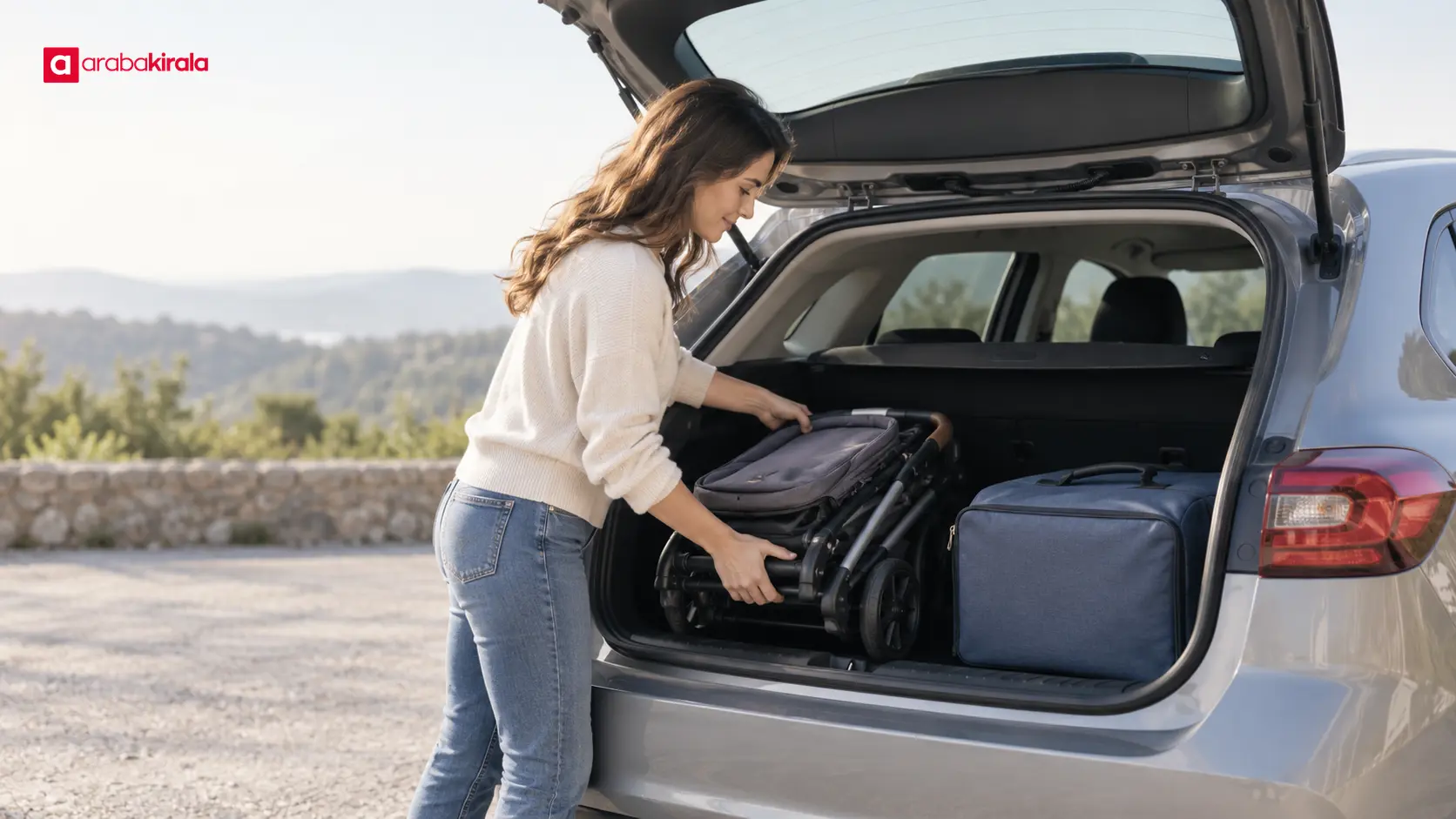
Hard-shell suitcases keep their shape, so check both the opening and the interior width. Include wheels and handles when estimating the space needed to pass through. Soft bags can compress somewhat, but do not force them in a way that strains a zip, buckle, or fragile contents. With a stroller or folding equipment, use its folded dimensions and check that movable parts stay secured.
For boxes and long objects, consider the lid’s closing line as well as the trunk floor length. The lid should close freely; pressing down on it or using it to hold the load in place is not a safe fit. If an item blocks the lid or rearward view, change the arrangement or consider another transport plan. When speaking with the branch, give the number of items, the dimensions of the largest one, and the number of passengers. Confirm any vehicle or loading arrangements directly with the office you will use.
Place the load securely
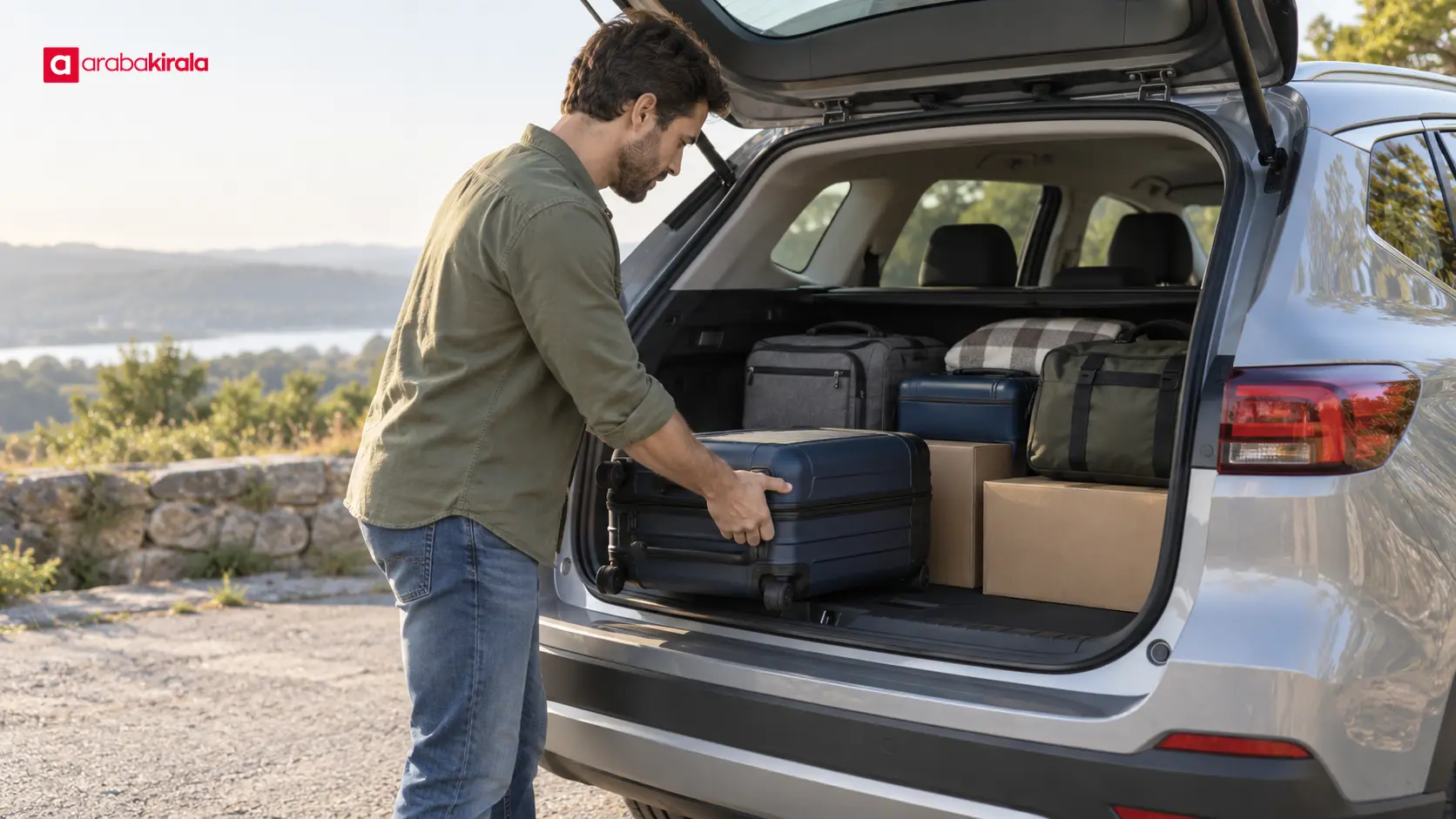
Put heavier pieces low on the trunk floor and distribute them evenly. Lighter bags can sit above them, provided they cannot slide forward during braking or a sudden maneuver. Before closing the lid, check that nothing presses against it and that the load does not unnecessarily block the rear window. A restricted view makes it harder for the driver to monitor surrounding traffic.
If the trunk has hooks or tie-down points, follow the vehicle manual for their use. Do not assume securing equipment is included or present. Avoid leaving heavy, rigid objects loose in the passenger area. If you are unsure how to secure an item, ask the branch for information. A load that can move around may injure passengers or damage belongings.
A short checklist for planning
- Record the outside dimensions of the largest and heaviest item.
- Note whether it folds and the orientation in which it must be carried.
- Assess the entrance, interior dimensions, and loading sill as separate features.
- Account for passenger seats and items that must remain in the cabin.
- If the fit is critical, share exact dimensions with the rental branch before booking.
This checklist helps you make a practical decision instead of relying on a capacity figure alone. When planning through Araba Kirala’s relevant city or location pages, focus on whether the luggage and passenger arrangement suits your needs; do not treat general information as a promise about a particular vehicle.
Summary: check the route in, then the space inside
To assess a rental car trunk, check three things together: whether your item passes through the opening, how the sill affects lifting, and whether the item can be placed securely inside. Capacity alone does not answer these questions. Measure your belongings, inspect the lid’s movement and the trunk’s shape, and keep heavy items stable and the rear view clear. For details tied to the vehicle or branch, contact the rental office with the dimensions of the items you plan to carry.
Frequently Asked Questions
Can every large item fit in a car with a high luggage capacity?
No. Capacity describes the overall storage volume; it does not ensure an item can pass through the entrance or sit in the required orientation. Check the opening, interior shape, and the item’s outside dimensions together.
What should I look at when assessing a loading sill?
Notice how the trunk floor sits relative to the outside edge, how far a piece must be lifted, and whether there is room to hold it while loading. For heavy belongings, this can matter more in practice than the volume figure.
Which measurements are useful for a trunk opening?
Start with the narrowest width, the usable height from the lower edge to the roof, and the interior floor dimensions. Include wheels, handles, and packaging, and consider the angle needed to pass the item through.
Can I fold the rear seats to carry more luggage?
Availability and the resulting layout depend on the vehicle. Folding seats also affects passenger space, so ask the branch you will rent from whether the arrangement is possible and suitable for your trip.
Should I push the trunk lid closed if it touches the luggage?
No. Forcing the lid can damage the item or vehicle and indicates the load is not placed safely. Rearrange the luggage; do not travel with the lid pressing against it.
Why should luggage not block the rear window?
A load that limits the rear view makes it harder to monitor traffic and surroundings. Arrange items so the view remains clear and the load cannot shift while driving. If that cannot be achieved, revise the transport plan.
Legal Disclaimer: All content, articles and information on the Araba Kirala website are provided solely to inform users. No information shared on this website constitutes definitive advice or guidance. Araba Kirala Teknoloji A.Ş. and its authors cannot be held responsible for any direct or indirect damages arising from the application of information on the website. For all questions and requests regarding car rental, please contact the office from which you will rent your vehicle.












