Robotic Production in Automotive Manufacturing: People and Robots at Work
Published: October 30, 2026 • Reading Time: 7 min • Last Updated: October 30, 2026 • Author: Merve B.
Learn how robots handle repeatable tasks while people contribute judgment, verification, and process knowledge to support quality and workplace safety in automotive manufacturing.
Contents
- What does robotics mean in automotive manufacturing?
- How do people and robots complement each other?
- Tasks robots are suited to
- What people contribute
- How can robotic production support quality?
- Which practices matter for workplace safety?
- Practical steps for daily work and improvement
- What should be considered when evaluating robotic production?
- Summary and next step
- Frequently Asked Questions
Robotic production in automotive manufacturing combines programmable machines for repeatable, precise tasks with human expertise in setup, oversight, decision-making, and problem-solving. This guide explains how people and robots share work, where quality checks fit into the process, and which practices help keep production cells safe.
What does robotics mean in automotive manufacturing?
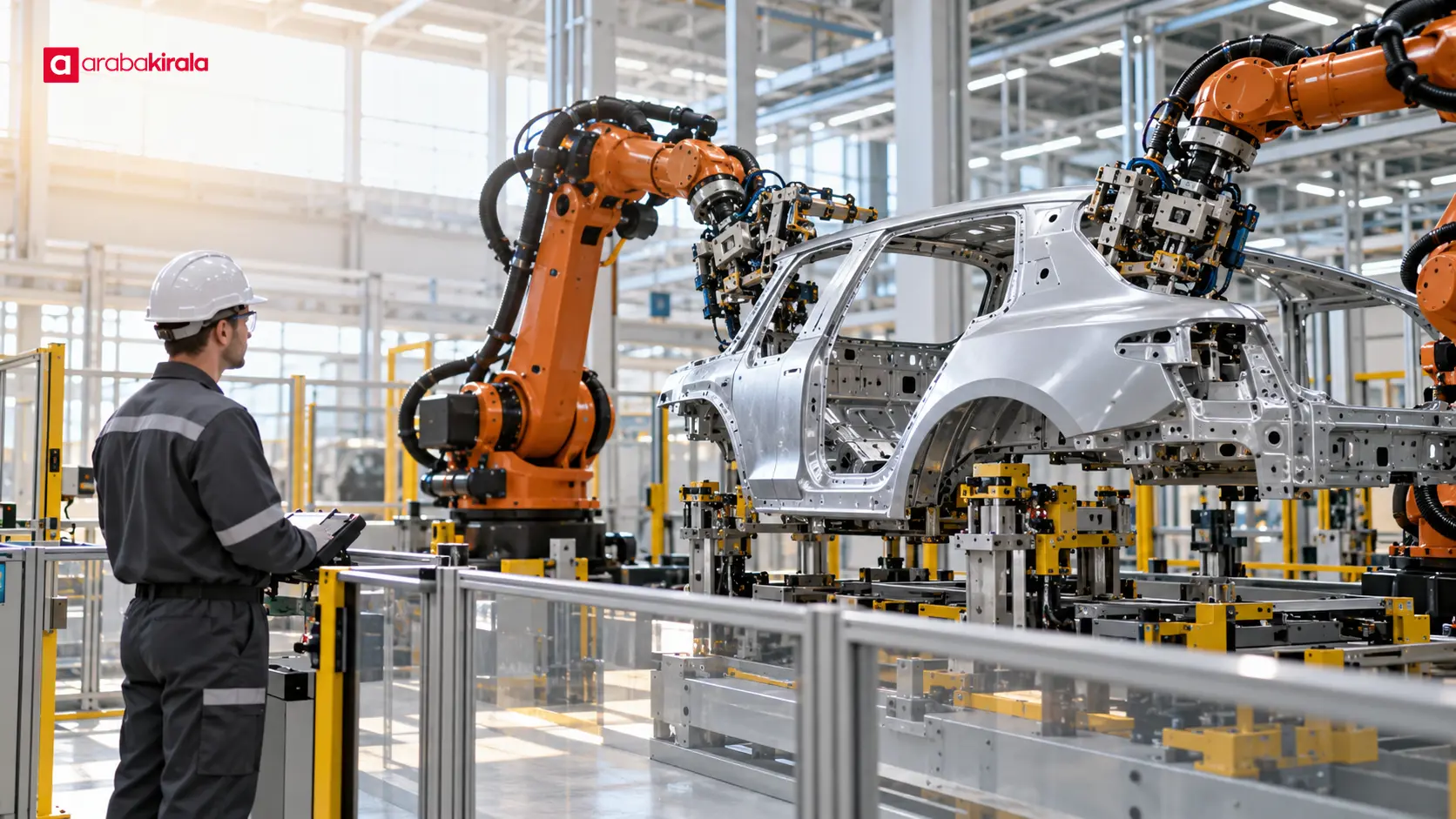
Robotic production uses programmable machines to carry out defined movements and operations in a controlled way. Automotive plants may use robot arms to position body components, weld, apply paint, move parts, or complete selected assembly steps. The choice to automate a task depends on the product, production volume, equipment, and the design of the facility’s process.
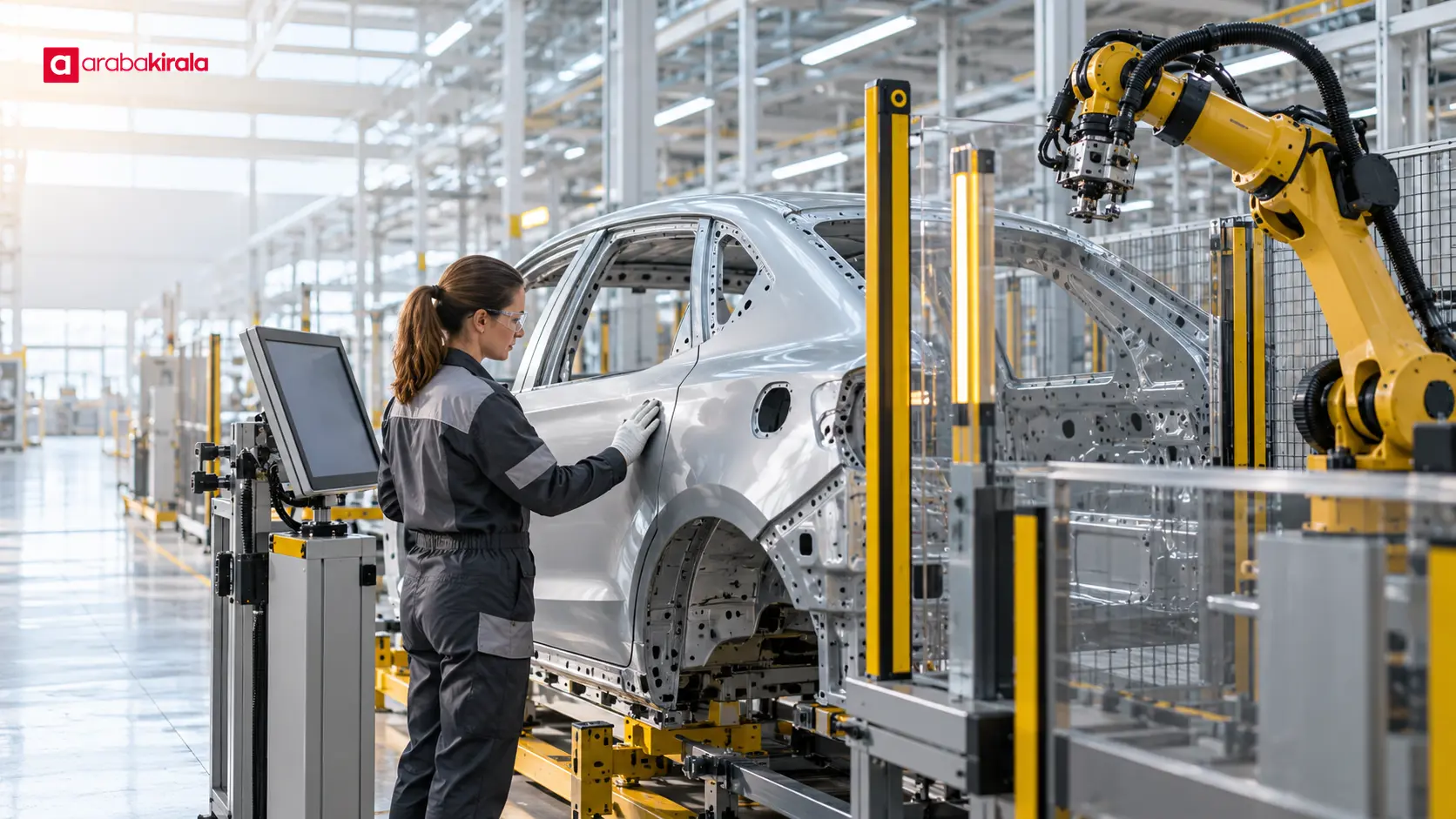
A robot does not manage the entire manufacturing process on its own. Fixtures hold components in position, sensors monitor selected conditions, control systems coordinate movement sequences, and workers set up, monitor, maintain, and assess the equipment. A robotic cell performs well only when these elements work together.
How do people and robots complement each other?
Tasks robots are suited to
Robots can be useful when the same movement must be repeated many times in a similar way. A properly programmed and maintained robot can follow a defined path consistently. This can help organize tasks such as repeating weld points, moving heavy components, or applying a controlled process to a particular surface.
Robot speed and accuracy are not unconditional. A component dimension that falls outside expectations, an incorrectly loaded fixture, a worn tool, a faulty program, or a sensor problem can change the result. Automation does not create quality by itself; it depends on correct material presentation and ongoing verification.
What people contribute
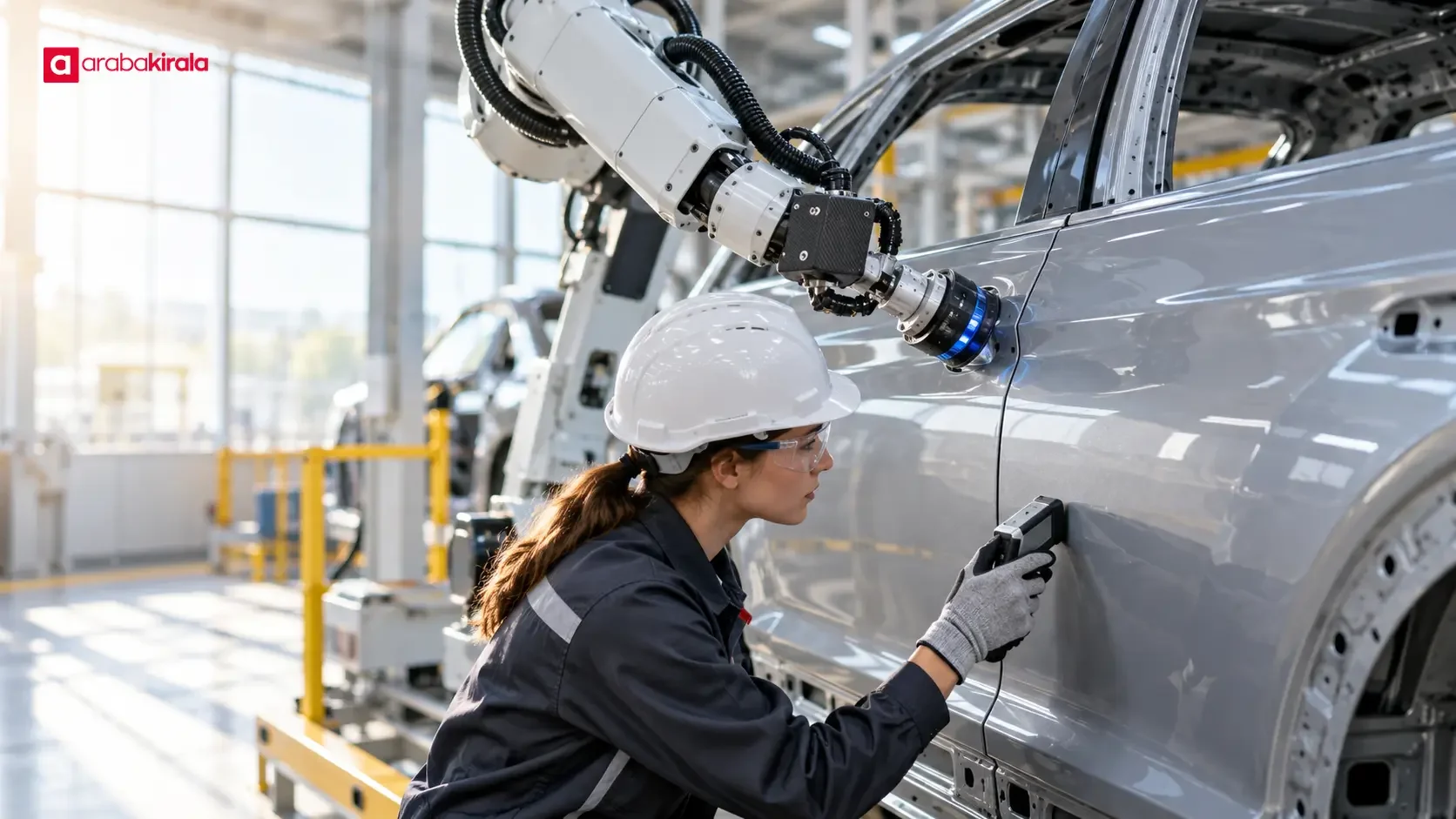
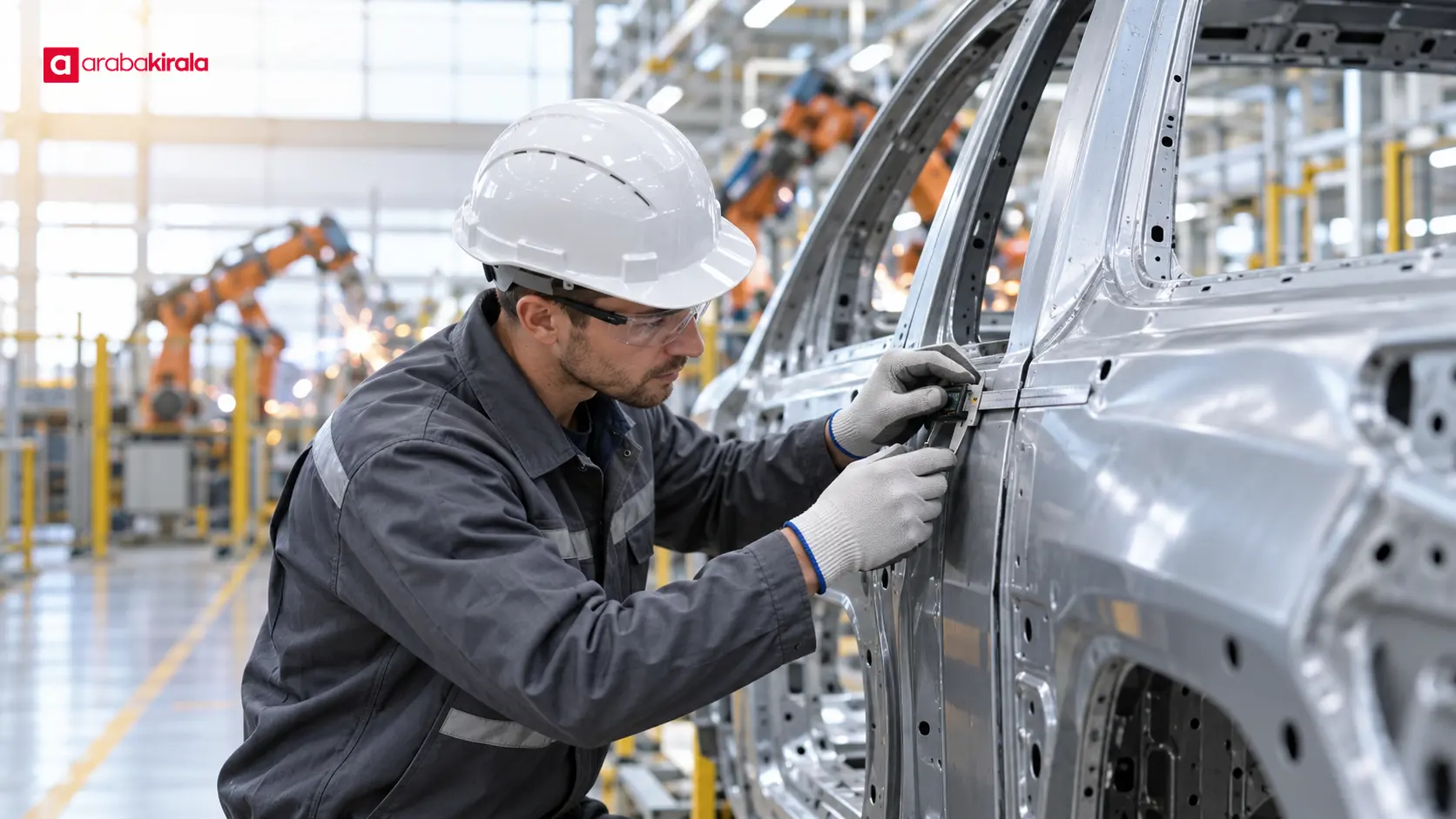
Workers interpret work instructions and equipment status, and help verify settings when a new product or process change is introduced. They may notice a visual defect, report an unusual vibration or sound, assess a measurement, or recognize when a process needs to stop before a problem recurs. Operators, maintenance technicians, quality specialists, and process engineers contribute at different stages.
Human involvement does not mean manually directing every robot movement. In a clear division of work, the robot performs a repetitive physical task while workers focus on following instructions, verification, handling exceptions, and improving the process. As automation expands, skills in training, programming, maintenance, and data interpretation become more valuable.
How can robotic production support quality?
Quality is not created at a single final inspection point. It depends on the fit between design, part supply, process settings, and assembly. A robot’s defined movements can help reduce variation in operations such as welding or surface application. Consistency matters, however, only when the right program is applied to the right component and equipment conditions are monitored.
- Standardized operation: A robot repeats the movement sequence in a validated program. Reviewing program changes through a controlled process helps reduce the risk of incorrect settings.
- Part positioning: Suitable fixtures and sensing arrangements can help confirm that a part is in the right position before processing. Incorrect positioning can produce a defect even when the robot follows its path correctly.
- Process data: Cycle, alarm, or measurement data can help teams understand where a deviation began. The data is useful when suitable thresholds and clear review responsibilities are defined.
- Verification after processing: Visual inspection, measurement, functional checks, or another appropriate method can verify the result of an automated operation. The part and quality plan determine which method is suitable.
A robot performing one step consistently does not mean the whole vehicle is defect-free. Part supply, assembly fit, system integration, and final checks also affect the outcome. A quality approach therefore includes both in-process monitoring and verification against relevant product requirements.
Which practices matter for workplace safety?
Industrial robots can move with considerable force and speed. Access during setup, production, and maintenance brings different hazards, so safety design involves more than marking a line around a machine. Risk assessment considers the robot’s reach, the tool in use, the part being handled, human access, and possible fault conditions together.
Physical guards, interlocked gates, light curtains, area scanners, emergency stops, and limits on speed or force may be used depending on the application. They should not be assumed to appear in the same form in every robot cell; protective measures are selected according to risk assessment and applicable technical requirements. A sensor system alone is not a guarantee of safe work: placement, functional testing, and maintenance matter too.
Adjustment and maintenance that require a worker to enter a cell are different from normal production. Controlling energy safely, following workplace procedures such as lockout and tagging, assigning authorized personnel, and checking the area before restarting are important. If a safety device is disabled or movement occurs unexpectedly, workers should follow the site’s stop and reporting procedures.
Practical steps for daily work and improvement
- At the start of a shift, inspect the work area, guards, and warning systems according to the approved work instruction.
- When a part, fixture, or program changes, verify initial production pieces using the approved inspection method.
- Record recurring alarms, measurement deviations, unusual sounds, or stoppages and report them to the relevant maintenance or quality team.
- For cleaning, setup, and maintenance around a robot, follow the safe-work procedure defined for those tasks rather than relying on normal production rules.
- Keep work instructions and training records aligned with the robot, tooling, and product version in use.
- After an automation change, review operator feedback, quality data, and safety risks together.
These steps describe general manufacturing practice. Responsibilities, equipment, and procedures at a particular facility are determined locally, and workers should follow their site’s training and approved instructions.
What should be considered when evaluating robotic production?
A robot investment should not be evaluated on cycle speed alone. Product quality needs, repeatability of the task, part variety, setup and maintenance effort, operator training, floor space, and safety controls all matter. The expected contribution can be tracked against measures defined at the start, such as defect types, downtime causes, rework needs, or safety reports. The measures should fit the facility’s purpose; no single number represents overall quality or safety.
A useful improvement effort brings workers into process design and feedback, rather than only sharing final results. An operator’s difficulty reaching a work area or a maintenance technician’s observation of recurring faults can point to a lasting solution when considered alongside production data.
Summary and next step
Robotic production in automotive manufacturing can support process consistency by automating repeatable tasks. Quality also depends on correct part presentation, fixtures, programs, measurement, and human oversight. Workplace safety calls for risk assessment, suitable safeguards, training, maintenance, and safe intervention procedures working together. When reviewing a production line, consider task sharing, quality verification, and worker access as a whole, then consult the facility’s approved instructions for local practices.
Frequently Asked Questions
Does robotic production guarantee vehicle quality on its own?
No. A robot can help perform selected operations consistently, but part quality, fixtures, programs, maintenance, assembly, and verification also affect the result. Quality control spans the manufacturing process.
Are all jobs in an automotive factory performed by robots?
No. The level of automation varies by factory, product, and operation. Robots may handle selected repetitive or physically demanding tasks, while people contribute to setup, monitoring, maintenance, quality assessment, and process improvement.
Are sensors around a robot cell enough to ensure safety?
They should not be assumed sufficient on their own. Sensor selection, placement, functional testing, and maintenance need to fit the risk assessment. The protective arrangement depends on the cell’s design and workflow.
What should a worker do after a robot error or alarm?
Follow the facility’s instructions for stopping, reporting, and restarting the process. Do not bypass guards or perform work beyond your authorization to clear a fault; maintenance and quality teams should carry out the required review.
Where should a team start when improving quality on an automated line?
Start by identifying which process steps are associated with recurring defects or downtime. Verify part positioning, tool condition, the program, and the measurement method, then review worker and maintenance observations alongside process data.
Legal Disclaimer: All content, articles and information on the Araba Kirala website are provided solely to inform users. No information shared on this website constitutes definitive advice or guidance. Araba Kirala Teknoloji A.Ş. and its authors cannot be held responsible for any direct or indirect damages arising from the application of information on the website. For all questions and requests regarding car rental, please contact the office from which you will rent your vehicle.