
Planning a Visit Around Thermal Springs: Time, Terrain and Breaks
Published: October 30, 2026 • Reading Time: 7 min • Last Updated: October 30, 2026 • Author: Merve B.
Plan a more comfortable visit to outdoor areas near thermal springs in summer or winter by considering route length, terrain, clothing, rest breaks and transport.
Contents
- Learn what kind of outdoor area you are visiting
- Set a visit length that fits the season and route
- A practical way to keep the plan flexible
- Choose footwear and clothing for the surface
- Account for heat and sun in summer
- Watch wet surfaces and daylight in winter
- Plan breaks, access and group pace
- Organize transport and the end of the day
- A short checklist before you leave
- Frequently Asked Questions
Planning a visit around thermal springs means more than choosing a destination. A comfortable outing depends on the time set aside for walking, the surface underfoot, the weather and the breaks along the way. This guide explains how to assess an outdoor route in summer and winter, choose suitable footwear and clothing, plan rest stops and organize transport.
Learn what kind of outdoor area you are visiting
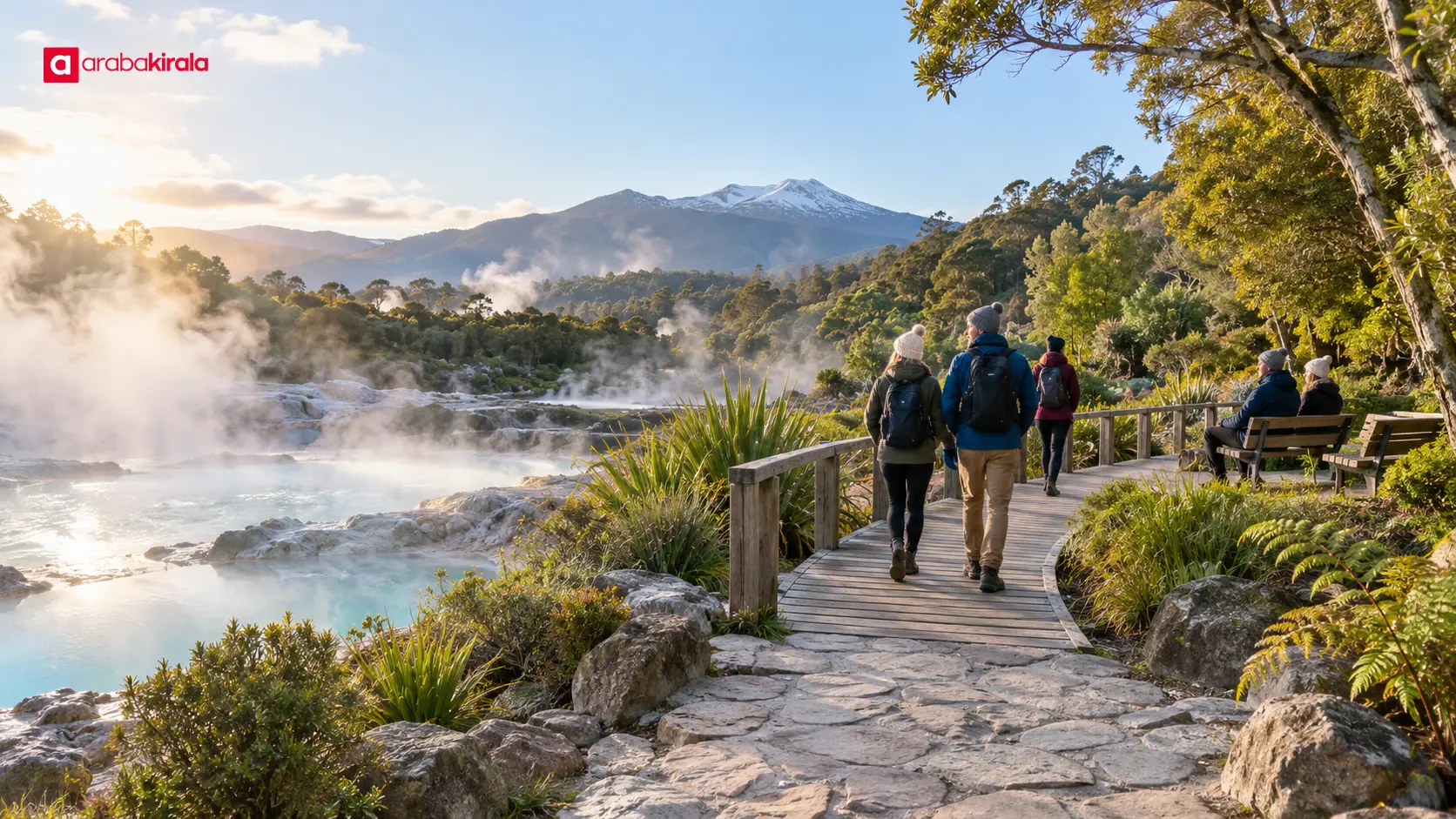
The phrase “thermal area” can describe both indoor facilities using spring water and outdoor paths around a source. A walking trail, viewpoint, picnic area and natural landscape may each have different surfaces and access conditions. Services and entry arrangements at one site should not be assumed to apply elsewhere. Before travelling, check the outdoor areas, opening information and access notices published by the local site or its official authority.
Do not judge a route by map distance alone. Gradient, steps, stone or packed-earth surfaces, shade and places to sit all affect how strenuous a walk feels. Two paths of similar length can be very different because of their surfaces, weather exposure and opportunities to rest. Follow the site's directions and stay out of closed or restricted areas.
Set a visit length that fits the season and route
There is no single ideal duration for every visit. In addition to walking time, allow for pauses, photographs, enjoying the view and resting. Treat a map's estimated walking time as a guide rather than a promise: wet ground, crowds, slopes and an individual's pace can all change it. At a place you have not visited before, leave room for a slower return instead of filling the day with back-to-back activities.
In summer, midday heat can make exposed paths more tiring. Early morning or a time when the sun is less intense may feel more comfortable, but check the site's access hours. In winter, daylight fades earlier, so fit the route into the brighter part of the day and leave enough time to return. Consider rain and wind in addition to the temperature in the forecast.
A practical way to keep the plan flexible
- Check the route's approximate distance, gradient and surface before setting out.
- Allow separate time for walking, rest and the return journey.
- Choose a shorter route or an early finish if the weather changes.
- Set the group's pace around the slowest walker and plan breaks before anyone is exhausted.
Choose footwear and clothing for the surface
Outdoor paths near thermal springs may include natural stone, wooden sections, soil, gravel or a finished walking surface. Rain, splashes or shade can leave some sections damp even when the surrounding air feels dry. Choose walking shoes that fit securely and provide grip. Do not hurry over a surface that looks wet or slippery, and remain on the designated route.
In summer, light breathable clothing, a hat and an extra layer for shaded stops can help with changing conditions. In winter, several adjustable layers make it easier to manage the difference between warming up while walking and cooling down during a break. If rain is possible, consider a water-resistant outer layer and whether spare socks or clothing would be useful. Base these choices on the day's forecast and how exposed the route is.
Entering thermal water and walking nearby are separate activities. Being on an outdoor route does not mean that entering the water is safe or allowed. Follow the site's official instructions about water access and use, and respect barriers around hot water and natural outlets.
Account for heat and sun in summer
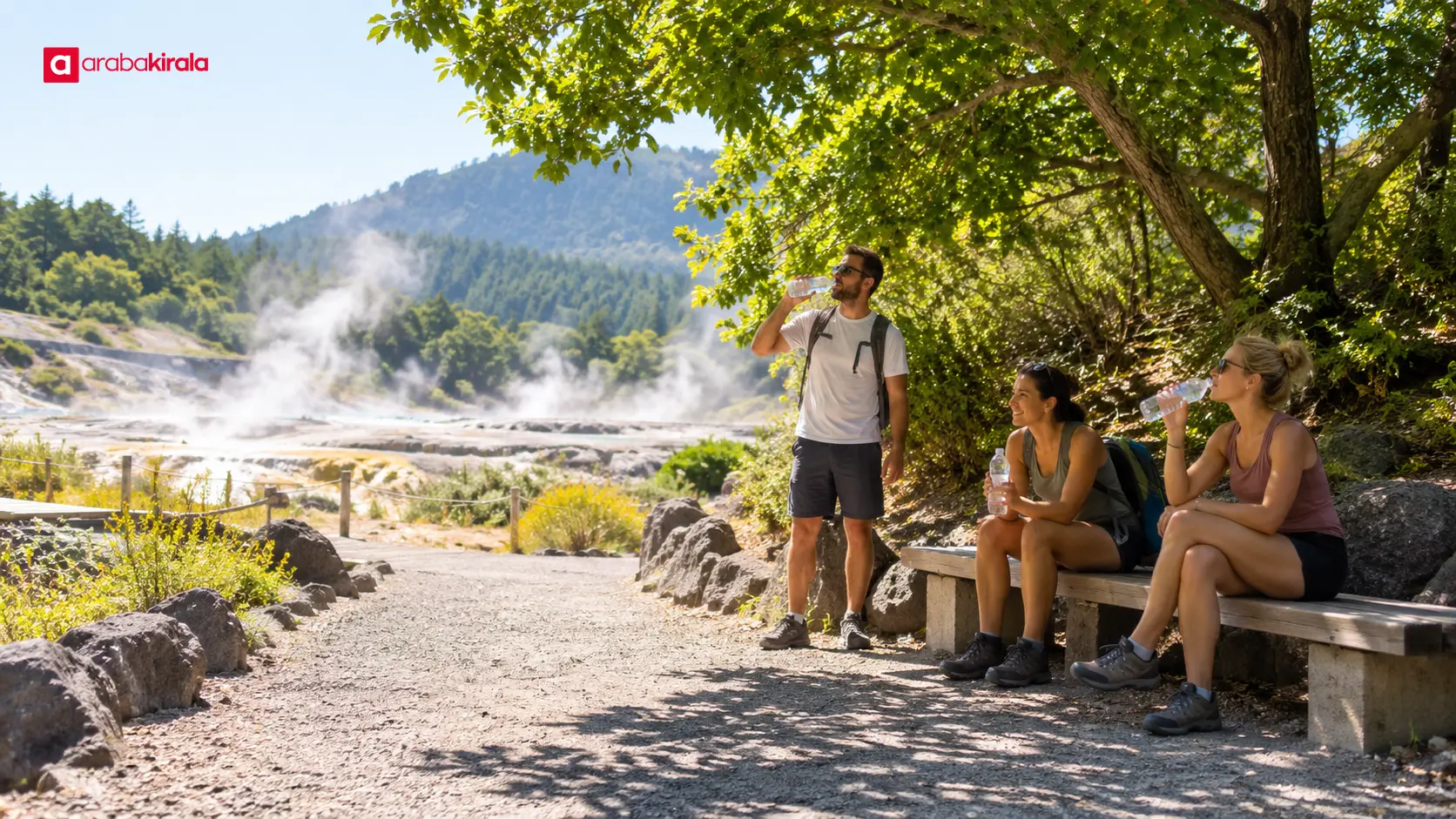
Assess walking distance together with the amount of shade. A sunny trail can increase the need for water and rest, even when it is short. Carry drinking water, take regular breaks in a shaded place and use sun protection according to its directions. A shorter route and an unhurried pace can be helpful for children, older visitors and anyone who finds hot weather tiring.
If you feel dizzy, unusually weak or unwell in the heat, stop walking and move to a cooler place. Seek local emergency assistance when needed. Do not dismiss these symptoms on the assumption that a brief rest will resolve them. Ending the outing early can be the sensible choice when conditions become difficult.
Watch wet surfaces and daylight in winter
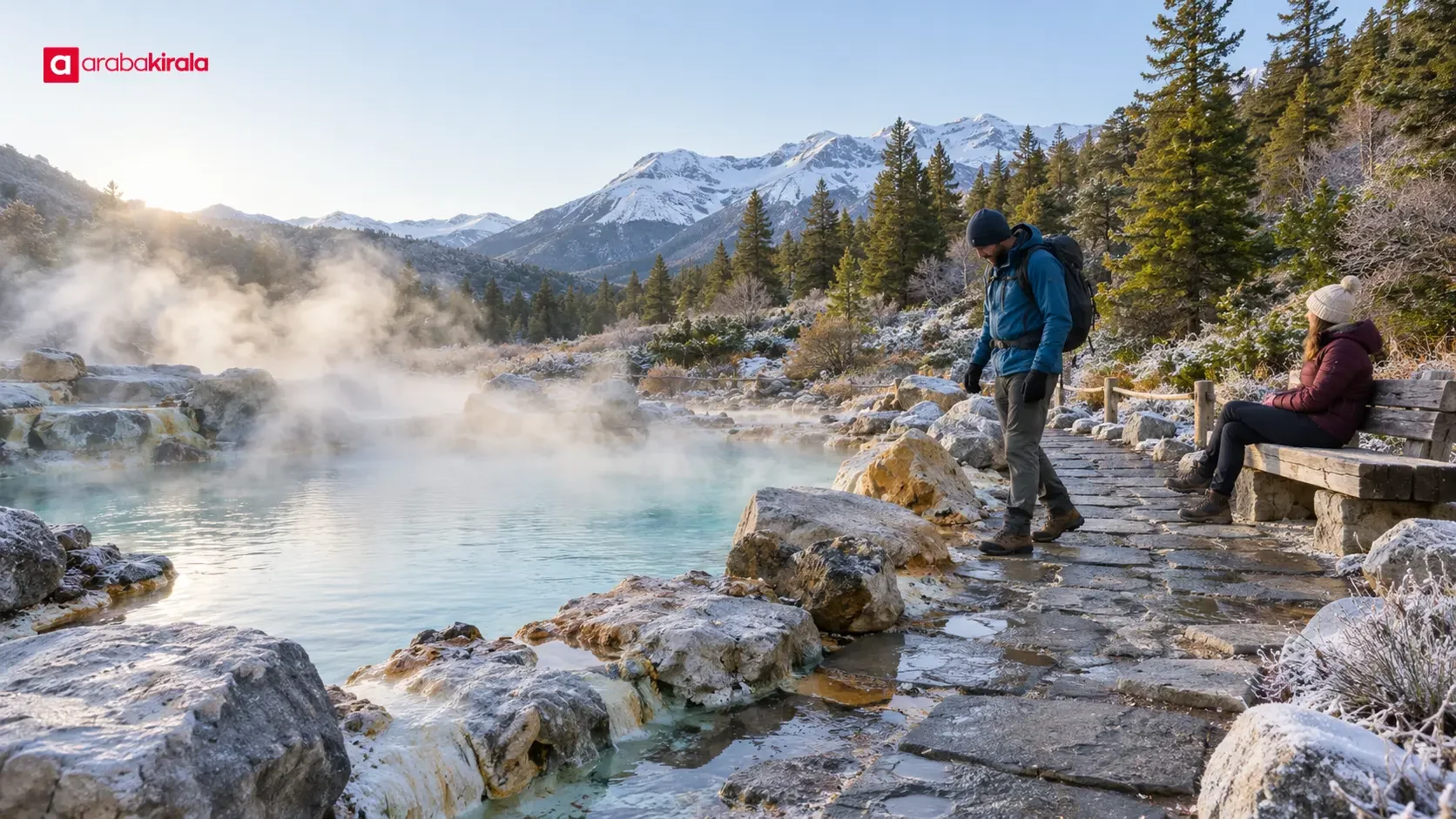
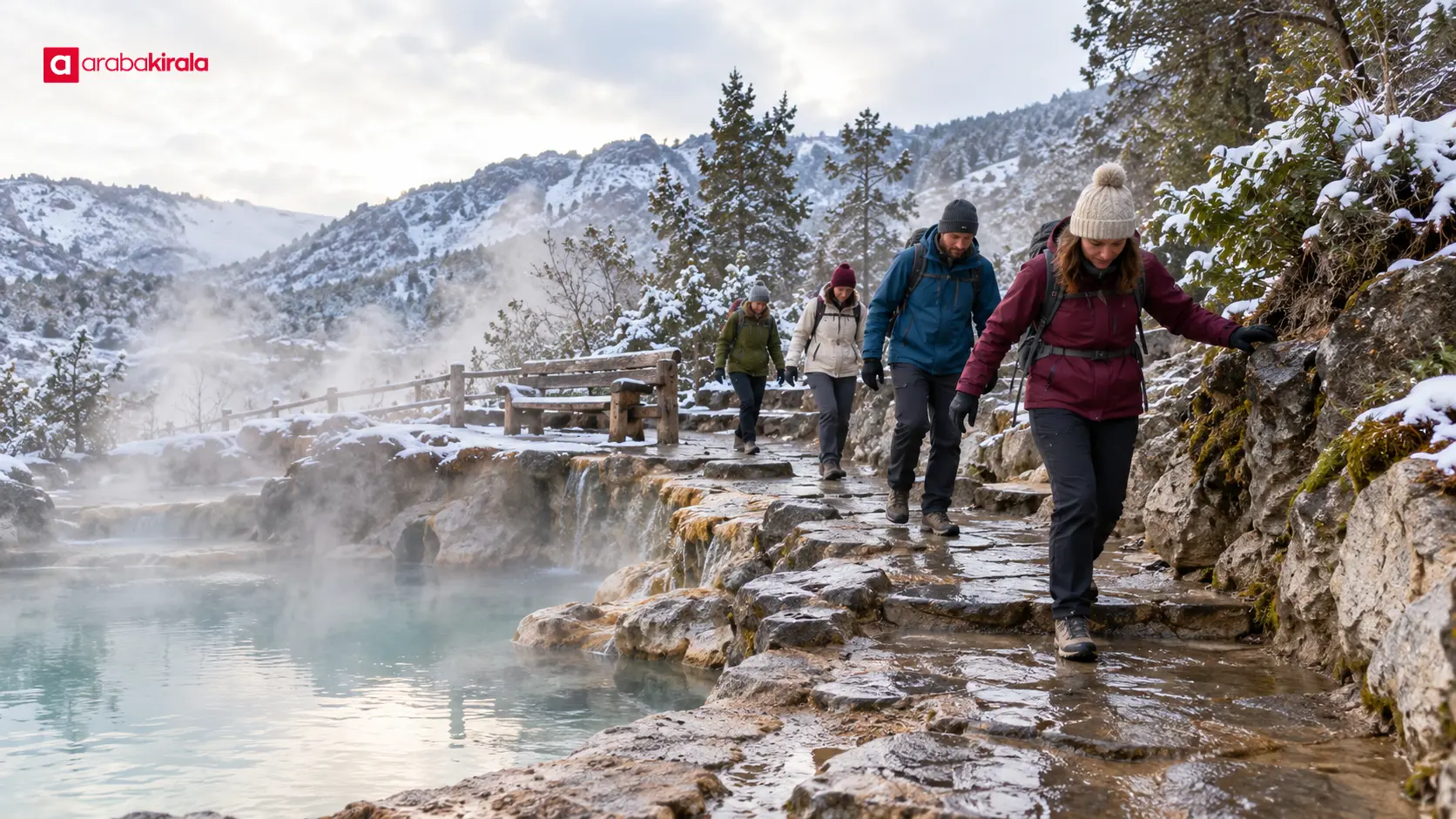
Rain, frost or melting snow can make stone and wooden surfaces slippery. Pay attention to shaded sections as well as the visible parts of the path. Take shorter steps, avoid rushing and keep your hands free where possible so you can maintain your balance. If a section does not feel safe, you can turn back or choose an easier route.
Layers help manage the difference between warming up on a walk and getting cold during a stop. Gloves, a hat and a water-resistant outer layer may be useful depending on the weather and route. Set your return time with sunset in mind. If the area has a rain or ice warning, check its notices and consider changing the date when outdoor conditions are unsuitable.
Plan breaks, access and group pace
Rest areas are not guaranteed on every route. Look up seating, toilets and accessible-path information through the site's official resources. For visitors using a wheelchair, stroller or mobility aid, surface, slope, steps and path width can determine whether a route is workable. Use current information for the specific site rather than relying on a general claim that a place is accessible.
When walking as a group, do not expect everyone to move at the same speed. Short regrouping stops can keep people together. With children, stay within safe boundaries and supervise more closely near water, hot surfaces and steep edges. If you plan to bring a pet, check the site's official information for rules on access, leashes and permitted routes.
Organize transport and the end of the day
A thermal destination may be outside a town centre, so travel time, parking and any final walk from a drop-off point can shape the day. Check the route and nearby parking information, while allowing for the possibility that spaces may not be available. If driving, review the route, weather and return time before leaving. For a rental car, confirm reservation-specific details such as pick-up and return times, mileage terms, parking and local access with the branch where you will collect the vehicle.
Include the distance between the end of the walk and your car or public transport stop in your plan. Packing a bag for damp clothing, water and personal items can make the return easier. Consider how tired the driver may be after walking; leave time to rest and do not drive when fatigued.
A short checklist before you leave
- Have you checked route length, gradient, surface and current access notices?
- Are footwear, clothing and sun or rain protection suited to the forecast?
- Do you have drinking water and personal essentials?
- Have you allowed enough time for breaks, daylight and the return journey?
- Have transport and any rental arrangements been checked with the relevant source?
In summary: a comfortable visit is built around the actual route, season, surface and pace of the group, rather than a fixed duration that suits everyone. Check the site's current outdoor conditions, choose suitable clothing and footwear, then set aside time for breaks and the return. Confirming the destination and transport plan is a practical next step.
Frequently Asked Questions
How many hours should I allow to explore an area around thermal springs?
It depends on route length, gradient, surface, rest opportunities and the pace of the people in your group. Add time for breaks and the return trip to any map estimate, and avoid overfilling the schedule if the area is new to you.
What should I bring for a summer walk near a thermal spring?
Walking shoes, drinking water, a hat or other sun protection and a light extra layer are useful basics. If shade is limited, consider a shorter route and more frequent breaks.
Are stone paths safe in winter?
That depends on rain, frost, shade and the condition of the particular path. Slow down on surfaces that look slippery, follow route boundaries and shorten or postpone the walk when conditions are unsuitable.
Can visitors enter the water in an outdoor thermal spring area?
Do not assume that every natural spring allows water access. Follow the site's official instructions about permitted use and safety boundaries, and stay away from restricted areas.
How can visitors with limited mobility choose a route?
Surface, gradient, steps, path width and places to rest all matter. Check current accessibility information for the specific destination in advance instead of relying on distance alone.
Legal Disclaimer: All content, articles and information on the Araba Kirala website are provided solely to inform users. No information shared on this website constitutes definitive advice or guidance. Araba Kirala Teknoloji A.Ş. and its authors cannot be held responsible for any direct or indirect damages arising from the application of information on the website. For all questions and requests regarding car rental, please contact the office from which you will rent your vehicle.












