
How Weight Distribution and a High Center of Gravity Affect WRC Stage Behavior

Published: October 18, 2026 • Reading Time: 6 min • Last Updated: October 18, 2026
Learn how rally-car mass is shared across axles and wheels, and how center-of-gravity height influences braking, cornering, and rough-stage behavior.
Contents
WRC car weight distribution describes how the vehicle’s mass is shared between the front and rear axles and across the left and right wheels. The height of the center of gravity describes how high that mass is concentrated. Together, these factors affect the forces each tire can put into the surface and the car’s responses to braking, steering, acceleration, and bumps. This guide explains the difference between the terms, what they mean on a stage, and why engineers consider them alongside the rest of the setup.
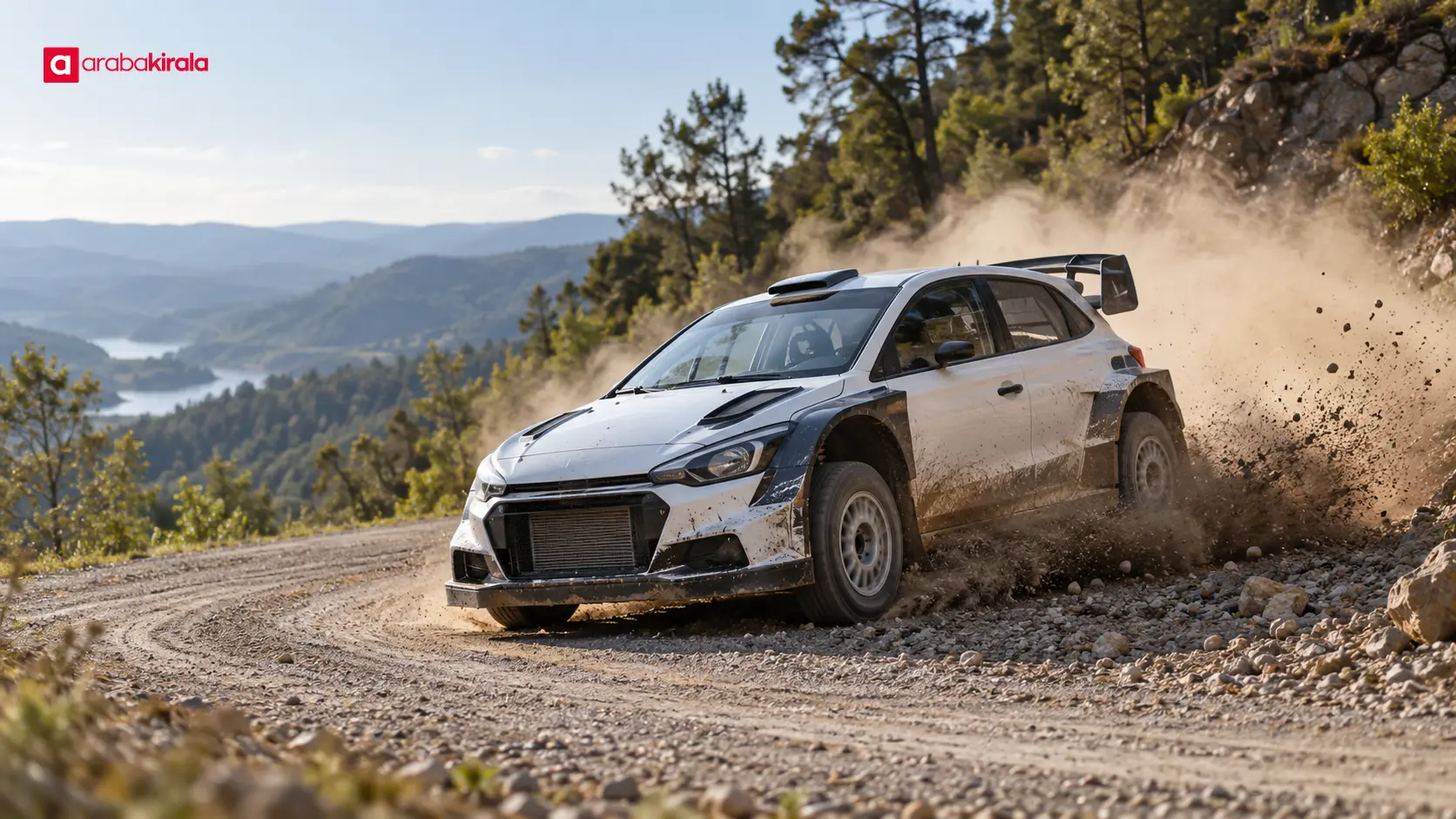
What do weight distribution and center of gravity mean?
Weight distribution is the share of the car’s total weight carried at particular points. Front-to-rear distribution describes the loads on the two axles; cross-weight describes the balance between left and right sides. The load at each wheel can change with suspension setup and the shape of the ground, so a static measurement alone cannot describe the car’s behavior in every stage condition.
The center of gravity is the point at which the vehicle’s mass can be treated as balanced. Its fore-aft position is related to how much load each axle carries. Its height affects how much load transfers among the wheels during braking and cornering. The two ideas are connected but distinct: a car can have a balanced front-to-rear distribution and still have a relatively high center of gravity.
How does load transfer happen on a stage?
When the car accelerates, some load shifts toward the rear wheels; under braking, it shifts toward the front. In a corner, the outside wheels carry more load and the inside wheels less. This transfer follows from the forces needed to change the car’s speed or direction. The higher the center of gravity, the greater the body’s rolling moment for a given cornering force, and the more pronounced the load difference between wheels can become.
A tire’s grip does not rise in direct proportion to the load placed on it. The extra grip gained by a heavily loaded tire may not make up for the grip lost by a lightly loaded tire. A large or abrupt transfer can therefore reduce the total usable grip. Suspension, tires, differentials, and driver inputs help manage the effects, but none cancels the underlying physics.
How does a high center of gravity change cornering?
A high center of gravity increases the tendency for the body to roll toward the outside of a corner. Body roll alone does not measure grip. What matters is how consistently the tires stay loaded against the surface and how predictably the car responds. During a sharp change of direction, the outside wheels gain load while the inside wheels lose it. On loose surfaces, this can bring either axle closer to its grip limit sooner.
Rally corners rarely resemble smooth, flat road corners. A corner may include a rut, crest, berm, or changing surface grip. Body roll and suspension movement affect how the wheels respond to those changes. For the driver, the practical questions are how stable the car remains on entry, how much the line can be adjusted with the throttle, and how consistently power reaches the ground on exit.
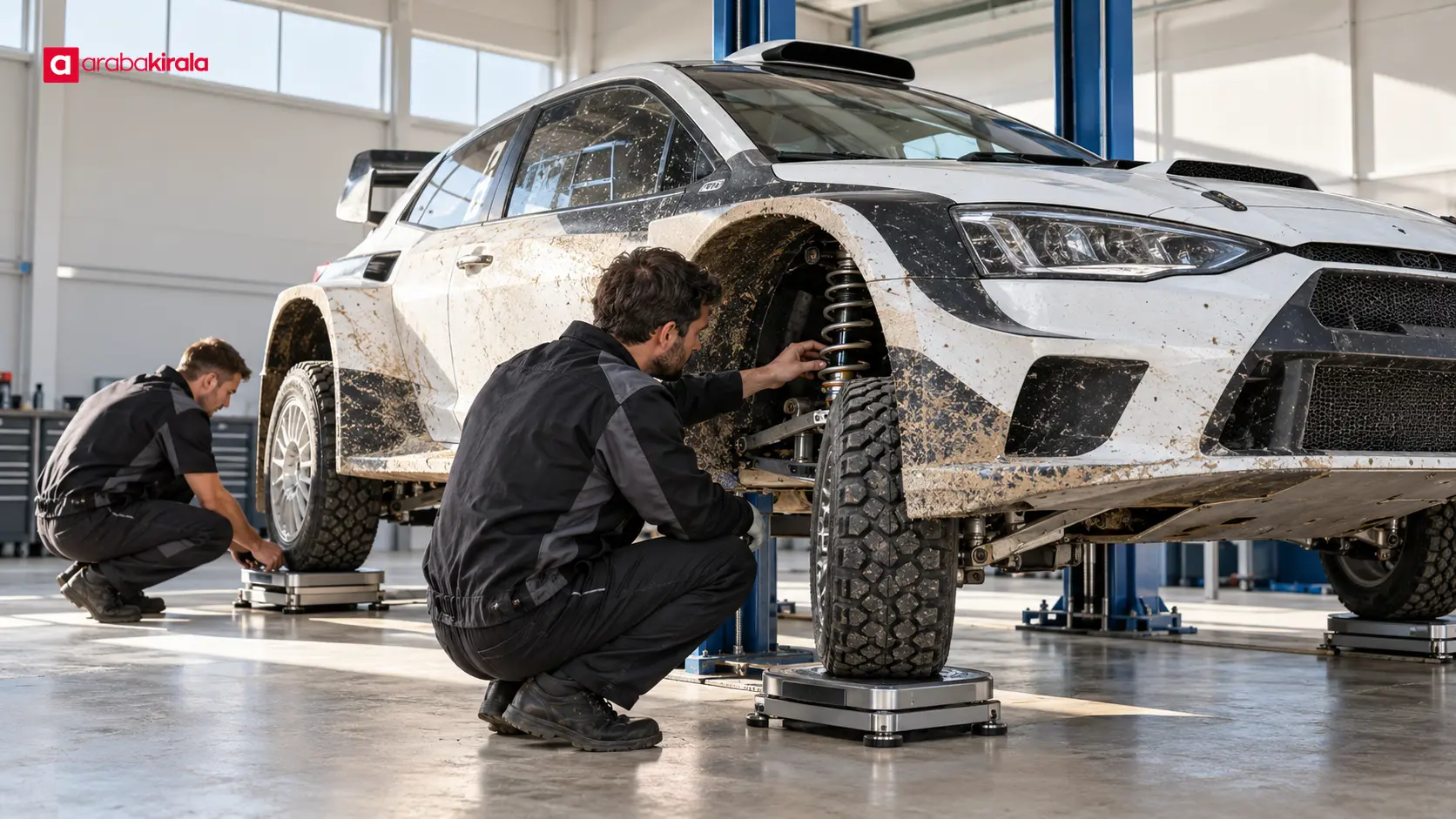
Braking, acceleration, and rough ground
Hard braking moves load forward. The front tires carry more while the rear becomes lighter; an unbalanced or sudden transfer can make it harder to keep the car on line. Acceleration shifts load rearward and affects traction. Four-wheel drive distributes drive to multiple wheels, but the load carried by each tire and the grip available at that moment still matter. Weight distribution is also a basic factor in the work done by the drivetrain and differentials.
At a bump, rut, or jump, the issue is not simply whether the car looks level in the air. The suspension must keep the wheels in contact where possible, manage impact energy, and carry loads on landing. A high center of gravity can increase body roll and pitch. Hard landings create substantial forces in the wheels and suspension, so speed, visibility, surface knowledge, and vehicle preparation all matter together.
How teams balance the car
A competition car’s mass is affected by the location of the engine and drivetrain, safety equipment, driver and co-driver, fuel, and other equipment. Placing heavy components appropriately and safely helps manage the center of gravity. Safety cages, seats, and protective equipment must first meet their safety purpose; a target for center-of-gravity height cannot take priority over that.
Teams consider springs, dampers, anti-roll elements, wheel alignment, tires, and differential settings together in light of the car’s character and stage conditions. A stiffer setting may limit body movement but can make it harder for the wheels to follow rough ground. A softer setting may absorb impacts better but allow more body movement. The aim is not to minimize one trait in isolation; it is to find a workable balance among grip, control, durability, and driver feedback.
What spectators can observe
When watching a stage, do not treat body roll by itself as a measure of speed or grip. Observe the car separately under braking, mid-corner, and on exit. The loading of the outside wheels, a front or rear end that moves away from the line, and how quickly the car settles after a bump are visible clues to load transfer. They cannot be separated from tire, suspension, surface, and driver effects.
When comparing cars, account for the surface, corner camber, speed, and whether they passed through the same conditions. A car that rolls less is not automatically better set up, and visible sliding does not automatically mean the setup is wrong. Controlled sliding can be part of line choice and speed strategy in rally driving. A video cannot reveal an exact weight split or setup result; those require measurements and technical data.
Summary and next step
Weight distribution describes how mass is shared across axles and wheels; center-of-gravity height describes how high that mass is concentrated. Braking, throttle, and steering transfer load among the tires, and a high center of gravity can amplify the effect. Suspension, tire, and drivetrain settings shape the response, alongside the surface and driving style. Next time you watch a stage, look beyond body roll and observe braking, corner transitions, and how the car settles after rough sections.
Frequently Asked Questions
Why does weight distribution matter in a WRC car?
It affects the load on each tire and the car’s response during braking, cornering, and acceleration. That makes it useful for understanding which axle may approach its grip limit first and how the car reacts to driver inputs.
Is a high center of gravity always bad?
A high center of gravity tends to increase load transfer and body movement during the same maneuver. Actual stage performance depends on more than this one measure, including suspension, tires, surface, and driving.
Does body roll show how much grip a car has?
Not by itself. Roll is a visible result of cornering forces and suspension response. To assess grip, consider whether the car holds its line, whether its wheels follow the surface, and how it responds to inputs.
Does four-wheel drive remove the effect of weight distribution?
No. Drive can be delivered to multiple wheels, but each tire’s load and the surface’s grip limit remain important. Load transfer continues to affect braking and cornering as well.
Can a video reveal a car’s weight split?
Footage can offer clues about body motion and stage behavior, but it does not provide an exact front-to-rear or left-to-right weight split. Those figures require suitable measurement equipment and technical records.
Legal Disclaimer: All content, articles and information on the Araba Kirala website are provided solely to inform users. No information shared on this website constitutes definitive advice or guidance. Araba Kirala Teknoloji A.Ş. and its authors cannot be held responsible for any direct or indirect damages arising from the application of information on the website. For all questions and requests regarding car rental, please contact the office from which you will rent your vehicle.












