
WRC Center Differential: How Rally Cars Manage Traction
Published: October 25, 2026 • Reading Time: 7 min • Last Updated: October 25, 2026
Learn how the center differential connects the front and rear axles in four-wheel-drive WRC cars, why axle speed differences matter in corners, and how surface grip affects traction.
Contents
- What does a center differential do?
- Center, front, and rear differentials compared
- Why do the axles need different speeds in a corner?
- Torque distribution is not the same as traction
- How the surface changes the picture
- Gravel and loose surfaces
- Tarmac
- Snow and ice
- What can an adjustable differential change?
- How to spot its effects while watching
- Summary and next step
- Frequently Asked Questions
A WRC center differential helps manage the connection between the front and rear axles in a four-wheel-drive rally car. It influences how engine torque reaches each axle while allowing for differences in axle speed. This guide explains what the center differential does, how it differs from front and rear differentials, why it matters in corners, and why torque distribution alone does not determine grip.
What does a center differential do?
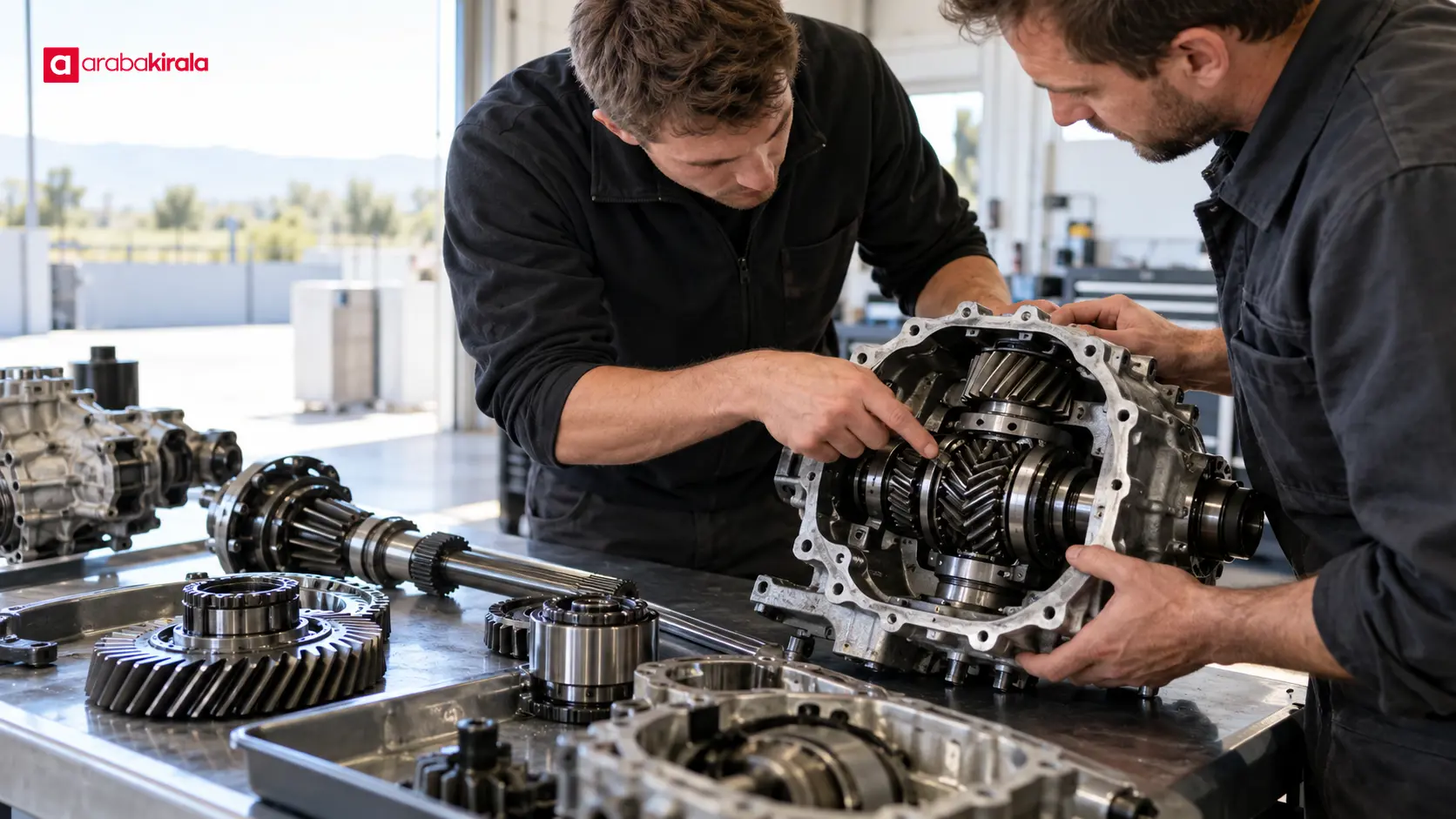
Engine torque travels through the gearbox and drivetrain toward the wheels. In a four-wheel-drive car, both the front and rear axles receive drive. The center differential manages the relationship between those two axle paths. It lets the axles work together while accommodating the speed differences needed as the car turns.
“Center” describes the differential’s place in the drivetrain’s function, not necessarily its physical location at the exact middle of the car. It links the front and rear drive paths. Depending on the design, the mechanism can allow the axles to rotate at different speeds while transmitting torque to both. The exact arrangement depends on the rally car’s technical specification and homologated design.
Center, front, and rear differentials compared
Front and rear differentials manage the speed difference between the left and right wheels on their respective axles. This matters in a corner: the outside wheel travels farther than the inside wheel, so it needs to cover more distance. Forcing both wheels to rotate at the same speed in every condition can make the tires scrub across the surface and affect how the car turns.
The center differential relates the front axle to the rear axle; it does not perform the same left-to-right job as an axle differential. That distinction is the simplest way to understand a WRC center differential. Front and rear differentials handle speed differences within their axles, while the center unit manages the relationship between the two axles. These components have related but different tasks.
Why do the axles need different speeds in a corner?
A car’s front and rear wheels do not follow identical paths through a turn. The front axle traces a different arc from the rear axle, so their rotational speeds may need to differ. A center differential helps accommodate that difference while maintaining a connection that sends torque to both axles.
If the front and rear axles were rigidly tied together in a way that prevented any speed difference, the tires might have to slip to make up for the mismatch, especially on a high-grip surface. That can load drivetrain components and influence cornering behavior. Allowing movement between the axles helps the car respond to their different paths and changing grip. It does not make every car behave identically in every corner: tires, suspension, weight transfer, surface, and driver inputs all matter.
Torque distribution is not the same as traction
Torque distribution describes how engine force is delivered through the drivetrain to the axles. Traction describes how effectively a tire can transmit force to the road. Sending more torque to one axle does not automatically create more grip. Loose gravel, asphalt, snow, or surfaces with different grip levels can change how much force each tire can use. Tire construction and the load on each wheel also affect the result.
When a tire has limited grip, some of the force reaching it may produce wheelspin instead of moving the car forward. The differential and drivetrain influence how torque can be transmitted through the other axle and wheels. Still, it is misleading to summarize every system as “it sends power to the wheel with grip.” Mechanical differentials, locking behavior, and electronically controlled solutions work in different ways. A particular response should not be assumed for every rally car or setup.
How the surface changes the picture
Gravel and loose surfaces
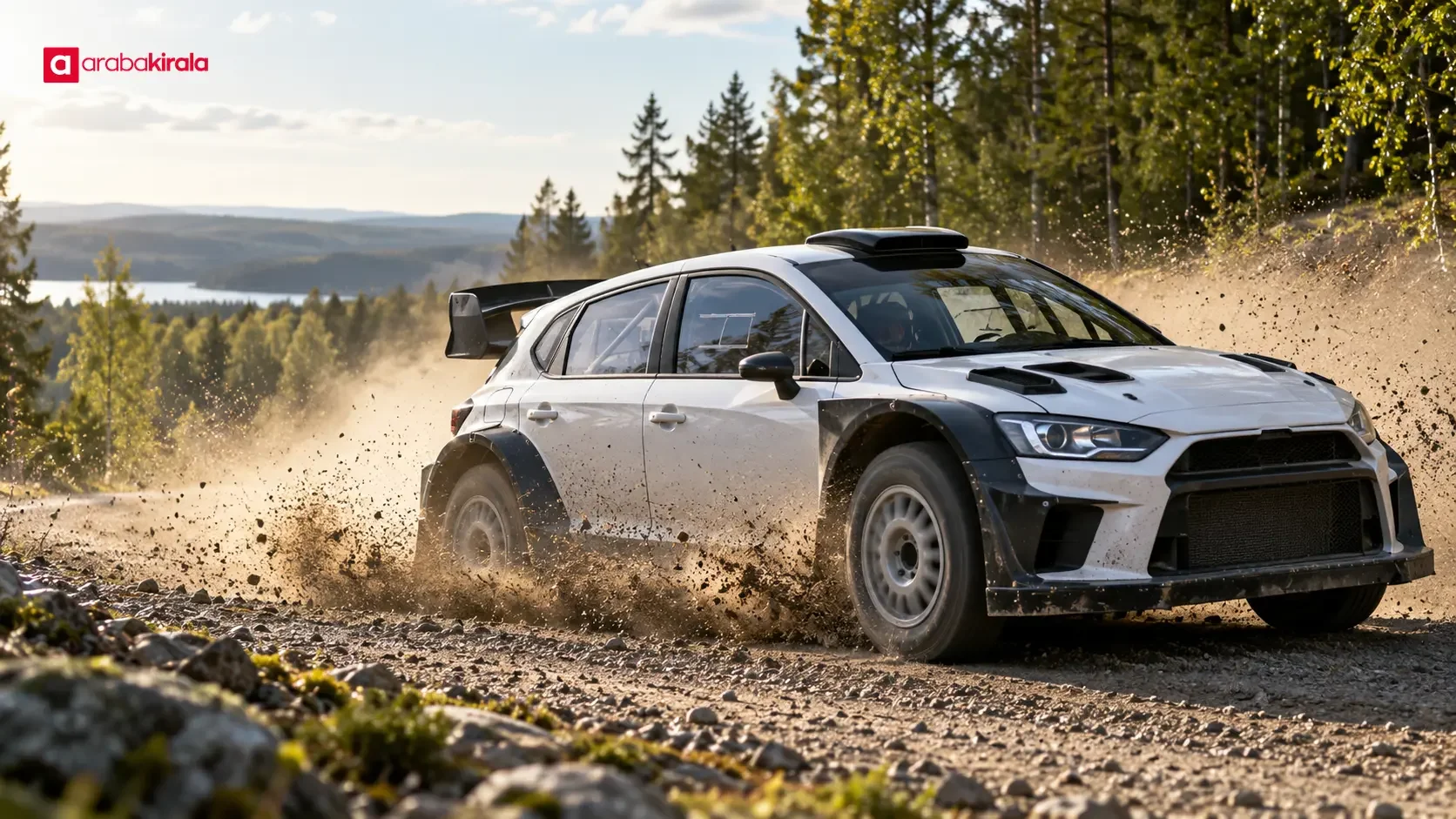
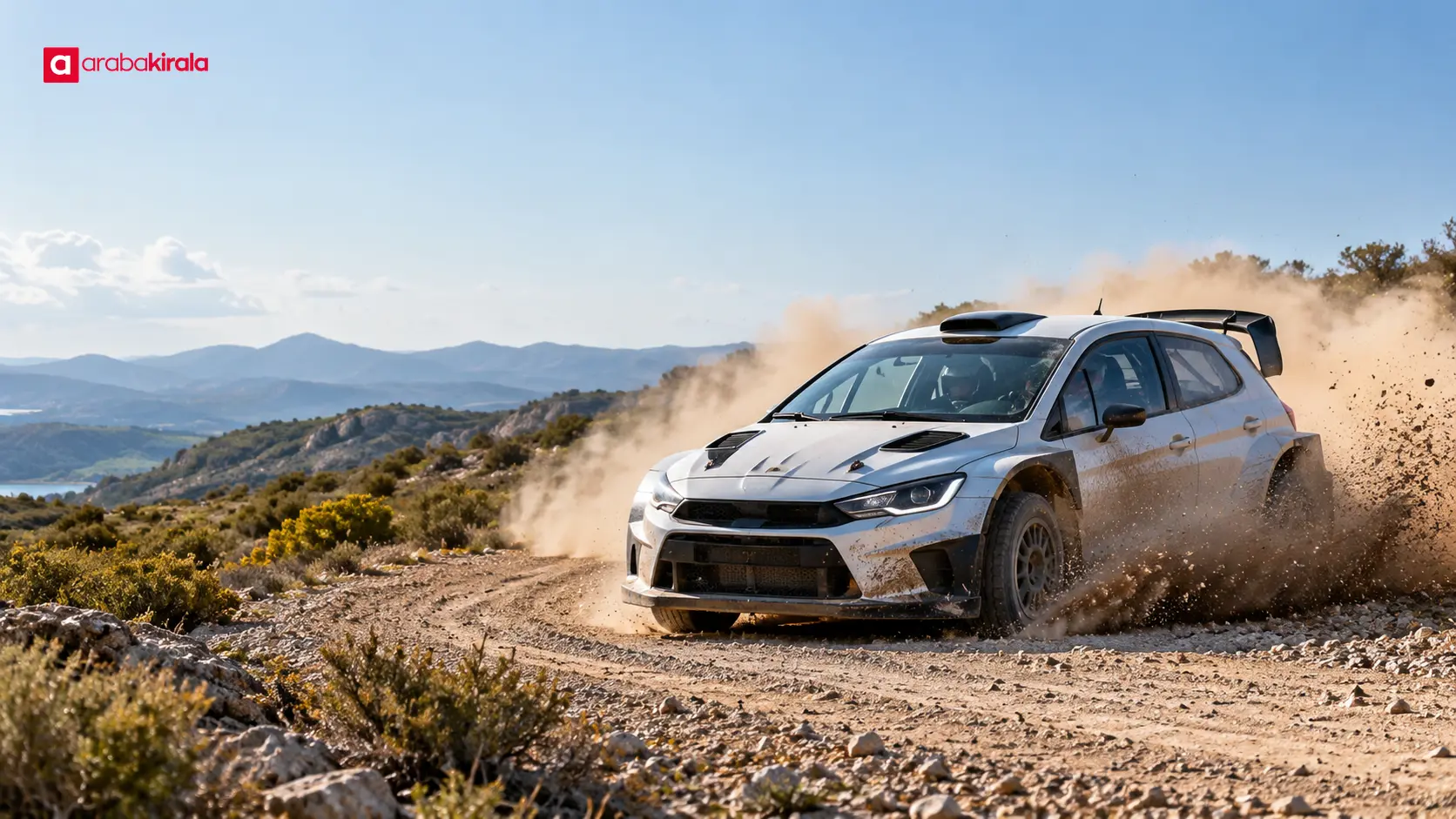
On gravel, a tire presses against a surface that can move beneath it. Grip changes with the stones, how compact the road is, and how the car’s load shifts. Drive reaching all four wheels can contribute to acceleration, but the torque behavior needs to work with the grip available. As the driver opens the throttle on corner exit, the car’s direction and wheelspin have to be managed together.
Tarmac
Tarmac can offer a more consistent surface than loose gravel, but grip still changes with corners, temperature, water, and tire condition. Allowing an appropriate speed difference between the axles remains relevant to cornering. Differential behavior can influence the car at turn-in, through the middle of the corner, and on exit. Teams consider it as part of the wider tire and suspension setup.
Snow and ice
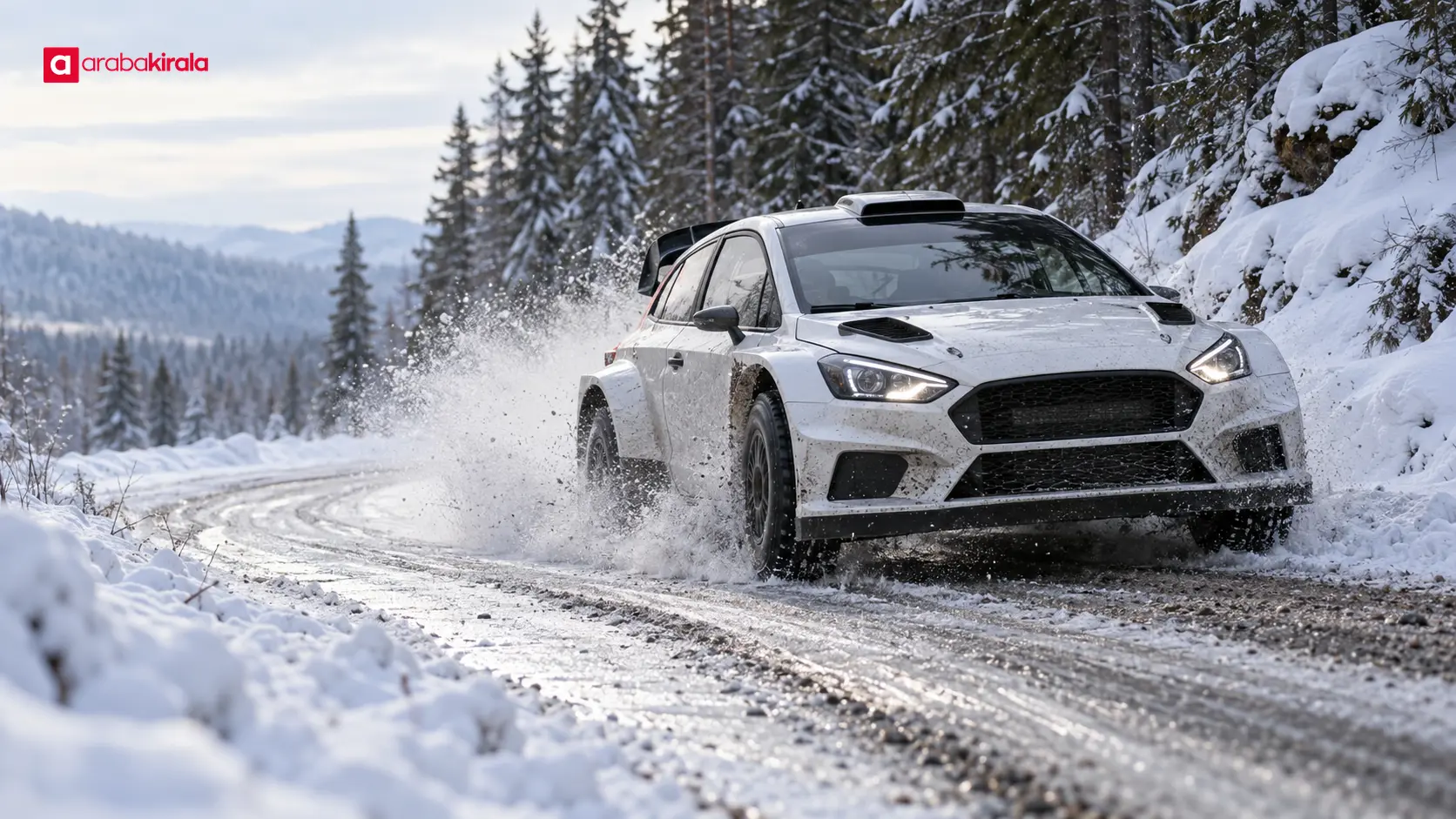
Snow and ice reduce the grip available to the tires, so small driving inputs can change wheelspin quickly. Four-wheel drive allows torque to reach both axles, but it does not remove braking distance or make a car immune to sliding. The differential manages the transfer of available mechanical force between axle paths; it does not create grip that the tires and surface cannot provide.
What can an adjustable differential change?
In a competition car, the differential’s locking or torque-transfer characteristics can affect how freely the axles respond and how closely they work together. More locking does not automatically mean better traction or better cornering in every condition. It can change how the front or rear of the car responds, how it holds its line under throttle, and how the wheels spin.
Rally teams assess setup in light of the stage surface, tires, weather, and driver feedback. There is no single “best” setting for every part of a rally; setup is a balance across different sections and conditions. WRC car specifications are also defined by the technical rules for their class and period. It is not safe to assume that every WRC car’s center differential has identical details or behavior.
How to spot its effects while watching
Video alone cannot reveal a car’s exact torque split or differential setting. A few broad observations can still help you follow the relationship between drivetrain and traction:
- Watch how the car manages wheelspin and holds its line as it accelerates out of a corner.
- Consider its response under throttle separately from its behavior on corner entry.
- Remember that the same car can react differently when the surface changes.
- Avoid drawing a firm conclusion about differential settings from one corner; tires, suspension, and driver inputs also play a part.
Summary and next step
The center differential connects the front and rear axle drive paths in a WRC car, helping manage torque transfer while allowing for differences in axle speed. It is distinct from the front and rear differentials, which manage left-to-right wheel speed differences within each axle. Traction is the result of the tire’s interaction with the surface and the car’s overall setup, not the center differential alone. When following rally technology, separate the axle-to-axle role from the left-to-right role. For a specific car’s technical details, consult its official technical documentation and the relevant FIA regulations.
Frequently Asked Questions
Does a center differential send power separately to all four wheels?
Its central role is to manage the relationship between the front and rear axles. The axle differentials address left-to-right wheel differences. The details of the complete system depend on the car’s design.
Does a center differential mean the car always has four-wheel drive?
A center differential links the front and rear axles within a drivetrain, but how and when a car delivers drive depends on its technical arrangement. The component’s name alone does not describe every operating strategy.
Does the differential always send torque to the wheel with the most grip?
That is an oversimplification. Torque transfer depends on the differential type, its locking behavior, and the rest of the drivetrain. Tire grip also changes, and different systems respond differently.
Does a center differential make a car faster through corners?
It cannot guarantee that result by itself. Allowing axle speed differences matters to cornering, but speed and control also depend on tires, suspension, surface, vehicle balance, and driver inputs.
Do all WRC cars use the same center differential?
No. Technical regulations set boundaries, but class, homologation, and design details matter. A feature described for one car should not automatically be generalized to every WRC car.
Legal Disclaimer: All content, articles and information on the Araba Kirala website are provided solely to inform users. No information shared on this website constitutes definitive advice or guidance. Araba Kirala Teknoloji A.Ş. and its authors cannot be held responsible for any direct or indirect damages arising from the application of information on the website. For all questions and requests regarding car rental, please contact the office from which you will rent your vehicle.












