
How Driver and Co-Driver Communication Works in a WRC Rally Cockpit
Published: October 17, 2026 • Reading Time: 7 min • Last Updated: October 17, 2026
Learn how WRC crews prepare and use pace notes, how co-driver calls support the driver, and what the intercom contributes to coordination on a stage.
Contents
- Two roles, one driving plan
- What do pace notes describe?
- Preparing notes as a crew
- How co-driver calls help
- The intercom and cockpit sound
- Feedback and changing conditions on stage
- How communication relates to performance and safety
- What to notice when watching a rally
- Summary and a useful next step
- Frequently Asked Questions
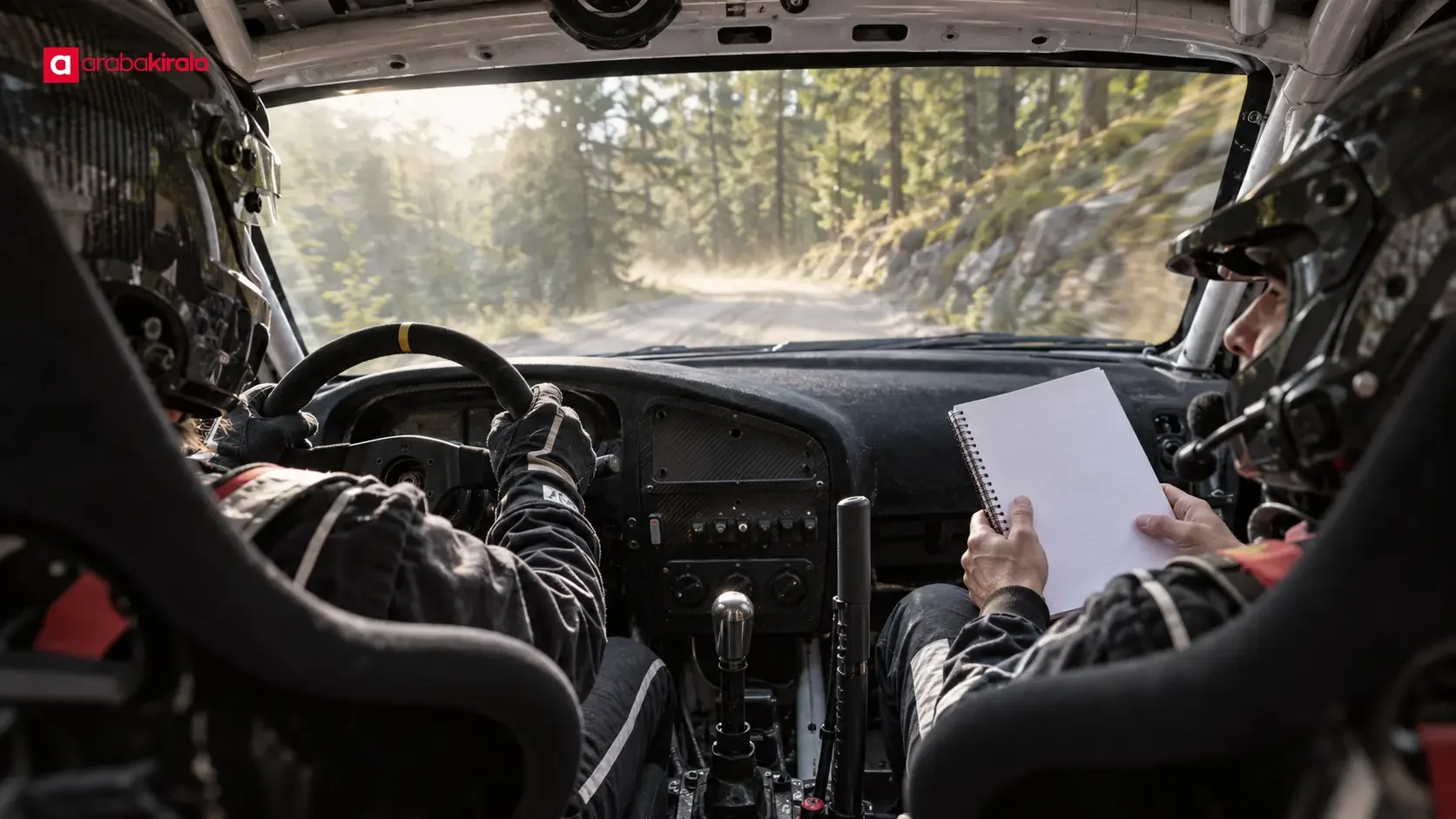
WRC driver and co-driver communication connects the person who sees and controls the car with the person who has described the stage ahead. This guide explains what pace notes convey, how a co-driver calls them, why the intercom matters, and how the crew builds a shared rhythm before and during a stage. Understanding that exchange shows why rally performance depends on prepared information as well as steering and engine power.
Two roles, one driving plan
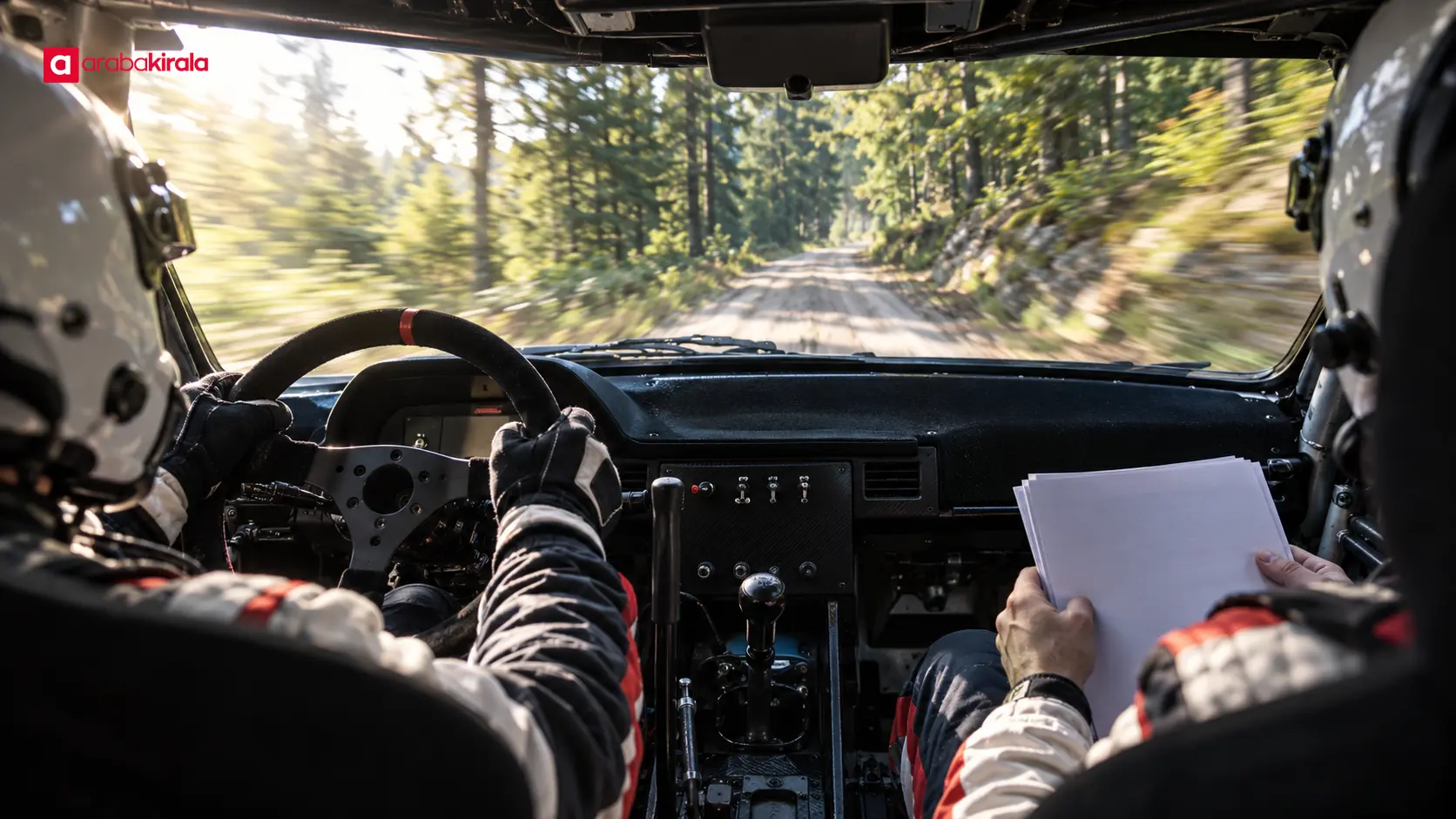
The driver controls the car in response to the road and conditions visible at that moment. The driver assesses bends, surface changes, visibility, and the car’s response directly. The co-driver follows prepared pace notes describing sections farther ahead and turns them into short, ordered calls the driver can use. As a result, the driver does not have to rely only on what is visible through the windscreen when approaching each feature; the crew has also prepared a description of the road coming next.
This division of work does not mean the co-driver controls the driving or that the driver follows every call without judgment. Notes help describe and plan for the road; the driver remains responsible for controlling the car safely. If visibility, grip, or the car’s behaviour differs from expectations, the driver’s observation matters. The value of communication lies in combining different kinds of information in a shared decision process, not in both crew members doing the same job.
What do pace notes describe?
Pace notes describe features of the stage that matter to driving in an organized system. They may identify a bend’s direction and approximate character, how successive corners connect, a narrowing or widening road, changes in shape such as a crest or descent, and notable features that deserve attention. The notation and level of detail depend on the crew’s method, so a symbol should not be assumed to mean exactly the same thing for every team.
The goal is not to describe every detail but to deliver relevant information in the right order. If the road after a bend affects the plan, the relationship between the two features can be noted. This helps the driver prepare not only for the approaching point but also for how to position the car on exit. Notes can be thought of as a map for driving, but they cannot prevent the actual surface from changing.
Preparing notes as a crew
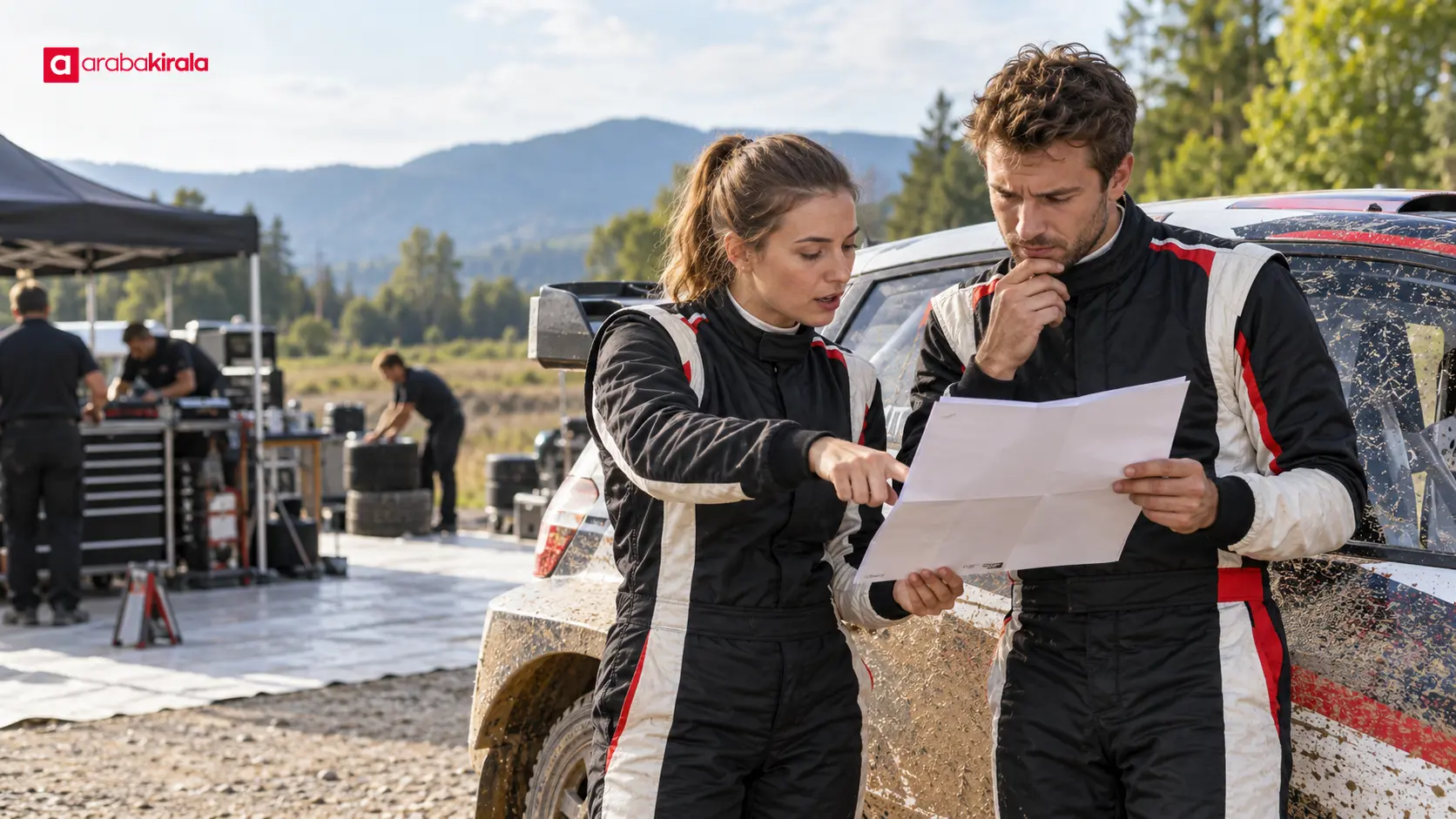
During pre-event reconnaissance, the crew reviews the stage without driving at competition speed and records features that may inform its plan. The driver and co-driver work through the description together: terms, abbreviations, and rhythm need to make sense to both. It is not enough for the notes to be readable to the co-driver; the driver must be able to turn a spoken phrase quickly into an expectation of the road ahead.
Reconnaissance is not a competition-speed practice run. Crews follow the applicable reconnaissance rules and safe-driving requirements. Prepared notes are not a guarantee of exactly what the road will be like later. Weather, surface, visibility, or stage conditions can change before or during a run. Notes therefore do not remove the need for the driver to watch the road and the car’s response; they are considered alongside current observations.
How co-driver calls help
On stage, the co-driver calls the notes in relation to the section approaching the car. Timing matters: a description delivered too early may be hard to retain, while one delivered too late may not help with planning. Crews establish a workable call rhythm during reconnaissance and preparation. The driver considers each description along with speed, the road currently in view, and the car’s behaviour.
Calls are generally concise and structured. The aim is not to give a long explanation in the cockpit but to pass useful information in a clear sequence. A notable feature can be emphasized; the order of a series of bends can help the driver anticipate the next section. Voice, pace, and phrasing vary with crew habits. Even a notation system that appears standardized can be used differently by different crews.
The intercom and cockpit sound
Inside a rally car, the engine, tyres, and road surface create substantial noise. A helmet communication system lets the driver and co-driver speak in that environment. The helmet and headset arrangement helps reduce the effect of outside noise, while the microphone transmits speech to the other crew member. The system supports clear conversation; it does not detect road conditions, interpret notes by itself, or replace crew preparation.
Communication equipment is checked before competition. Helmet fit, microphone position, connections, and audio level all affect whether crew members can hear and speak comfortably. A sound problem during a run can distract the crew or disrupt the information flow, which makes equipment preparation as useful as preparing the notes. Equipment design and checks differ, so one setup should not be treated as universal for every car.
Feedback and changing conditions on stage
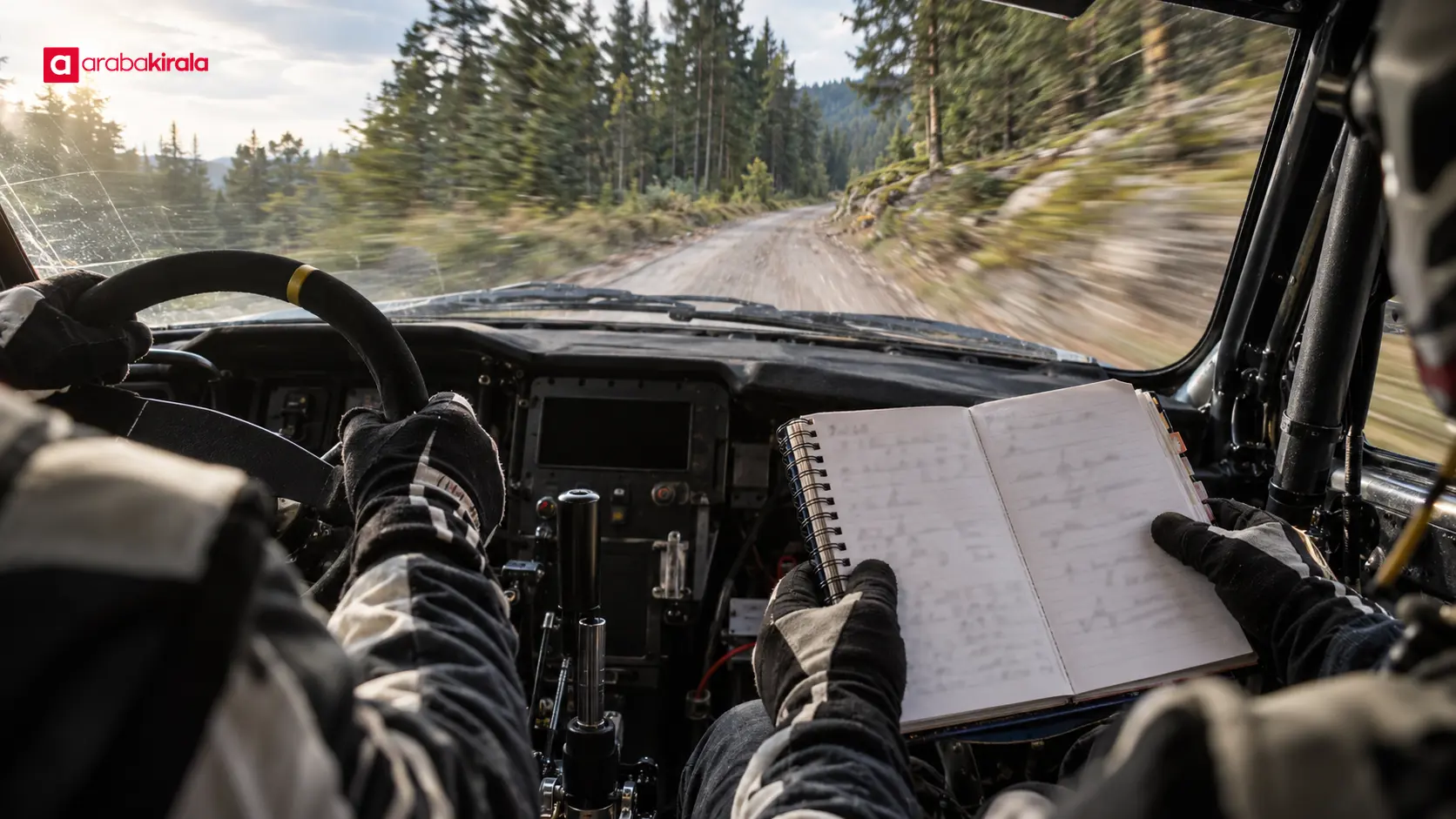
The co-driver’s role is more than reading continuously. The driver may give brief feedback if the road looks different from the notes or a call is unclear. A good crew communication routine keeps unnecessary conversation down and brings the needed information forward. At the same time, cockpit talk should not become so lengthy that it pulls the driver’s attention away from the road. Brief, agreed phrases are useful for this reason.
Rain, mud, loose stones, or changes in visibility can affect how a road behaves. A pace note describes the general shape of a bend; it does not report grip at that instant or confirm whether the surface has changed. The driver uses observation and the car’s response to adjust speed and line to the conditions. This distinction helps explain the notes’ value: they provide prepared information, not a substitute for assessing the road in real time.
How communication relates to performance and safety
A well-coordinated crew helps the driver organize information about the road ahead and plan decisions more consistently. The co-driver’s ordered description helps the driver manage the approaching section instead of trying to think about the entire stage at once. The driver compares the described road with actual conditions. Preparation, transmission, and application of information become connected parts of the crew’s work.
This communication cannot guarantee safety by itself. Rallying takes place on closed stages under defined rules, and this style of driving should not be imitated on public roads. Spectators should follow event safety instructions and stay away from prohibited or hazardous areas along the route. Learning about cockpit coordination is a way to understand teamwork in the sport, not an instruction for attempting high-speed driving.
What to notice when watching a rally
- Notice how the co-driver’s speaking rhythm changes with the complexity of the road.
- Listen for descriptions that connect successive sections rather than naming isolated corners only.
- Observe how the driver combines calls with the road in view and the car’s movement.
- Consider how the crew balances prepared notes with real-time observation when conditions change.
Summary and a useful next step
WRC cockpit communication is built around pace notes prepared during reconnaissance, calls delivered by the co-driver at a useful moment, and the driver’s assessment of those notes against current conditions. The intercom carries that information through the noisy cockpit, while a shared vocabulary helps the calls make sense. When you watch the next rally, listen to the notes as a system for describing the sequence of the road and supporting a driving plan.
Frequently Asked Questions
Does the co-driver show the road to the driver?
The co-driver calls pace notes prepared during stage reconnaissance. Those descriptions help explain the shape of the road ahead, but they do not replace the driver’s view or independent assessment of the road.
Are pace notes the same for every WRC crew?
No. The notation, vocabulary, and level of detail can vary by crew. What matters is that the driver and co-driver understand the system they use together and attach compatible meanings to its calls.
Are the notes prepared before the rally stage?
The crew reviews the stage during reconnaissance and records features relevant to its plan. Preparation follows the applicable reconnaissance rules, and the notes do not mean that conditions will remain unchanged during competition.
What happens if the intercom stops working?
The intercom helps crew members speak over cockpit noise. A fault can make information harder to pass, so teams check communication equipment before competition. A particular fault procedure should not be assumed to be the same for every crew.
Do pace notes prevent driver mistakes?
Notes prepare the driver for the road ahead and support planning, but they cannot guarantee that mistakes will not happen. The driver still assesses visibility, the surface, and the car’s response continuously.
Why is communication so important in rallying?
Time to make decisions on stage is limited, and the driver is controlling the car at the same time. A prepared, concise flow of information helps the driver anticipate the road ahead and connects the two crew members’ roles.
Legal Disclaimer: All content, articles and information on the Araba Kirala website are provided solely to inform users. No information shared on this website constitutes definitive advice or guidance. Araba Kirala Teknoloji A.Ş. and its authors cannot be held responsible for any direct or indirect damages arising from the application of information on the website. For all questions and requests regarding car rental, please contact the office from which you will rent your vehicle.












