How Do Turbochargers and Engine Air Supply Work in WRC Rally Cars?
Published: October 28, 2026 • Reading Time: 6 min • Last Updated: October 28, 2026
Learn how a WRC turbocharger uses exhaust energy, how air travels into the engine, and why cooling and control matter on demanding rally stages.
Contents
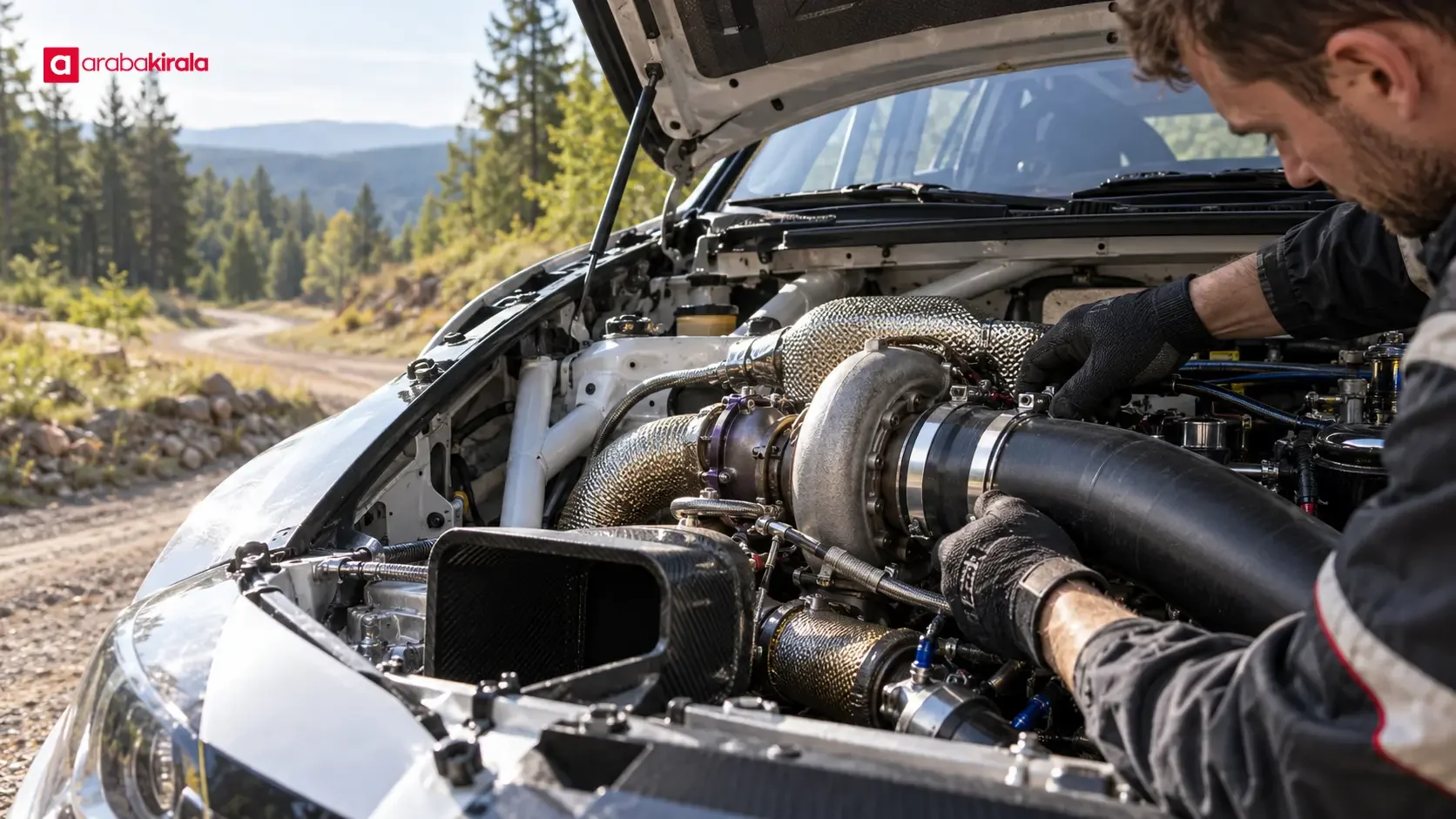
In a WRC rally car, the turbo system helps deliver denser air to the engine so that useful power and torque are available across changing engine speeds. This guide explains how exhaust gas spins the turbo, how air moves from the filter to the cylinders, what the intercooler does, and why the system must be managed carefully on a rally stage. Understanding the whole air path makes it easier to see why boost pressure alone does not describe performance.
The basic principle of a turbocharger
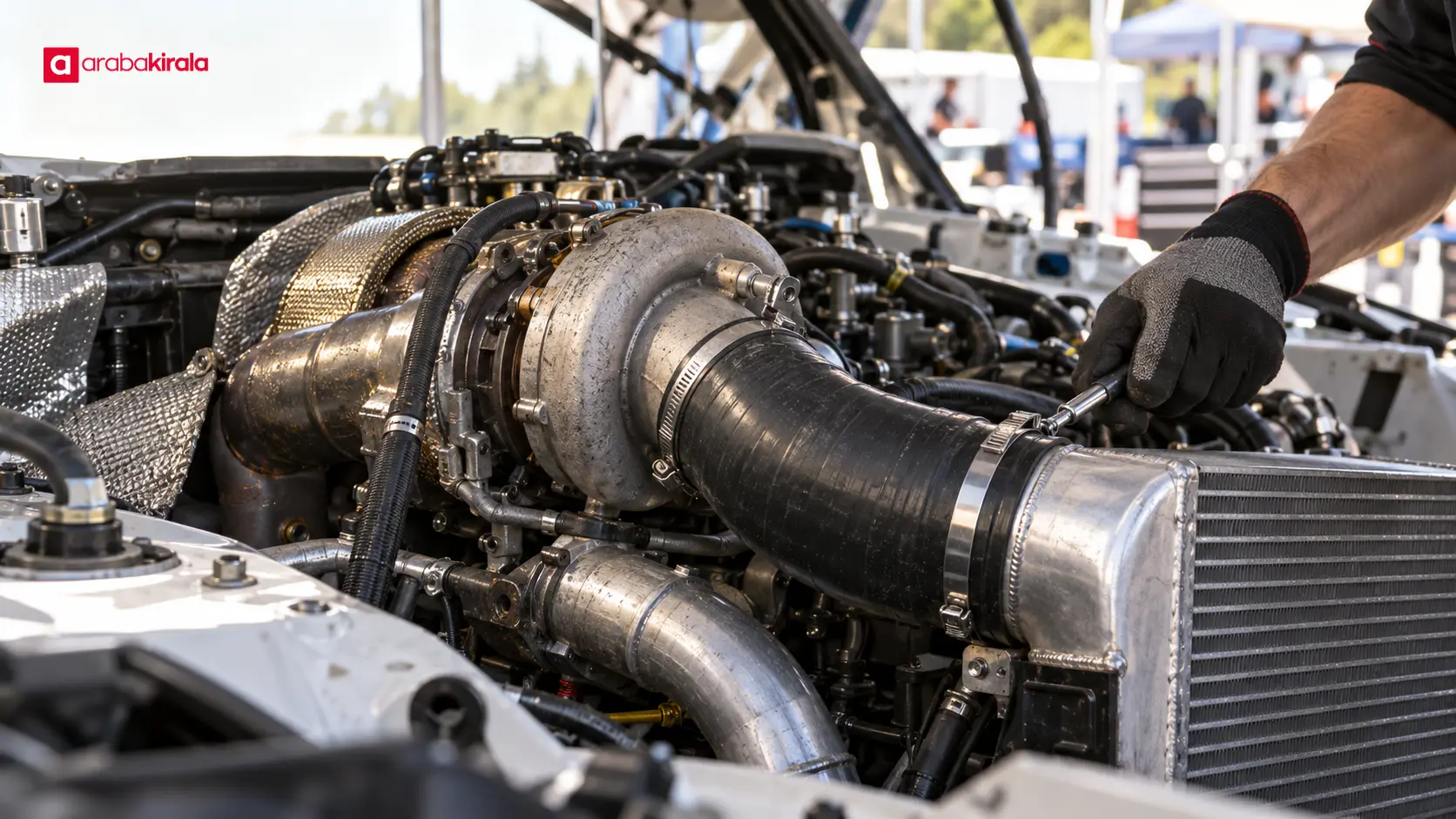
A turbocharger uses two connected wheels to use energy in the exhaust flow and compress the air entering the engine. Hot, fast exhaust gas turns the turbine wheel. On the same shaft, the compressor wheel draws in fresh air and raises its pressure. This can deliver more air mass to the engine than it could take in at atmospheric pressure alone. When fuel delivery and ignition are calibrated for that air, an engine can produce more load from a given displacement.
A turbo does not create energy from nothing. It recovers part of the energy in the exhaust to compress intake air, while also adding heat, mechanical load, and some restriction to the exhaust flow. For that reason, turbo design is not simply a search for the highest possible pressure. Engineers balance response, temperature management, durability, power demand, and the applicable technical rules.
From air filter to cylinders: the air path
Engine air first passes through an inlet and an air filter. The filter reduces the amount of dust and debris reaching the compressor and engine, a valuable function on gravel and dusty stages. The air then enters the turbocharger’s compressor. Compression raises the air temperature, and hotter air can be less dense, so the next part of the system addresses that heat.
Compressed air travels to an intercooler, also called a charge-air cooler. Depending on the design, outside air or another cooling arrangement removes some heat from the charge air. Cooler air may be denser in the same volume and can provide more favorable conditions for combustion. The intercooler does not make boost; it cools air that the compressor has already compressed.
From the cooler, pipes carry air through the throttle body and into the intake manifold, then to the cylinders. Sensors measure inputs such as pressure and temperature. The engine control unit considers those readings alongside the engine’s operating state. Fuel quantity, ignition, and turbo control are connected, so a change in one part of the system can influence the engine’s overall behavior.
Boost, engine speed, and response
Turbo response describes how the engine reacts between a driver’s request for power and the turbo producing a noticeable boost effect. At low engine speed, exhaust flow may not turn the turbo wheels quickly enough for substantial boost. As engine speed and load rise, the turbine spins faster and the compressor supplies pressurized air. How this transition feels depends on engine design, turbo size, control calibration, gear selection, and immediate load. More boost does not automatically mean sharper response in every situation.
Systems may use a wastegate to route some exhaust gas around the turbine and regulate its speed. The control system manages that flow to support the intended operating range and protect the engine. The details vary by manufacturer and the governing technical rules. A turbo’s operating map accounts for temperature, engine speed, driver demand, and other limits together.

Why rally stages challenge the air supply system
A rally stage is not a place where an engine runs at one steady load for long. The driver moves between acceleration, braking, and gear changes; wheelspin on loose surfaces, uphill sections, slow hairpins, and fast straights all create different demands. The turbo and engine management must respond in a predictable way. A leak in the air path, a restricted filter, or reduced cooling efficiency can affect both performance and consistency.
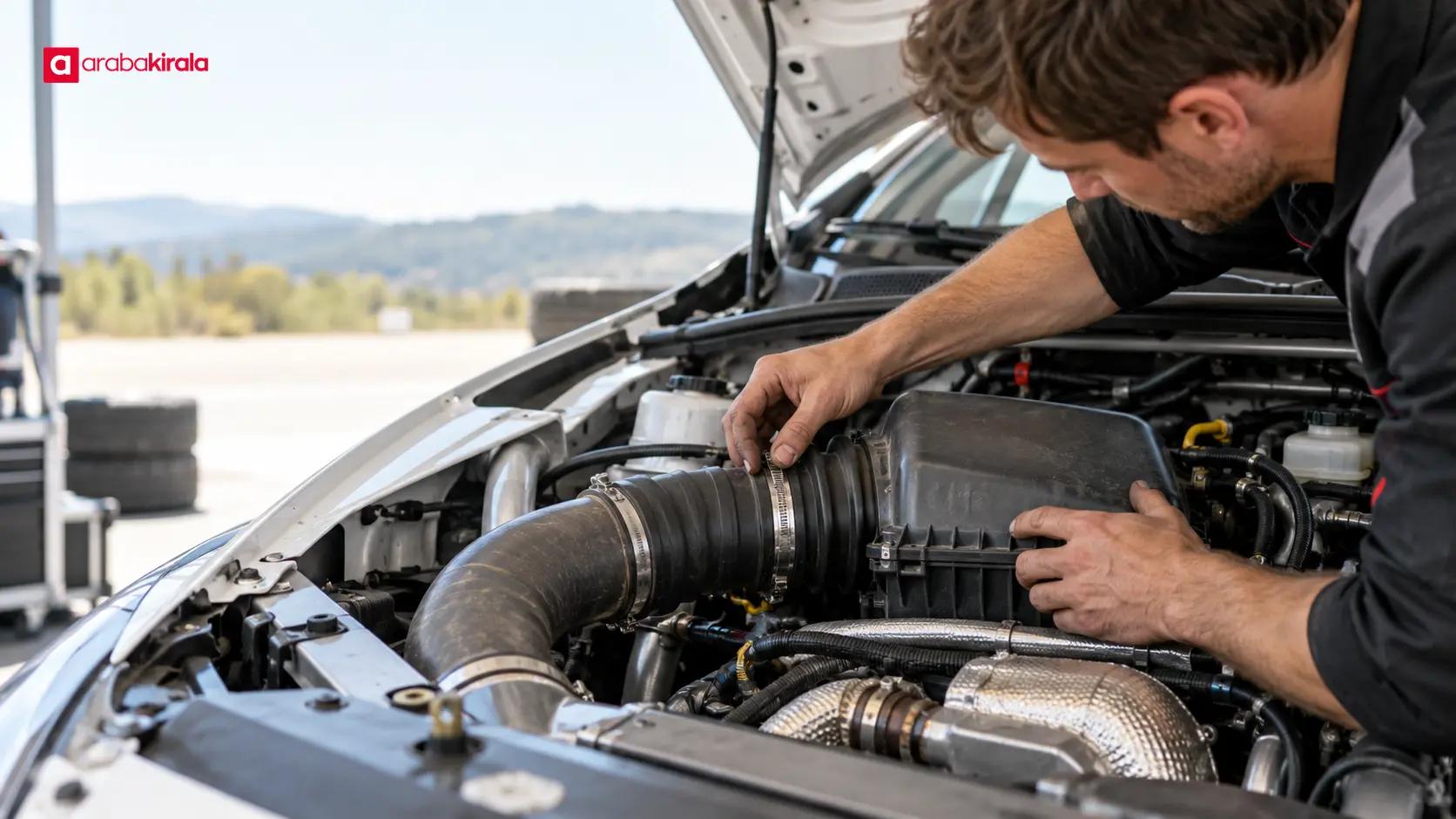
Dust, gravel, and mud can contaminate the air inlet and cooler surfaces. Designers consider inlet placement and filtration for those conditions, while service crews inspect relevant parts. Blocked airflow can make heat management harder. Work on a competition car uses specialist equipment and the applicable manufacturer procedures; it is not a set of repair steps to try on a road car.
How WRC rules shape technical design
Rally car engine and turbo layouts are developed within the technical rules for their class and season. Rules can restrict engine architecture, airflow, or other performance-related features. The details vary by class and period, so an older technical explanation should not automatically be applied to a current car. Exact claims about a particular WRC car’s boost, component dimensions, or control strategy require official technical material for that car.
Technical rules do more than define maximum power. They also help set boundaries for competition and support consistent, inspectable cars. For a particular season, official FIA or WRC technical documents and the manufacturer’s technical explanations are the right places to verify specifications.
What to keep in mind when learning about turbo systems
- The turbine and compressor do different jobs: Exhaust turns the turbine; the compressor raises intake-air pressure.
- The intercooler does not create boost: It helps remove heat added as the air is compressed.
- The filter protects the engine from debris: Filtration and inlet design matter on dusty stages.
- Pressure alone is not a complete measure: Response, temperature, fuel, control calibration, and durability all matter.
- Technical details depend on the car and season: Use current official documents for precise specifications.
Summary and next step
A WRC rally car’s turbo system uses exhaust energy to spin a compressor, filters and compresses incoming air, cools it in an intercooler, and routes it to the engine. Engine management coordinates that airflow with fuel, ignition, and operating conditions. Dust, heat, surface changes, and rapidly varying load all shape the design and service needs. When researching a particular season or car, check FIA/WRC technical material and manufacturer documentation; understand the general system as the combined work of the turbo, cooling, and control components.
Frequently Asked Questions
How does a turbocharger increase engine power?
The compressor can supply denser air to the cylinders than they would receive at atmospheric pressure alone. When engine management matches fuel delivery and ignition to that air, the engine can produce more load. The result depends on the engine design and its control limits.
Why does a turbocharged engine use an intercooler?
The compressor heats air as it raises its pressure. An intercooler removes some of that heat, which can make the intake air denser. It does not replace the turbocharger or generate boost by itself.
What does turbo lag mean?
It refers to the response between a request for acceleration and the turbo system building a noticeable effect. Engine speed, load, turbo dimensions, gear choice, and control calibration can all affect that response; it cannot be reduced to one component or number.
Can dust affect a rally car’s turbo system?
Dust increases the debris handled by the filter and intake path, and accumulated dirt can restrict airflow. Filtration and service inspections therefore matter. Maintenance should follow the car’s technical procedures and be handled by qualified crew.
Do all WRC cars use the same turbo system?
No. Class, season rules, engine architecture, and manufacturer design all affect the system. To find exact dimensions or calibration for a specific car, consult official technical material for that car and season.
Does higher boost always mean a faster rally car?
No. Air temperature, fuel and ignition calibration, response, drivetrain, traction, and durability also affect performance. On a rally stage, usable and consistent power involves more than a single pressure value.
Legal Disclaimer: All content, articles and information on the Araba Kirala website are provided solely to inform users. No information shared on this website constitutes definitive advice or guidance. Araba Kirala Teknoloji A.Ş. and its authors cannot be held responsible for any direct or indirect damages arising from the application of information on the website. For all questions and requests regarding car rental, please contact the office from which you will rent your vehicle.