
How WRC Tire Changes and Tire Allocation Shape a Rally Weekend
Published: October 31, 2026 • Reading Time: 6 min • Last Updated: October 31, 2026 • Author: Merve B.
Learn what tire allocation means in WRC, how tire-change zones differ from service areas, and how teams plan choices around stage conditions.
Contents
- What does tire allocation mean in WRC?
- How a tire-change zone differs from a service area
- How tire choice relates to stage conditions
- Why tire changes involve timing and strategy
- Where tires fit into the rally weekend schedule
- What to watch for as a spectator
- Summary and next step
- Frequently Asked Questions
WRC tire changes are part of a wider competition plan that governs which tires teams can use and where wheel changes may take place. This guide explains tire allocation, the difference between a service area and a tire-change zone, and how stage conditions influence tire choices. Understanding these pieces helps explain why a rally weekend depends on planning and resource management as well as speed.
What does tire allocation mean in WRC?
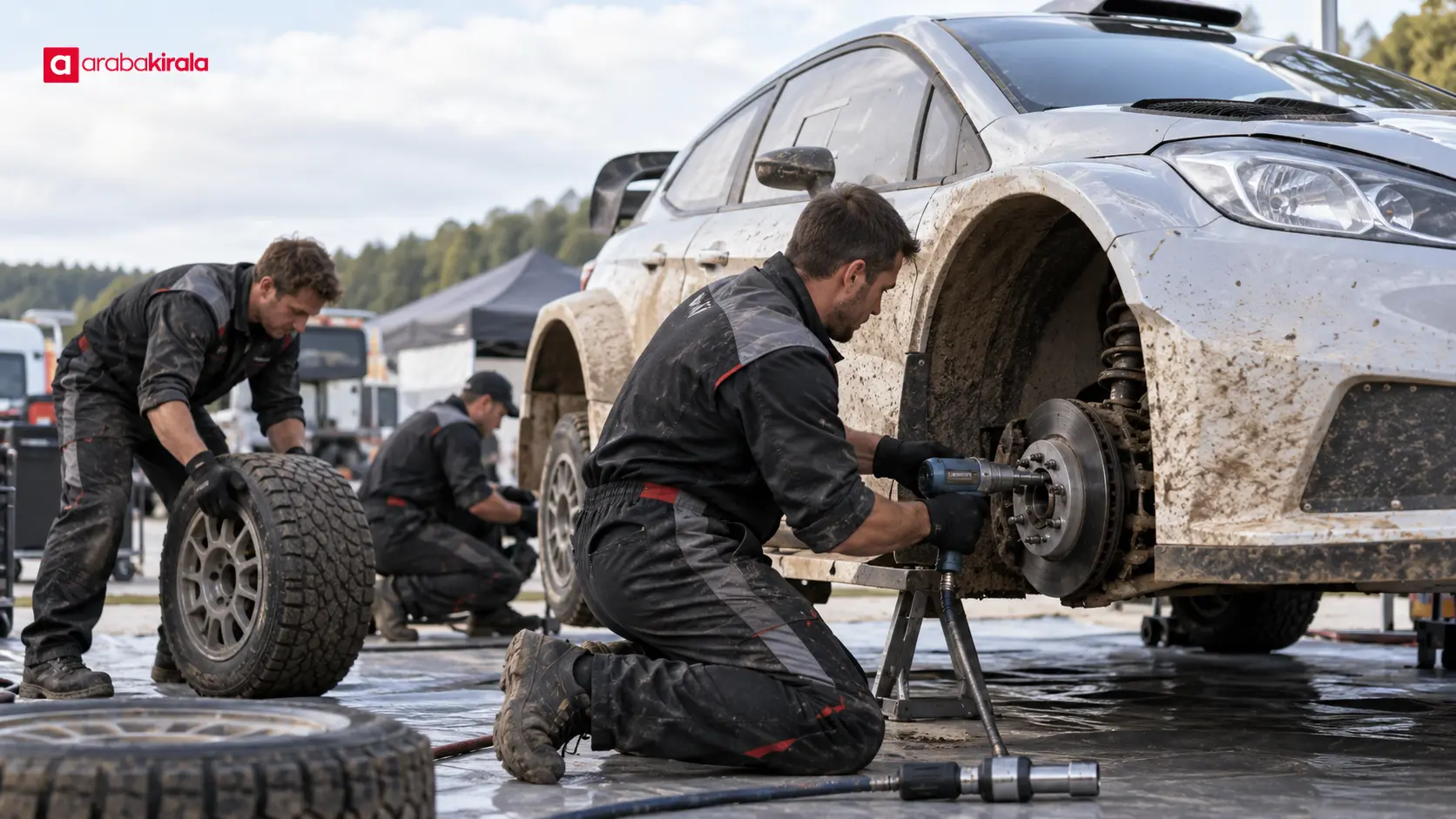
Tire allocation is the planning of the tires a competitor may select for use during a rally under the applicable rules. The key idea is that a team cannot simply choose an unlimited supply of fresh tires before every stage. Allocation is considered alongside stage length, surface type, weather, and the needs expected across different parts of the event.
Allocation does not mean that every competitor must use the same number of tires or make identical choices in every situation. The details depend on the event and the current sporting regulations for the relevant class. Exact quantities, selection windows, or marking procedures should therefore be checked in that rally’s official documents. In general, allocation gives teams a framework for deciding how to use their available tires across the stages.
How a tire-change zone differs from a service area
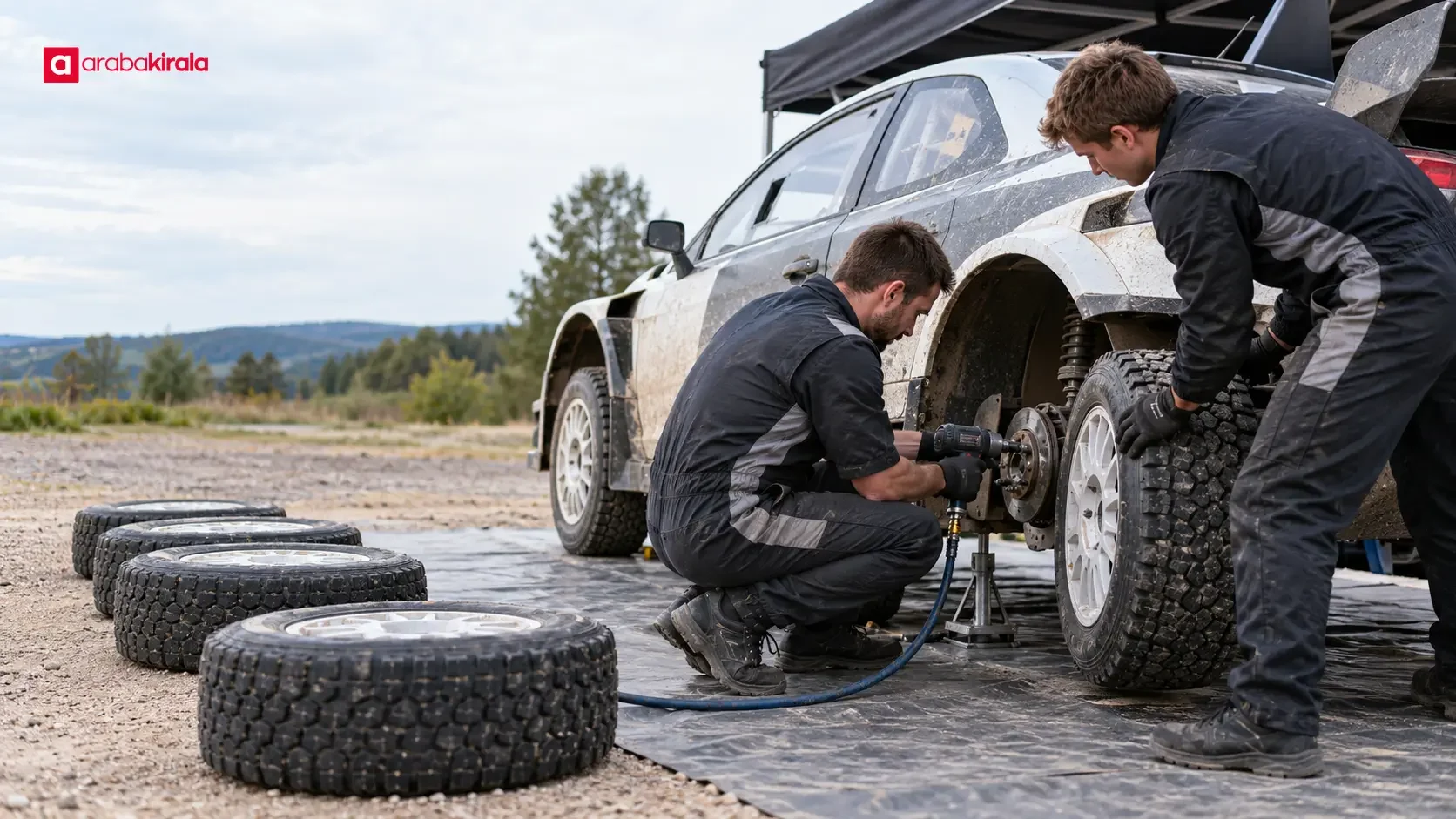
A service area is a regulated location where cars receive planned team support and crews carry out permitted maintenance during scheduled service intervals. Mechanics work within the time and task limits set for that event. A tire-change zone refers to the designated place or procedure where tire changes are allowed under the competition format. The terms are related, but they do not mean that a tire can be changed anywhere on the route.
Rally routes include special stages, road sections, and service intervals, each with a different purpose. Team assistance is restricted on a special stage, so the crew relies on the car’s equipment and applicable safety procedures. At a service area, the team can carry out planned maintenance and tire work within the rules. Controls and the event timetable also govern when activities may take place.
How tire choice relates to stage conditions
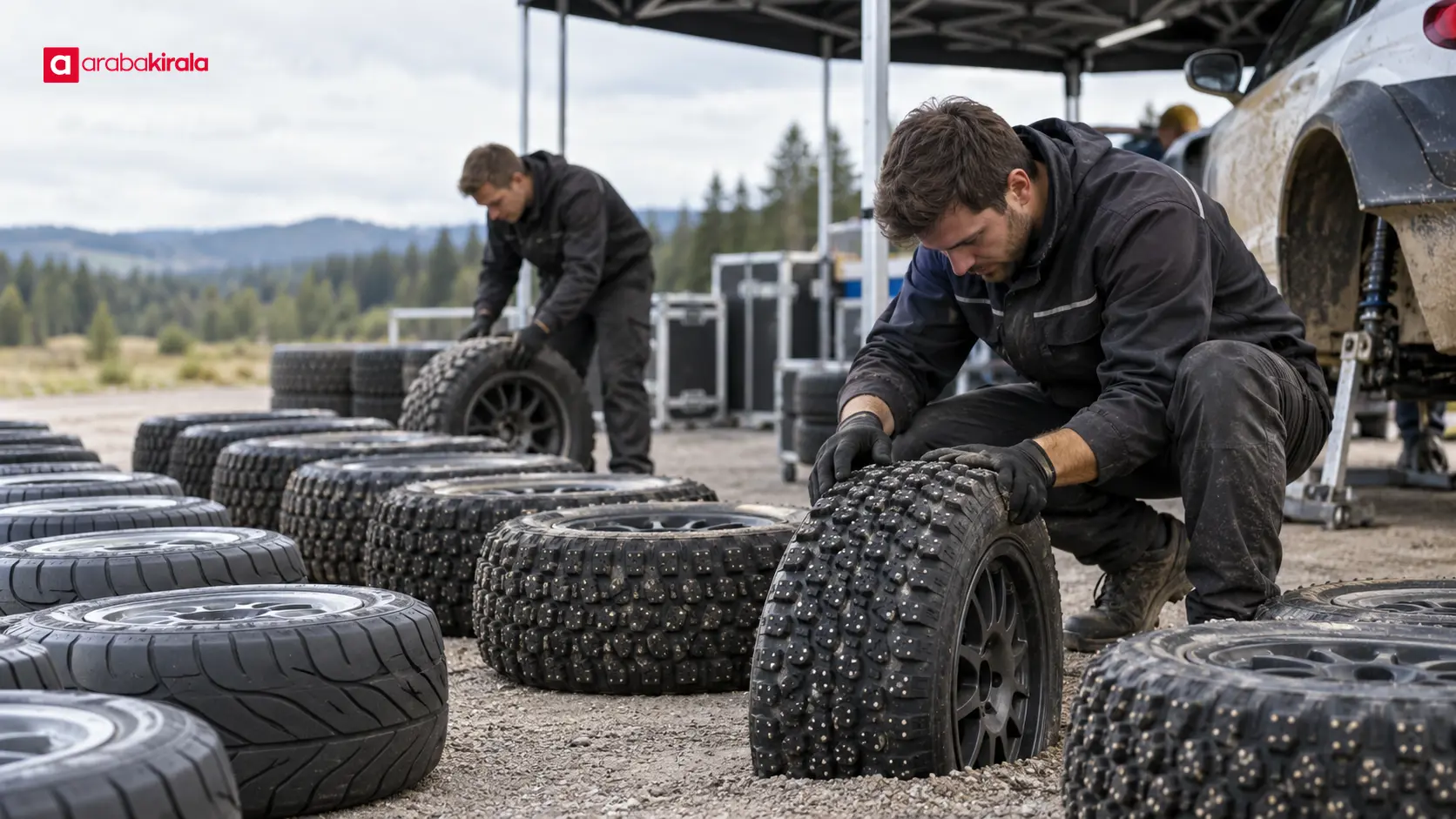
Tread pattern, compound, and construction affect how a tire interacts with the road. Asphalt and loose gravel place different demands on the tire, while rain, temperature, and changing surfaces make the decision more nuanced. A softer compound can help provide grip in certain conditions but may wear faster. A harder option may offer greater durability, yet it cannot be assumed to provide the best grip on every surface. This is a basic technical trade-off, not a claim that one tire is ideal for every stage.
Teams consider not only the next stage but also the sequence ahead and the distance to the next service opportunity. They weigh likely wear, surface roughness, and temperature together. Planning in this way helps teams use allocated tires carefully and reduce unnecessary changes between stages. The exact options available to competitors, and when they can change them, are set by the event’s regulations.
Why tire changes involve timing and strategy
A tire change is both a physical task and a decision that affects the schedule. The crew needs to prepare, have the selected tires ready, and complete the work safely. When a service window is limited, the team coordinates tire work with other permitted checks. Time spent on one task affects the time available for the rest of the service routine.
That is why a simple approach such as “use more tires” or “fit new tires before every stage” does not explain rally strategy. Allocation defines the available resources; the team’s job is to distribute them according to the surfaces and stage sequence. A poor selection may fail to meet expectations for grip or durability. Even a suitable tire does not replace the driver’s need to make safe pace and line choices on the stage.
Where tires fit into the rally weekend schedule
A rally weekend follows a timetable made up of stages and service intervals. Before competition, teams review route information, monitor forecasts, and consider their tire options and use plan. As stages progress, actual road conditions may confirm the plan or prompt a reassessment. Any adjustment still has to fit the locations and time windows allowed by the event.
Tire allocation adds resource planning to that schedule. A team asks not only which tire is suitable, but also which stage group is the best place to use it. The service area is one point where that plan can be carried out. Designated change procedures and other controls help the event run in an orderly and consistent way. For spectators, knowing this makes the quick wheel changes seen during service easier to understand as carefully timed work.
What to watch for as a spectator
- Surface changes: Asphalt, gravel, or snow can call for different tire considerations. Transitions between surfaces increase the planning challenge.
- Stage order: The length and character of consecutive stages affect how long tires may need to last before the next service opportunity.
- Service work: The checks mechanics perform alongside wheel changes show how many tasks must fit into a service interval.
- Changing conditions: Rain or temperature shifts can lead a team to reassess an earlier forecast, while decisions remain subject to the rules.
- Official information: For the number of tires or procedure at a specific event, use the current official regulations and event documents.
Summary and next step
In WRC, a tire-change zone, a service area, and tire allocation are distinct concepts within one planning system. Allocation frames the available tires; stage conditions shape the selection; and service intervals and designated procedures determine when changes can happen. When following an event, consider the road surface, the next service opportunity, and the official regulations together. For event-specific details, check the organizer’s current documents.

Frequently Asked Questions
Why does WRC use tire allocation?
Allocation provides a framework for planning and limiting the tires used during a rally. Teams must distribute their available tires according to stage conditions rather than choosing from an unlimited supply before each stage.
Are a tire-change zone and a service area the same thing?
They are not always interchangeable terms. A service area is where planned vehicle work takes place, while a tire-change zone refers to a designated location or procedure for changing tires. The exact arrangement depends on the event’s official rules.
What conditions matter most when teams choose tires?
Teams consider the surface, stage length and order, temperature, likelihood of rain, and expected wear together. No single tire characteristic guarantees the best result in every condition.
Can a WRC team change tires during a special stage?
Team assistance and permitted work during a stage are governed by the competition rules. For a specific event, consult its current sporting regulations and official instructions for the applicable procedure.
Why do WRC tire changes look so fast?
Service intervals follow a timetable, and crews assign tasks in advance. Preparation, suitable equipment, and coordinated work help the team complete the change efficiently while following safety procedures and event rules.
Legal Disclaimer: All content, articles and information on the Araba Kirala website are provided solely to inform users. No information shared on this website constitutes definitive advice or guidance. Araba Kirala Teknoloji A.Ş. and its authors cannot be held responsible for any direct or indirect damages arising from the application of information on the website. For all questions and requests regarding car rental, please contact the office from which you will rent your vehicle.












