
WRC Water Crossings and Wet Stage Preparation
Published: October 20, 2026 • Reading Time: 7 min • Last Updated: October 20, 2026
Learn how water hazards, changing grip, tyre choices and team preparation shape WRC wet stage driving. This guide explains the risks of water crossings and the role of reconnaissance, pace notes and event safety planning.
Contents
- Why a water crossing is more than a splash
- How wet surfaces change grip
- Why tyres and car setup depend on conditions
- Reconnaissance and pace note preparation
- Safety: distinguish a water hazard from a driving tactic
- Reading wet stage preparation step by step
- What viewers can learn from rally footage
- Summary and next steps
- Frequently Asked Questions
Understanding WRC wet stage driving means looking beyond the splash as a rally car passes through water. Surface grip, visibility, the approach and exit, and what follows the crossing all matter. This guide explains why standing water creates risk, how teams consider tyres and changing surfaces, and how reconnaissance and pace notes contribute to preparation. Rally cars run on controlled stages with specialist equipment and event safety systems; their techniques are not instructions for use on public roads.

Why a water crossing is more than a splash
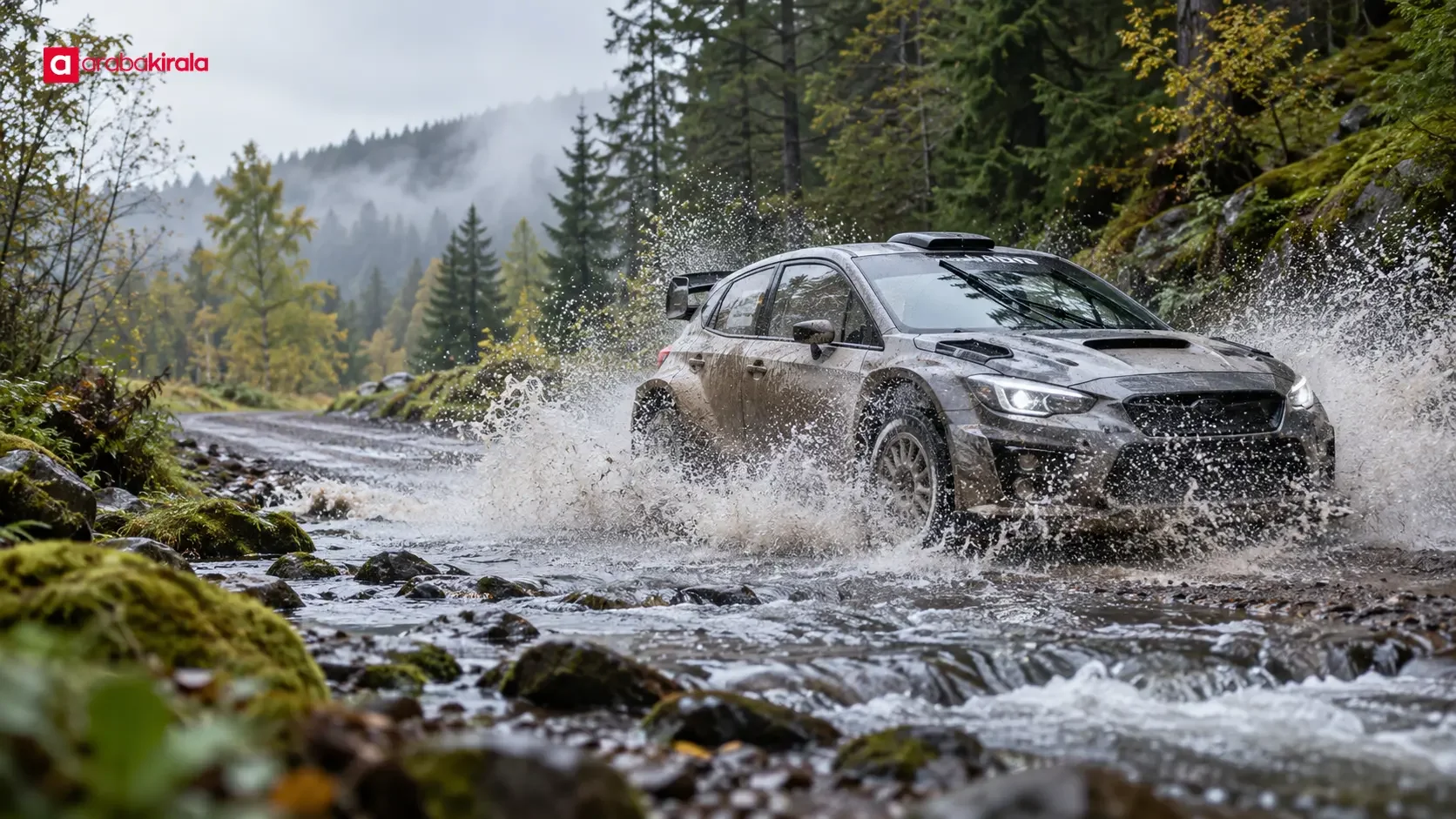
Water on a rally stage can range from a shallow puddle left by rain to a stream or an area flooded by severe weather. A photograph of water thrown up by a car cannot establish the depth or reveal what lies below the surface. Water can conceal holes and stones, and it may combine with mud or loose ground. The same location can change as rain continues or earlier cars carry mud and water onto the road.
Teams assess visibility, road width, the entry and exit line, and the bend or slope immediately after a crossing. Moving quickly into water of unknown depth can threaten control and stage safety. Preparation therefore draws on reconnaissance, pace notes, weather information and safety details from the event rather than a glance at the water alone.
How wet surfaces change grip
The contact between tyre and road affects acceleration, steering and braking. Wet asphalt, mud, damp gravel and standing water do not offer the same grip. One section may be soaked while a sheltered stretch remains comparatively dry; mud brought onto the road can change the surface near a corner. Treating an entire stage as one uniform “wet road” misses these variations.
A film of water can reduce contact between tyre and surface. Tread grooves help move water away from the contact area, but depth, speed, tyre condition and road surface all influence the result. In aquaplaning, a tyre can lose contact with the road and slide on water, reducing steering and braking response. This basic physical risk matters in competition as well as in everyday traffic.
Why tyres and car setup depend on conditions
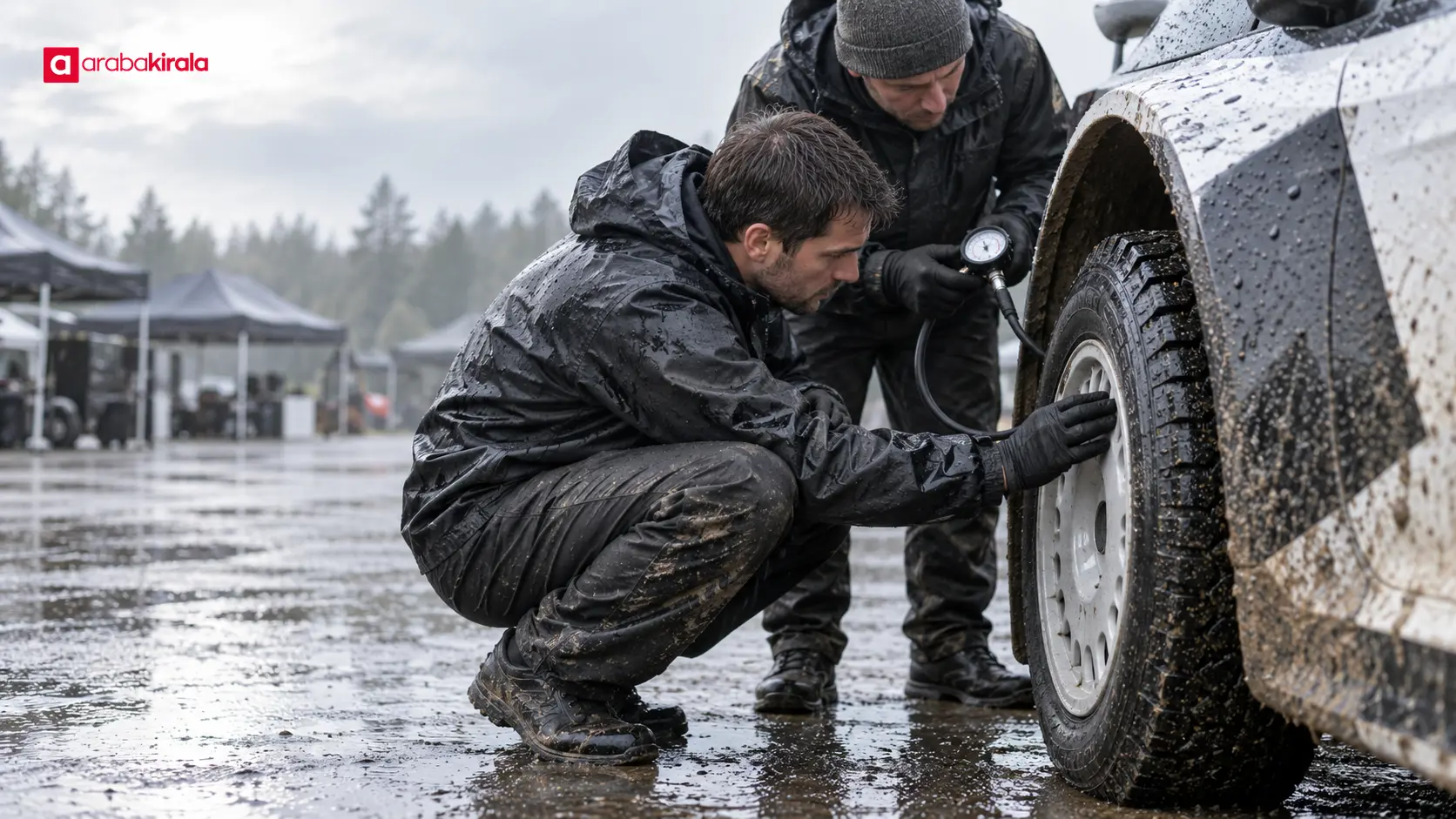
Tyre choice is not made from the simple fact that rain is falling. Surface type, rainfall, temperature, expected changes through the stage and the tyre’s operating range all inform the decision. Tread design plays a part in clearing water and loose material, while the compound relates to temperature and grip. Sporting rules and the available options also shape what a team can select.
It would therefore be misleading to name one tyre as the best choice for every wet stage. Teams combine what they saw on reconnaissance with weather information and technical assessment in service. Pressure, suspension and differential settings can also affect how a competition car behaves, but these are technical decisions specific to that car and its regulations. They should not be treated as setup advice for an ordinary rental car.
Reconnaissance and pace note preparation
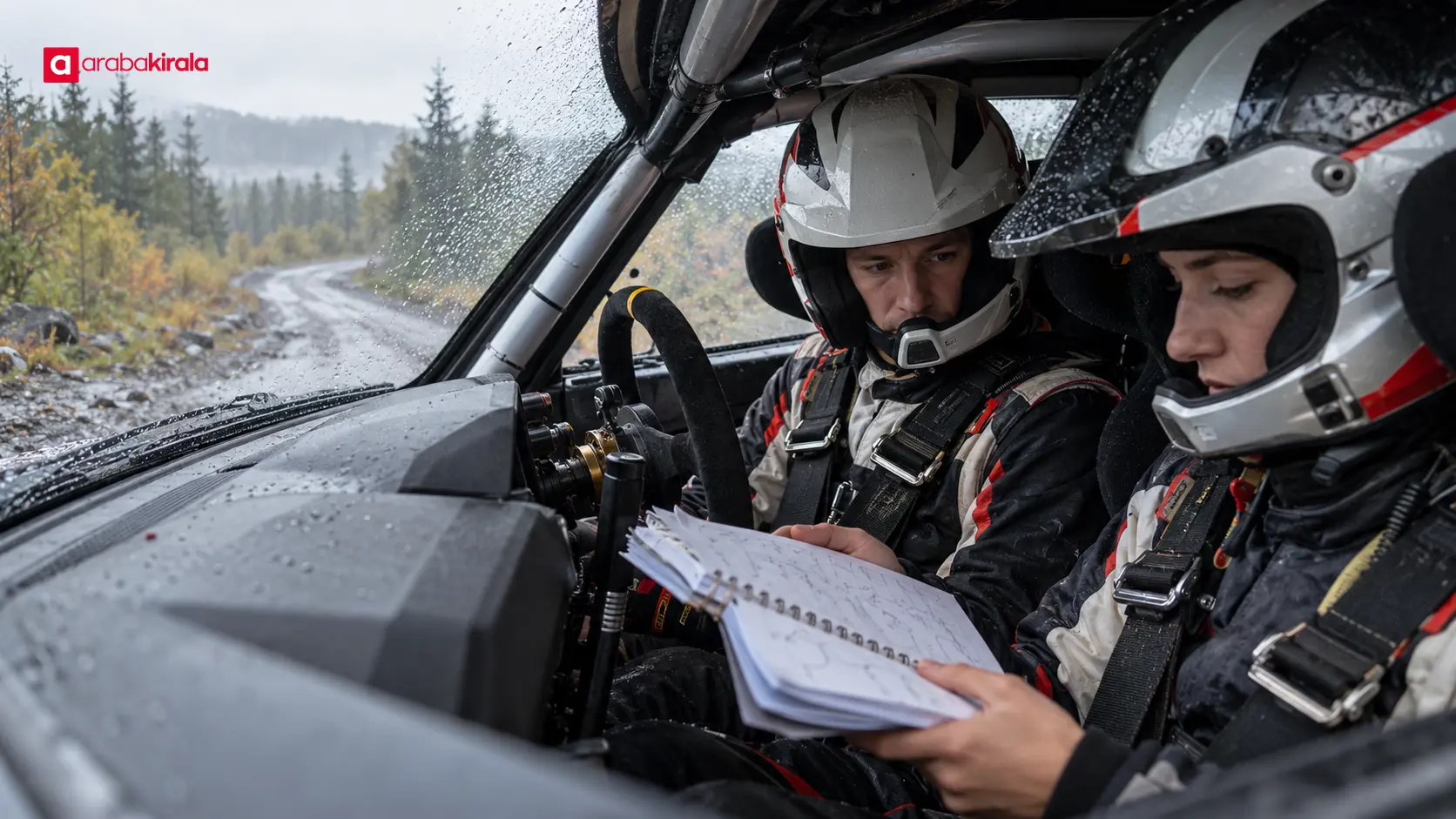
Rally crews inspect stages before competition and record road features in pace notes for the co-driver to read. In wet conditions, changes in surface, puddles, muddy sections, restricted sight lines and the positions of bends become especially relevant. Notes give the driver advance information about the road rather than requiring every feature to be discovered at the last moment.
Pace notes are not a permanent map of the surface. Rain can start after reconnaissance, water levels can rise and earlier cars can spread mud onto the road. Crews interpret their observations alongside current weather and event information. Clear, timely communication from the co-driver helps the driver devote attention to visibility and vehicle control.
Safety: distinguish a water hazard from a driving tactic
The FIA Rally Safety Guidelines 2026 treat bodies of water near a stage as significant hazards in event planning. Lakes, rivers, the sea, pools, dams and floodwater caused by extreme weather can create risks if a car leaves the road or crew members become trapped. The guidance calls attention to the distance from the stage, the depth and movement of water, and the speed of cars approaching the area.
This safety perspective explains why a water crossing should not be viewed simply as a dramatic jump. Stage safety depends on more than driver skill: route selection, risk reduction measures, marshal positions and emergency preparation all matter. Spectators should follow event staff directions, stay out of restricted areas and use designated safe viewing locations. Approaching a section where cars pass at speed creates serious danger for both spectators and competitors.
Reading wet stage preparation step by step
- Weather and stage information: Teams consider when rain is expected, temperature changes and the different surfaces along the route. A general forecast cannot describe the conditions at every corner.
- Surface observations: During reconnaissance, crews note water collecting on the road, muddy sections, crossings and the available exit line. If the depth beneath visible water is unknown, that uncertainty remains relevant.
- Tyre assessment: Available options, the regulations and stage conditions are considered together. The decision does not reduce to one universal formula.
- Communication and equipment: Driver and co-driver review pace notes, while service personnel handle the car’s technical checks. Safety equipment and event instructions form part of the competition framework.
- Reassess when conditions change: New rain, flooding or a major loss of visibility can affect event safety decisions. Safety information takes priority over a performance target.
What viewers can learn from rally footage
The way a car behaves after a water crossing may offer clues about the stage, but one clip cannot establish the water’s depth, the tyre type or whether the car has been damaged. The size of a splash depends on speed, the line through the water and the shape of the puddle. Similar looking footage can represent different conditions.
Watching the approach, the co-driver’s notes, the road beyond the crossing and the event’s safety arrangements together gives a fuller picture. It shows that preparation in WRC is not a single bold manoeuvre: surface knowledge, technical decisions and crew communication work as a system.
Summary and next steps
In WRC, water crossings are considered alongside changing grip and stage safety. Wet asphalt, mud and standing water behave differently; tyre decisions, reconnaissance, weather information and event precautions all shape preparation. Competition techniques should not be copied on public roads. When driving in rain, reduce speed and increase following distance for the conditions. Avoid water whose depth you cannot judge, and do not proceed when visibility or road safety is inadequate. Rally spectators should follow marshals’ directions and remain in safe viewing areas.
Frequently Asked Questions
Why does a rally car throw up so much water when it crosses a puddle?
Speed, the shape of the car, water depth and the line through the puddle all affect how the water moves. A large splash does not, by itself, show how deep the water is or prove that the crossing was safe.
Which tyres are used on wet rally stages?
The choice depends on surface type, temperature, rainfall, stage conditions and the options permitted by the competition rules. There is no single tyre choice for every wet stage.
Do pace notes state the exact depth of a water crossing?
Notes communicate road features observed during reconnaissance, and conditions can change afterward. Rain or rising water can make an earlier observation an unreliable description of the current crossing.
What is aquaplaning?
Water between a tyre and the road can reduce contact and cause the vehicle to slide on the water. Steering and braking response may weaken; speed and the amount of water affect the risk.
How does the FIA account for water hazards when planning a stage?
The FIA Rally Safety Guidelines include the proximity, depth and flow of water, as well as the possibility of a car leaving the route and reaching it, in risk assessment. The purpose is to identify hazards and plan suitable measures to reduce risk.
Should I try a water crossing technique I saw in WRC on a public road?
No. Rally cars run on closed stages under the oversight of professional crews and event organizers. On a public road, avoid water when you cannot judge its depth, slow down in rain and leave a safe following distance.
Legal Disclaimer: All content, articles and information on the Araba Kirala website are provided solely to inform users. No information shared on this website constitutes definitive advice or guidance. Araba Kirala Teknoloji A.Ş. and its authors cannot be held responsible for any direct or indirect damages arising from the application of information on the website. For all questions and requests regarding car rental, please contact the office from which you will rent your vehicle.












