
Planning One-Way Streets and Turns When Renting a Car in Beylikdüzü
Published: October 13, 2026 • Reading Time: 7 min • Last Updated: October 13, 2026
Learn how to check one-way streets, turning restrictions, and alternate connections before driving in Beylikdüzü, and how to use navigation safely.
Contents
- What are one-way streets and turning options?
- How to review a route in Beylikdüzü
- Pin down the start and destination
- Check the final streets and alternate connections
- Include parking and the direction of departure
- Use navigation alongside road signs
- Complete your route plan at car collection
- Respond safely if the route changes
- A short pre-drive checklist
- Summary: check direction in advance and decide safely on the road
- Frequently Asked Questions
When planning a Beylikdüzü car rental, review not only your destination but also the streets that connect to it and the legal ways to turn. This guide explains what one-way streets mean, which route connections to check on a map, how navigation can support safe driving, and how to respond calmly when a route changes.

What are one-way streets and turning options?
A one-way street allows motor traffic to travel in the designated direction. Entering from the opposite end is more than a route mistake: it can conflict with oncoming traffic and put pedestrians at risk. A map arrow or navigation instruction does not replace official traffic signs seen while driving. Do not assume that consecutive streets share the same direction; a connector, junction, or next block may follow a different arrangement.
A turning option is a connection that is both physically accessible and permitted for reaching your destination from where you are. A street that looks short does not mean you may turn left or right at every junction. Turn restrictions, divided roads, medians, one-way links, and roadworks can change the route. Checking these distinctions in advance can reduce pressure to change lanes suddenly or enter an unsuitable street.
How to review a route in Beylikdüzü
Pin down the start and destination
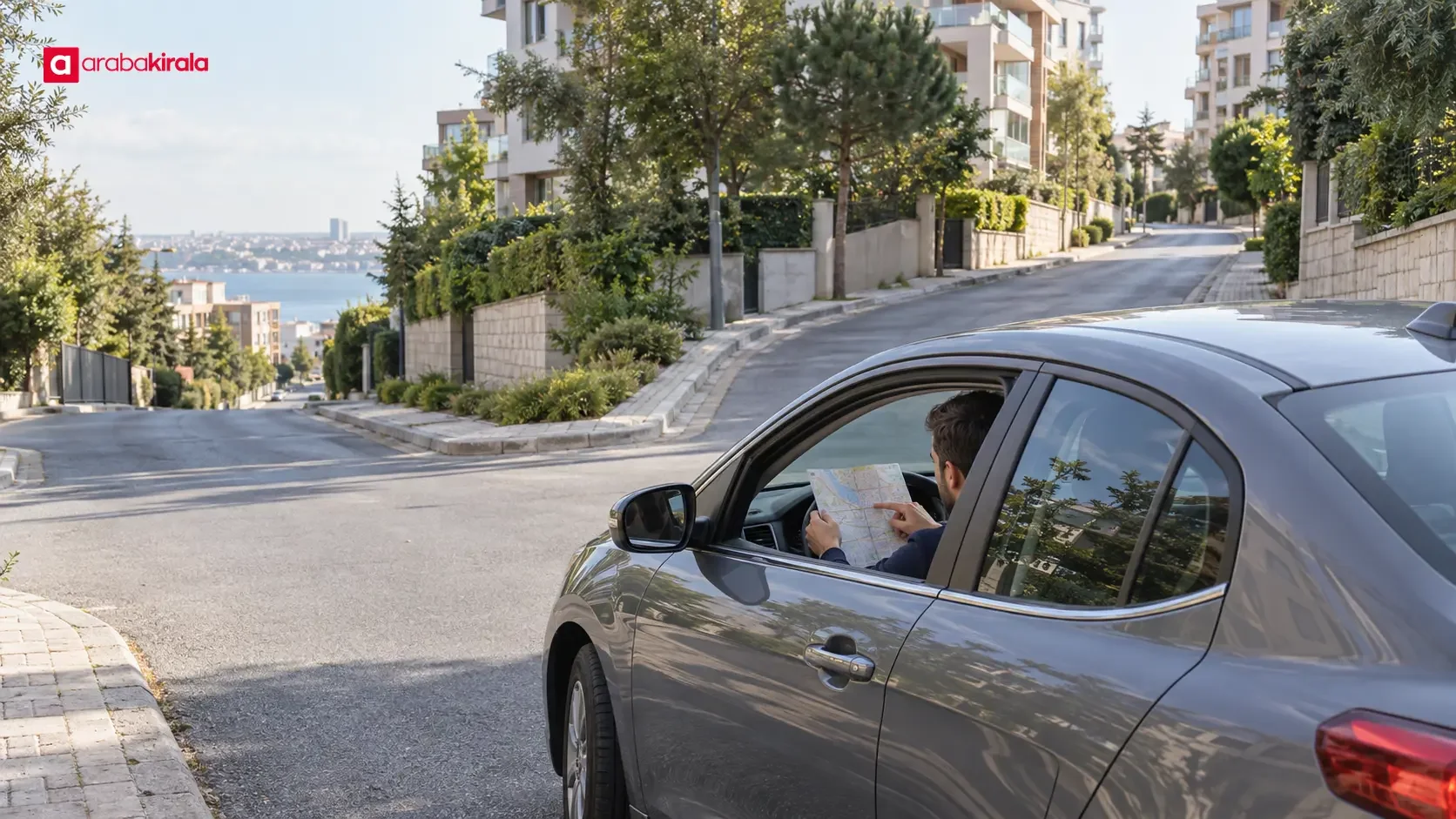
Identify as precisely as possible where you will collect the car, where you are staying, or the place you plan to visit. For a large building or site, a general map pin may not be enough: the vehicle entrance, parking entrance, and pedestrian entrance may be in different places. Knowing which side you need to reach helps avoid unnecessary circling through narrow streets. If the address changes, update the route after stopping safely instead of searching manually while driving.
Check the final streets and alternate connections
Review the whole route, then zoom in on the final few connections before arrival. Look for one-way signs, turn restrictions, and whether the road continues in both directions. Identify a second connection in case the main route is closed. An alternative should not just be a line on the map; it must also fit the signs and actual road conditions. Map data may be out of date. If you encounter roadworks, a temporary traffic arrangement, or a physical obstruction, follow the signs on site and choose a safe alternative.
Include parking and the direction of departure
Consider where you can park and the direction in which you can leave that spot for the main road. Parking on a one-way street does not permit you to drive out against its direction. You may need to continue to a junction in the permitted direction and turn farther along. Avoid sudden stops, places that block visibility, and manoeuvres that obstruct traffic while looking for parking. A car park’s entrance and exit layout is separate from the street’s direction, so follow its signs and road markings too.
Use navigation alongside road signs
A navigation app helps with preparation and route guidance; it does not override road signs. Enter your destination before setting off, choose audio guidance, and secure the phone in a suitable holder. Looking at the screen for a long time or editing a route while moving takes attention away from the road. If a direction is unclear, stop somewhere safe to check it.
If you see a sign restricting entry or turning, follow it even if the app suggests a different route. Let navigation recalculate; reach the next suitable connection rather than entering against traffic or attempting a prohibited turn at the last moment. If signs are obscured or appear to conflict, do not force a manoeuvre. Proceed safely and lawfully through the junction, then reassess the route.
Complete your route plan at car collection
Before setting off, confirm the exact location of the branch where you will collect the car, how to reach it during its operating hours, and where the vehicle is to be returned. These details may vary by location, so ask the branch you plan to use about reservation-specific information. Before moving, adjust the seat, mirrors, lights, and basic controls. Set up navigation audio and phone connectivity while the car is parked.
Reviewing the vehicle’s condition and surroundings at collection helps you focus on driving. The odometer can be one piece of information used to compare collection and return records; by itself, it does not indicate a specific mileage allowance or limit. Clarify the vehicle record and handover procedure with the branch. Read the agreement for the return location, return time, fuel recording method, and any listed additional services, and ask for an explanation of terms you do not understand.
Respond safely if the route changes
Approaching the wrong street does not require forcing a last-minute correction. If a turn or reverse manoeuvre is not appropriate, do not attempt it. Continue in accordance with traffic rules, allow navigation to suggest a new route, and stop in a safe place if needed. Stopping in the middle of a junction, reversing, or driving against the permitted direction increases risk. If roadworks or congestion arise, assess signs and traffic flow before taking an alternative.
Drive slowly and predictably on narrow streets, watching for pedestrians emerging between parked vehicles and corners with limited visibility. Before turning, assess the vehicle’s width and available manoeuvring space without crossing into opposing traffic. If you are unfamiliar with the vehicle’s dimensions, a route that avoids narrow connections may be more comfortable. At a difficult passage, find a safe place to wait rather than pressuring other drivers.
A short pre-drive checklist
- Identify the start, destination, and actual vehicle access points.
- Zoom in on one-way streets and permitted turns near the destination.
- Choose an alternate connection for the main route and follow signs on site.
- Plan where to park and how to leave; do not exit a one-way street against its direction.
- Finish phone and navigation setup before the car moves.
- Confirm handover, return, and reservation-specific details with the branch you will use.
Summary: check direction in advance and decide safely on the road
When driving in Beylikdüzü, review the final streets, one-way arrangements, turn restrictions, and departure direction after parking together. A map helps you prepare; signs and actual traffic conditions govern manoeuvres. Before collecting the car, confirm the branch location and handover details. If you need to change course while driving, stop somewhere safe first. As a next step, open your destination and review its final connections and one viable alternate route.
Frequently Asked Questions
What should I do if I realize I entered a one-way street in the wrong direction?
Do not make a sudden manoeuvre. If you cannot stop safely immediately, proceed in accordance with traffic rules, then stop at a suitable place and let navigation recalculate. Do not try to turn around or reverse against the permitted direction.
What if navigation gives a different direction from a one-way street sign?
Follow the official signs and traffic arrangements on the road. The app may recalculate; do not drive in a direction that the sign prohibits. Stop safely if you need to choose a new route.
How can I tell whether a road shown on a map is open to vehicle traffic?
A map alone cannot guarantee current access. Check signs at the entrance, temporary arrangements, and physical obstructions. If the information does not match, do not force entry; use another permitted connection.
Can I leave a one-way street in the opposite direction after parking?
No. Parking does not change the street’s direction. Travel in the permitted direction and continue your route from a place where turning is allowed and safe.
How should I plan the collection and return point for a rental car in Beylikdüzü?
Check the branch and handover information in your reservation, then confirm location-specific details such as the entrance, timing, and return arrangement with the branch you plan to use. This helps you route to the correct point.
Legal Disclaimer: All content, articles and information on the Araba Kirala website are provided solely to inform users. No information shared on this website constitutes definitive advice or guidance. Araba Kirala Teknoloji A.Ş. and its authors cannot be held responsible for any direct or indirect damages arising from the application of information on the website. For all questions and requests regarding car rental, please contact the office from which you will rent your vehicle.












