
Car Roof Load Capacity: Choosing a Roof Carrier Safely
Published: October 31, 2026 • Reading Time: 7 min • Last Updated: October 31, 2026 • Author: Merve B.
Learn what a car’s roof load capacity means, how vehicle and carrier limits work together, and what to check before loading and driving.
Contents
- What does car roof load capacity mean?
- Which weights count toward the roof limit?
- Dynamic and static roof loads
- How to choose a compatible roof carrier
- Positioning and securing the load
- Before-driving checklist
- How roof loads affect driving
- Planning a roof carrier for a rental car
- Summary and next step
- Frequently Asked Questions

What does car roof load capacity mean?
Car roof load capacity is the amount of load the vehicle is designed to carry on its roof. This guide explains where to find the relevant figure, how to account for roof bars and accessories, and how to check the load before setting off. The correct limit depends on the vehicle, its model year, and its roof configuration, so there is no single kilogram figure that applies to every car.
Checking capacity helps protect the equipment and maintain a stable load. Weight added high on the vehicle raises its center of gravity, while a roof carrier can change the area exposed to wind. Use the vehicle’s manual, the carrier maker’s instructions, and the actual weight of the equipment and cargo together. Do not infer a limit from the appearance of the roof or from another vehicle.
Which weights count toward the roof limit?
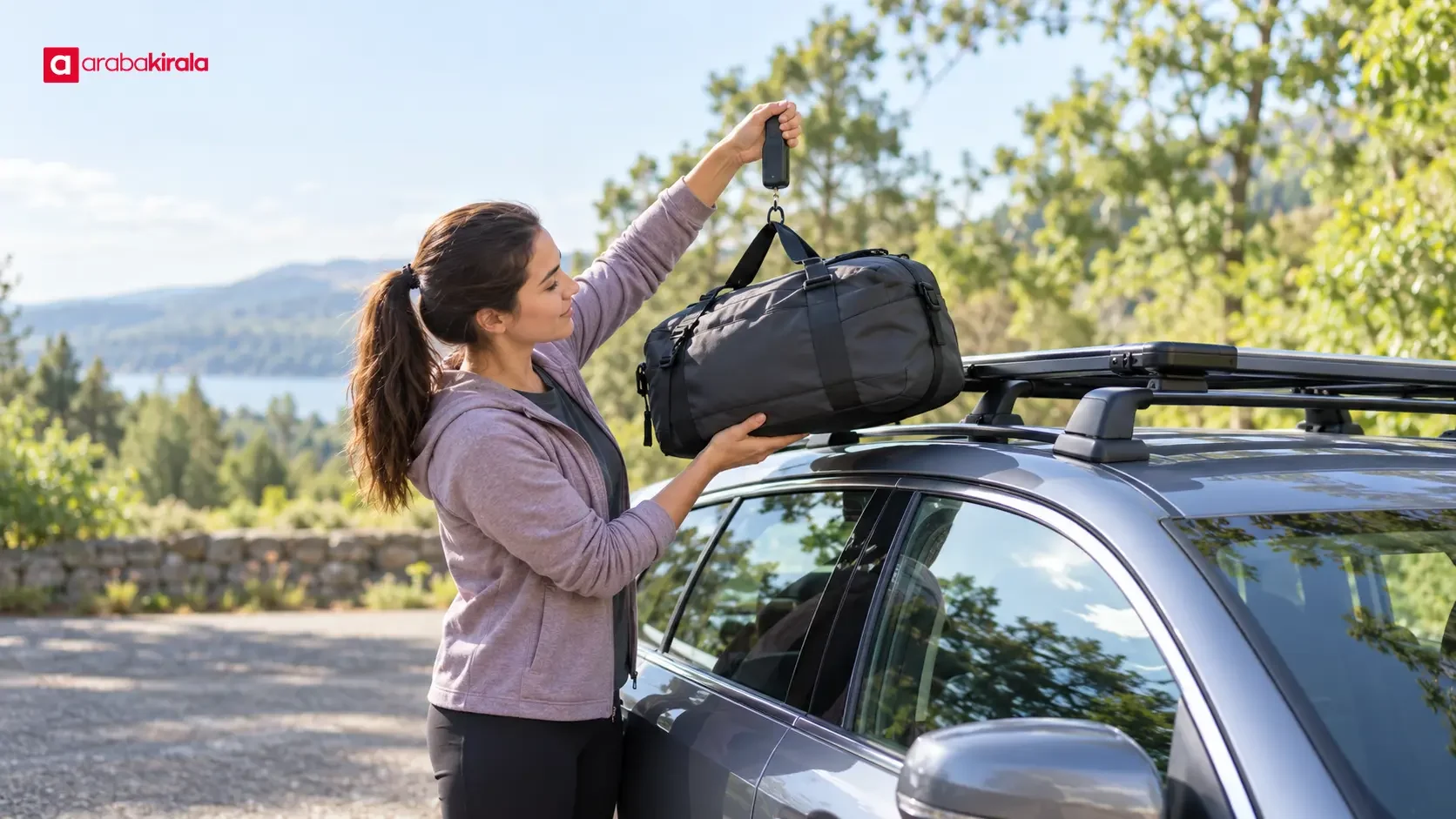
For a useful total, include the roof bars and their mounting feet, as well as any box, bicycle carrier, or other attachment. Then add the items carried by that attachment. Counting only the luggage or sporting equipment can understate the load placed on the roof.
The calculation is straightforward: add the weight of the bars, mounting components, carrier accessory, and cargo. Compare that total with the vehicle maker’s stated roof capacity. Also check the capacity of each carrier component. If one applicable limit is lower than another, the lower limit still matters. Meeting each component’s limit separately does not automatically establish that any combination of components is suitable.
Dynamic and static roof loads
A dynamic load is carried while the vehicle is moving. The vehicle’s stated roof capacity for driving should be read in this context. A static load concerns weight applied while the vehicle is parked; equipment information may discuss this separately for uses such as a rooftop tent. A static figure should not be treated as permission to carry that amount on the road.
If an equipment document does not clearly identify which capacity it gives, or if you are considering a special use such as a rooftop tent, check the vehicle manual and the equipment maker’s technical documentation. Ask the relevant manufacturer or a qualified service professional to clarify uncertain fit or use details. Do not guess a safe driving limit.
How to choose a compatible roof carrier
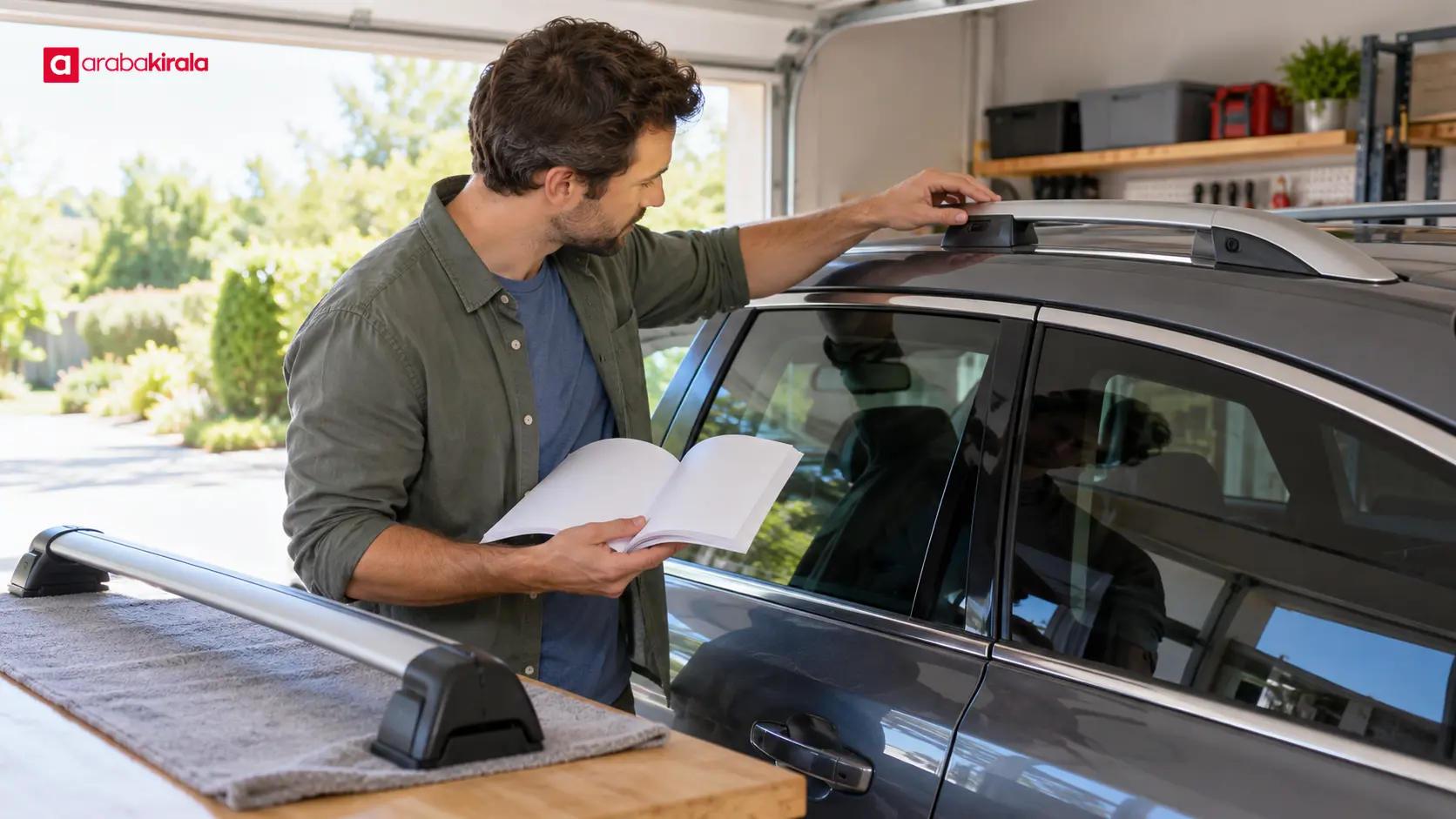
The carrier has to suit both the roof shape and the vehicle’s mounting system. Some cars have fixed mounting points, while others use roof rails or another arrangement. A carrier should not be selected by appearance or bar length alone. Check the maker’s compatibility information, installation instructions, and load ratings for your vehicle’s model year and roof type.
- Find the vehicle manual: Check the roof load limit, any guidance that varies by roof configuration, and the approved mounting points.
- Confirm vehicle fit: Use the carrier’s compatibility information to verify the bars, box, or bicycle attachment for the exact model year and roof layout.
- Read each component’s rating: Consider the limits for the bars, feet, and accessory separately.
- Calculate the full load: Include all equipment and cargo, and stay within every applicable limit.
- Follow the installation guide: Use the supplied instructions for positioning, fastening, and locking the equipment.
The presence of roof bars does not mean that every accessory will fit. Bar spacing, attachment type, and the carrier’s contact points all affect compatibility. If the official product documentation does not answer a fit question, ask the manufacturer or seller to confirm it for the exact vehicle and roof type.
Positioning and securing the load
Staying under the weight limit alone does not make a load secure. Attach cargo through the points and methods intended for the carrier, and prevent it from shifting. Keep weight balanced rather than concentrated on one side, and use straps and locks as directed. Check the vehicle and equipment instructions for guidance on how far a load may extend beyond the carrier.
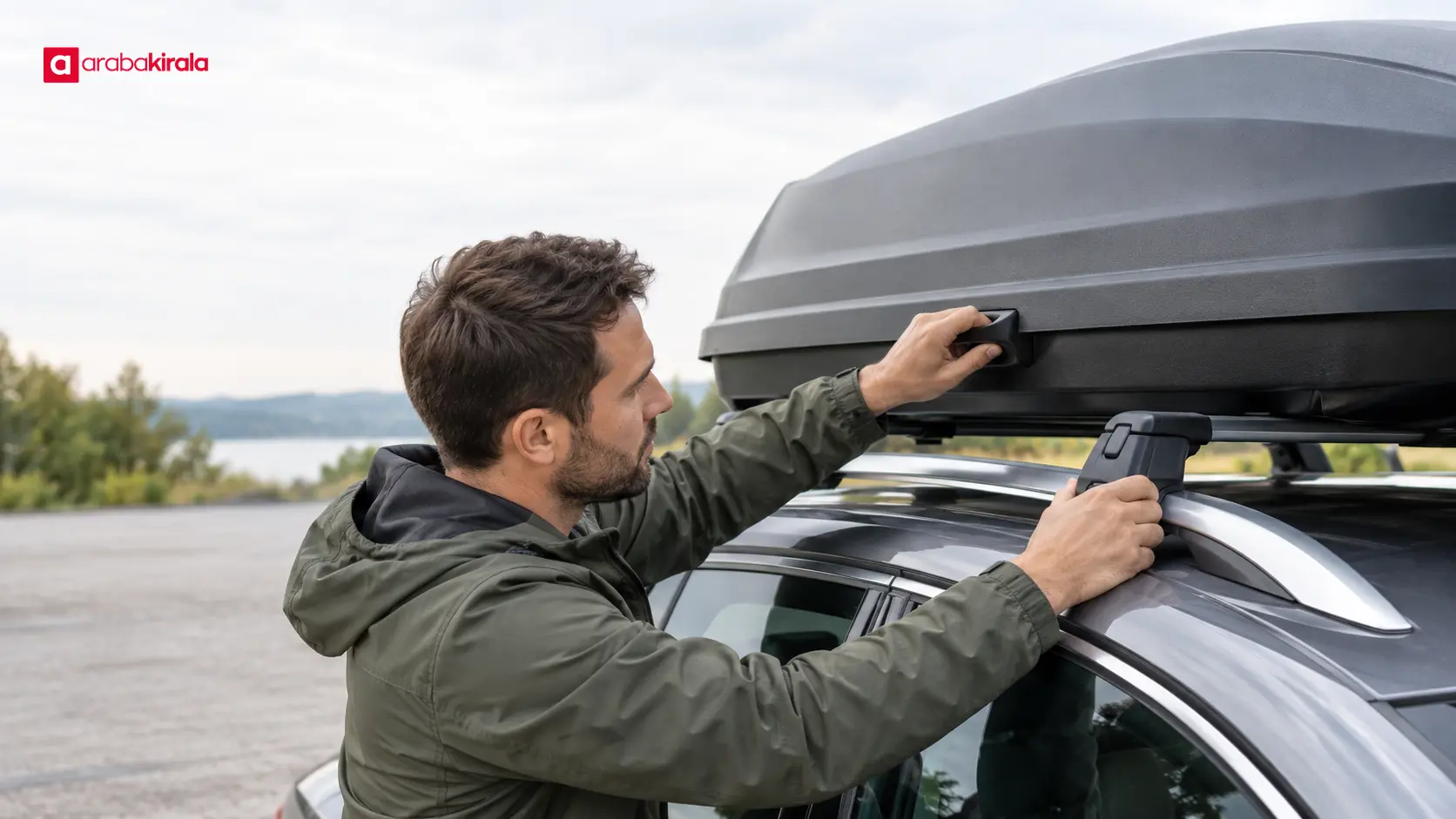
Check that straps and locks are fully fastened, and that loose ends cannot reach a wheel, door, or other moving part. If a roof box is loaded, follow its loading guidance and confirm the lid is locked. Equipment such as bicycles has a distinct shape and weight distribution, so use an attachment designed for that purpose. Improvised fastening can allow cargo to shift or fall.
Before-driving checklist
- Is the carrier compatible with the vehicle and roof type?
- Is the combined weight within the relevant limits in the vehicle and equipment documents?
- Are the mounting feet, locks, and straps properly seated and fastened?
- Is the load balanced, with no loose parts or movement?
- Have you considered the added height? The loaded vehicle may not clear a low garage, tunnel, or other overhead obstruction.
After the first part of the journey, stop somewhere safe and recheck the attachment. Repeat the check after a long drive or rough road, and follow any inspection intervals in the carrier instructions. If you hear an unusual noise or feel vibration, stop in a suitable safe place and inspect the load.
How roof loads affect driving
A roof load raises the vehicle’s center of gravity and can increase the surface exposed to wind. These changes may affect handling in bends, during sudden steering, or in crosswinds. Choose speed carefully based on the road, weather, visibility, and equipment instructions. Do not assume that one speed is suitable for every vehicle and carrier; follow any limits in the relevant manuals.
If the carrier can be removed when not in use, follow the manufacturer’s instructions. An empty carrier can still affect wind resistance and noise. The extra height also matters when entering enclosed spaces, so account for the overall height of the vehicle and load. These practical checks can help prevent damage and disruption.
Planning a roof carrier for a rental car
If you will be using a rental car, do not assume that a particular vehicle comes with roof bars or accepts the accessory you want. Before booking, ask the branch where you will collect the car what roof equipment is fitted, whether the carrier is compatible, and how to access the vehicle maker’s load information. If you plan to bring your own equipment, confirm that its mounting system matches the roof and mounting points. Ask the branch directly about any carrier rental or fitting options and their conditions.
At collection, check where the vehicle manual is and how to find the roof load information. Clarify practical matters such as who fits the carrier, which instructions govern installation, and how the equipment’s condition is recorded at handover. These details can vary by branch and vehicle, so do not assume that a setup seen on another car applies to the one you will receive.
Summary and next step
Car roof load capacity must be considered alongside the total weight of every roof component and the way the load will be used. Find the driving capacity in the vehicle manual, then count the bars, fittings, accessory, and cargo. Confirm that both the vehicle and carrier documentation support the fit and load, follow the installation instructions, and inspect the setup before driving. For a rental, confirm the equipment, compatibility, and capacity information with the branch where you will collect the vehicle and consult the vehicle manual.
Frequently Asked Questions
Does roof load capacity include the roof bars?
When calculating the total roof load, account for the bars, mounting feet, box or other carrier, and cargo. Definitions can vary between vehicle and product documents, so check how the manual describes its capacity.
Can I carry more if my carrier has a higher rating than the car?
No. A higher carrier rating does not increase the vehicle’s roof limit. Follow all applicable vehicle and carrier limits and do not exceed the lowest one that applies.
Does an empty roof box count toward the load?
Yes. The box and the system attaching it to the vehicle have their own weight, which is part of the total roof load even when the box contains no luggage.
Can I use a static roof load figure for driving?
A static figure may refer to a parked vehicle and cannot be assumed to replace the dynamic driving capacity. Use the vehicle manual’s driving limit and the carrier documentation for road use.
Can I fit my own roof carrier to a rental car?
Compatibility depends on the vehicle model, model year, roof shape, and mounting system. Ask the collection branch about the fitted roof equipment and compare it with the carrier maker’s compatibility information. Do not install it until fit has been confirmed.
Legal Disclaimer: All content, articles and information on the Araba Kirala website are provided solely to inform users. No information shared on this website constitutes definitive advice or guidance. Araba Kirala Teknoloji A.Ş. and its authors cannot be held responsible for any direct or indirect damages arising from the application of information on the website. For all questions and requests regarding car rental, please contact the office from which you will rent your vehicle.












