EV Battery Preconditioning and Cold Weather Charging
Published: October 7, 2026 • Reading Time: 6 min • Last Updated: October 7, 2026
Learn how cold weather can affect an EV battery and charging speed, what battery preconditioning does, and how to plan a winter trip in a rental electric car.
Contents
- How cold weather affects the battery and charging
- What is battery preconditioning?
- How preconditioning can change charging time
- Practical preparation for a winter drive
- Battery preconditioning versus cabin heating
- What to clarify when collecting a rental EV
- Frequently asked questions
- Does every EV charge more slowly in cold weather?
- Does plugging in automatically precondition the battery?
- Will setting a charging station as a navigation destination start preconditioning?
- Can I precondition when the vehicle is unplugged?
- Summary and next step
Electric vehicle battery preconditioning is a thermal preparation that brings the battery closer to a suitable temperature for driving or charging. This guide explains why cold weather can extend charging time, what preconditioning does, and how to plan a winter trip in a rental EV. Features vary by vehicle, so the owner’s manual is the best reference for operating instructions.
How cold weather affects the battery and charging
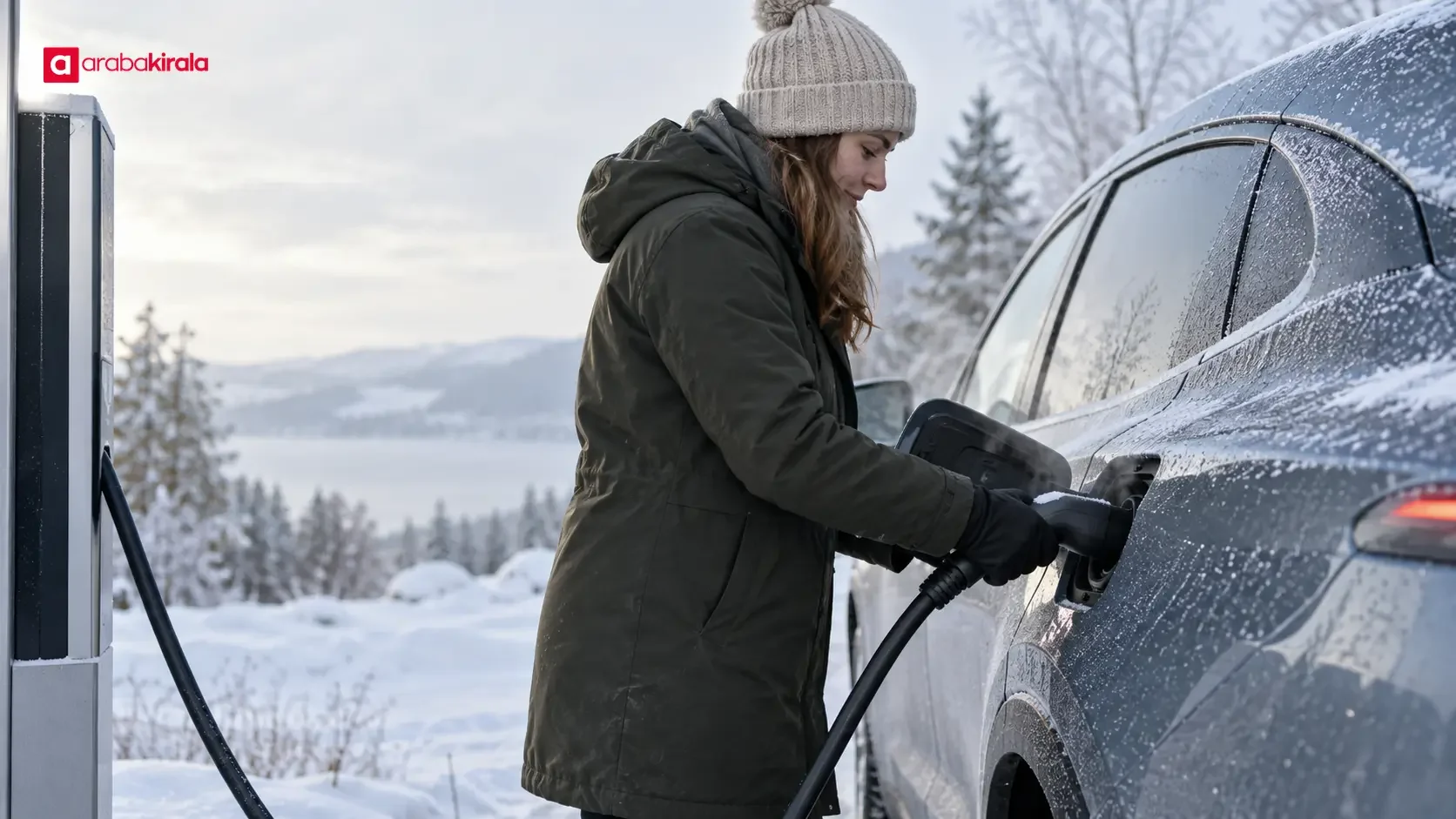
The chemical processes inside a lithium-ion battery slow at low temperatures. A vehicle may limit power to protect the battery and bring it toward a suitable operating range. As a result, a cold battery may accept less charging power in some vehicles, taking longer to reach the same charge level than it would in milder conditions. Temperature is only one part of charging speed: current state of charge, charger capacity, vehicle systems, and the station’s current conditions can also matter.
Cold weather adds energy demands beyond charging. Heating the cabin and managing battery temperature use energy, reducing what is available for driving. On short trips after a cold start, the energy used to warm the vehicle can be a more noticeable share of the total. Treat the displayed range estimate as a changing projection, and consider weather, speed, terrain, and climate settings together.
What is battery preconditioning?
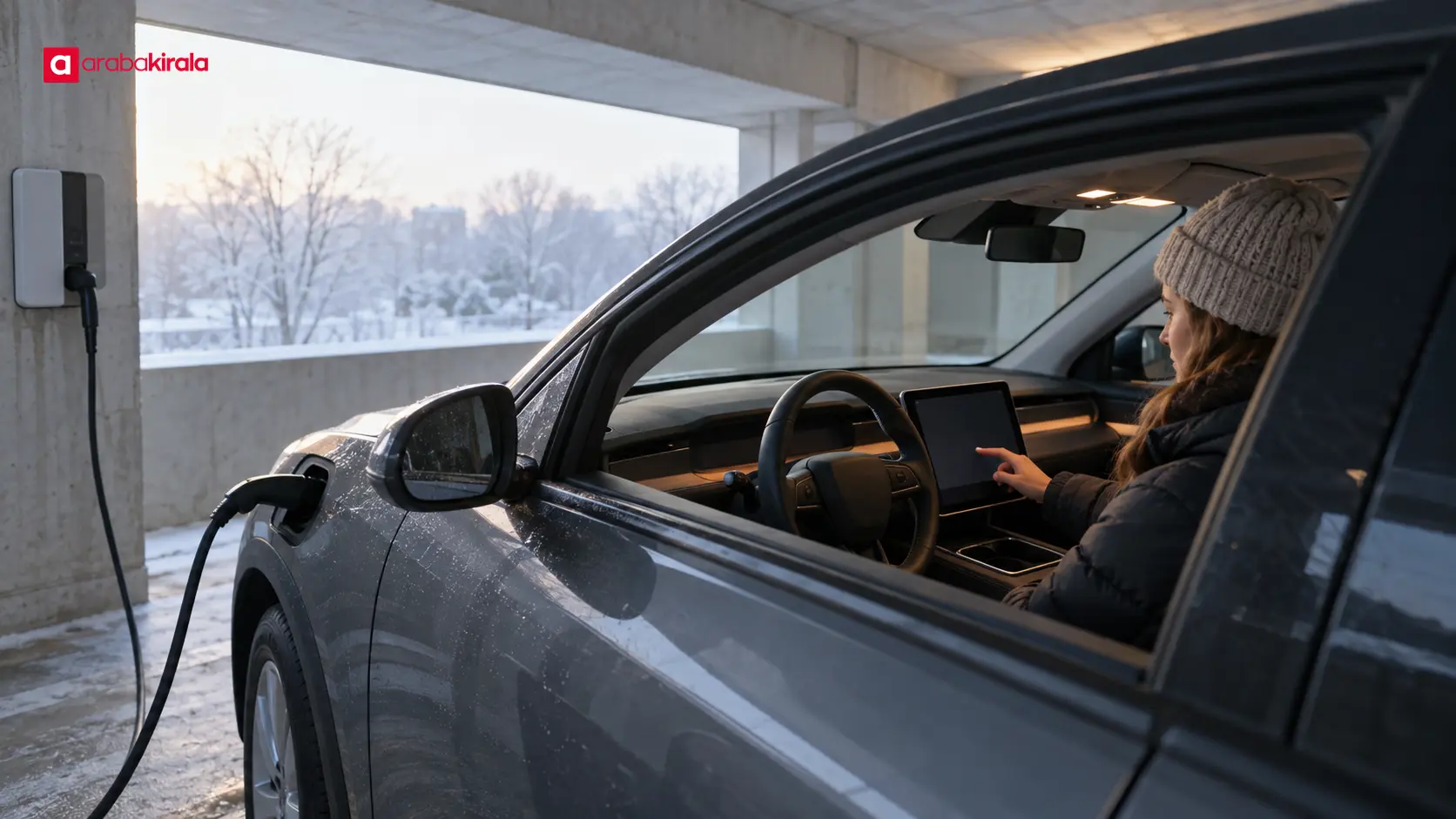
Preconditioning is the vehicle’s thermal management system warming the battery—and, on some models, the cabin—before departure. Depending on the vehicle, it may be started through a scheduled departure setting, an in-car control, or automatically when navigation is set to a charging stop. The available methods, menu names, and operating conditions vary by make, model, equipment, and software. Do not assume the feature is present; check the manual or ask for a demonstration when collecting the vehicle.
Battery preconditioning and cabin heating are not necessarily the same function. Cabin climate control aims to make the passenger area comfortable, while battery thermal preparation helps bring the battery toward conditions suitable for driving or charging. Some vehicles coordinate the two, while others manage them separately. A warm cabin does not by itself confirm that the battery is ready for charging.
How preconditioning can change charging time
When the battery is cold, a vehicle may limit charging power to protect its cells. Bringing the battery closer to a suitable temperature can reduce that limitation and allow it to accept more power under the conditions at hand. Preconditioning may therefore help reduce a cold-related wait, but it cannot promise a specific time saving. Results depend on the vehicle, starting temperature, charge level, and charging point.
Warming the battery requires energy. If the vehicle is plugged in, some of that energy may come from the external supply, leaving more battery energy for the drive. When unplugged, preconditioning may draw from the battery. If you use the feature, learn from the manual when it consumes power and how its schedule works. Preconditioning does not increase a charger’s output: if the station has limited capacity or is sharing power, charging may remain slow even with a warm battery.
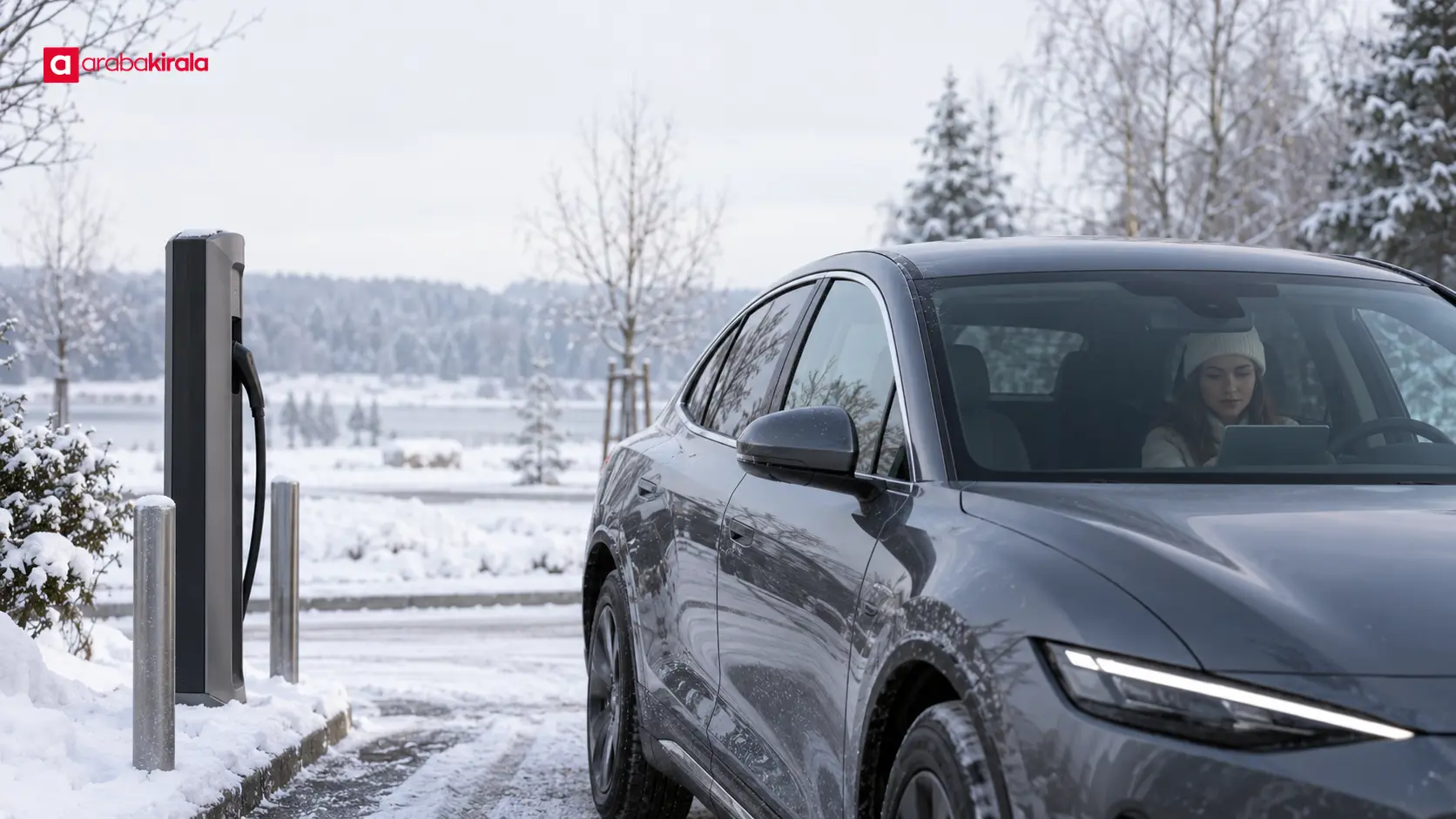
Practical preparation for a winter drive
- Learn the vehicle’s controls at pickup: Ask how the rental EV handles battery preconditioning, scheduled departure, and charging-stop preparation. Request a brief demonstration of the relevant screen controls.
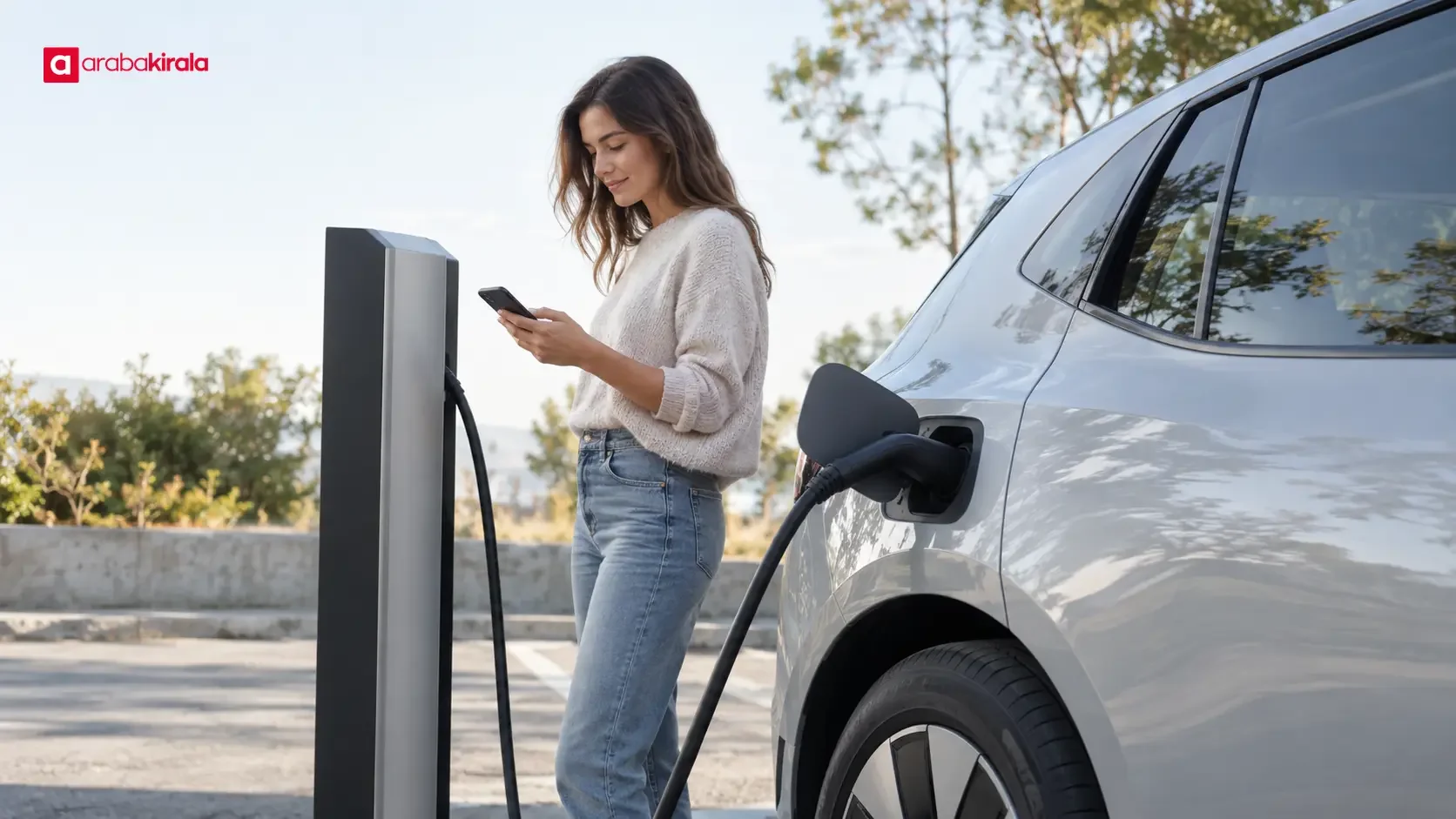
- Allow time in the charging plan: Arrival and charging times can vary in cold weather. Check suitable charging points and alternatives along your route before setting off, and avoid plans that depend on a tight schedule during poor weather.
- Choose a charge target for the trip: There may be no need to wait for the highest charge level if the energy needed for the next leg is available. Consider the vehicle’s guidance and where you can charge next. At fast chargers, power can taper as charge increases, so the remaining time may not progress evenly.
- Keep the vehicle plugged in when practical: If the vehicle manual and charging setup allow it, remaining connected during scheduled preconditioning can help preserve battery energy. This does not work identically on every vehicle.
- Watch the vehicle’s displays: A cold battery may trigger limits or notices about power, regenerative braking, or charging. Follow the manual’s guidance for indicators and do not try to override a system limit.
Battery preconditioning versus cabin heating
Cabin heating directly warms the passenger space. Battery preconditioning manages battery temperature. A vehicle with a heat pump may use energy differently depending on conditions, but it is not sensible to assume a specific efficiency benefit without knowing the vehicle’s equipment. Localized heating, such as heated seats, can reduce the need to warm all the cabin air; the effect depends on the model and how the occupants use the controls.
Once driving begins, the battery and thermal system continue to respond to changing conditions. Preconditioning is not a one-time action that produces the same result in every situation. Short stops, extended parking, and changing temperatures can all affect battery condition. Reassess the vehicle’s estimated charging time and power during the trip rather than relying only on the first estimate.
What to clarify when collecting a rental EV
Ask the rental location about vehicle-specific details such as the charging connector, any cable or equipment supplied, preconditioning controls, and how to get assistance. Clearing these up at pickup can save you from searching for instructions at the first cold-weather charging stop. Compare the displayed charge level and any operating notes provided at handover with your own trip plan; do not assume a feature is available unless it has been confirmed for that vehicle.
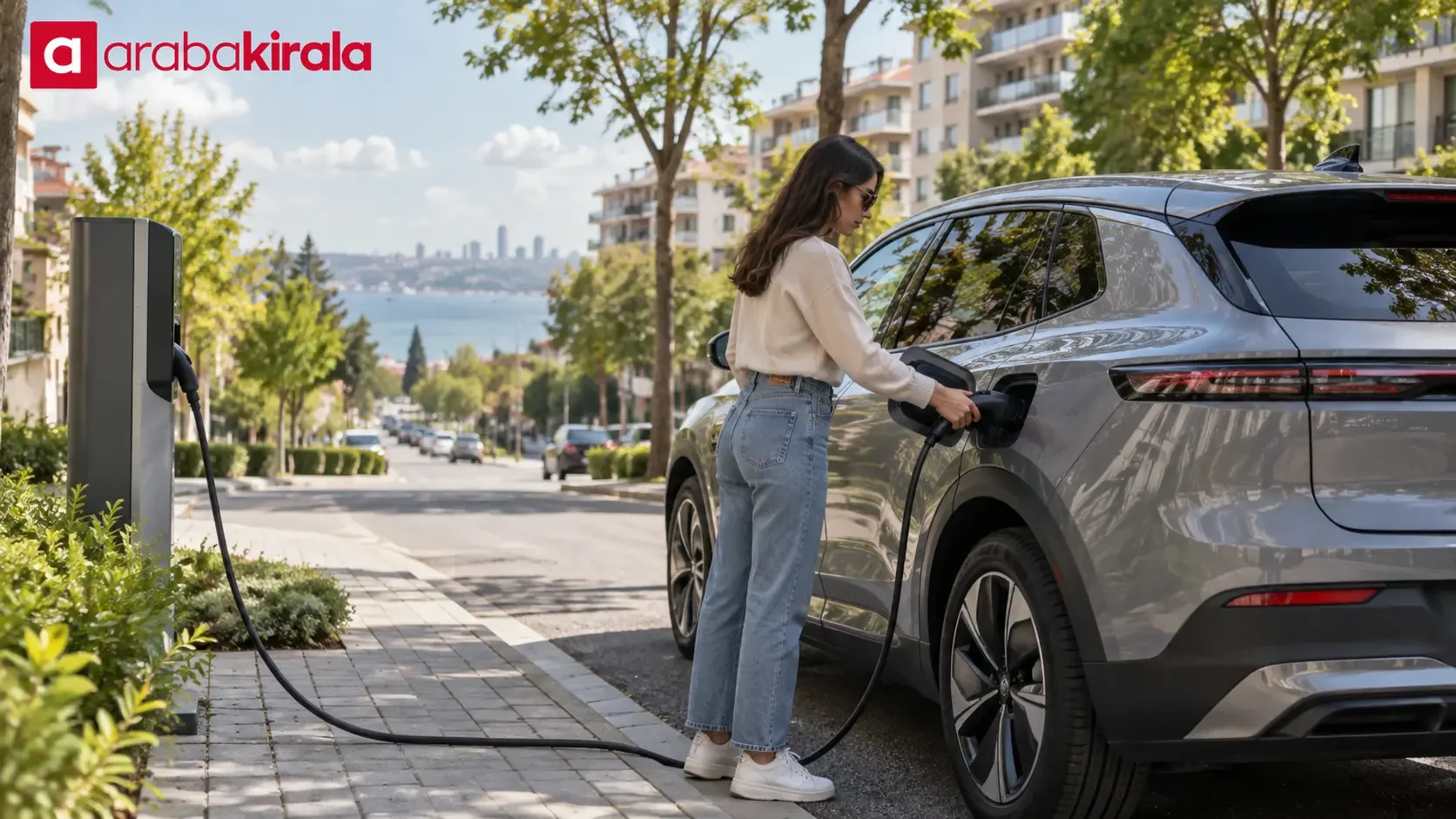
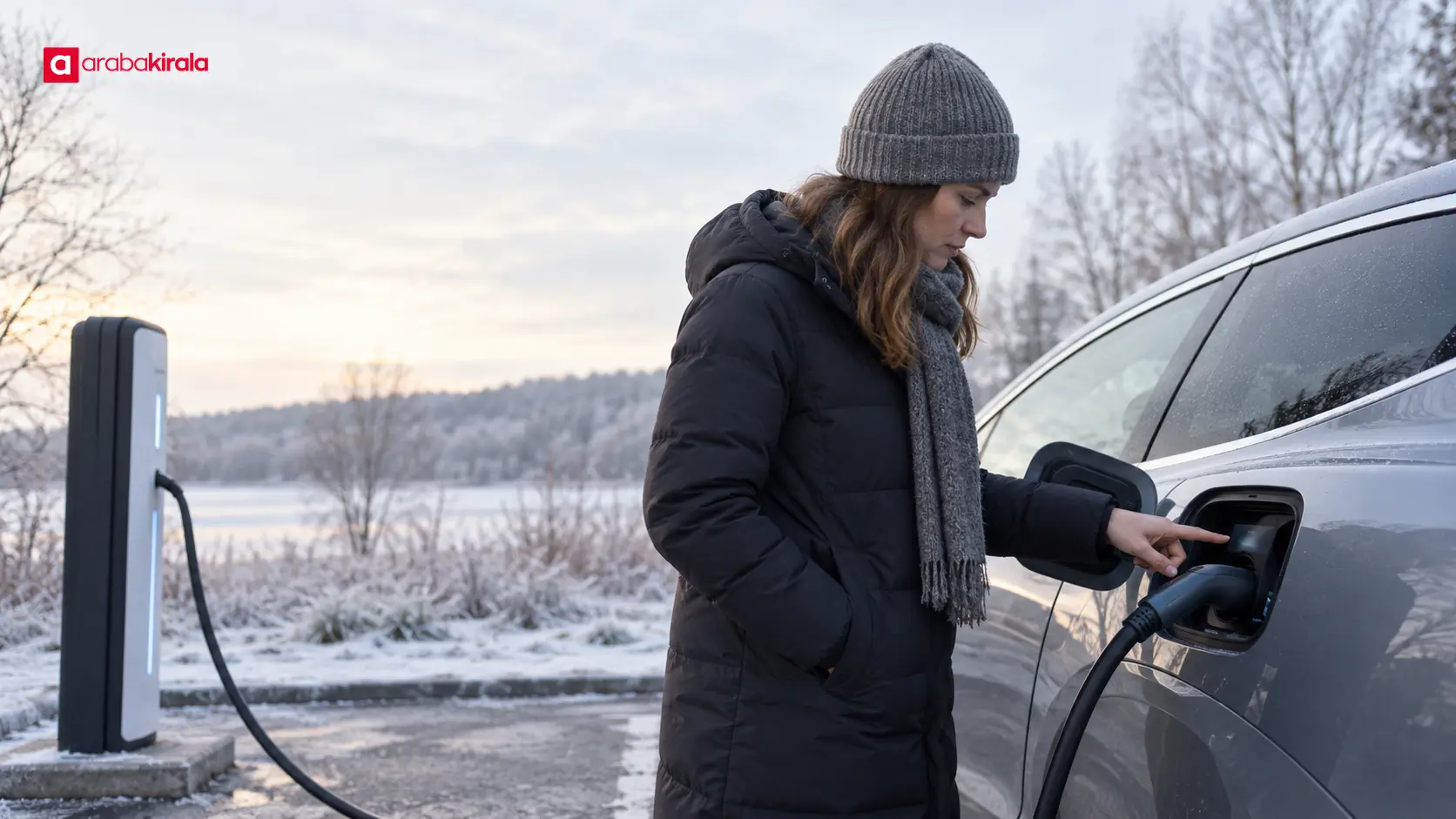
When connecting or disconnecting a charging cable, follow the vehicle’s screen prompts and manufacturer instructions. If a connector appears frozen or an unfamiliar warning appears, do not force it or attempt an improvised fix. Follow the manual and contact the support channel provided for the rental. High-voltage battery systems are not designed for user repair.
Frequently asked questions
Does every EV charge more slowly in cold weather?
A cold battery can lead to limited charging power, but the effect varies with the vehicle, battery temperature, charge level, and charging point. The battery management system responds to conditions, so no single charging time applies to every EV.
Does plugging in automatically precondition the battery?
Not in the same way for every model. Some vehicles may warm a cold battery as needed for charging, while scheduled preparation or cabin heating may be separate functions. Check the manual and the charging status shown in the vehicle.
Will setting a charging station as a navigation destination start preconditioning?
Some vehicles prepare the battery when a compatible charging stop is selected as the destination. This is not available on every vehicle or for every charging point. Review the rental vehicle’s instructions for navigation and charging.
Can I precondition when the vehicle is unplugged?
That depends on the model and its settings. If it operates while unplugged, the system may use battery energy. Ask about the operating conditions and scheduling options at pickup.
Summary and next step
Cold weather can lower battery temperature and limit charging power; heating the cabin and battery also affects trip energy. Battery preconditioning helps bring the vehicle closer to a suitable temperature before driving or charging, but it does not guarantee a particular charging time. Learn how the rental EV’s feature works at pickup, follow the manual, and leave flexible time for charging on a winter route.
Legal Disclaimer: All content, articles and information on the Araba Kirala website are provided solely to inform users. No information shared on this website constitutes definitive advice or guidance. Araba Kirala Teknoloji A.Ş. and its authors cannot be held responsible for any direct or indirect damages arising from the application of information on the website. For all questions and requests regarding car rental, please contact the office from which you will rent your vehicle.