
Planning the Order of Multiple Stops in Istanbul with a Rental Car

Published: October 13, 2026 • Reading Time: 7 min • Last Updated: October 13, 2026
Organize a multi-stop day in Istanbul by grouping nearby destinations, accounting for traffic, parking and cross-city transitions, and leaving time for the rental car return.
Contents
- What determines the best stop order?
- Group destinations by area
- Place time-sensitive visits first
- Allow for traffic and uncertainty
- Keep a simple backup plan
- Plan the transition between the two sides
- Manage the rental-car day practically
- Parking and belongings
- A quick checklist for the day
- Summary and next step
- Frequently Asked Questions
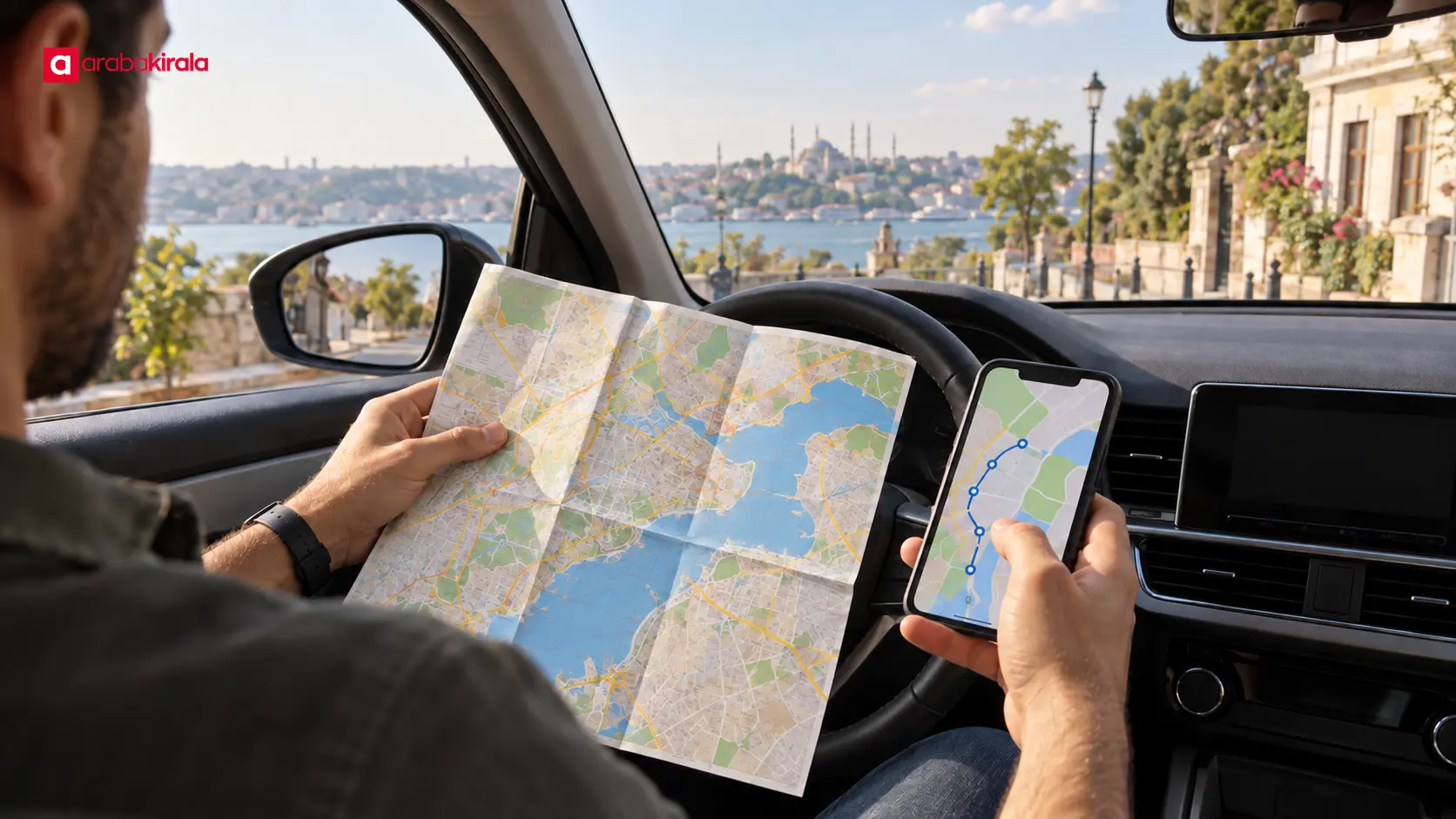
Istanbul car rental route planning involves more than connecting addresses with the shortest line on a map. The order of your stops can depend on which visits have fixed times, how destinations cluster by area, where you can park, and whether your day crosses between the two sides of the city. This guide explains how to structure a practical route, interpret navigation estimates, and include pickup and return details in your plan.
What determines the best stop order?
The route with the fewest kilometers is not always the easiest one to complete. Crossing back and forth between nearby areas, repeating a busy crossing, or searching for parking can add friction. Start by entering each exact destination in a map app. For every stop, record its appointment time, expected visit duration, opening hours if relevant, and parking needs.
Build the day in three passes. First, place appointments and other time-sensitive visits. Next, group flexible stops near those fixed points. Finally, arrange the route around your starting location and the rental return location. Keeping flexible visits around fixed commitments makes it easier to adjust the day if travel takes longer than expected.
Group destinations by area
Istanbul’s two sides and separate centers require more thought than distance alone suggests. Sort destinations first by European or Asian side, then into smaller groups of nearby neighborhoods. Completing a group before crossing may reduce the need to make the same crossing more than once. Your start, finish, appointment times and current traffic may still call for a different sequence, so treat this as a planning aid rather than a fixed rule.
Save full addresses, not just neighborhood names. Two places that look close on a map may involve one-way streets, different entrances or a longer drive than expected. Set the destination to an entrance or vehicle-accessible point where possible. This reduces the chance of arriving in the area and then having to search for the correct approach.
Place time-sensitive visits first
A fixed appointment or a place with limited opening hours can anchor the day. Put those stops in order first and allow realistic travel windows between them. Then add flexible activities in the same areas. This helps avoid a schedule that looks efficient on a map but leaves no room for peak traffic or the time needed to get from the car to the destination.
Allow for traffic and uncertainty
Navigation estimates can change with the departure time and live road conditions. Review the entire route before setting out, then check the next leg again during the day. Choose the next destination before moving off. Do not adjust a route while driving; pull over somewhere safe before using your phone.
Driving time is only one part of each leg. Finding a parking space, walking to the destination, entering a building and returning to the car also take time. In busy areas, check where a car park entrance is and how far it is from the place you are visiting. If you cannot confirm parking in advance, consider whether another nearby car park or continuing by public transport would work for that part of the day.
Keep a simple backup plan
Rather than planning for every possible delay, identify one or two important stops that could be reordered if needed. An alternative might be to visit another nearby place first or move a flexible visit to another day. Contact the relevant venue if a change affects an appointment. A backup should help you stay calm; it should not depend on driving in a hurry.

Plan the transition between the two sides
The effect of bridges, tunnels and sea transport depends on your origin, destination, time of day and current operating conditions. Do not choose a crossing only by looking at distance. Before travel, check the route and, where relevant, how charges are handled using official operator information. If you plan to take a ferry, confirm sailing times and vehicle acceptance with the official operator because these details can change.
When the appointment order allows, place the crossing at a natural point in the day: finish the time-sensitive visits on one side before continuing to the other. That may help avoid repeating the same route. It is not suitable for every itinerary; some appointment schedules make an earlier crossing more practical.
Manage the rental-car day practically
Before collecting the vehicle, ask the branch where pickup and return take place, which times define your rental period, and how any route-related charges or records are handled. These details can vary by reservation and branch, so do not assume a standard process. Have your planned destinations and return time ready so the branch can answer your specific questions.
At pickup, noting the vehicle’s condition and odometer reading can make it easier to compare the pickup and return records. Also note the fuel level and the fuel arrangement explained to you. These are simple record-keeping steps, not substitutes for route planning. If you will return the vehicle somewhere different, reserve time to drive there after your last visit.
Parking and belongings
Do not leave bags or valuables visible in a parked vehicle. Lock the vehicle and stay aware of your surroundings when handling luggage. If you need to reorganize belongings between visits, choose a suitable, safe place rather than a busy roadside. Check local signs for parking permissions, time limits and payment instructions. If a sign is unclear, ask a parking attendant before leaving the car.
A quick checklist for the day
- Collect exact addresses and visit times for every stop in one place.
- Schedule fixed-time visits first and group nearby destinations by area.
- Allow time for parking and walking in addition to navigation estimates.
- Assess cross-city routes using current information from official operators where applicable.
- Ask the rental branch about pickup, return and any record details that affect your itinerary.
- Check the next destination before setting off, and change the route only when safely stopped.
Summary and next step
For a multi-stop day in Istanbul, anchor the schedule with fixed appointments, group nearby destinations, and account for parking, walking and cross-city travel. Treat navigation times as estimates and check the route again before each leg. Confirm pickup and return details directly with the branch where you will collect the car. A useful first step is to list every address and fixed appointment, then group the stops on a map.

Frequently Asked Questions
How many stops are realistic in one day in Istanbul?
There is no single useful number. Location, visit duration, appointment times, parking and traffic all matter. Estimate time for both the drive and the visit, and keep the schedule flexible enough that delays do not pressure you to drive unsafely.
In what order should I visit stops on the European and Asian sides?
Start with fixed-time visits and your pickup and return locations. Grouping nearby stops on the same side may reduce crossings, but appointments and current traffic can make another order more practical. Check current route information before deciding.
Can I treat a navigation app’s arrival estimate as exact?
No. Estimates can change with traffic and route conditions, and they do not include parking, walking to the destination or entry procedures. Allow extra time before important appointments.
What should I check before using a bridge, tunnel or ferry in a rental car?
Use official operator information to check current operating conditions and any applicable charging method. For a ferry, confirm sailing times and vehicle acceptance with the operator. Ask the branch collecting your rental about the vehicle’s crossing and record process.
How should I include the rental return in my route?
Treat the return location as the final destination and reserve time to reach it after your last stop. Pickup and return locations or times may depend on the reservation, so confirm those details with the branch before finalizing the day’s plan.
Legal Disclaimer: All content, articles and information on the Araba Kirala website are provided solely to inform users. No information shared on this website constitutes definitive advice or guidance. Araba Kirala Teknoloji A.Ş. and its authors cannot be held responsible for any direct or indirect damages arising from the application of information on the website. For all questions and requests regarding car rental, please contact the office from which you will rent your vehicle.












