Who Gets a Traffic Fine in a Rental Car?
Published: November 7, 2026 • Reading Time: 6 min • Last Updated: November 7, 2026 • Author: Merve B.
Contents
- How can a fine be recorded for a rental car?
- Driver, registered owner, and renter: different roles
- The driver is the person using the car at the time
- The registered owner appears in vehicle records
- The renter should also review the agreement
- How to match the notice to your rental
- Who should track the fine or notice?
- What to check before and during the rental
- Frequently Asked Questions
- Summary and next step
- Related Articles
- Sources
This guide explains the rental car traffic fine process: who may receive a notice, why the driver and registered owner can be different people, and which details to check if a fine appears. The answer cannot be reduced to a single rule that every notice goes to the renter or always belongs to the owner. It depends on how the violation was detected, how the notice was issued, and what the official record says.
A useful first step is to match the notice details to the rental period, review the agreement’s relevant terms, and verify the official record. This is general information, not a determination of any particular case or a promise about a specific branch’s procedures.

How can a fine be recorded for a rental car?
A traffic penalty is an administrative measure issued for a traffic rule violation. A violation may be identified in a way that links it directly to a driver, or it may be recorded using the vehicle’s registration plate. With a plate based record, the notice may be addressed to the person listed as the registered owner. In a rental, the registered owner and the person driving during the rental period may be different, so the first recipient of a notice may not be the person who was behind the wheel.
This distinction does not mean that every fine automatically belongs to the rental business, or that every renter is named directly in the public record. The notice, the official process, and the rental agreement each have a different role. The Turkish Revenue Administration publishes official information about traffic administrative fines; check current official records before taking action.
Driver, registered owner, and renter: different roles
The driver is the person using the car at the time
The driver is the person actually operating the vehicle when the alleged violation occurred. If an incident is identified with the driver, the process may use driver details. The rental agreement may also set out who is permitted to drive and how user details are recorded during the rental. Keeping accurate records of who used the vehicle and when can help clarify questions later.
The registered owner appears in vehicle records
A fine recorded against a plate may be reflected in the registered owner’s records. A renter should not assume that there is no issue just because no notice has arrived in their own name. After receiving a notice, the owner or rental business may compare its date with rental records and contact the renter. That contact alone does not settle who is responsible. The notice, official record, and agreement must be considered together.
The renter should also review the agreement
A rental agreement may describe how a traffic fine notice is passed on, how a related cost is handled, or which contact details are used after return. Do not confuse those contractual arrangements with the public authority’s record: one concerns an administrative entry, the other concerns how the contracting parties handle the matter. Reading the relevant wording before collection helps avoid uncertainty later.
How to match the notice to your rental
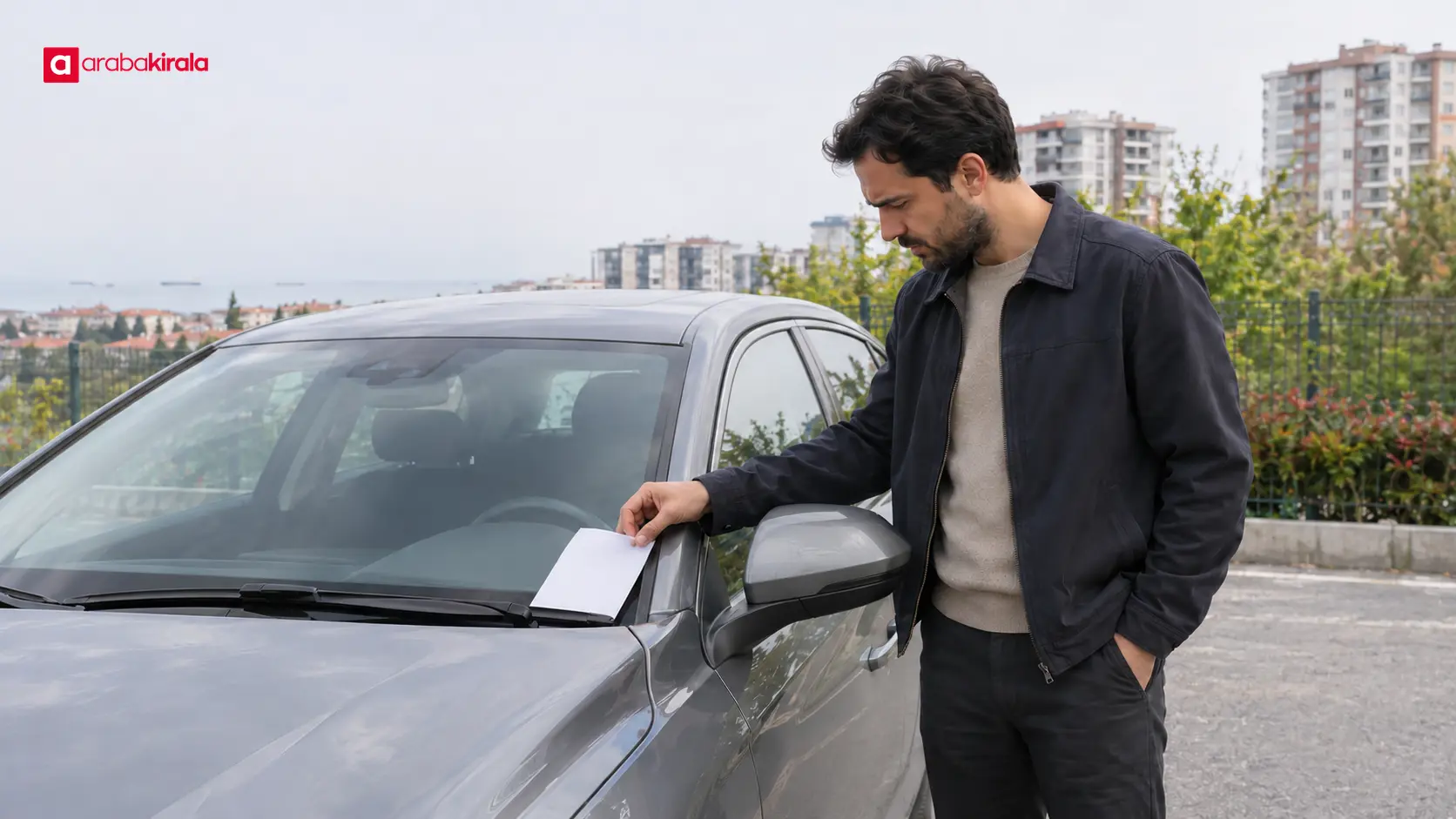
Start by noting the plate, date and time of the alleged violation, location, notice or reference number, and named recipient. Compare these details with the rental start and return records. If the date or vehicle information does not fit your rental period, verify the notice through an official channel before deciding what to do.
For a plate based fine, the time and date are especially useful. Documents showing when the car was collected and returned can help establish whether the incident falls within your rental period. Keep the handover record, booking or agreement documents, and relevant written messages together.
- Check the plate and vehicle details shown on the notice.
- Compare the violation date with collection and return dates.
- Read the stated location and time, and note any missing or inconsistent detail.
- Check whether the record appears in an official traffic fine lookup service.
- Ask the branch where you rented the car how the notice relates to your specific rental period and what the agreement says about the process.
Who should track the fine or notice?
Check official balances and fine records through the named recipient and current government records. A message from a rental business is not a substitute for an official record; likewise, seeing a fine under the owner’s name does not by itself explain how the rental agreement addresses related costs. Treat these as two related but separate steps to follow.
If the notice states a payment or appeal deadline, confirm it from the notice and the relevant official information rather than letting the document sit unanswered. The Revenue Administration’s current guidance is a useful starting point for checking traffic administrative fine records and payment channels. If the facts of the incident or the validity of the notice require legal assessment, seek qualified help for your situation.

What to check before and during the rental
Safe driving and clear rental records make it easier to understand a fine process. Read the agreement for any clauses about traffic notices, how the renter is contacted, and how any related administrative costs are handled. These are questions to clarify, not a claim that a particular fee or procedure must apply. The answer depends on the agreement and the branch handling the reservation.
At collection, check that the plate and relevant vehicle details on the handover documents are accurate. Keep the return confirmation too. Such records do not establish whether a fine is valid, but they can help show when the vehicle was in your care.
Frequently Asked Questions
Who receives a fine recorded against a rental car’s plate?
A plate based notice may be directed to the person listed as the registered owner. The rental business may then compare its records with the incident date. Check the notice and official record to confirm the actual recipient and next steps.
If the fine appears under the owner’s name, does that mean the renter has no responsibility?
The name on the public record alone does not resolve what the rental agreement says about the parties’ responsibilities. The administrative record and the contractual process are different matters. Consider the incident date, driver information, and the relevant agreement terms together.
What should I do if a notice arrives after the rental ends?
Check the plate, date, time, and reference number, then compare them with your collection and return documents. Verify the record through an official lookup channel and ask the branch which rental period the notice concerns. Keep the documents and correspondence.
Where can I check whether a traffic fine is official?
Use the Revenue Administration’s current information and official government lookup channels. Before entering personal details on a site that resembles a public service, check that its address belongs to an official government domain.
Which parts of the rental agreement should I read?
Look for terms about traffic fines, renter obligations, notice delivery, and any administrative costs connected with a fine. Ask the branch to explain unclear wording before collection or signing; do not assume a fee or procedure is identical everywhere.
What if I believe I was not using the car at the time?
Compare the stated date, time, and location with your own records. If a detail seems wrong, inspect the notice through an official channel and follow the process published by the relevant authority. This guide cannot determine the legal outcome of a specific fine.
Summary and next step
To understand who a rental car traffic fine is directed to, read the named recipient, detection method, rental dates, and agreement terms together. Verify the official record first, then compare the date and vehicle details with your handover documents. Ask the branch only about the notice process for your reservation and agreement. Keeping records and driving safely makes the process easier to follow.
Related Articles
- What to Do When a Rental Car’s Tire Pressure Warning Light Comes On
- How to Read a Rental Car Fuel Consumption Display
- Rental Car Parking Damage: What Should You Record?
 Add ArabaKirala as a preferred source on Google