
What Do F1 Tyre Blankets Do? Heat, Grip and Tyre Management
Published: October 11, 2026 • Reading Time: 7 min • Last Updated: October 11, 2026
Learn how F1 tyre blankets warm racing tyres, why temperature affects early-lap grip, how heat changes on track, and what a blanket cannot do.
Contents
- What is an F1 tyre blanket?
- Why does tyre temperature affect grip?
- How can a blanket help on the opening lap?
- How does tyre temperature change during a race?
- What can an F1 tyre blanket not do?
- Can tyre blanket use change with rules and technology?
- What to watch for when following a race
- Summary: the blanket prepares the start, not the whole race
- Frequently Asked Questions
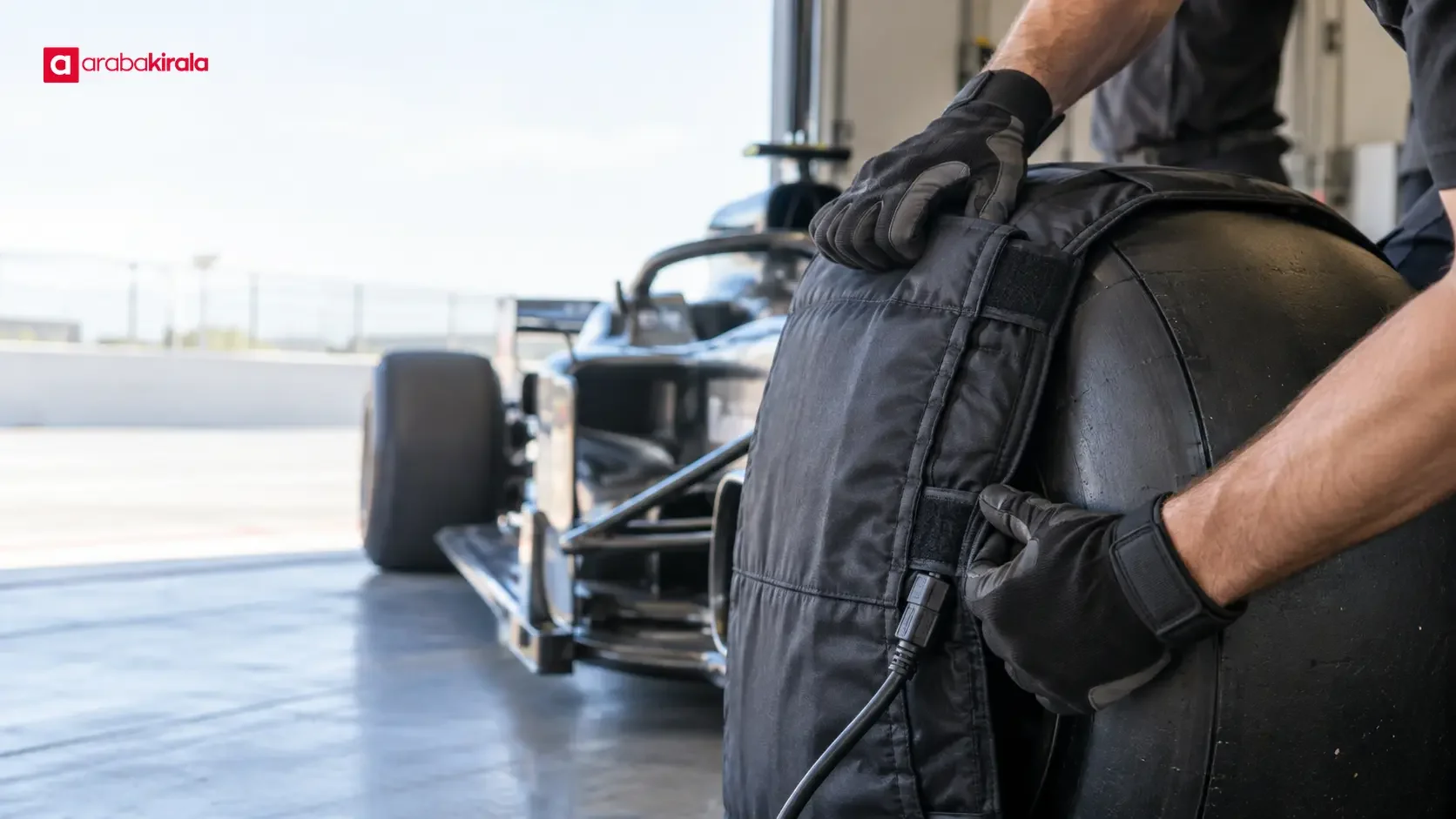
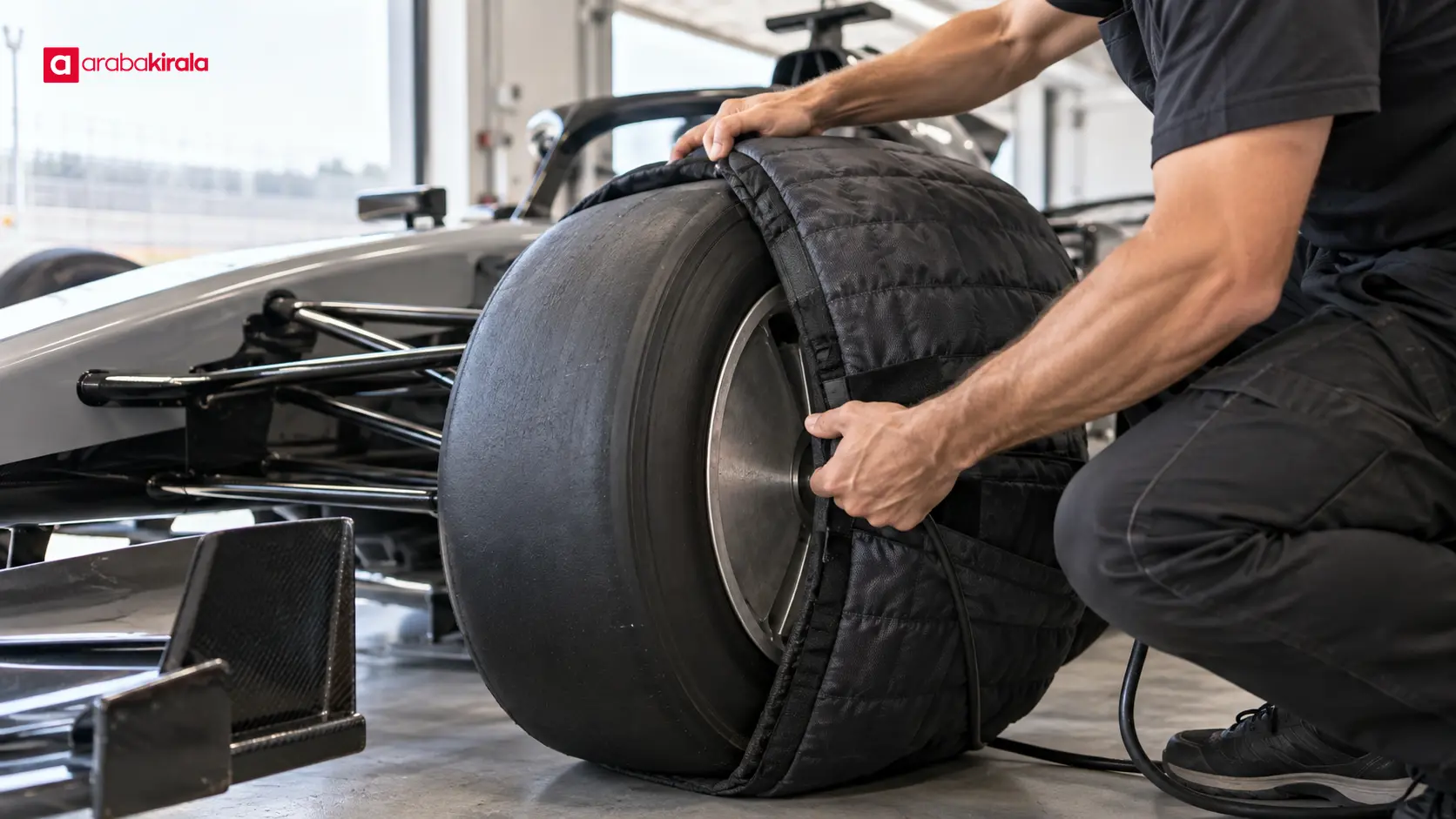
An F1 tyre blanket is an electrically heated cover wrapped around a racing tyre before the car goes out on track. It helps raise the tyre’s starting temperature, which can make the opening phase of a run more manageable. This guide explains how the equipment works, why temperature matters to grip, how a tyre’s heat changes during a race, and where the blanket’s role ends. The key idea is that preheating prepares one part of the process; it does not determine the tyre’s performance on its own.
What is an F1 tyre blanket?
A tyre blanket surrounds a tyre while it is stationary, typically in the garage or pit area. Electrical heating elements transfer heat through the cover, and a control system is used to manage the heating process. The blanket does not rotate the tyre, warm the circuit, or reproduce the forces a tyre experiences once the car is moving. Its purpose is to influence the tyre’s condition before it reaches the track.
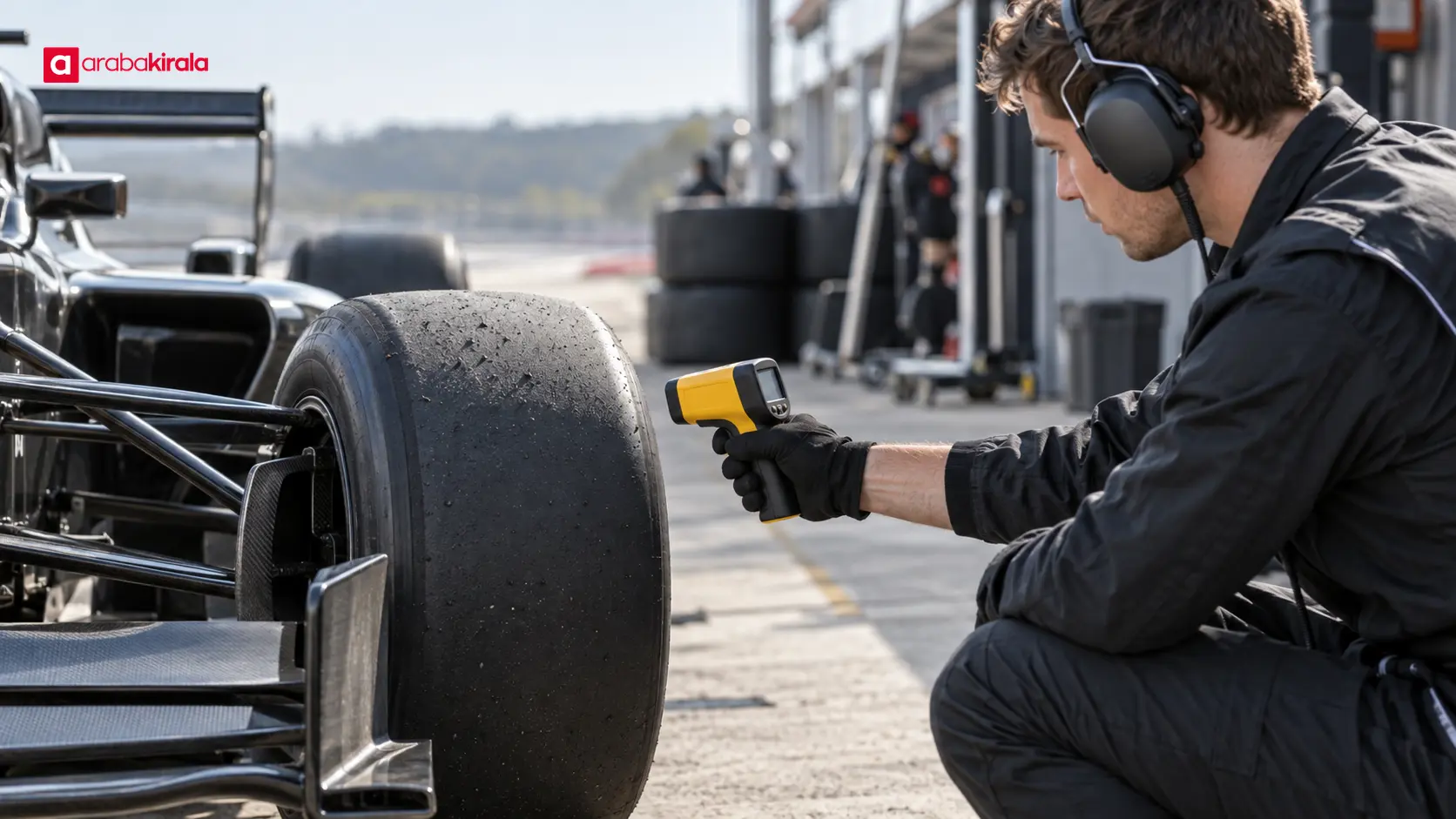
Tyre temperature is not one uniform reading. The tread, shoulders and internal structure may warm at different rates. Ambient air, the surface beneath the tyre and the time spent waiting also affect heat loss. A tyre coming out of a blanket therefore should not be assumed to have the same temperature everywhere. Teams interpret measurements alongside the car’s behaviour and the driver’s feedback.
Why does tyre temperature affect grip?
Racing tyre compounds are designed to work under particular temperature conditions. When a tyre is cold, its rubber may not interact with the fine texture of the circuit as intended. The driver can then have less usable grip for braking, turning and accelerating. As the tyre approaches its working conditions, its response may become more predictable.
More heat is not always better. Excessive temperature or uneven heating can affect performance and wear, making the available grip harder to use consistently. Teams manage both ends of the problem: a tyre should not start too cold, but it also needs to stay within a useful operating range. The ideal conditions depend on the compound, circuit, car setup and driving style, so one temperature cannot be treated as universal.
How can a blanket help on the opening lap?
Once the car moves, the tyres carry load and flex against the track. Braking and cornering forces also generate heat. A warmer starting point can put the tyre closer to its intended conditions than a completely cold start, reducing the amount of running needed before it begins to respond as expected.
That does not mean a blanket makes the tyre ready for full race pace. Grip on the opening lap also depends on track temperature and cleanliness, the compound, how weight moves through the car, and the driver’s inputs. Drivers build pace while assessing the response through the steering, brakes and acceleration. Two tyres that began at similar temperatures may behave differently under different circuit or car conditions.
How does tyre temperature change during a race?
Tyres gain heat through use and lose it to their surroundings. Long corners, heavy braking, acceleration and the load placed on the tyre can raise its temperature. Airflow on a straight can help remove heat, while cool weather or a cold track can increase heat loss. Following other cars also creates a different aerodynamic and thermal environment from running in clean air.
Temperature can vary from lap to lap and across different parts of the same tyre. Front and rear tyres do not necessarily carry identical loads: the circuit layout, car design and driving all matter. A tyre that has been worked hard in one section may feel different later in the lap. Teams therefore consider temperature alongside data and driver comments instead of treating it as a fixed number.
What can an F1 tyre blanket not do?
- Guarantee grip: It supports the starting condition; it cannot decide how much grip the circuit and tyre will provide.
- Heat every part equally: Tyre construction and surrounding conditions can create temperature differences.
- Keep the tyre at one ideal temperature: Once the car is running, heat continues to change with driving and the environment.
- Correct other problems: The blanket does not fix unsuitable pressure, excessive load or driving that is too aggressive for the conditions.
These limits do not make the blanket irrelevant. They show that preheating and on-track tyre management are separate parts of a larger process. The blanket affects the starting point; setup and driving shape how the tyre works afterwards.
Can tyre blanket use change with rules and technology?
In motor racing, the permitted use of tyre heaters can depend on the series’ technical regulations and the season. It is not safe to assume that every Formula 1 season or every racing category follows the same practice. For a rule or current application, use the official technical regulations and announcements for the relevant season. This general explanation describes the equipment’s basic function and does not state which devices or settings are permitted in a particular year.
The technology involves more than the cover material. Heat control, measurement and the fit between the equipment and tyre all contribute to the process. Different tyre constructions and operating targets can call for different approaches. For that reason, a temperature or heating time should not be presented as a universal recipe for every F1 tyre.
What to watch for when following a race
To understand the warm-up process, look beyond the moment the blankets come off. Watch how the driver brakes, turns and accelerates after leaving the pits, and consider comments about tyre behaviour alongside the circuit conditions. This makes it easier to distinguish a tyre’s starting temperature from the grip it develops at racing speed.
- Remember that the blanket surrounds the tyre; it does not heat the whole car.
- View the opening laps as part of the tyre’s transition toward its working conditions.
- Account for cool air, track temperature and traffic when interpreting tyre behaviour.
- Do not assume one temperature reading describes the whole tyre; where and how it was measured matter.
Summary: the blanket prepares the start, not the whole race
An F1 tyre blanket helps raise a tyre’s starting temperature before the car heads out. A more suitable starting condition can make the early running easier to manage than beginning with a cold tyre. But temperature and performance continue to change with the compound, circuit, weather, car setup and driving. The blanket cannot guarantee grip or make a tyre race-ready by itself.
Think of the blanket as one link in tyre preparation: it influences the starting point, while track loads and driving determine what follows. If you need to check the blanket rules for a particular season, consult that season’s official FIA and Formula 1 documents. For the basic concept, keep the distinction between preheating and on-track management in mind.
Frequently Asked Questions
How hot do F1 tyre blankets make the tyres?
There is no single temperature that applies to every tyre, compound and season. Targets depend on tyre construction and the relevant racing practice. For a precise figure, consult the official technical documents and team statements for the season in question.
Do tyres cool as soon as the blankets are removed?
Tyres continue to exchange heat with their surroundings. The rate depends on the air, track surface, waiting time and tyre construction, so it is not safe to assume the temperature stays unchanged after removal.
Why can cold tyres make an F1 car difficult to drive?
Racing rubber is designed for particular working conditions. A cold tyre may be further from those conditions, leaving the driver with less usable grip under braking and through corners. Its response changes as it warms up.
Do tyre blankets set tyre pressure too?
The blanket’s main job is to transfer heat. Pressure is a separate tyre variable that can change with temperature and is managed by the team using its own procedures. A blanket should not be treated as an automatic pressure adjustment device.
Are tyre blankets used the same way in every F1 season?
No. Equipment use and technical requirements can vary by series and season. Check the relevant season’s FIA regulations and official Formula 1 announcements for current details.
Legal Disclaimer: All content, articles and information on the Araba Kirala website are provided solely to inform users. No information shared on this website constitutes definitive advice or guidance. Araba Kirala Teknoloji A.Ş. and its authors cannot be held responsible for any direct or indirect damages arising from the application of information on the website. For all questions and requests regarding car rental, please contact the office from which you will rent your vehicle.