WRC Body Protection: What Do Mud Flaps Do?

Published: November 12, 2026 • Reading Time: 6 min • Last Updated: November 12, 2026 • Author: Merve B.
Contents
- Why loose surfaces challenge a rally car
- What mud flaps and wheel-area protection do
- Mud flaps redirect tyre spray
- Reducing spray is different from stopping impacts
- What areas can underbody protection help cover?
- What protection parts cannot guarantee
- How to assess protection on a WRC car
- A practical takeaway for rally fans
- Frequently Asked Questions
- Related Articles
- Sources
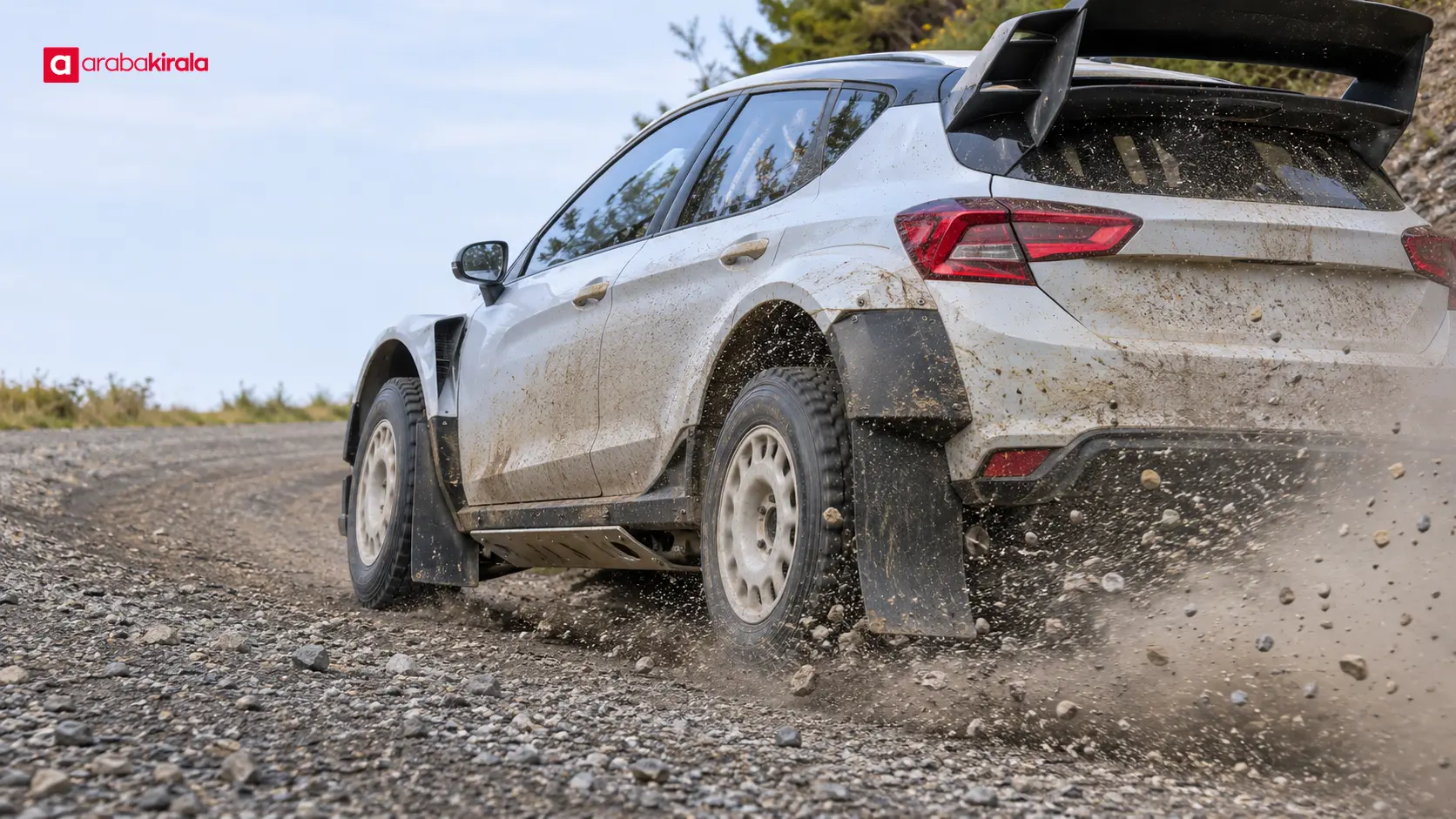
This guide explains what WRC body protection includes, how mud flaps and underbody panels help manage loose-surface debris, and where their limits lie. On a gravel stage, tyres lift stones, dust, and mud and send them around the car. Protective parts help direct that material and reduce exposure in selected areas. The FIA has described stones, mud, and gravel as hazards that can damage bodywork elements or obstruct air intakes during rally car development.
Why loose surfaces challenge a rally car
Unlike asphalt, a loose surface contains material that a tyre can dislodge as it rolls. Vehicle speed and wheel rotation can throw debris backwards, sideways, or underneath the car. The size and direction of that spray depend on the stage surface, rain, road wear, and the line taken through a corner. Gravel, mud, and stones can therefore create different problems within the same stage.
Protection does not remove these physical effects. Its purpose is to contain or redirect some of the spray, shield selected components from direct impacts, or reduce debris reaching parts of the underside. It would be inaccurate to treat protection as a promise that stones can no longer affect the car. A large rock, a severe impact, or heavy mud can exceed what a component is designed to handle.
What mud flaps and wheel-area protection do
Mud flaps redirect tyre spray
WRC mud flaps sit behind the wheels and may be made from flexible or durable material. They help direct some stones and mud thrown from the tread downwards and backwards, reducing the spray reaching the body and nearby mechanical areas. Their effectiveness depends on their shape, position, and condition. They are not expected to catch every particle.
A mud flap and a wheel arch are different parts. The wheel arch is the body area surrounding the wheel; a mud flap is an additional surface that can influence the direction of material thrown out by the tyre. Wheel-area protection can also reduce gravel or mud reaching the inside of a body panel or nearby equipment. The precise arrangement depends on the vehicle design and competition rules.
Reducing spray is different from stopping impacts
On a muddy surface, a flap can limit how widely the wheel spreads mud. On dry gravel, stones may bounce off the ground and pass around the edges of a protective panel. These parts alone do not guarantee visibility, tyre behaviour, or braking performance. Teams inspect fit and condition before a stage, and reassess any damage that occurs during competition.
What areas can underbody protection help cover?
Underbody protection can consist of panels or shields beneath the car. Depending on the design, it may partly screen the underside of the engine bay, the area around the transmission, or other lower components from direct stone strikes and debris thrown up from the road. Protection does not mean armour that absorbs every impact; its purpose and coverage vary with the car’s technical layout.
Panels may also limit loose material reaching certain openings directly. However, a covered area still needs inspection. Service crews look for loose fasteners, dents, cracks, and mud buildup around panels. An intact-looking outer surface does not by itself prove that every part beneath it is unaffected.
FIA technical regulations vary by vehicle category and period, so a protection device allowed in one class may not be used in the same way in another. A feature on one WRC car should not be described as a universal standard for every rally car. The applicable technical rules and the vehicle’s approved configuration determine what is fitted.
What protection parts cannot guarantee
- No guarantee against damage: Rock size, speed, impact angle, and surface hardness all affect the outcome.
- No complete barrier to dirt: Mud and dust can reach the car through other openings.
- No end to maintenance: Protective parts can loosen, wear, or take impacts themselves.
- No identical result on every stage: Dry gravel, wet ground, deep mud, and rocky sections behave differently.
These limits do not make protection useless. The parts help reduce exposure to debris and impacts, but they cannot cancel changing stage conditions or the effects of vehicle setup and driving. The FIA notes that rain at gravel events such as Safari Rally Kenya can turn roads muddy and expose unforgiving rocks. That is one reason teams assess protection in the context of the conditions.
How to assess protection on a WRC car
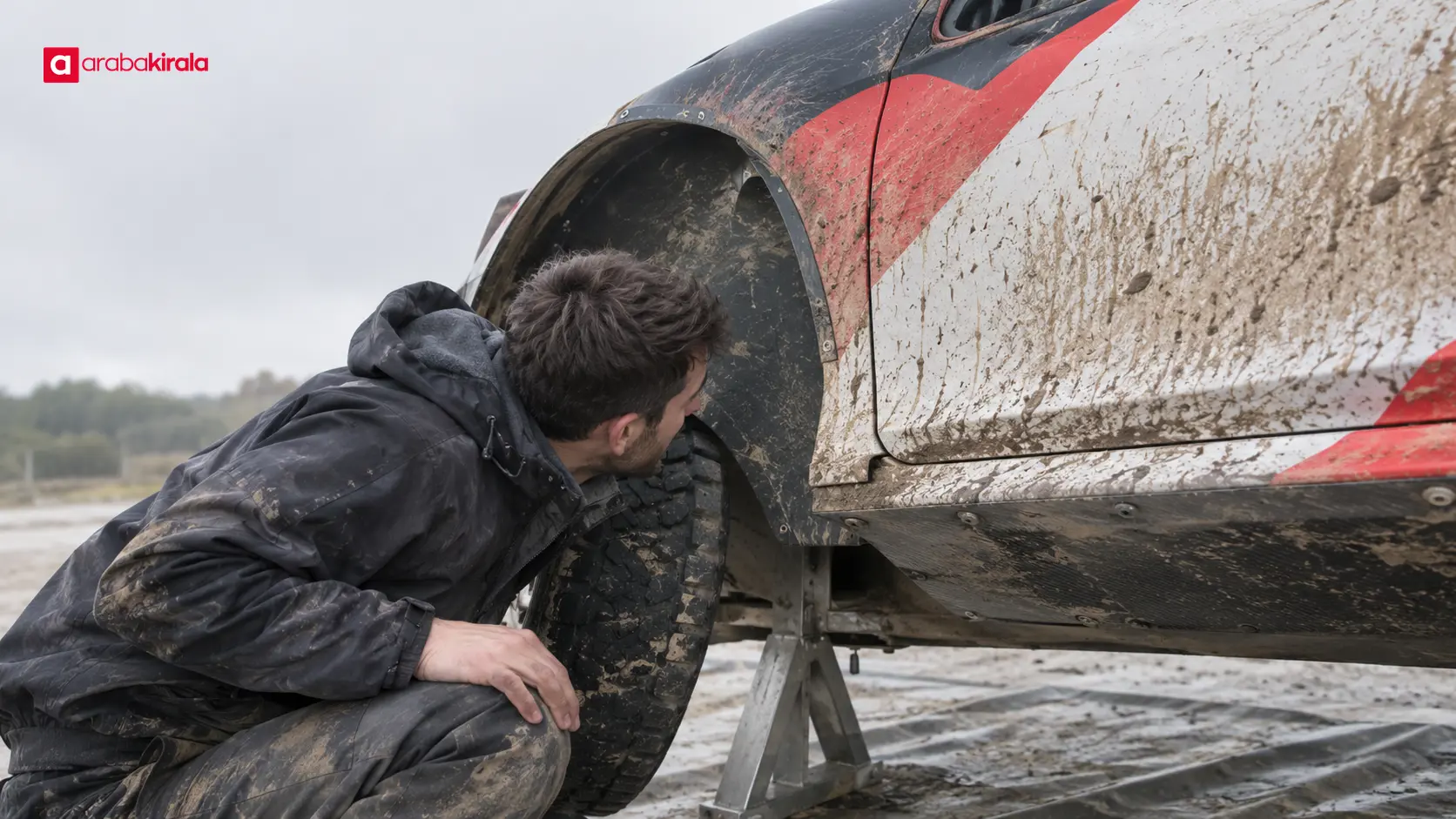
It is more useful to look at the system from the wheel area to the underbody than to focus on one isolated part. A technical inspection may consider:
- Whether mud flaps are present and their fixings are secure.
- Whether the wheel arch and nearby bodywork show missing parts, rubbing, or debris buildup.
- Whether underbody panels show impact marks, cracks, deformation, or loose fasteners.
- How changes in stage surface and weather affect the load on protective parts.
- The technical rules and approved configuration for that competition class.
This is not a repair procedure. If damage is suspected, a qualified team should inspect the car and its components. Removing, fastening, or replacing a protection part without the right expertise may be unsafe and may conflict with technical rules.
A practical takeaway for rally fans
When you see a mud flap or underbody panel on a rally car, think of it as a way to redirect debris and reduce exposure in selected areas. Avoid conclusions such as “the entire underside is protected” or “stones cannot cause damage.” Protection is one part of a car’s durability approach, and it works alongside inspection and attention to stage conditions.
In short, WRC body protection helps manage the effects of stones, dust, and mud around a car on loose surfaces. Mud flaps influence material thrown from the tyres; underbody panels can screen selected lower components. As a next step when viewing a rally car, consider the position, coverage, and condition of each part together, while remembering that vehicle layouts and applicable rules differ.
Frequently Asked Questions
Do WRC mud flaps stop every stone?
No. Mud flaps help redirect some material thrown from the wheels and reduce spray, but they cannot stop every stone. Debris size and direction, along with surface conditions, affect what reaches the car.
Are mud flaps and wheel arches the same part?
No. A wheel arch is the body area around the wheel, while a mud flap is a surface that can influence the direction of mud and stones thrown outward. They work in nearby areas but have different forms and functions.
Does underbody protection cover the whole car?
No. Coverage depends on the vehicle design and technical configuration. Panels can partly shield selected components from spray or direct impacts, but they are not a complete shell around the car.
Does rain change how protective parts work?
Rain can change the conditions. It may turn loose ground muddy and affect visibility of rocks and grip at the surface. Teams consider the condition of the protection together with the stage conditions.
Can a car keep running if a protective part is damaged?
The effect of damage on safety and technical compliance depends on the part and its condition. A qualified competition team needs to assess it; drivers should not try to remove or fasten the part themselves.
Related Articles
- WRC Brake Cooling and Air Ducts: What Do They Do?
- What Does Underbody Protection Do on a WRC Rally Car?
- WRC Rally Headquarters and Spectator Areas: What Do They Do?