WRC Pace Notes: Corner Grades, Distance and Hazard Calls
Published: November 21, 2026 • Reading Time: 7 min • Last Updated: November 21, 2026 • Author: Merve B.
Contents
- What are pace notes and how are they used?
- What do corner grades describe?
- Distance calls and the order of information
- Why hazard calls are a separate category
- How notes are prepared and why conditions can change
- A practical way to follow pace notes as a viewer
- Summary: the purpose of pace notes
- Frequently Asked Questions
- Related Articles
- Sources
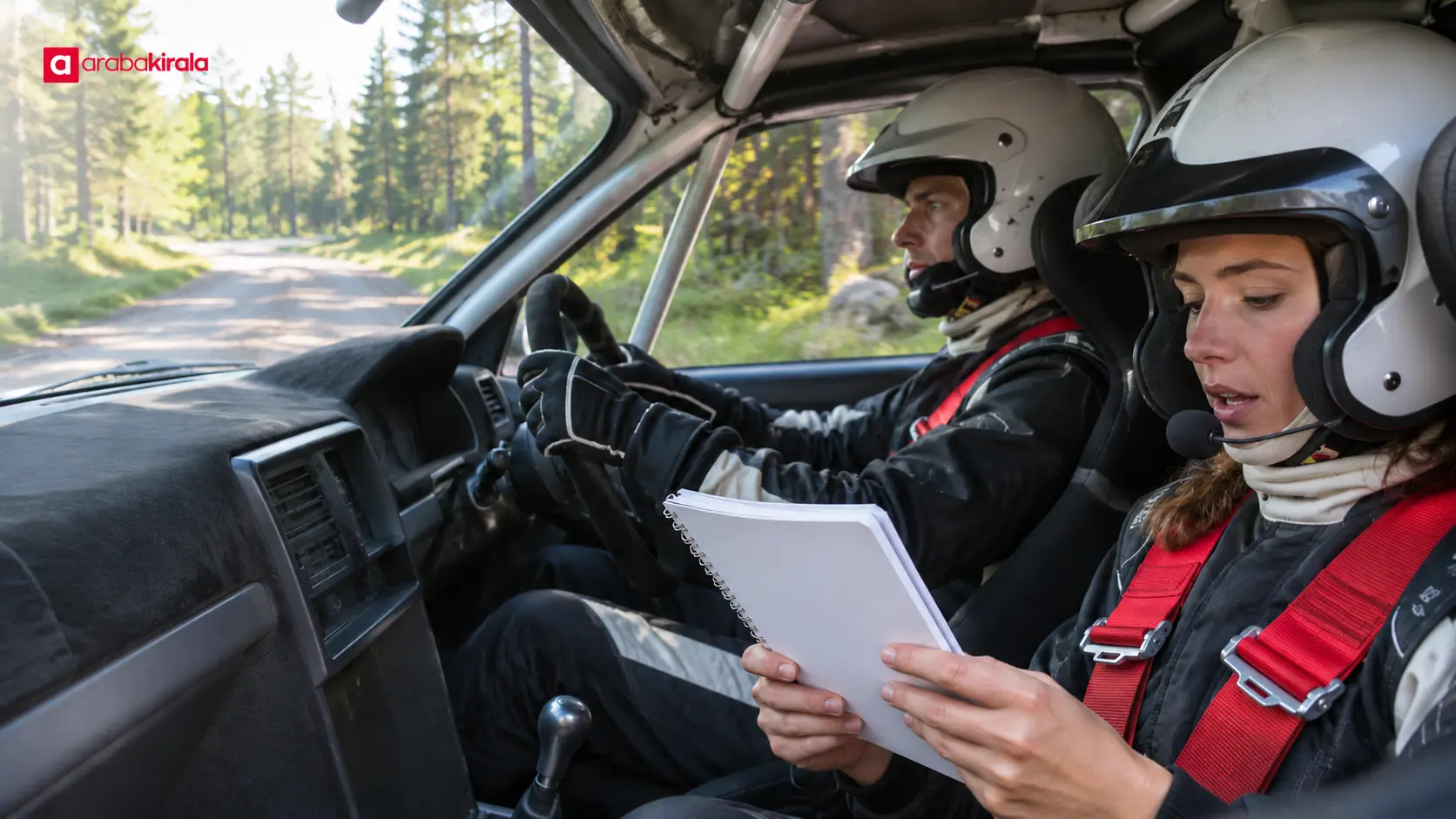
This guide explains what WRC pace notes communicate, how corner grades and distance calls are interpreted, and why hazard warnings deserve separate attention. Pace notes are a crew’s description of upcoming road features, prepared after the route has been inspected. Their purpose is to help the driver understand changes that may not yet be visible.
Pace notes are not a universal codebook for every detail of a stage. Numbers, words, abbreviations and reading rhythm vary with the system a crew uses. To understand a short call in a broadcast, consider its context and the co-driver’s delivery rather than treating the phrase as an isolated command.
What are pace notes and how are they used?
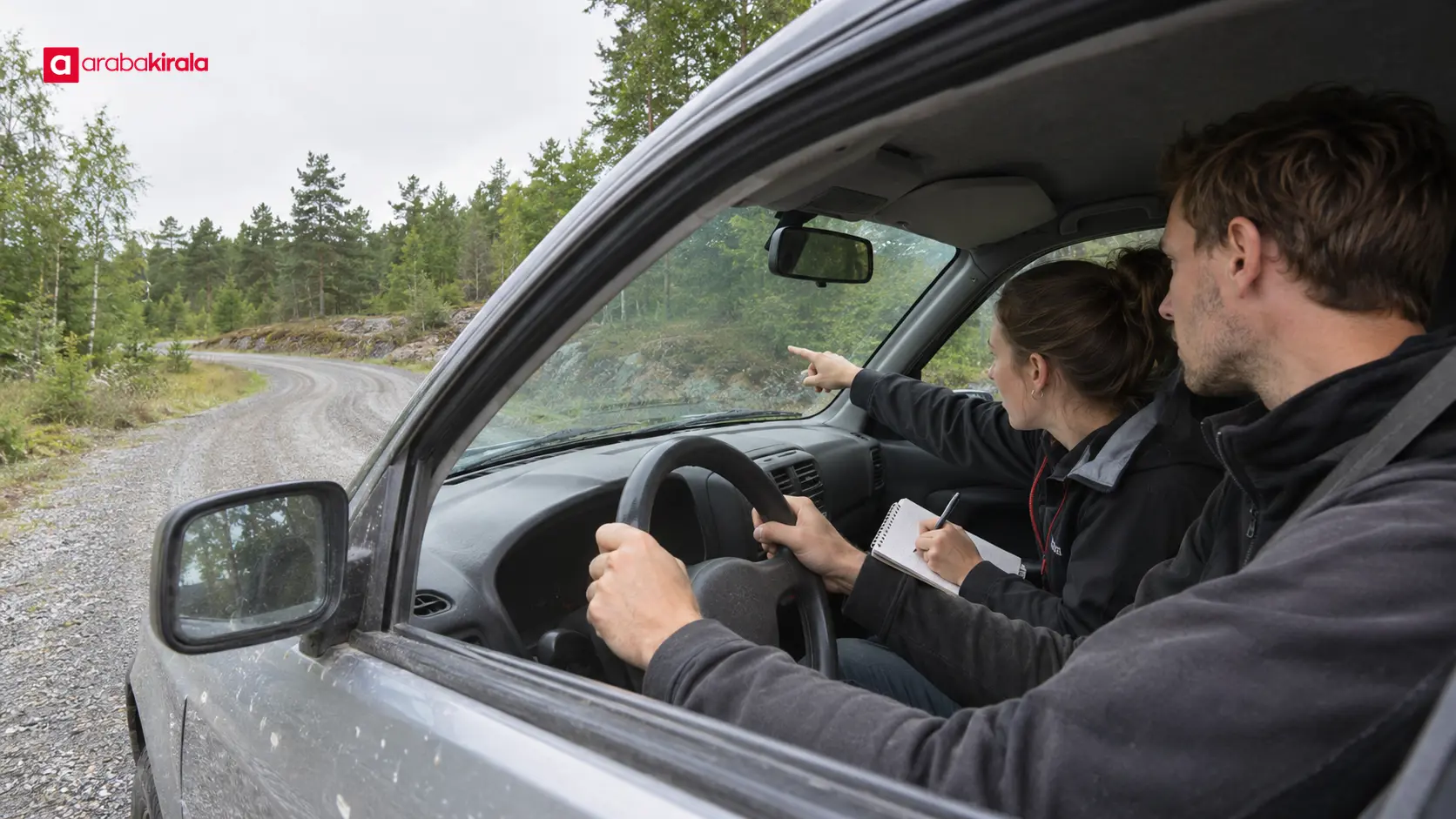
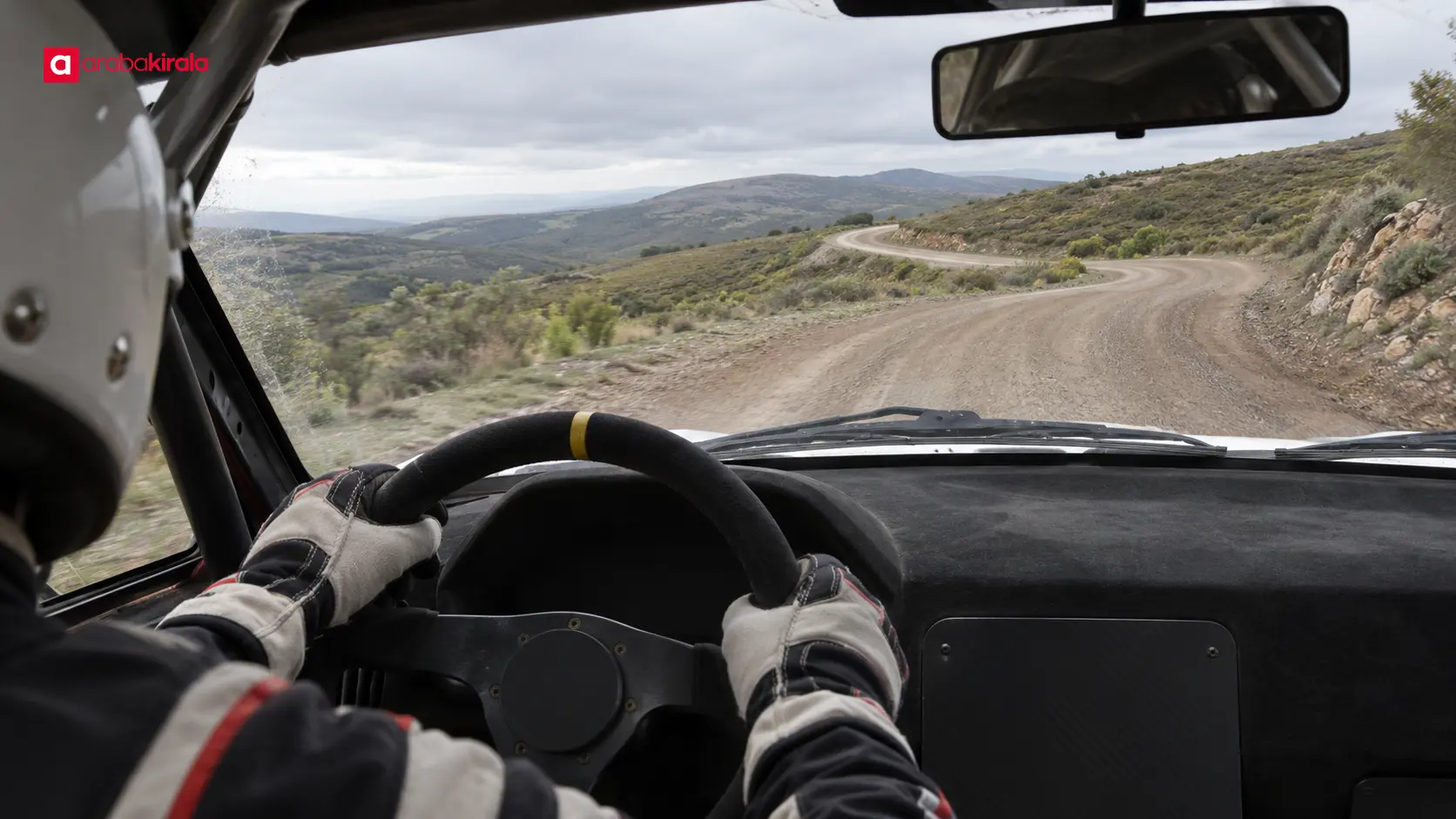
A rally crew examines the stage during reconnaissance before competition. WRC’s overview describes this as a process in which drivers and co-drivers travel the route at limited speed to make notes. The crew records direction changes, corner character, crests or dips that affect visibility, and other points that require attention, using its own note method.
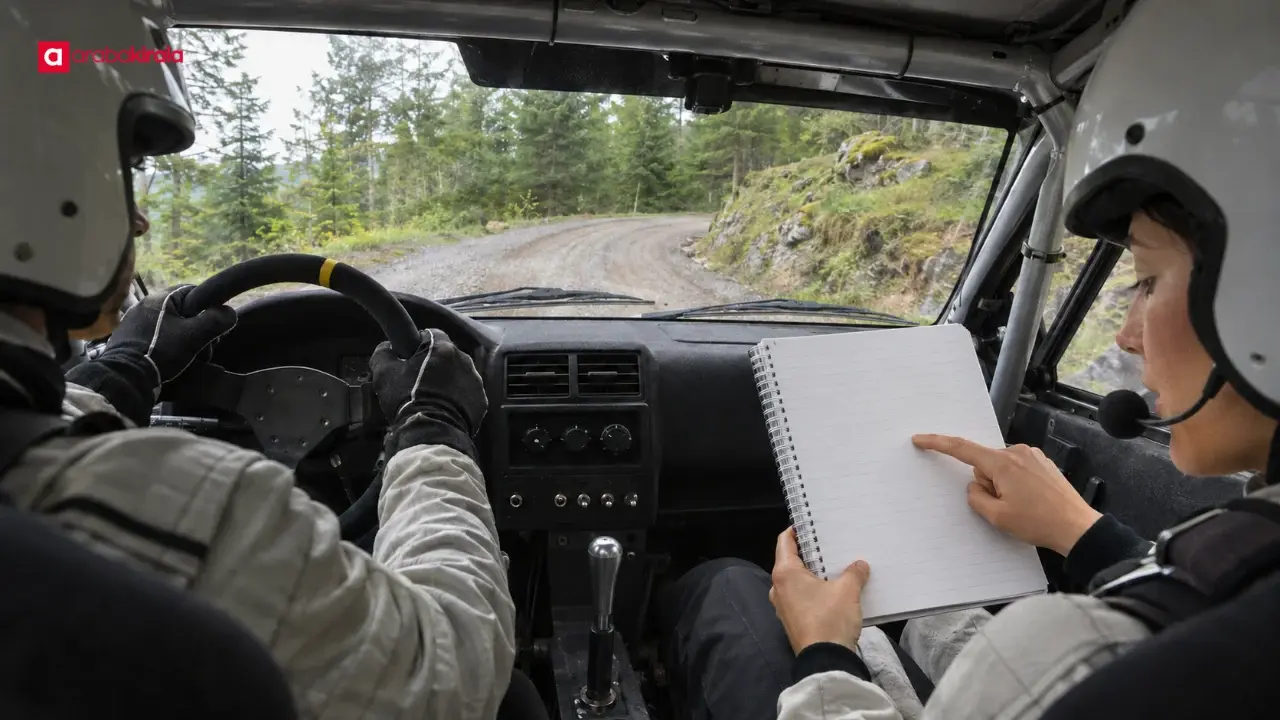
During a stage, the co-driver reads the information aloud in a consistent rhythm. The driver is also watching the road and managing the car, so concise, familiar language matters. Notes support the driver’s decisions; they do not replace observation of the road or assessment of the conditions at that moment.
This also helps spectators understand what they hear. Following pace notes is more than listening for “left” or “right.” Tracking the direction of the next bend, how close it is and how it connects to the following section makes the sequence of decisions easier to understand.
What do corner grades describe?
A corner grade gives a compact description of how open or tight a bend is considered. Some crews use numbers, while other systems may use words, colors or different symbols. It is unsafe to assume that the same number means the same angle, speed or gear for every crew. The grading belongs to the crew’s own vocabulary.
A sequence of grades can summarize the character of changing direction: a more open bend and a tighter bend create different expectations. But a grade alone does not provide a reliable speed calculation. Road surface, slope, visibility, car position and the section that follows all affect driving decisions.
Instead of memorizing a number in isolation, ask what direction the call describes, how tight the bend is, how it relates to the previous or next section, and whether a warning accompanies it. This makes it easier to follow different crews without forcing their notes onto one scale.
Distance calls and the order of information
Distance calls describe how near an upcoming feature is to the current point. Crews may use metres, words such as short or long, or another sign from their own system. A distance call helps the driver understand the spacing between instructions; it does not guarantee that the road will be perceived identically in every condition.
Sequence matters when notes arrive one after another. A bend may be followed by a short link and then another change of direction. The co-driver’s timing helps the driver process one item while preparing for the next. Removing a single “left” or “right” call from its sequence can therefore distort the flow of the road.
When following a broadcast, match the calls to the road visible in front of the car. Camera angle can make spacing look different, while audio delay or an edit can obscure the relationship between a call and the road. Follow the notes that come next instead of drawing conclusions about the whole stage from one isolated command.
Why hazard calls are a separate category
Hazard calls can highlight a feature that needs attention beyond the bend’s basic grade. A sharp change of direction, a crest that limits visibility, a roadside hole or a rough patch may be emphasized with a separate word or sign. At a Safari Rally Kenya press conference, FIA recorded discussion of calls for avoiding large holes and of a note describing a line away from the usual path in a corner. This shows that notes can convey local hazards as well as the road’s general shape.
The name and severity of a warning are not identical across every note system. A word such as “caution” does not establish a shared risk level for all crews. To interpret it, consider the crew’s vocabulary, the road context and the feature being flagged.
For safety, do not read a hazard call as a speed recommendation. Rally cars travel at high pace on closed stages, and spectators should follow event safety instructions and remain in areas designated by officials. Pace notes are not directions for spectators choosing where to watch.
How notes are prepared and why conditions can change
Reconnaissance is not the same as a full-speed pass in a rally car. The basic WRC process includes inspecting the route beforehand so the crew can prepare its notes. Those notes combine a description of the road with a shared way of communicating. As the co-driver reads, the driver also controls the car, making consistent terminology essential.
Road surfaces and stage conditions can change over time. At a FIA press conference, crews discussed holes on Safari Rally Kenya and sections that could deteriorate by a later pass. That example is a reminder that notes describe the road but cannot guarantee the surface will remain unchanged throughout competition. Teams consider current conditions alongside the information in their notes.
It is more useful to think of pace notes as a prepared spoken route description than as a fixed map. A map shows locations; pace notes are read in sequence during a drive, and the meaning of their terms depends on how a crew uses them. The two tools serve different purposes.
A practical way to follow pace notes as a viewer
- Find the direction first: Track whether the call turns left or right and how the direction changes across consecutive notes.
- Keep the grade in context: Interpret an open or tight bend within that crew’s system; do not assume another crew’s numbers are equivalent.
- Follow the spacing: Listen for whether the link between two features is described as short, long or otherwise marked.
- Separate out the warning: A hazard call beside a corner description may add information about visibility or the surface.
- Use picture and sound together: A single frame or edited audio clip may not show the complete sequence.
This approach makes crew communication easier to follow during a rally broadcast. If you need the meaning of a particular team’s terms, use the context provided in that team’s or event’s official information. Combining different vocabularies into one supposedly universal chart can hide important differences.
Summary: the purpose of pace notes
WRC pace notes are a crew communication system that helps the driver understand a stage while driving. Corner grades describe the character of a turn, distance calls explain the order and spacing of features, and hazard warnings flag details that need extra attention. None of these is, by itself, a speed, gear or guaranteed safe-passage instruction.
During the next rally broadcast, listen for direction, order, spacing and warnings, and interpret unfamiliar terms according to the crew using them. This gives you a clearer view of what the notes communicate and avoids unsupported comparisons between different systems.
Frequently Asked Questions
Who reads WRC pace notes?
The co-driver reads the notes, while the driver evaluates them alongside the road and the car’s immediate behavior. Shared terminology and timing help the information work for the crew.
Does a corner number mean the same thing for every crew?
No. Numbers belong to the crew’s note system. Treating the same number as the same angle, speed or gear across teams would require a shared, verified vocabulary.
What does a distance call measure?
Depending on the system, it describes the nearness of an upcoming feature or the spacing between features. You should not assume every crew uses the same measurement method.
How is a hazard call different from a corner grade?
A grade classifies the character of a turn; a hazard call can flag an additional concern such as a hole, rough surface or limited visibility. Its meaning depends on the crew’s vocabulary.
Do pace notes stay accurate throughout a stage?
Notes are a route description prepared during reconnaissance, not a promise that the surface will remain unchanged. Crews also consider conditions such as gravel or surface damage as they develop.
How do pace notes help when watching a rally?
They help viewers follow the direction and sequence of bends and understand the co-driver’s stream of information. Following a longer sequence is more informative than relying on a short clip that may separate the sound from the road.
Related Articles
- How WRC Differential Setup Affects Grip Through a Corner
- How WRC Road Sections Connect Stages
- How WRC Starting Order Affects Road Conditions