What Do Formula 1 Pit Entry and Exit Lines Do?
Published: November 7, 2026 • Reading Time: 6 min • Last Updated: November 7, 2026 • Author: Merve B.
Contents
- What do the pit entry and exit lines mark?
- The pit road and the racing circuit are different spaces
- Why does the entry line matter to drivers?
- The exit line and rejoining the track
- Do the lines automatically mean a penalty?
- How to read pit markings while watching
- Why are these connections part of race strategy?
- Summary and next step
- Frequently Asked Questions
- Related Articles
- Sources
Formula 1 pit entry and exit lines show where cars leave the racing circuit for the pit road and where they join the track again. This guide explains what the markings mean for traffic flow and safety, how the pit road differs from the racing surface, and how to read these points while watching a Grand Prix.
What do the pit entry and exit lines mark?
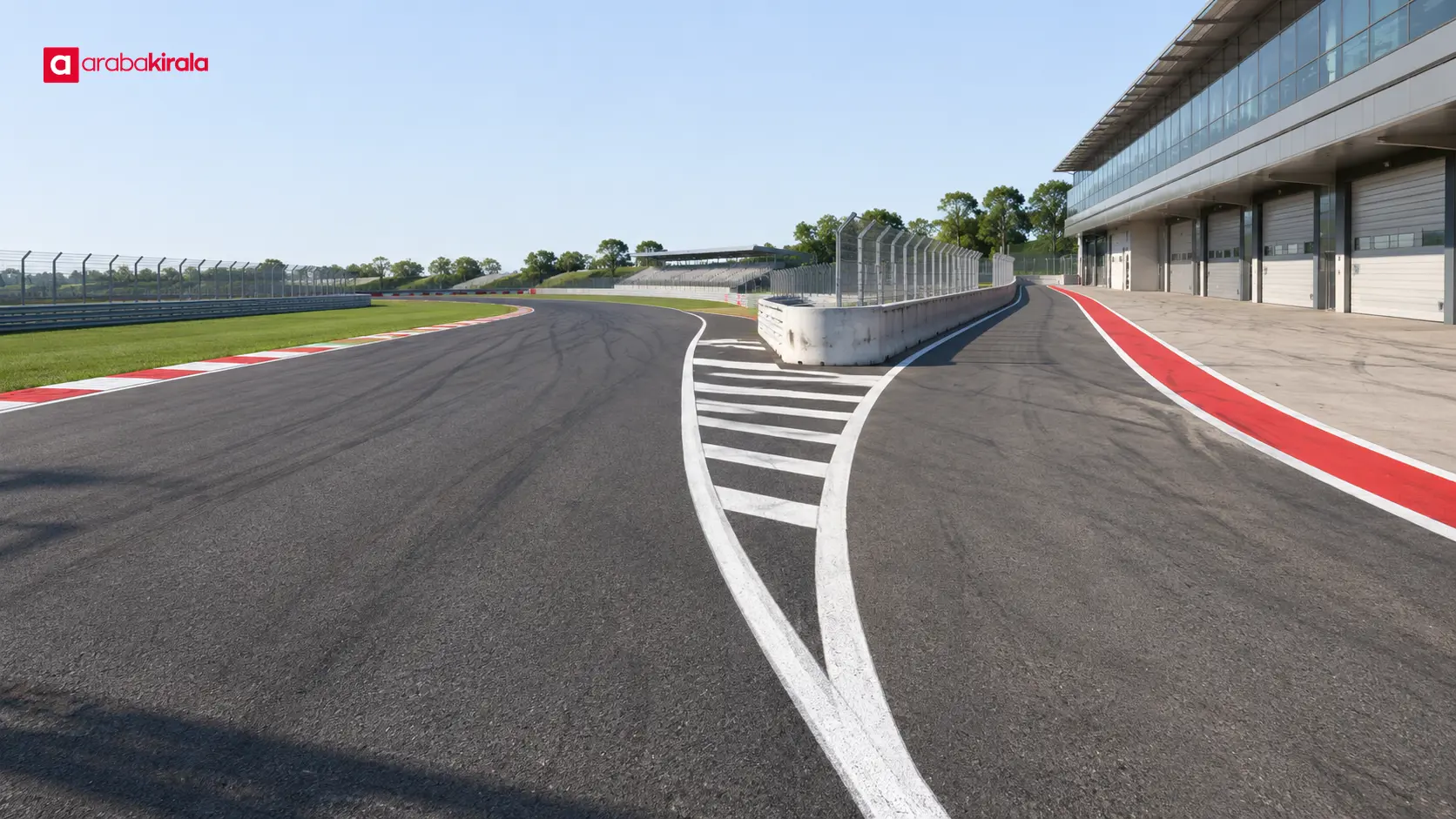
Pit entry is the connection that leads from the main circuit to the pit road. A driver heading in for a stop leaves the racing line and follows this route; painted markings make the transition area visible. Depending on the circuit, the entry may look like a long connector or a short branch near the exit of a corner.
Pit exit is where the pit road feeds back onto the circuit. Cars leaving the pit lane merge into the flow of cars already completing laps. The markings show where that merge takes place, while flags, lights and instructions from race control communicate the conditions that apply at that moment.
The pit road and the racing circuit are different spaces
The racing circuit is the main route where lap times are recorded and the race takes place. The pit road runs separately beside the team garages. Cars travel through it to their pit stop positions, where work such as a tyre change may be carried out. The two routes connect, but they do not have the same traffic pattern.
The FIA sporting regulations distinguish the pit entry road, pit lane and pit exit road as separate sections. The rules also include operational provisions such as a pit lane speed limit and lights at the pit lane exit. Entry and exit lines are therefore visible parts of a wider system for managing order and safety during a race.
Why does the entry line matter to drivers?
A driver entering the pit road moves from racing pace into an area with a different speed regime. Following the entry route helps keep the transition clear of the space used by cars continuing on the circuit. Drivers behind also need to assess the car’s position and keep a suitable margin as it turns toward the pit road.
The meaning of the entry line should be understood in the context of each circuit’s layout. At some tracks, the driver heads toward a long deceleration section; elsewhere, the entry is closely linked to a corner exit. A layout at one circuit should not be treated as a universal template. Instructions issued for that event by the FIA and race director are the relevant reference for competitors.
The exit line and rejoining the track
At the pit exit, a driver can encounter cars already travelling at speed on the main circuit. The exit marking identifies the merge area and, depending on the layout, can separate the space available to cars leaving the pit road. A safe rejoin depends on more than the painted line: drivers also need to monitor traffic and the exit signal.
FIA rules provide for red and green lights at the end of the pit lane, with cars permitted to leave when the exit light is green. A blue flag or flashing blue light may also warn a driver that cars are approaching on the track. These signals do not replace the line; they add information about the conditions at the exit.
Do the lines automatically mean a penalty?
Seeing a line does not mean that the same breach and consequence apply at every circuit. The position of the marking, the instructions issued for the event and the FIA rules all matter. When an incident is reviewed, officials consider the car’s movement, its position and the relevant instructions. A camera image showing a wheel close to a line is not enough on its own to establish a conclusion.
For viewers, the useful distinction is that a line describes a physical boundary or transition area, while officials assess an incident using the rules and the circumstances. When a broadcast discusses a possible line infringement, the circuit map and race director’s notes can help explain the context.
How to read pit markings while watching
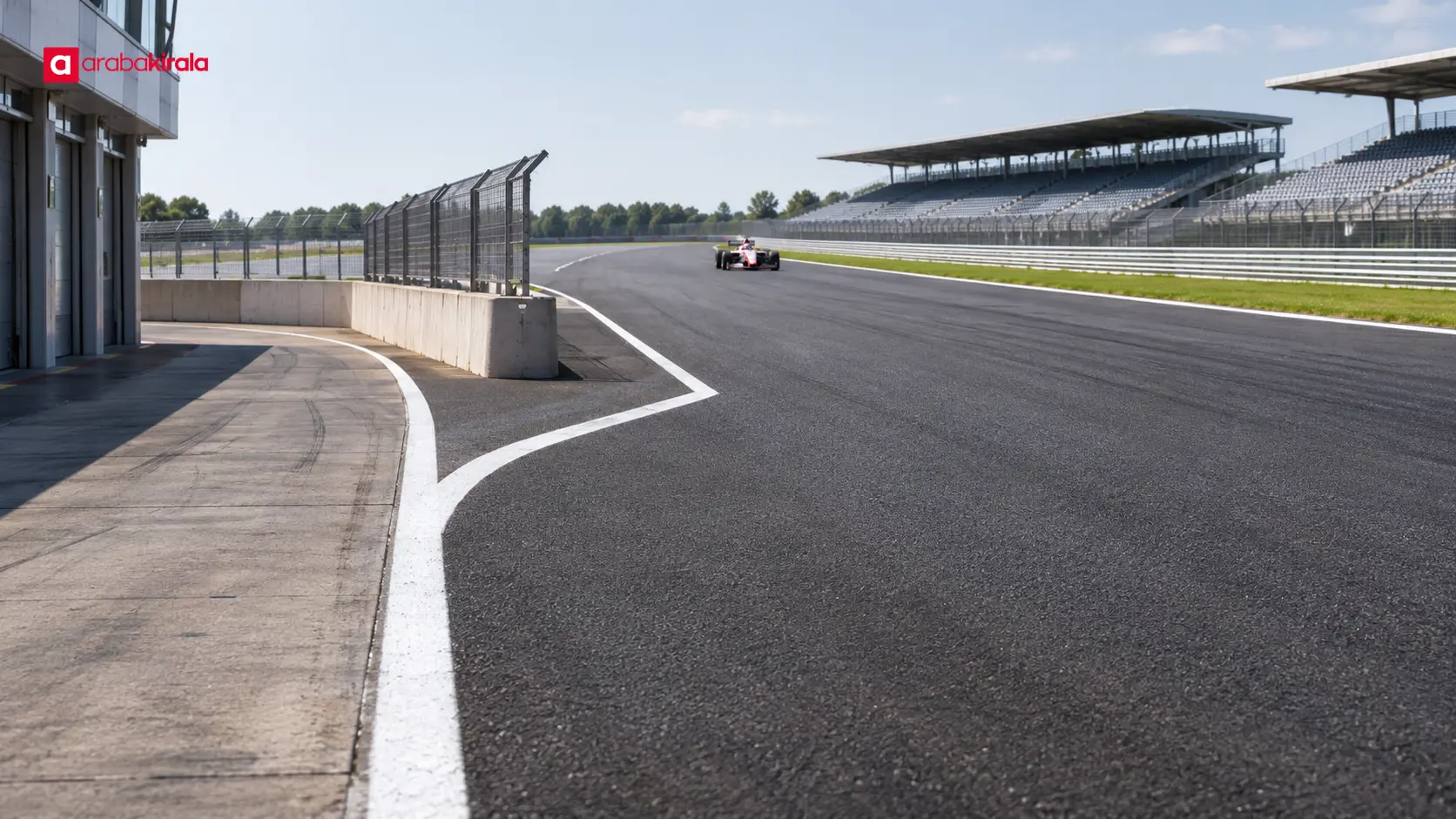
Start with the circuit map and locate where pit entry branches off and where pit exit rejoins the main route. Then watch the car’s position before it reaches the markings and note how other cars are approaching. This makes it easier to follow why a stop and the timing of a rejoin can have different strategic effects.
- Locate the entry: Find the branch from the circuit to the pit road on the map.
- Follow the exit: Notice which corner or straight the pit road rejoins.
- Add signals and flags: Read the markings alongside the race control indicators in use.
- Check the circuit-specific notes: Event instructions can explain the local arrangement.
Why are these connections part of race strategy?
A pit stop is more than a car visiting its garage. Time spent on the circuit and the moment the car rejoins traffic are also parts of the race. The entry location shows when the driver leaves the main flow; the exit location shows where the car returns in relation to other competitors. These points help viewers understand pit timing and the traffic a driver may encounter after a stop.
When a commentary mentions traffic at pit exit or time lost at pit entry, remembering the markings clarifies the physical setting. The lines do not prove that a particular strategy will succeed; they describe the transition between the circuit and the pit area.
Summary and next step
Formula 1 pit entry and exit lines make two important connections between the circuit and the pit road visible. At entry, a car leaves the main track flow; at exit, it rejoins it. Reading the markings alongside speed management, traffic, lights and event instructions helps explain both the safety arrangements and the role of a pit stop in the race.
For the next Grand Prix, open the official circuit map and find the entry and exit points. Then follow a car through those areas when it stops. This makes the pit road’s separate operation, and its close connection to the race result, easier to understand.
Frequently Asked Questions
Are the pit entry line and racing line the same thing?
No. The racing line describes a route drivers use to complete a fast, efficient lap. The pit entry line marks the area where a car branches onto the pit road. The routes may approach or cross each other at a particular point.
Why does the pit exit line matter for safety?
A car leaving the pit road joins the flow of cars completing laps. The marking makes the merge area visible, while lights, flags and traffic awareness also contribute to a safe exit.
Are the lines in the same place at every Formula 1 circuit?
No. Circuit designs, the position of the pit buildings and the connecting routes vary. The circuit map and event instructions describe the arrangement for each race.
What does a green pit exit light mean?
Under the FIA sporting regulations, red and green lights are provided at the end of the pit lane, and cars may leave when the exit light is green. Drivers must also follow the race control signals in effect.
Does touching a line automatically result in a penalty?
A camera view showing a car close to a line does not by itself establish an automatic penalty. Any review depends on the applicable rule, event instructions and the car’s movement in context.
Related Articles
- What Do F1 Tyre Blankets Do? Heat, Grip and Tyre Management
- What Do Formula 1 Steering Wheel Controls and Displays Do?
- F1 Car Checks: What Seals and Component Inspections Do
 Add ArabaKirala as a preferred source on Google