Rental Car Key Handover: Spare Keys and Vehicle Basics
Published: November 5, 2026 • Reading Time: 7 min • Last Updated: November 5, 2026 • Author: Merve B.
Learn how to check the main and spare keys, test the remote, and clarify essential vehicle instructions before driving away.
Contents
- What to confirm when you receive the keys
- How to check the spare key and remote
- Count the keys and note their visible condition
- Test the remote beside the parked vehicle
- Vehicle information to learn before driving
- Keep handover notes clear and useful
- What to do if a key is lost or stops working
- Frequently Asked Questions
- Related Articles
Rental car key handover is the time to confirm how many keys you receive, what each one does, where the spare is kept, and which vehicle instructions matter before setting off. This guide explains how to inspect the keys and remote, learn the basic controls, and keep a useful handover record. You will also see which details depend on the vehicle or branch and should be confirmed directly before you leave.
What to confirm when you receive the keys
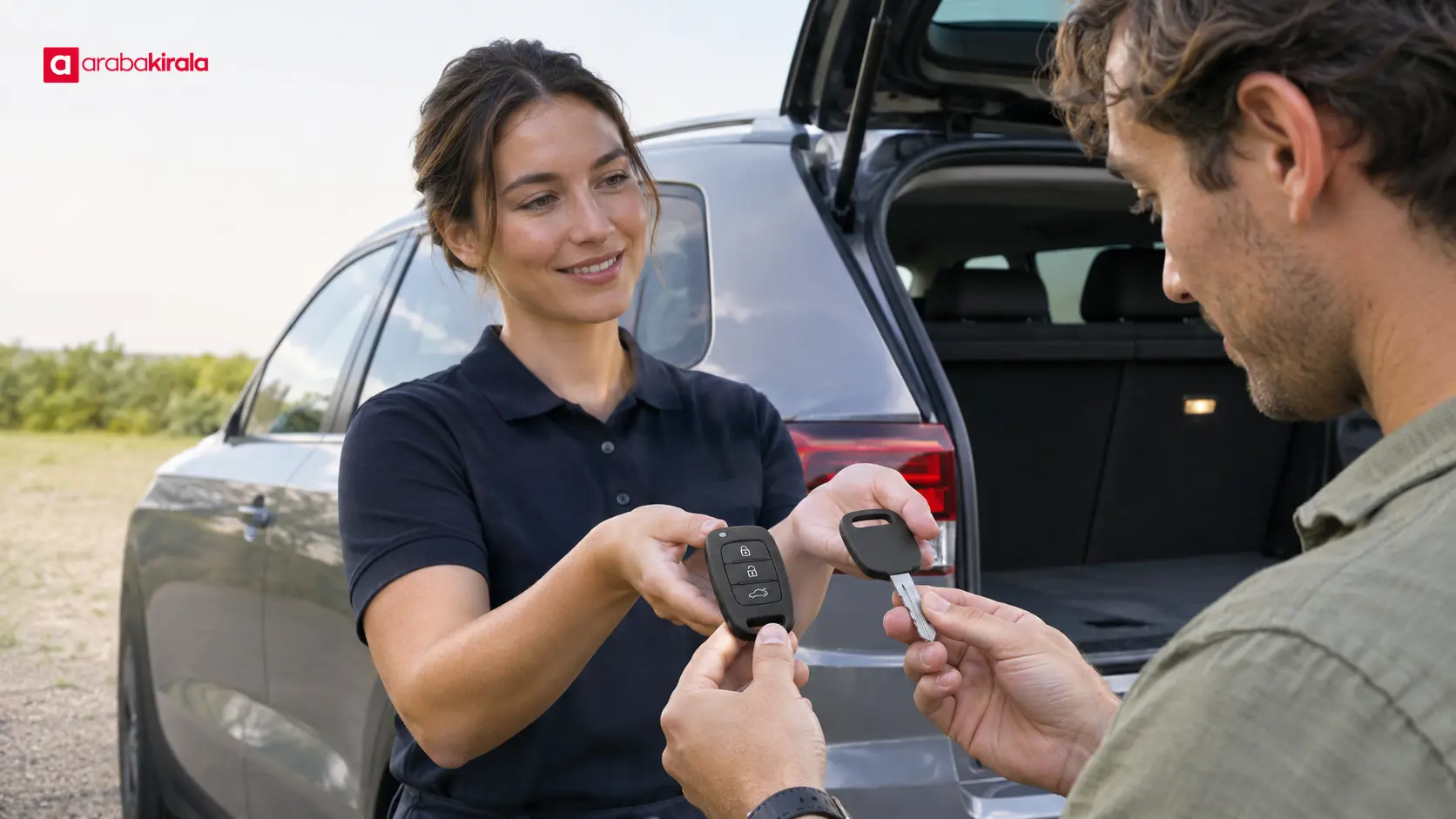
For rental car key handover, the practical points below should be considered together. A car key may be more than one object. Depending on the vehicle, you may receive a remote fob, a mechanical key tucked inside the fob, or an electronic key used for keyless entry and ignition. The design determines how the parts work and what to do if the electronic functions fail. Identify each item with the staff member rather than assuming every key has the same purpose.
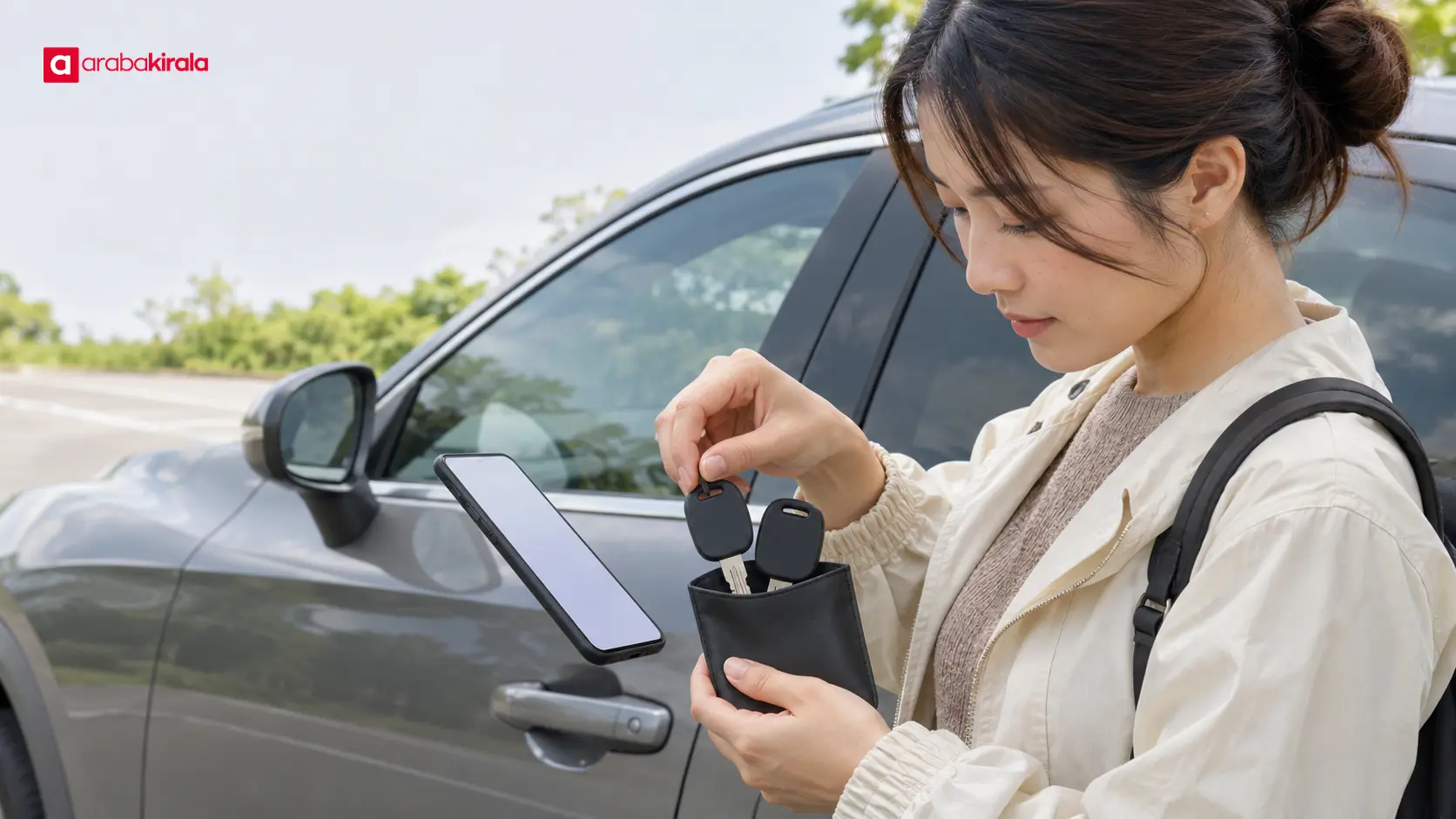
Count the keys handed to you and ask whether a spare is included. A spare being available does not mean you should leave it in the car or carry it in any particular way. The branch can explain how its keys should be stored and returned. If you will keep two keys in separate places, choose a secure arrangement that still lets you reach the spare if needed.
Look at the remote buttons for locking, unlocking, and, where fitted, opening the boot. Their symbols can be similar. Test them while the car is parked and notice the vehicle’s light or sound response. If a button does not appear to work, show the staff member instead of repeatedly pressing it. The cause may relate to the battery, vehicle settings, or the correct operating method.
How to check the spare key and remote
Count the keys and note their visible condition
Inspect each key for obvious cracks, loose buttons, damage to the metal blade, or a broken keyring attachment. This is a visual handover check, not a technical inspection. If you notice a missing part or visible damage, tell the staff member before accepting the car and ask for the condition to be recorded.
Do not assume that a spare key works in exactly the same way as the main one. Ask which functions it supports and how you could access it if needed. Whether the spare is handed over, stored separately, or returned with the main key can depend on the rental arrangement and branch. Confirm the specific process where you are collecting the car.
Test the remote beside the parked vehicle
Try the lock and unlock buttons from a reasonable distance while the vehicle is stationary. If the remote works only when close to the car, demonstrate the issue to staff. Key signal range and response vary by vehicle, so do not rely on a universal distance. A keyless system may also have a model-specific sequence for detecting the key, opening doors, or starting the engine.
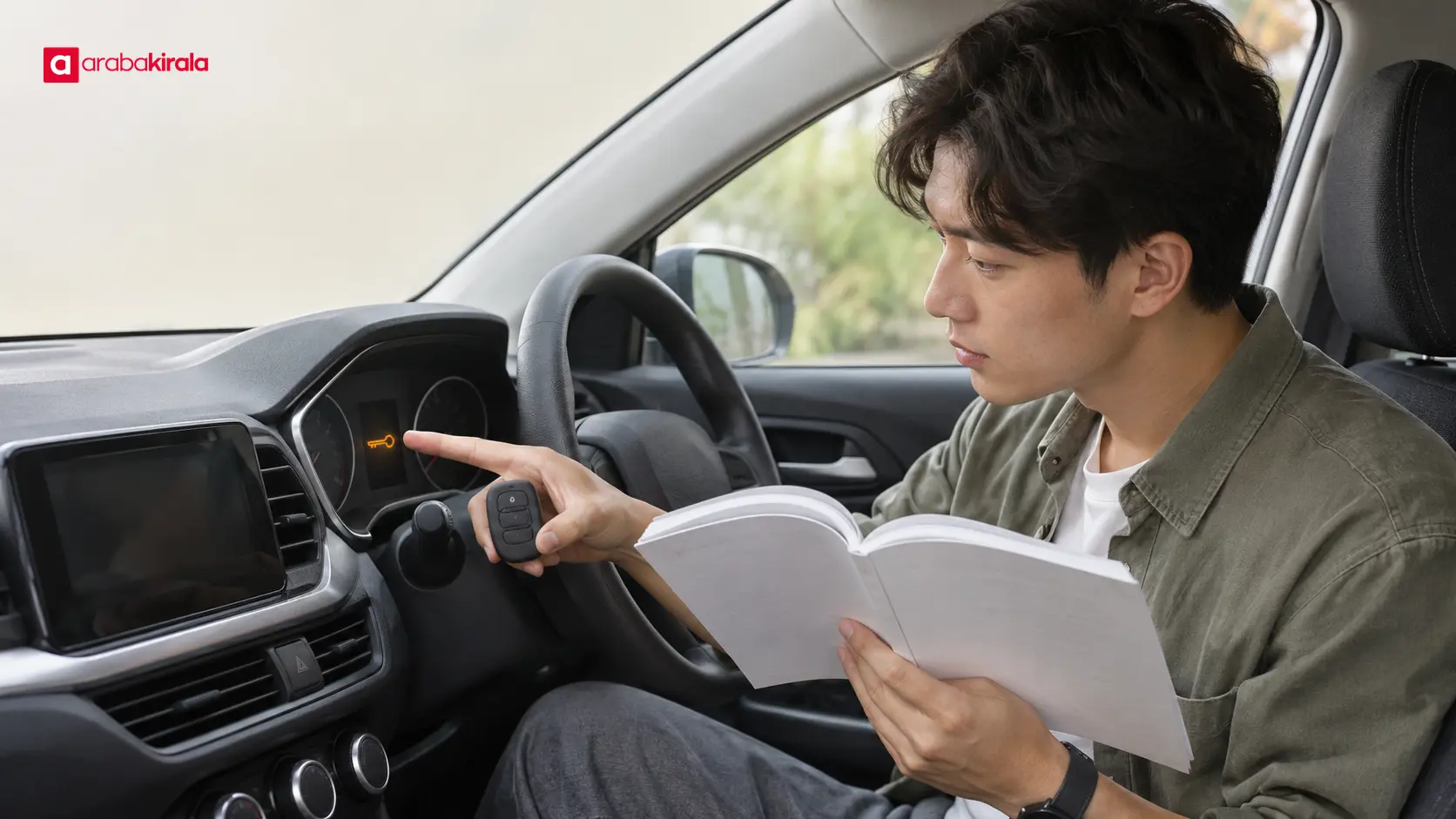
For a keyless ignition, ask where the start button is, whether the key must be inside the cabin, and what steps switch the vehicle off before you leave it. Ask the staff member to demonstrate the process. It can also help to learn whether the car gives a warning if the key is outside while the engine is running. The owner’s manual is the best source for instructions specific to that vehicle.
Vehicle information to learn before driving
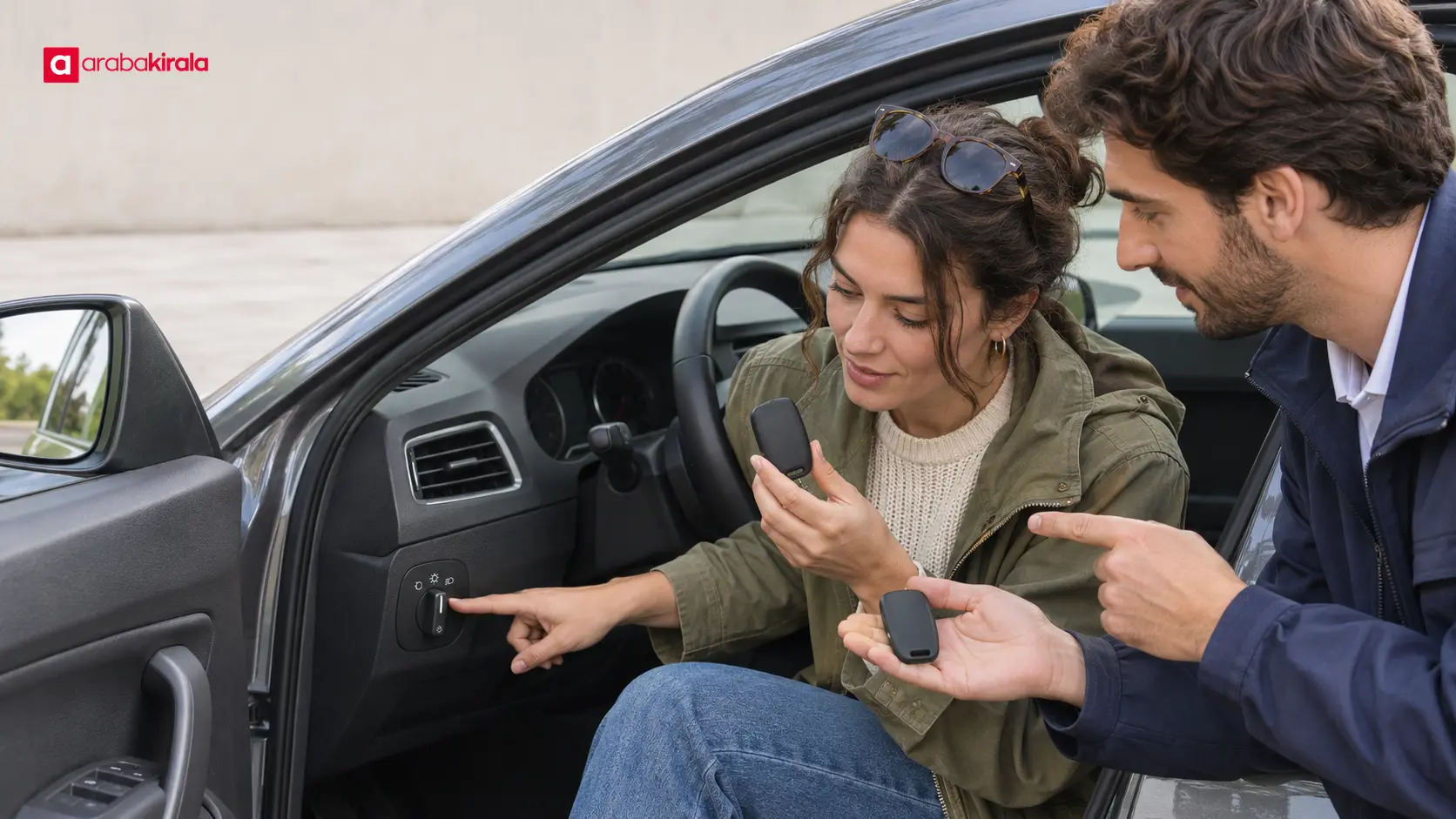
Knowing the key is only part of being ready to drive. While parked, locate the controls for headlights, indicators, wipers, hazard lights, parking brake, and fuel door release. Confirm the transmission type and how to secure the vehicle in park. Learn these controls while stationary, rather than trying to find them in traffic.
Find the fuel or charge level, odometer, and warning indicators on the instrument panel. The odometer reading helps compare the recorded values at collection and return; it does not itself state a mileage allowance or limit. Confirm the correct fuel type from the vehicle marking and the staff member. Using the wrong fuel can cause serious damage, so do not refuel when uncertain; contact the branch for guidance.
Ask whether the car has a spare wheel, tyre repair kit, warning triangle, first aid kit, or other equipment, and where it is stored. Availability and location vary by vehicle. Do not assume you know how to use every item in the boot. Before attempting tyre or battery work, understand the safe assistance process. Note where the vehicle handbook is kept and how to access a digital manual if one is available.
Keep handover notes clear and useful
If a key is missing, visibly damaged, or has a non-responsive button, report it immediately. Ask for the issue to be entered on the paper handover form or confirmed in the digital record. If you take a photo, make sure the key and relevant condition are clear. A record helps everyone recall what was observed at handover; by itself, it is not a technical diagnosis or a decision about responsibility.
- Record how many keys and remotes were handed over.
- Learn where the spare is and how it can be accessed and returned.
- Try the lock, unlock, and engine-start steps while parked.
- Locate the handbook, fuel type, and basic driving controls.
- Report visible damage or a missing part before setting off.
- Save the branch contact details for a lost key or remote problem.
Keep notes practical: the key count, the functions you tried, and any vehicle-specific instruction are a useful start. Avoid sharing a key photo with personal details or information that unnecessarily links it to the vehicle. Do not leave keys visible in the cabin or a door pocket. Take them with you when leaving the car and store them securely.
What to do if a key is lost or stops working
If the remote does not respond, stop in a safe place and check where the key is inside the vehicle. Note any dashboard warning. Do not force the key open, dismantle electronic parts, or try an arbitrary replacement battery: construction and replacement methods vary. Call the branch where you collected the car and ask for instructions for that vehicle.
If the key is lost, tell the branch where it was last seen and whether the vehicle is secure. The branch should explain where the spare is and how it can be made available. Fees, procedures, and support for a lost key depend on the specific rental terms and location. Do not treat another company’s practice as a general rule; confirm the applicable details with your own branch before collection.
Frequently Asked Questions
Does every rental car come with a spare key?
Whether a spare is handed over depends on the vehicle and the branch’s arrangement. Before taking the car, ask how many keys are included, what the spare can do, and how you would access it if necessary.
Can I drive away if the key remote does not work?
Show the problem to the staff member and confirm the correct operating method first. Manual door entry or an alternate start procedure varies by model. Avoid forcing the key or attempting a repair yourself; follow the branch’s vehicle-specific guidance.
Where should the key be in a car with keyless ignition?
The detection area and start sequence vary by model. During handover, learn where the key must be, how to start and switch off the engine, and what to check before walking away from the vehicle.
Should I carry the spare key on the same keyring?
There is no single arrangement that suits every renter. Follow the branch’s storage and return instructions. Keep keys out of sight in the vehicle and save the contact route to use if one goes missing.
What should the handover form say about the keys?
Record the number of keys handed over and any visible damage or function issue you noticed. Show uncertainties to staff and review together what the form records before you leave.
What is the most useful next step before setting off?
Confirm the key count, try the essential buttons and start sequence while parked, and save the branch contact details for a lost key or malfunction. This short check reduces uncertainty during the first part of the trip.
Related Articles
- How to Check a Rental Car’s Locks, Windows, and Mirrors
- How to Check Navigation Data in a Rental Car
- How to Record Fuel Type and Dashboard Readings at Rental Car Pickup
Legal Disclaimer: All content, articles and information on the Araba Kirala website are provided solely to inform users. No information shared on this website constitutes definitive advice or guidance. Araba Kirala Teknoloji A.Ş. and its authors cannot be held responsible for any direct or indirect damages arising from the application of information on the website. For all questions and requests regarding car rental, please contact the office from which you will rent your vehicle.
 Add ArabaKirala as a preferred source on Google