Rental Car Trunk Cover and Mounts: What to Check
Published: November 4, 2026 • Reading Time: 7 min • Last Updated: November 4, 2026 • Author: Merve B.
Learn to identify a trunk cover, its mounting points, and cargo tie-downs, then check their condition before setting off in a rental car.
Contents
- What a luggage compartment cover does
- Recognizing common cover designs
- Rigid parcel shelf
- Retractable cover
- Side rails, sockets, and attachment cords
- How to identify cargo tie-downs
- A collection-day inspection, step by step
- Loading and using the cover safely
- What to do if a fitting does not work
- Before setting off
- Frequently Asked Questions
- Related Articles
Rental car trunk cover mounts are easier to use when you know which parts support the cover and which are meant to secure cargo. This guide explains common cover designs, how to recognize their sockets and supports, and what to inspect when you collect a rental car. The exact layout varies by vehicle, so identify the parts in the car you receive before placing luggage or operating a moving cover.
What a luggage compartment cover does
For Rental Car Trunk Cover, the practical points below should be considered together. A trunk cover spans or shields the upper part of the luggage area. A vehicle may have a rigid parcel shelf that lifts like a panel, or a flexible retractable cover that pulls out from a roller. It can make luggage less visible from outside and create a visual separation between the cabin and the trunk.
The cover is not a cargo restraint. Its purpose is to cover the luggage area, not to hold heavy bags in place or serve as a shelf for loose objects. Put luggage on the trunk floor. Where the vehicle provides appropriate hooks or loops, use suitable tie-down equipment to help prevent cargo from shifting.
Recognizing common cover designs
Rigid parcel shelf
A rigid parcel shelf usually rests on supports along the trunk sides. One edge may connect to the rear seat with hinges, cords, or another flexible attachment, allowing the panel to rise when the trunk lid opens. Watch how it moves before lifting it. Avoid bending the panel or pulling it out of its supports.
Retractable cover
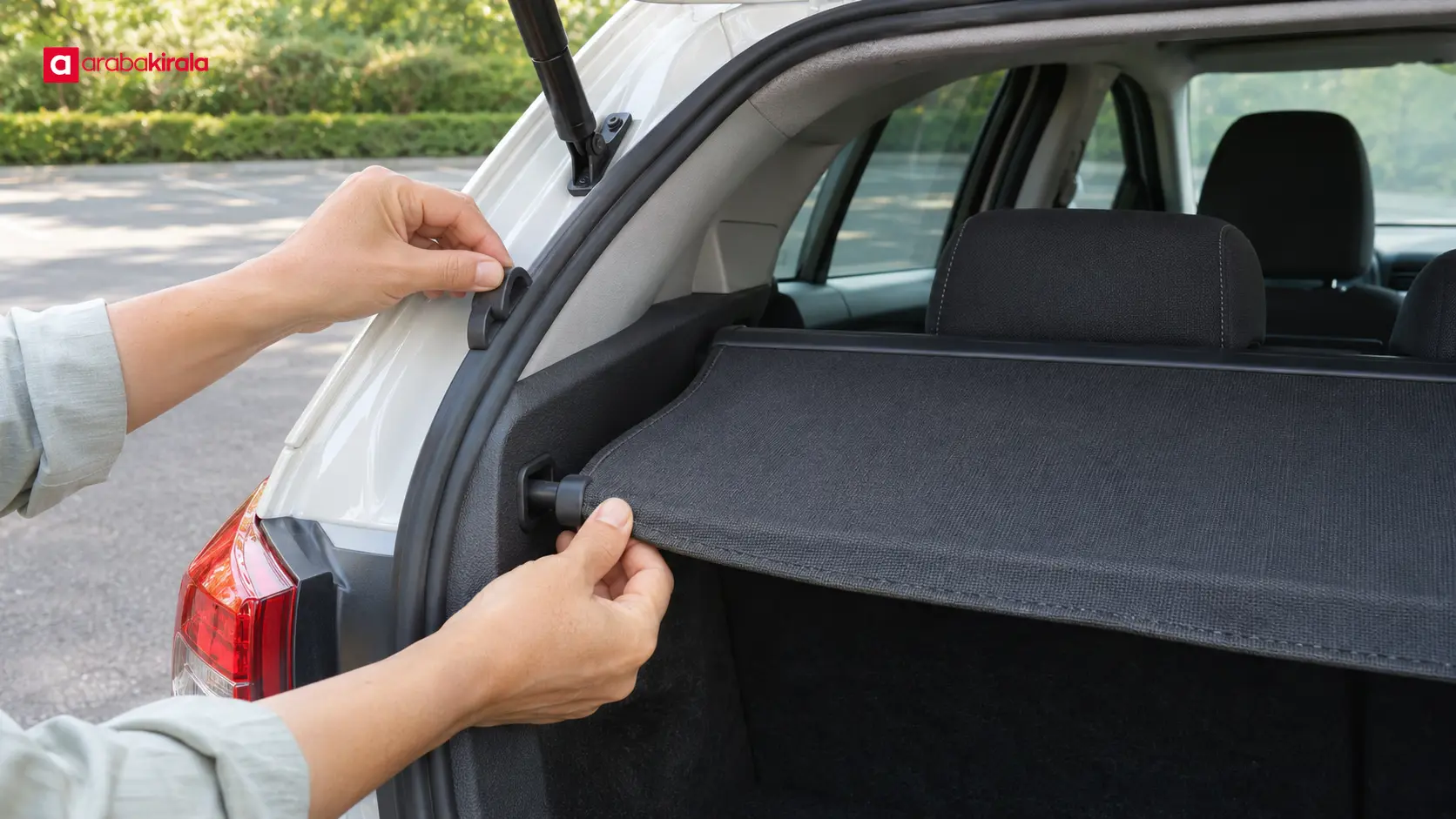
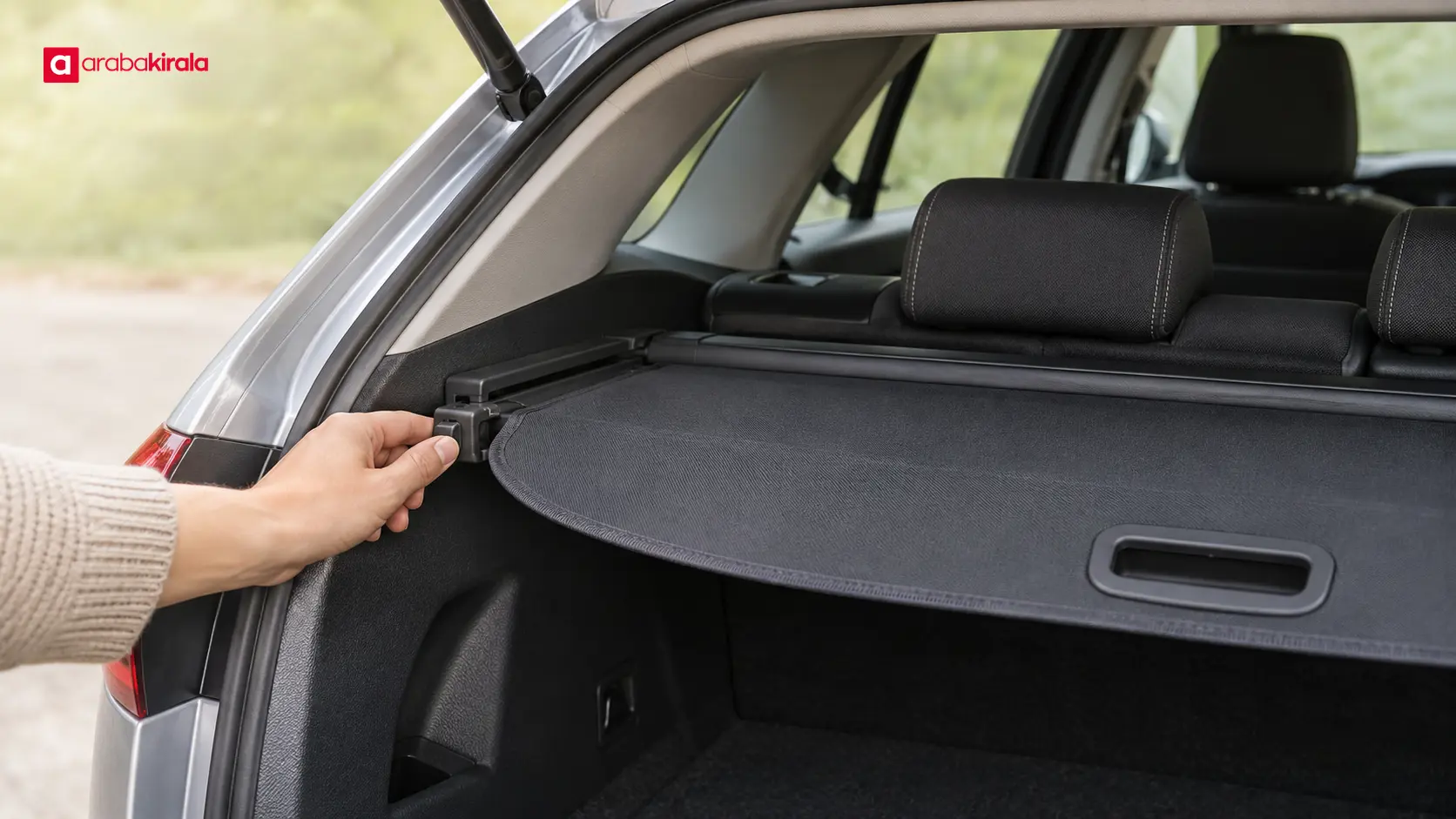
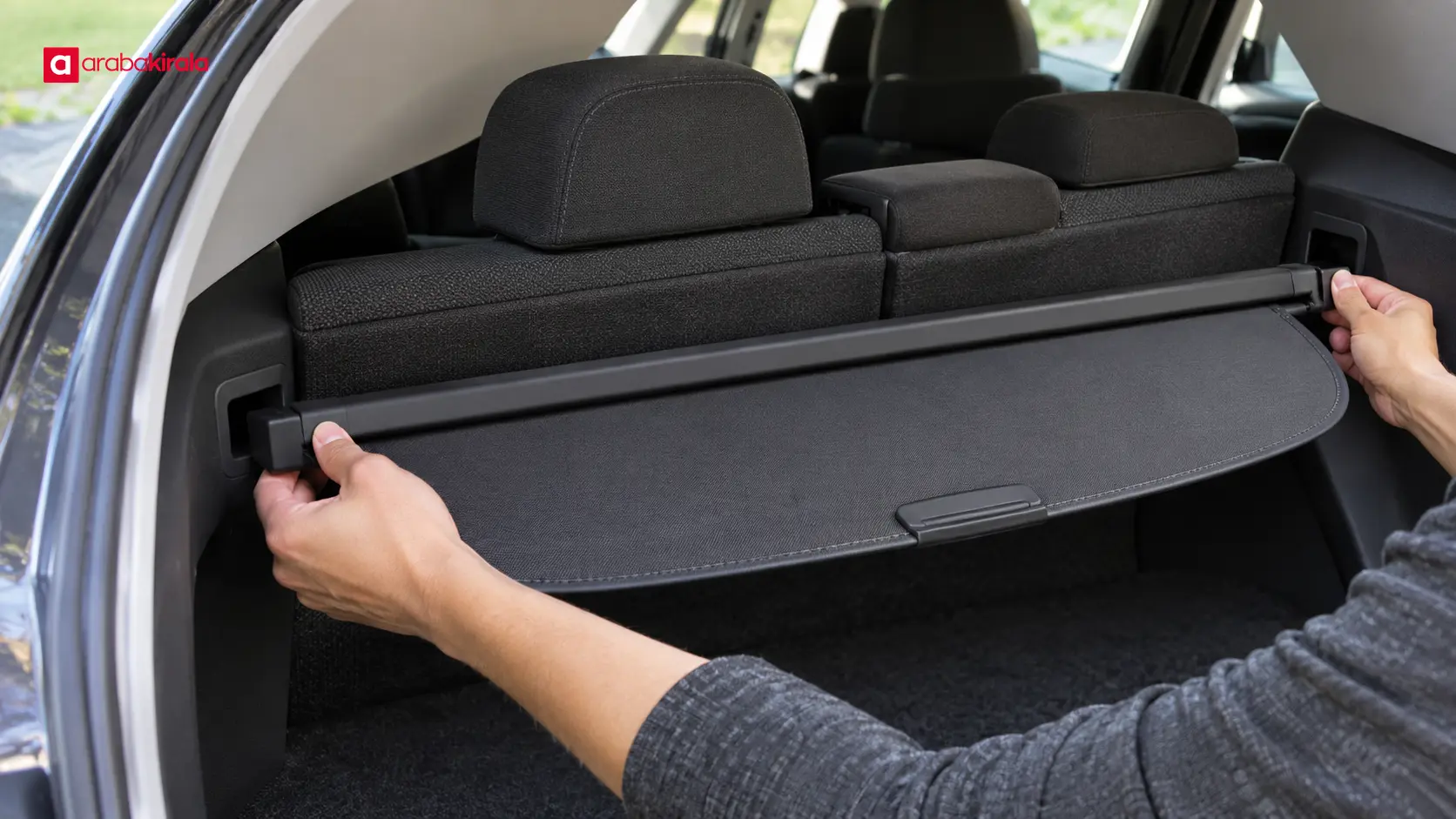
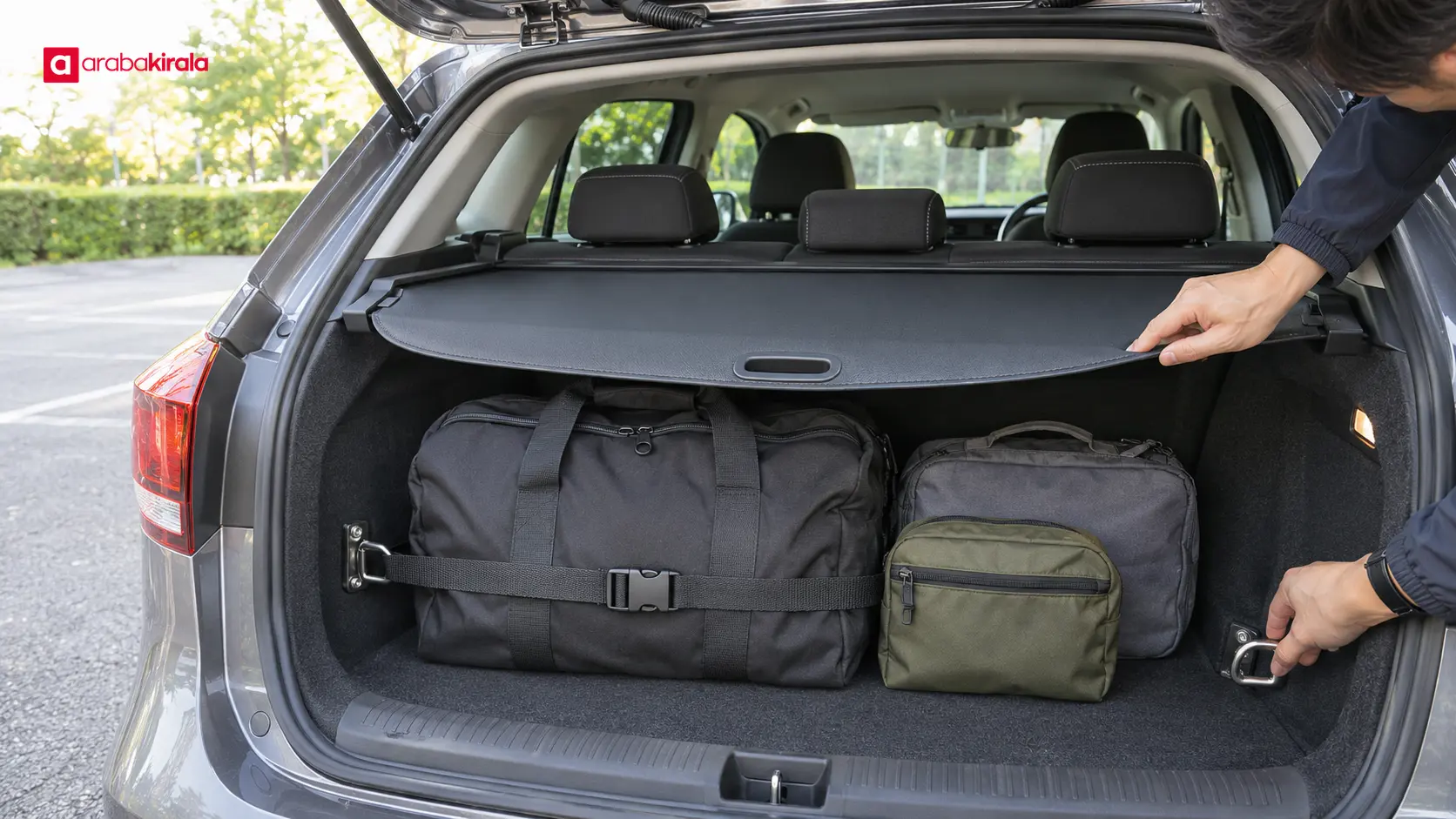
A retractable cover has a flexible surface wound around a roller, usually at one side of the luggage area. A crossbar at the free end gives you a grip and may fit into sockets on both sides of the trunk. Pull it along its natural path and check that it extends evenly. If it catches or feels unusually resistant, stop rather than increasing force.
Side rails, sockets, and attachment cords
Side rails or supports define where a cover sits. Small recesses may hold the ends of a cover bar. Cords can connect a parcel shelf to the trunk lid so the shelf rises with it. These fittings serve a different purpose from tie-down loops on the trunk floor. Follow each part to see what it attaches to instead of assuming every loop or recess secures luggage.
How to identify cargo tie-downs
Hooks and loops in the luggage area may provide attachment points for suitable straps or a cargo net. A net may connect to floor anchors or side fittings, depending on the vehicle. Look for the matching attachment points and observe the intended path of the strap or net. Any restraint should be appropriate for the cargo and fitted so it can do its job without pressing against the cover.
A bent, loose, cracked, or missing fitting should not be used to secure a load. Some fittings that look like hooks may instead support trim or the cover mechanism. If the function is unclear, do not test it by pulling hard. Check the vehicle guide or ask the branch where you collect the car to identify the part.
A collection-day inspection, step by step
- Open the trunk and identify the arrangement: rigid shelf, retractable cover, or no cover.
- Look at the rails, supports, and sockets where the cover rests. Check for visible cracks, looseness, damage, or missing pieces.
- If the cover moves, operate it gently in its normal direction. Stop if it jams, winds unevenly, or will not seat properly.
- Locate any cargo hooks, loops, or net attachments on the floor and sides. Distinguish these from fittings that belong to the cover.
- Check how much usable room remains with the cover in place and whether your luggage fits below it without pressure.
If a part appears damaged or absent at collection, show it to the staff member and follow the vehicle handover process for recording the condition. A clear check at the start also helps you remember which equipment was present in the car.
Loading and using the cover safely
Place heavy items low in the trunk and distribute them so they do not slide freely. Do not stack bags, boxes, or other cargo on the cover unless the vehicle maker specifically identifies it as a load-bearing surface. If the cover presses on luggage when closed, rearrange the items. The cover should sit in its supports without obstructing normal trunk closure.
Tall or long items may prevent the cover from closing. Do not force the trunk lid or bend the cover to make the load fit. Check the vehicle instructions for guidance on cargo placement and keep the driver's view clear. Use only attachment points and equipment intended for securing cargo, and arrange items so they are less likely to move into the passenger area.
Before driving, check that the trunk lid closes fully, the cover is seated, and loose fittings are not swinging. If the cover affects rear visibility, reconsider its position and the height of the load. Never reach into the luggage area to adjust a part while the vehicle is moving; stop somewhere safe first.
What to do if a fitting does not work
If the cover comes loose, a rail looks cracked, the roller will not turn, or an attachment cord appears broken, do not dismantle or repair the part yourself. Check whether the trunk can close safely and whether the luggage is secure. Tell the handover staff what you found and ask the rental branch for instructions on using the vehicle.
The car may have a different cover layout from the one you expected, or the cover may not be included in that vehicle's equipment. If a covered luggage area or a particular item of equipment matters to your trip, ask the branch handling your reservation before collection. Trunk capacity figures alone do not tell you whether a specific shape or length of luggage will fit below the cover.
Before setting off
Identify the cover type, distinguish its supports from cargo anchors, test any moving mechanism gently, and keep luggage off the cover. If a fitting is damaged or its purpose is unclear, pause and ask the branch where you collected the car. When your plans depend on a covered luggage space or a specific piece of equipment, confirm that detail before pickup. These checks make it easier to arrange your luggage and start the trip with a clear understanding of the trunk.
Frequently Asked Questions
Are a trunk cover and a parcel shelf the same thing?
The terms are sometimes used broadly for a panel or cover over the luggage area, but the part may be a rigid shelf, a retractable fabric cover, or another design. Inspect the vehicle's actual arrangement and how it moves instead of relying on the name alone.
Can I put luggage on top of the trunk cover?
Do not assume the cover is designed to carry cargo. An item placed there may obstruct visibility, damage the cover, or fall as the vehicle moves. Keep luggage on the trunk floor and use appropriate tie-downs where available.
Are all hooks in the trunk for securing cargo?
No. Some fittings support the cover, trim, or other components. If you cannot identify a fitting's purpose, check the vehicle guide or ask the branch before attaching a strap or net.
What should I do if the cover will not fit into its sockets?
Do not force the bar or bend the sockets. Check visually that the ends are aligned with their supports. If it still will not seat, or the mechanism catches, report the issue to the staff member handling the handover.
How can I check whether a rental car has a trunk cover?
If your luggage needs to stay below a cover, or a covered cargo area is important to you, ask the branch handling the reservation or vehicle pickup. Trunk layouts can differ by model and equipment, so a general vehicle description may not answer that specific question.
Related Articles
- How to Assess Trunk Opening and Loading Height in a Rental Car
- A Guide to the Trunk and Cargo Area in a Rental Car
- How to Use a Cargo Cover and Tie-Down Points in a Rental Car
Legal Disclaimer: All content, articles and information on the Araba Kirala website are provided solely to inform users. No information shared on this website constitutes definitive advice or guidance. Araba Kirala Teknoloji A.Ş. and its authors cannot be held responsible for any direct or indirect damages arising from the application of information on the website. For all questions and requests regarding car rental, please contact the office from which you will rent your vehicle.
 Add ArabaKirala as a preferred source on Google