How to Verify Recycled Materials in Automotive Interiors
Published: November 5, 2026 • Reading Time: 7 min • Last Updated: November 5, 2026 • Author: Merve B.
A practical guide to checking traceability, performance tests, cabin suitability, and production consistency for recycled fabrics and plastics in vehicles.
Contents
- What recycled content means
- Four evidence layers for quality
- 1. Source and traceability
- 2. Mechanical and use performance
- 3. Cabin air and contact considerations
- 4. Production consistency and workmanship
- How to read documents and product claims
- Practical checks for consumers
- Inspecting a product or vehicle
- Requesting technical information
- Summary and next step
- Frequently Asked Questions
- Related Articles
Recycled Materials in Automotive directly describes the main subject covered in this guide. Verifying an automotive recycled material claim takes more than seeing the word “recycled” on a product description. You need to understand where the feedstock came from, which part contains it, how the finished component performs, and whether production quality stays consistent.
This guide explains how to read evidence for interior fabrics and plastics, what common tests can and cannot show, and which questions help clarify an environmental or technical claim.
What recycled content means
For Recycled Materials in Automotive, the practical points below should be considered together. Recycled content is material recovered from a previous use or manufacturing process and processed into a new material or component. The feedstock may come from post-consumer waste or from manufacturing scrap. These sources have different collection and processing paths, so a clear claim identifies the source category rather than treating all recovered material as identical.
A component containing recycled feedstock is not necessarily made entirely from it. A seat textile may blend recycled and other fibers; a plastic trim part may combine recycled polymer with additives or other polymers. A percentage claim should therefore specify the component or material layer it covers and how the percentage is calculated. Without that scope, the number can be difficult to interpret.
Four evidence layers for quality
1. Source and traceability
Start by asking where the feedstock came from and how it is tracked through processing. A manufacturer or supplier should be able to describe the material type, recycling stream, batch identification, and steps that turn the feedstock into the component. A certificate or technical statement is useful only when its scope and covered product are clear.
Traceability records connect a recycled-content claim to a batch or product family. Review the period covered, whether the source is post-consumer or manufacturing scrap, and how the process addresses mixing or substitution risks. Missing records do not automatically prove that a component is poor quality, but they make the content claim harder to verify.
2. Mechanical and use performance
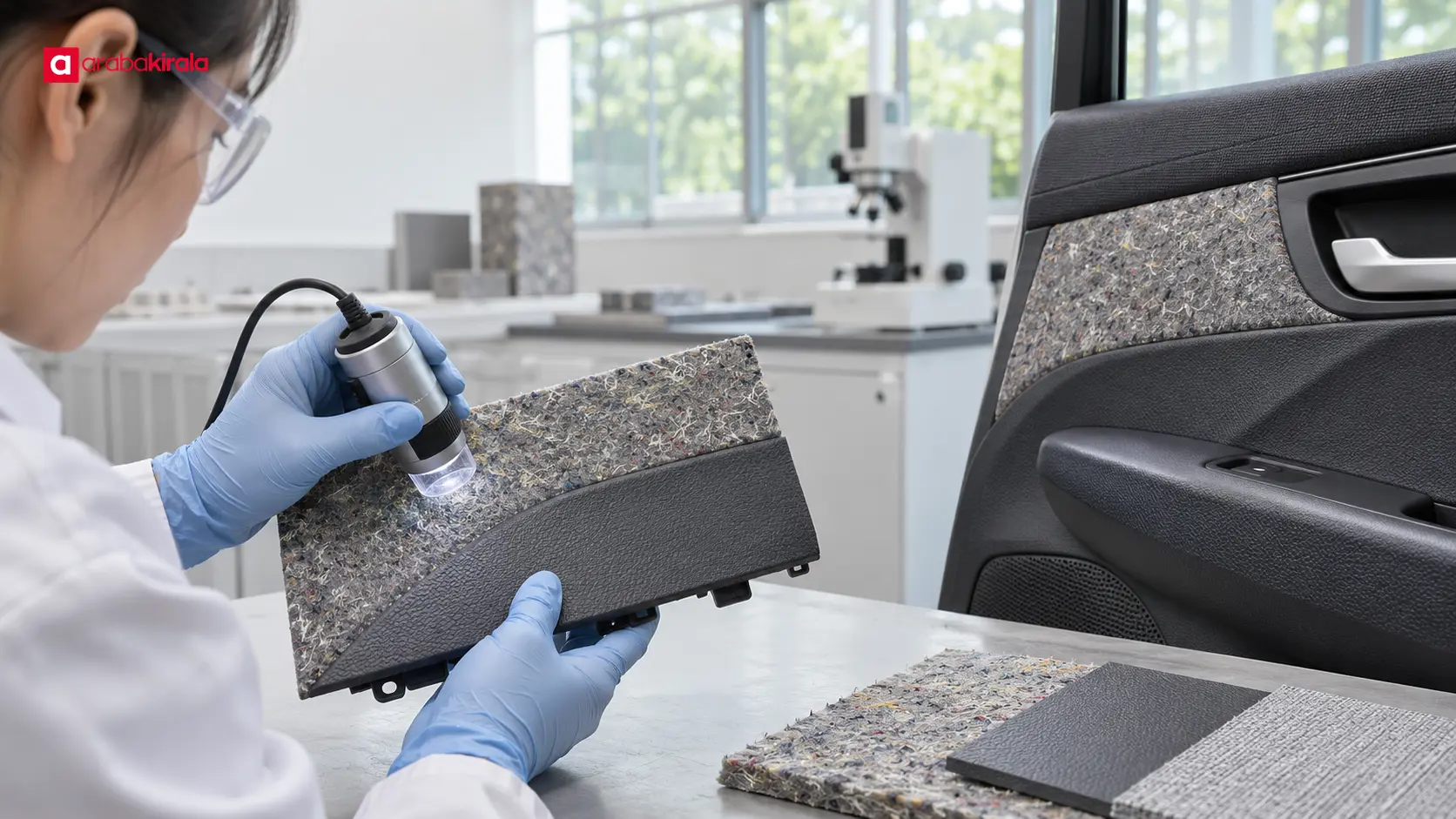
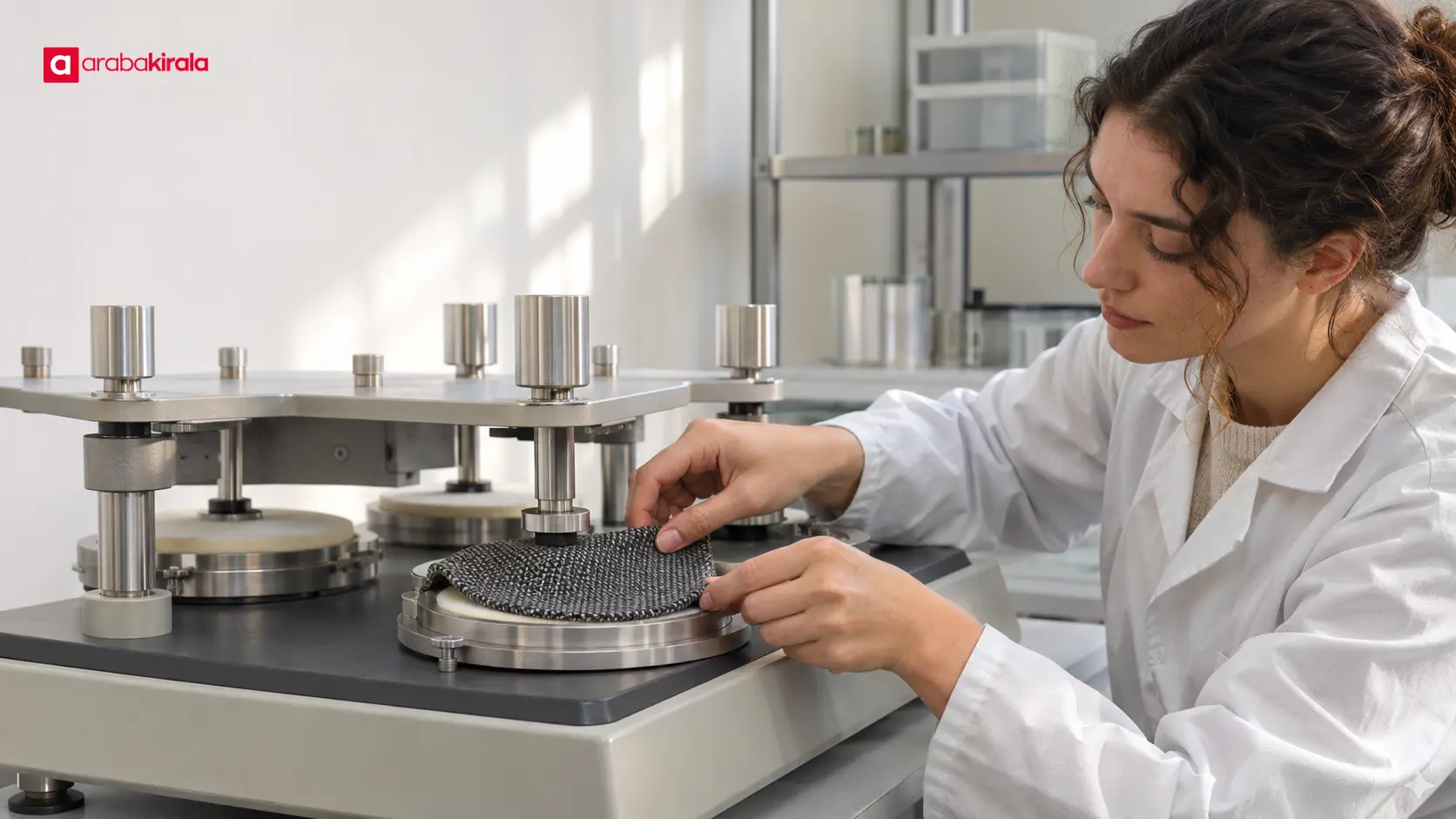
Cabin components face friction, pressure, temperature changes, sunlight, and cleaning. Seat fabrics may be assessed for abrasion, seam strength, color change, and pilling. Plastic trim may be evaluated for impact resistance, surface scratching, attachment strength, or dimensional stability. Each test measures a defined property; passing one test does not guarantee performance over the entire service life.
When reading a test report, check the sample, conditions, method, acceptance criteria, and date. A test on a finished component offers different evidence from one performed only on raw material. Component shape, thickness, stitching, coating, and attachment design also affect performance, so finished-part assessments are especially relevant when available.
3. Cabin air and contact considerations
Odor, emissions of volatile substances, and surface contact can matter for materials used inside a vehicle. The label “recycled” does not by itself establish low emissions or prove that a material will be comfortable for every occupant. Such claims should be supported by defined test methods and measurement conditions.
Suitability for flammability, chemical content, or cabin air quality depends on the part’s location and applicable technical requirements. Ask which component was tested, whether the sample included its final coatings or surface treatments, and what limits were used to interpret the results. If a user has a sensitivity or experiences discomfort, a broad “safe” statement is less informative than evidence tied to the actual material and test scope.
4. Production consistency and workmanship
A good result from one laboratory sample does not establish that every production batch will be identical. Production quality control should monitor changes in color, texture, dimensions, thickness, and mechanical properties. Since recycled feedstock can vary with its source stream, batch checks and procedures for separating nonconforming parts are important.
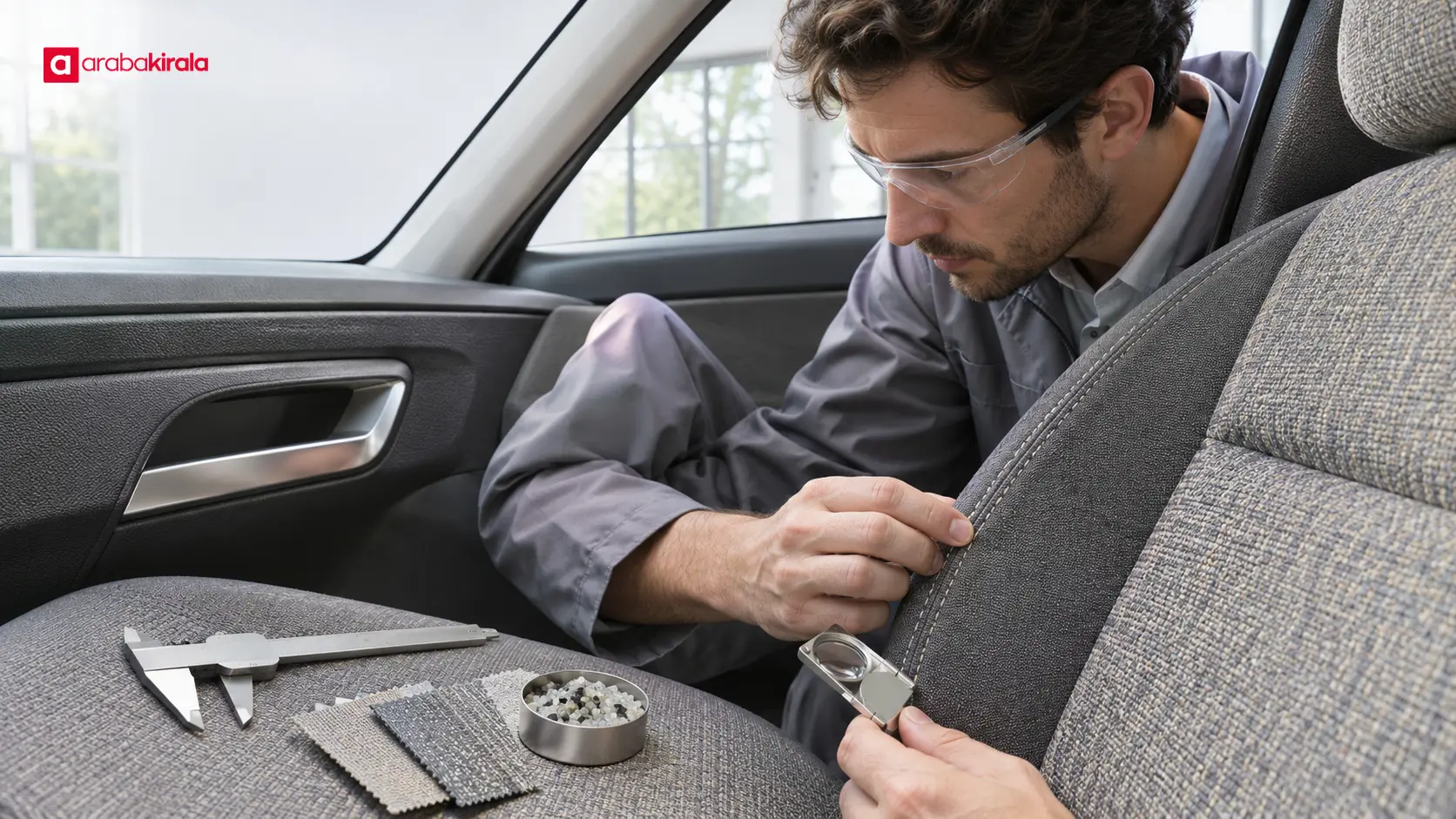
Consumers can visually check whether seams are even, surfaces have bubbles or cracks, trim fits properly, and touch points have uncomfortable sharp edges. These observations do not replace laboratory testing, but they can reveal assembly or surface defects.
How to read documents and product claims
- Claim scope: Does recycled content refer to the whole vehicle, a specific component, or only one layer of that component?
- Percentage and calculation: Is the percentage based on mass, volume, or another measure, and which material constituents count?
- Feedstock type: Does the document identify post-consumer material or manufacturing scrap?
- Evidence and coverage: Who prepared the report, which product or batch was assessed, and are exclusions stated?
- Performance link: Separate from the content claim, are there relevant results for abrasion, strength, emissions, or colorfastness?
A marketing phrase does not replace a technical report. Broad expressions such as “eco-friendly” or “sustainable” are harder to verify than specific, measurable statements with defined boundaries. A report that identifies its method, sample, unit, and result makes it easier to understand exactly what has been demonstrated.
Practical checks for consumers
Inspecting a product or vehicle
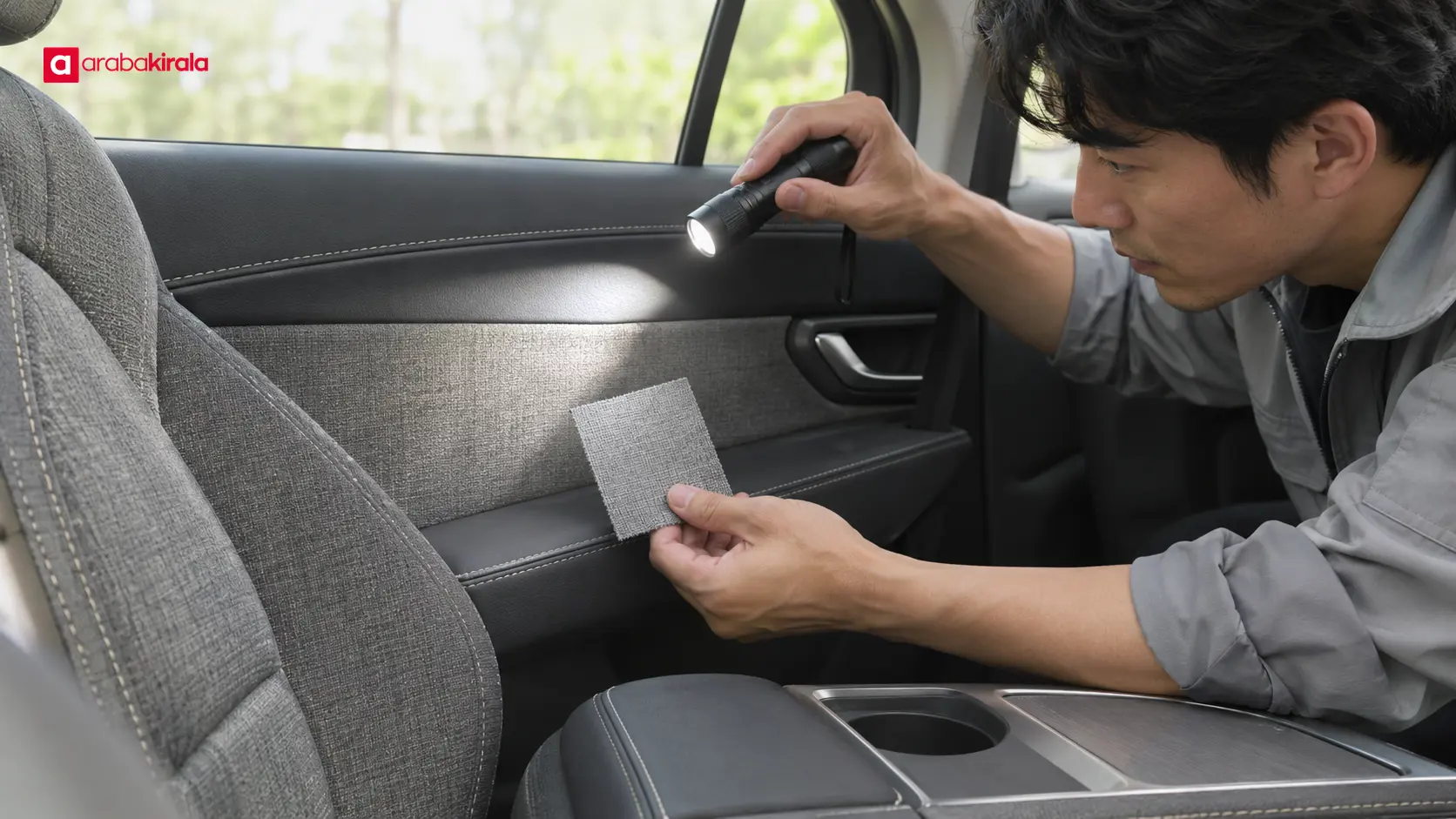
Clarify which area contains recycled content. Seat fabric, carpet, door panels, and hard plastic trim are different materials; a result for one cannot automatically be applied to the others. If technical information is available, check which component and layer the stated content percentage covers.
Do not treat every visible variation in color or texture as a defect; recycled fibers or polymers can show batch variation. However, a crack, loose attachment, open seam, sharp edge, or repeated surface flaw should be inspected. For a rental vehicle, recording the condition you observe at pickup and asking the branch you book about relevant use details can help keep the vehicle-specific information clear.
Requesting technical information
Focus questions on the evidence: Which component does the recycled-content claim cover? How are feedstock source and batch traceability managed? Which durability and emissions tests were performed on the finished part? Does the report identify the sample and method? These questions clarify the claim without assuming a particular company policy.
If technical details are unavailable, make decisions only from properties that can be confirmed. Recycled content alone does not establish that a material is stronger, weaker, odor-free, or environmentally preferable. Assess the actual composition and measured performance instead of filling gaps with assumptions.
Summary and next step
Automotive recycled material quality is best assessed through source traceability, the boundaries of the content claim, finished-part performance, cabin suitability, and production consistency. First identify which component the claim covers. Then review evidence for that component and consider visible workmanship alongside the test results.
Do not use a recycled-content label as a stand-alone quality rating. Look for product-specific information and a clear test scope. If you need details about cabin materials or the condition of a vehicle you are renting, contact the branch handling your reservation or vehicle pickup.
Frequently Asked Questions
Is recycled plastic always lower quality for vehicle interiors?
No. Quality depends on more than the feedstock’s history. Polymer type, processing, additives, part design, and quality controls all matter. The finished component should be assessed against the conditions in which it will be used.
How can I verify the recycled-content percentage in a component?
Look for a technical statement that identifies the component and layer covered, together with batch traceability or verification with an appropriate scope. Check how the percentage is calculated and which material constituents are included.
Which tests show that recycled automotive fabric is durable?
Abrasion, pilling, seam or tear strength, colorfastness, and cleaning-effect tests measure different properties. The relevant tests depend on how the fabric is used. Review the report’s sample and method details.
Can recycled material cause an odor inside a vehicle?
Feedstock and processing can affect odor and emissions, but recycled content alone does not predict a particular odor. Evaluate odor or emissions claims using measurements on the relevant material or finished component.
Does a color difference mean the material has a quality defect?
Color variation can reflect differences between feedstock batches and does not, by itself, prove a performance defect. Consider it alongside other findings such as cracks, loose parts, or surface deterioration.
Can I find out whether a rental vehicle has recycled cabin materials?
Available information can depend on the vehicle model, trim, and technical documentation. Ask the branch you plan to rent from about the specific vehicle and the information it can provide; do not assume a feature applies to every vehicle of a model.
Related Articles
- Automotive Part Quality and Traceability Guide
- What Technical Evidence Drives Automotive Recall Decisions?
- Automotive Recycling Stages: From Vehicle Parts to Recovered Materials
Legal Disclaimer: All content, articles and information on the Araba Kirala website are provided solely to inform users. No information shared on this website constitutes definitive advice or guidance. Araba Kirala Teknoloji A.Ş. and its authors cannot be held responsible for any direct or indirect damages arising from the application of information on the website. For all questions and requests regarding car rental, please contact the office from which you will rent your vehicle.
 Add ArabaKirala as a preferred source on Google