WRC Car Suspension Geometry: Wheel Movement on Rough Stages
Published: November 5, 2026 • Reading Time: 7 min • Last Updated: November 5, 2026 • Author: Merve B.
Learn how WRC car suspension geometry helps wheels follow rough ground, and how camber, caster, toe, springs, and dampers shape a rally car’s response.
Contents
- What geometry and suspension movement describe
- Three key angles: camber, caster, and toe
- Camber: the wheel viewed from the front
- Caster: the steering axis viewed from the side
- Toe: wheel direction viewed from above
- How springs and dampers work together
- How a wheel follows difficult ground
- Why stage surface changes the setup approach
- What to observe when watching a rally car
- Summary and next step
- Frequently Asked Questions
- Related Articles
WRC car suspension geometry is the arrangement that helps a rally car’s wheels follow difficult ground while the car responds predictably to the driver. This guide explains camber, caster, and toe, how suspension compresses and extends, and why tire contact matters. You will be able to connect those concepts to what happens over bumps, through dips, and under cornering loads.
What geometry and suspension movement describe
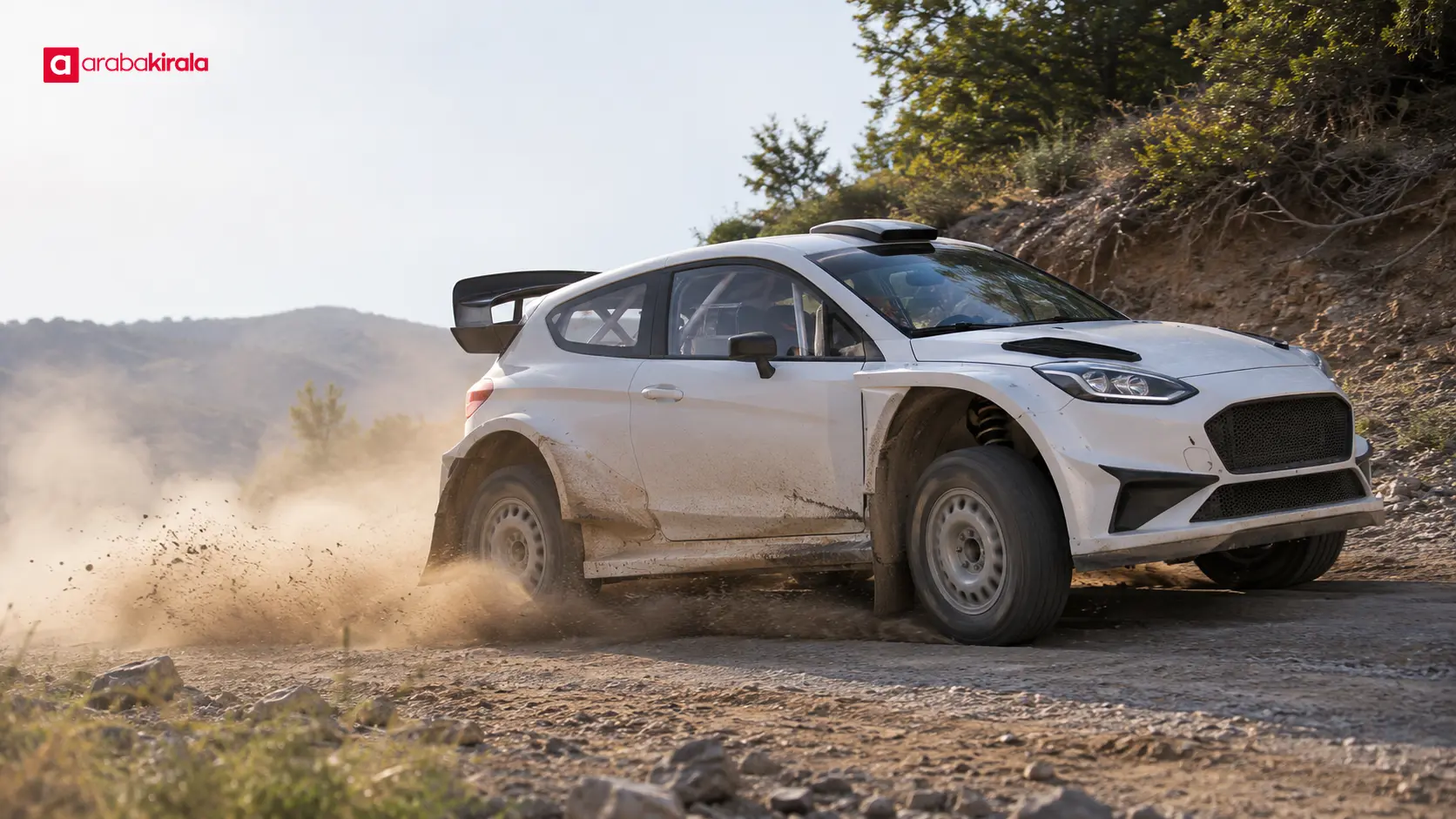
Wheel geometry describes how wheels are positioned relative to the car and the road, including how their direction changes as the steering moves. Suspension is the mechanical system connecting each wheel to the body while allowing vertical movement and managing some of the forces from impacts. They interact: as a wheel moves up or down, its angle can also change.
A rally stage does not offer a flat reference surface. A wheel compresses the suspension as it rises over a bump and the suspension extends as the wheel moves into or out of a depression. During that movement, the tire’s orientation and load against the ground affect steering response and body motion. The aim is not to keep the body perfectly still in every condition. The system helps the wheels follow the surface while keeping the car controllable.
Three key angles: camber, caster, and toe
Camber: the wheel viewed from the front
Camber is the inward or outward tilt of a wheel relative to vertical when viewed from the front. As the car leans in a corner and the suspension takes load, the relationship between tire and road changes. Geometry affects how that change occurs. Camber alone does not explain grip; it must be considered with the tire, load, suspension kinematics, and surface.
On rough ground, the wheel can move through a wide range, so a measurement with the car stationary does not tell the whole story. It also matters how the wheel angle changes as the suspension compresses. Rally setups are assessed for their behavior across movement; it is not sound to infer performance from one angle alone.
Caster: the steering axis viewed from the side
Caster describes the forward or rearward tilt of the axis around which the steering turns, viewed from the side. The position of that axis relates to how the wheel changes direction and how the car responds when the steering is turned. Caster can also contribute to the steering’s tendency to return toward center. The felt effect depends on the steering system and other geometry values.
A driver can receive different feedback on loose gravel, asphalt, or packed snow. A change in surface means the same steering input may not produce the same tire response. Caster does not determine that relationship by itself; it is one part of the steering-axis and wheel-position arrangement.
Toe: wheel direction viewed from above
Toe describes whether wheels on the same axle point slightly inward or outward when viewed from above. It can affect straight-line behavior and the initial response to steering input. Since the front and rear axles have different roles, the effect of toe depends on the axle and the car’s overall setup.
Toe can change as the suspension moves or the steering turns. On rough ground, the movement of the linkage points makes this relevant. A value measured while the car is stationary does not fully show what the wheels do throughout their range of movement.
How springs and dampers work together
A spring compresses as a wheel moves upward and helps carry the load; it then extends to help the suspension return toward its starting position. A damper controls the speed of that compression and extension. Without damping, spring and body movement could continue oscillating for longer. These parts do different jobs, but operate together.
Suspension travel is the amount a wheel can move relative to the body as the system compresses and extends. Reaching the limit of that travel can cause a sharper load through the wheel or body during a large impact. Setup relates to factors such as vehicle weight, stage surface, tires, and driving pace. One setting does not mean the best result on every stage.
How a wheel follows difficult ground
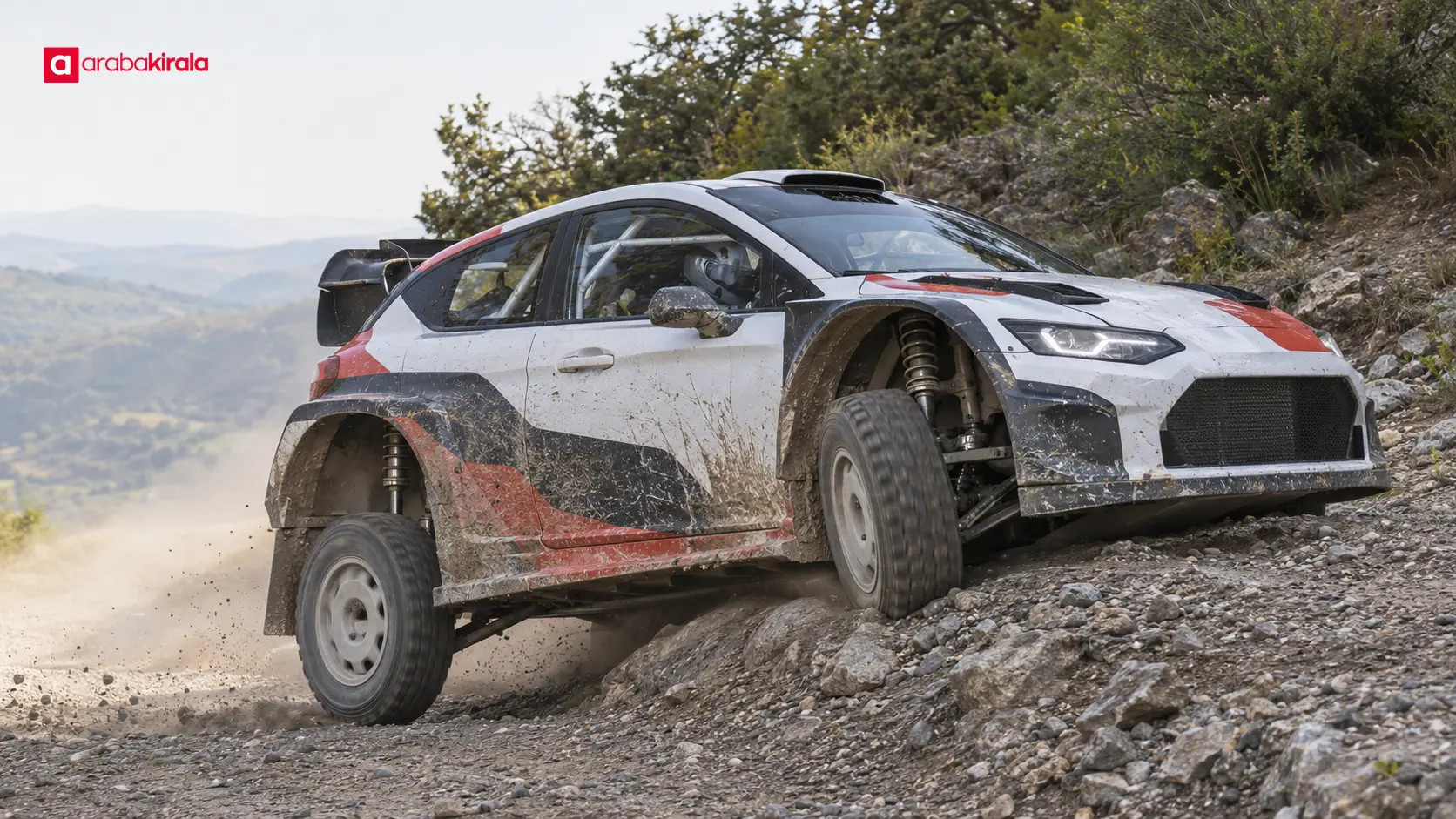
When a wheel climbs a bump, it moves upward relative to the body. Suspension movement helps absorb that difference instead of sending the entire impact directly into the body. Other wheels may meet different surface shapes at the same time; their ability to move independently helps maintain contact. The body still moves, but the system manages the form and speed of that movement.
Tire contact transfers braking, traction, and cornering forces. If a wheel bounces or carries less load, its ability to generate those forces can also change. Suspension is not meant to glue the car to the ground through every impact. It manages wheel loads and body movement to support usable contact.
In a corner, the outside wheels generally carry more load. The body rolls and the two sides of the suspension move by different amounts. Geometry affects wheel direction and tire contact during that load change. Acceleration and braking also shift load toward the rear or front. Rally-car balance therefore cannot be reduced to one angle or component.
Why stage surface changes the setup approach
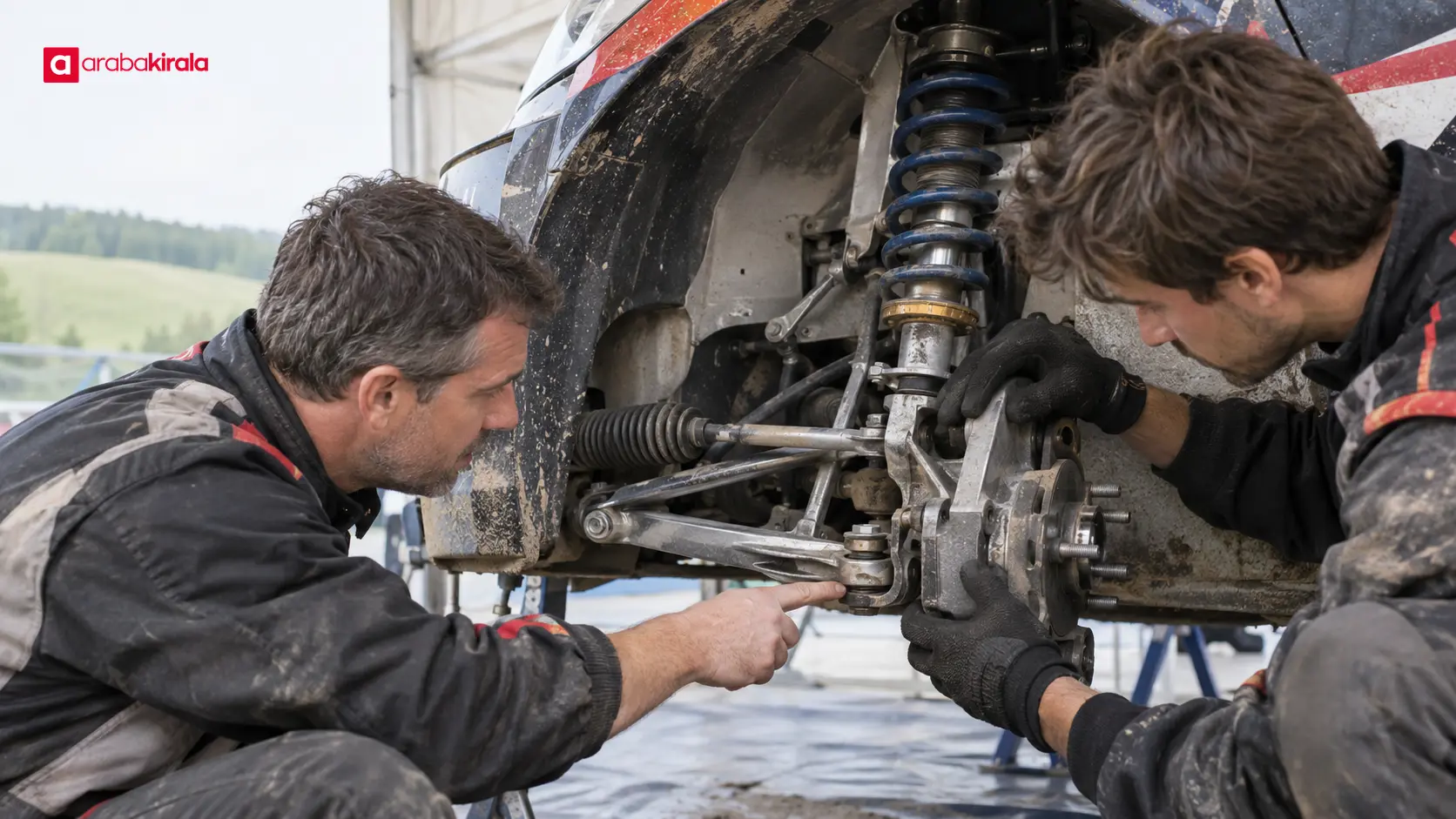
Sharp rocks, deep holes, and repeated bumps place different kinds of loads on the wheels and suspension. Smooth asphalt gives the tire a more consistent surface, though cornering, braking, and acceleration loads remain. As grip and surface shape change, the same setup may also feel different to the driver.
WRC car suspension geometry is therefore more than a static measurement chart. It includes how a wheel is guided throughout its movement, how much suspension travel is available, and how body loads are managed. In competition, technical teams assess setups for the car, stage, and conditions; there is no single “ideal” value that can be inferred in isolation.
What to observe when watching a rally car
- Wheel movement: Notice how far the wheel travels relative to the body over bumps and through dips.
- Body response: Watch how the body settles after an impact and how it leans in a corner.
- Surface changes: Consider how gravel, asphalt, or snow changes tire contact and the car’s response.
- Steering response: Remember that a direction change depends on tires and ground as well as geometry.
These observations do not diagnose a vehicle setup from afar, but they make suspension and geometry easier to understand. Rally cars operate at speed on special stages. This explanation is not an instruction to alter the setup of a road car.
Summary and next step
Camber describes a wheel’s front-view tilt, caster the side-view tilt of the steering axis, and toe the direction of the wheels when viewed from above. Springs carry load and move; dampers control oscillation; suspension geometry influences wheel direction during that movement. Together, they shape tire contact and the car’s response.
When watching a WRC stage, look first at the surface, then at wheel movement, and finally at the body’s response. That sequence makes suspension geometry’s role easier to see. To explore further, consult basic diagrams in vehicle makers’ chassis and suspension technical material. Leave adjustments that require vehicle-specific expertise to qualified technical staff.
Frequently Asked Questions
What does camber change on a rally car?
Camber describes the wheel’s tilt when viewed from the front and can affect the tire’s relationship with the road under load. Its effect depends on the tire, suspension movement, axle, and surface; it does not determine grip by itself.
How are caster and toe different?
Caster concerns the side-view tilt of the steering axis. Toe describes whether wheels on the same axle point inward or outward when viewed from above. They define different geometric properties and contribute to steering behavior in different ways.
Do a spring and damper do the same job?
No. A spring helps carry suspension load and compresses and extends. A damper controls the speed of that movement and limits oscillation. Vehicle behavior depends on these parts working with the rest of the suspension.
Why does a rally car need suspension travel?
Stage surfaces include bumps, dips, and changes in height, so wheels need to move relative to the body. Available travel helps the tires follow the ground. Its amount and setup vary with the car and stage conditions.
Can WRC settings be applied to a road car?
WRC settings are assessed for specialized competition cars, tires, and stage conditions. Directly transferring them to a road car is not a general recommendation. For a road vehicle, use the manufacturer’s technical information and a qualified service assessment when geometry needs checking.
Related Articles
- How Do Turbochargers and Engine Air Supply Work in WRC Rally Cars?
- How WRC Rally Cars Prepare Their Windows and Visibility Equipment
- WRC Suspension Setup: How It Changes with the Surface
Legal Disclaimer: All content, articles and information on the Araba Kirala website are provided solely to inform users. No information shared on this website constitutes definitive advice or guidance. Araba Kirala Teknoloji A.Ş. and its authors cannot be held responsible for any direct or indirect damages arising from the application of information on the website. For all questions and requests regarding car rental, please contact the office from which you will rent your vehicle.
 Add ArabaKirala as a preferred source on Google